




A stainless steel glass spigot looks simple, but its specification affects glass fit, drainage, corrosion resistance, installation time and the finished appearance of an entire railing or pool-fence system. Buyers should define the application and interfaces before selecting a catalog shape or requesting a price.
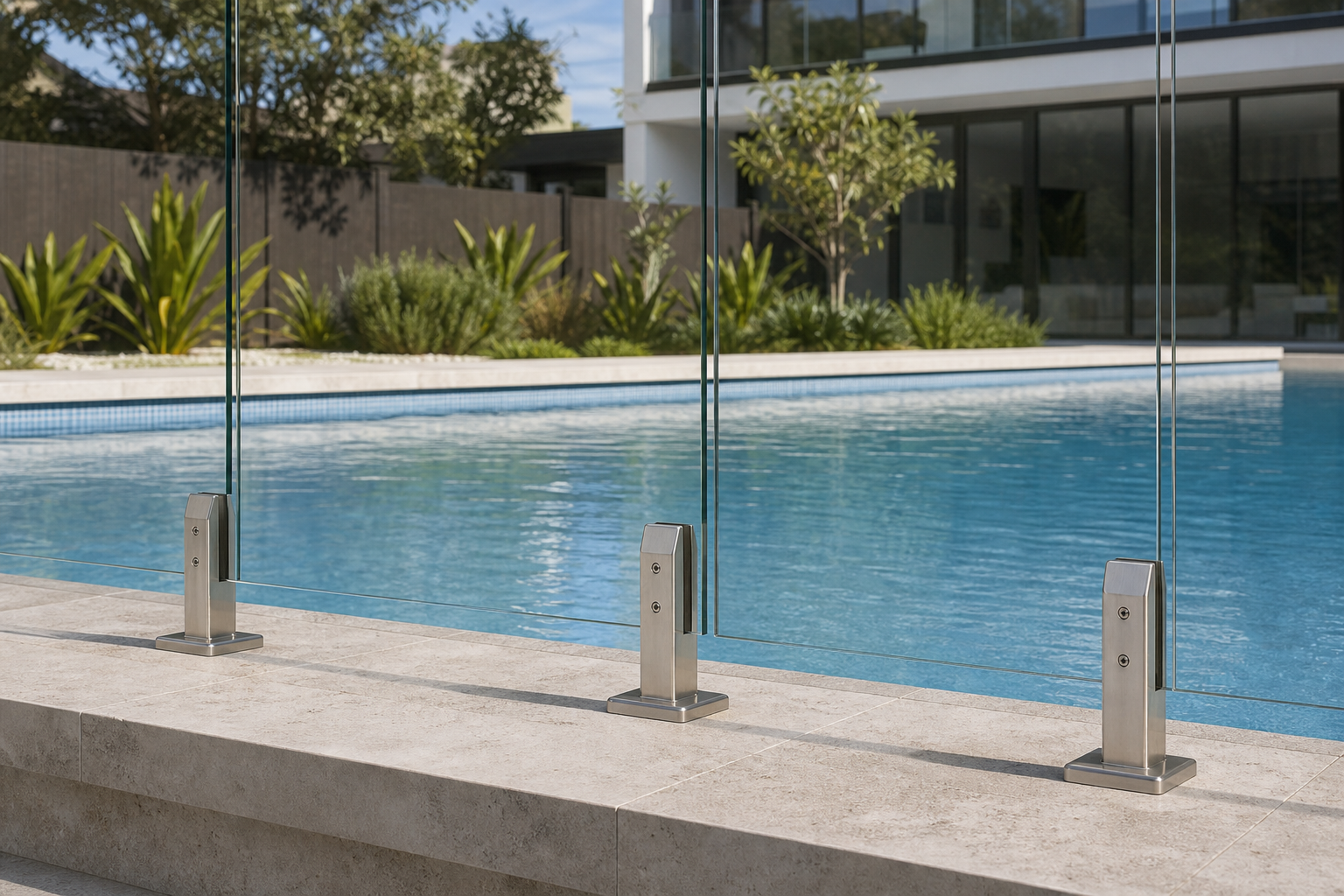
This guide explains the information an architect, railing contractor, distributor or OEM buyer should confirm when sourcing stainless steel glass spigots for pool fencing and frameless railings. It focuses on practical manufacturing and purchasing decisions rather than replacing structural calculations, local building codes or project-specific engineering approval.
Start with the complete glass system
The spigot is only one part of an assembled barrier. Its body, glass slot, gaskets, fasteners, base and mounting substrate work together. A specification that identifies only the spigot height or exterior shape leaves important interfaces unresolved.
Before requesting a quotation, define whether the product will be used for a frameless pool fence, balcony guard, stair railing, commercial partition or another glass-support system. Also identify whether the installation is indoors, outdoors, near a swimming pool or exposed to coastal salt. These conditions influence material, finish, mounting and maintenance requirements.
1. Confirm the mounting method
Common installations use a base-mounted spigot fixed to concrete, stone, steel or another prepared substrate. Other projects may require side mounting, core drilling or a custom interface. The mounting method determines the base geometry, hole pattern, anchor access and the amount of adjustment available during installation.
For base-mounted units, provide the substrate type, available embedment depth, anchor specification and finished floor build-up. Tile, waterproofing layers and decorative paving should not be treated as structural support. The project engineer or approved installation system should define how loads transfer into the supporting structure.
2. Match the glass slot and gaskets
Glass thickness is one of the first dimensions a manufacturer needs. The machined slot and gasket set must hold the approved glass securely without creating concentrated contact or allowing excessive movement. Buyers should provide the nominal glass thickness, glass construction and any required adjustment range.
The quotation drawing should also identify glass edge position, panel clearance and the intended number and spacing of supports. If wedge plates, pressure plates, setting blocks or replaceable gaskets are required, include them in the assembly specification instead of treating them as unverified accessories.
3. Select stainless steel for the environment
For dry interior architectural applications, 304 stainless steel can be a practical option when the exposure and cleaning regime are controlled. Outdoor pool fencing, coastal installations and chloride-bearing environments commonly call for 316 or 316L stainless steel because it offers stronger corrosion resistance than 304.
Material grade alone does not make a component maintenance-free. Pool chemicals, salt deposits and contamination can collect around crevices, fasteners and drainage paths. For unusually severe exposure, the project may require a higher-alloy material or a revised design. The final selection should reflect chloride level, temperature, cleaning access and expected service life.
4. Define the surface finish
Mirror polishing is often selected for pool and marine-style installations because it produces a bright appearance and a smoother exposed surface. Satin or brushed finishes suit many architectural schemes, but the finishing direction and acceptable appearance should be agreed before production.
Ask the supplier to control grinding transitions, casting marks, sharp edges and polishing consistency across the lot. Passivation and careful handling after finishing can further support surface cleanliness. Finished components should be protected from carbon-steel contact during packing, transport and installation.
5. Review the manufacturing route
Many shaped glass spigots are efficiently produced by precision investment casting, followed by CNC machining of the glass slot, base, threads, gasket interfaces and other functional surfaces. This route combines design freedom with repeatable finishing for small and medium production runs.
The casting model should include machining allowance, shrinkage planning and transitions that avoid unnecessary mass. CNC operations then establish the dimensions that control fit and assembly. A drawing should distinguish cosmetic cast surfaces from machined functional surfaces and identify critical tolerances.
6. Control water traps and crevices
Outdoor spigots should not retain water where the glass, gasket and stainless body meet. Drainage paths, cleanable gaps and suitable sealing details help reduce stagnant moisture and chloride deposits. Blind pockets and inaccessible crevices deserve particular attention around pool decks and coastal sites.
The mounting surface also matters. A spigot installed on an uneven or poorly drained base may experience conditions that were not present during factory inspection. Installation instructions should explain orientation, drainage, gasket placement and any sealant requirements approved for the system.
7. Separate product dimensions from structural approval
A manufacturer can produce components to approved drawings and provide material and inspection records, but loading requirements depend on the complete barrier system and the rules applying at the project location. Glass type, panel size, support spacing, anchor design, edge distance and substrate strength all influence performance.
For this reason, buyers should submit the project engineer’s approved dimensions and test or compliance requirements with the RFQ. A generic spigot should not be assumed to satisfy every pool-fence, balcony or public-building application.
8. Specify inspection and documentation
Inspection should focus on the characteristics that affect assembly and service: material identity, glass-slot dimensions, base flatness, hole position, thread quality, edge treatment, finish consistency and visible surface condition. Sampling level and acceptance criteria should be agreed before mass production.
Depending on the order, documentation may include a material certificate, dimensional report, surface-finish approval sample, packing photographs and a final inspection record. A first-article sample is useful when a new gasket, glass thickness, anchor pattern or custom profile is introduced.
Information to include in a glass spigot RFQ
- Application: pool fence, balcony, stair, partition or custom railing
- Drawing, 3D model or reference sample
- Glass thickness and approved glass construction
- Mounting method, substrate and anchor arrangement
- Material grade and service environment
- Surface finish and cosmetic acceptance standard
- Required quantity and annual demand
- Critical dimensions, tolerances and inspection plan
- Packaging, labeling and documentation requirements
Providing these details lets the manufacturer review casting feasibility, machining operations, polishing, gasket interfaces and inspection before quotation. It also separates a useful engineering quotation from a price based on an incomplete visual reference.
Frequently asked questions
Is 316 stainless steel always required for glass spigots?
No single grade suits every project. 316 or 316L is commonly preferred for outdoor, pool and coastal exposure, while 304 may be suitable for controlled dry interiors. The final decision should consider chlorides, cleaning, temperature, drainage and local project requirements.
Can glass spigots be customized from a drawing?
Yes. The body shape, slot, base, hole pattern, threads, finish and gasket interface can be reviewed for drawing-based production. Customization is most effective when the glass system and mounting conditions are defined before tooling or machining begins.
What is the most important dimension?
There is no single controlling dimension. Glass-slot geometry, gasket fit, base flatness, hole position and mounting interfaces all affect assembly. The project drawing should identify which dimensions are critical and how they will be inspected.
Should buyers approve a sample before production?
A first-article sample is recommended for a new design or interface. It allows the buyer to confirm glass fit, mounting, finish and cosmetic expectations before the production lot is released.
Source glass spigots as an engineered component
A reliable glass-spigot quotation begins with the system, not the exterior shape. When glass, mounting, material, finish, environment and inspection requirements are defined together, the supplier can plan a stable manufacturing route and the buyer can compare proposals on a meaningful basis.
Explore AODSON’s stainless steel glass spigots and broader architectural hardware manufacturing capabilities. For a custom project, send your drawing and requirements for engineering review.