




Tea staining on stainless steel can usually be reduced by combining the right grade, a smooth and uncontaminated finish, rain-washed design, good drainage and a realistic cleaning plan. Selecting 316 stainless steel alone is not enough if salt is allowed to collect in rough surfaces, sheltered crevices or poorly finished welds.
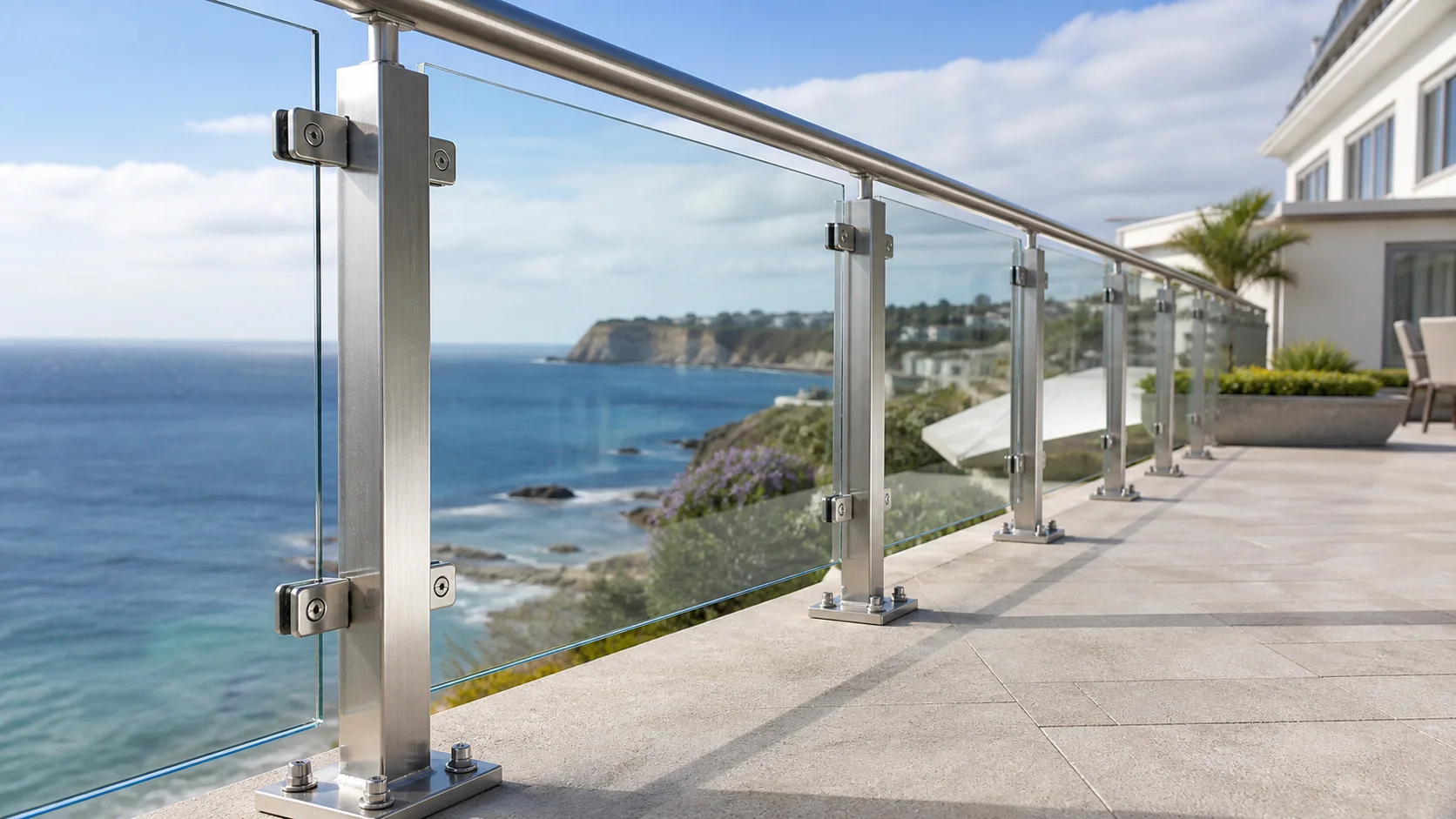
Brown discoloration on an otherwise bright stainless steel railing, glass clamp or handrail bracket is a common concern on coastal buildings. Owners may describe it as rust, while contractors may assume the material grade is wrong. In many cases the visible problem is tea staining: surface discoloration associated with localized corrosion and deposited contamination.
For architects, facade consultants, railing contractors and international hardware buyers, the useful question is not simply whether stainless steel can stain. It is how to specify the complete component so that staining risk, cleaning cost and appearance expectations are controlled from the beginning.
What is tea staining on stainless steel?
Tea staining is a brown surface discoloration most often associated with stainless steel exposed to salt-bearing air. It is primarily an appearance issue, but it is also a warning that the installed surface and local environment are interacting. It should not be confused with embedded carbon-steel contamination, unremoved weld heat tint, chemical attack or deep pitting.
The Australian Stainless Steel Development Association notes that sea salt on the surface is a major factor. Salt attracts moisture and can keep the surface wet, creating a more aggressive local condition. Sheltered locations can be worse than exposed ones because natural rain does not wash deposits away.
Why coastal architectural hardware is vulnerable
Architectural hardware contains many features where salt and moisture can collect: glass gaskets, clamp plates, screw recesses, handrail joints, base plates, anchor covers, weld transitions and underside surfaces. These details receive less rain and are often cleaned less frequently than large visible panels.
Risk generally increases closer to breaking surf, but distance alone is not a reliable specification. Wind direction, building height, humidity, temperature, traffic pollution, sheltering and cleaning access can make one elevation much more severe than another. Pool decks can create a separate chloride exposure even when the building is far from the sea.
1. Choose the grade for the real environment
304 stainless steel is widely used for indoor architectural hardware in dry and regularly cleaned spaces. It is not the preferred starting point for exposed coastal railings, poolside fittings or locations that receive frequent salt deposits.
316 or 316L stainless steel is the common baseline for quality exterior and coastal architectural hardware because molybdenum improves resistance to chloride-related pitting compared with 304. The low-carbon 316L grade is often selected for welded components.
Where aesthetic expectations are very high, maintenance access is poor or chloride exposure is unusually severe, duplex 2205 or a more corrosion-resistant alloy may be considered. Higher alloy content does not remove the need for smooth finishing, clean fabrication and washing. The selection should be reviewed against the project environment and applicable engineering requirements.
2. Specify surface roughness, not only a finish name
A generic instruction such as “brushed” or “No. 4” does not fully define surface quality. Two visually similar finishes can have different roughness and different tendencies to retain salt. For demanding coastal architecture, a smooth, clean surface is easier to rinse and less likely to trap deposits.
ASSDA recommends a surface roughness below 0.5 micrometres Ra for minimizing tea-staining risk in coastal applications. Mirror polishing can provide a very smooth mechanically finished surface, while properly controlled fine satin finishes may suit projects that require lower reflectivity. The required roughness, grain direction and appearance reference should be stated in the purchase specification.
3. Remove fabrication contamination
Stainless steel can be contaminated by carbon-steel grinding dust, dirty handling equipment, shared wire brushes or contact with unprotected workshop surfaces. These iron particles can corrode and create brown marks that resemble failure of the stainless substrate.
Use dedicated stainless-steel tools and clean storage areas. Weld heat tint, embedded particles, grinding residue and damaged passive surfaces should be removed using an approved finishing process. Depending on the component and appearance requirement, the manufacturing route may include grinding, polishing, pickling, passivation or electropolishing by trained personnel.
4. Design hardware so salt cannot remain trapped
Good corrosion performance begins in the drawing. Avoid blind pockets, upward-facing ledges and narrow crevices that cannot drain or be cleaned. Orient brushed grain and drainage features so water leaves the component instead of collecting around fasteners and glass interfaces.
Rain-washed surfaces normally perform better than sheltered undersides. This means a canopy, soffit or recessed balcony can be more demanding than an open balustrade on the same building. Designers should identify which surfaces will not receive natural washing and include them in the maintenance plan.
5. Treat welds and edges as critical surfaces
Weld zones require special attention because heat tint and rough transitions can reduce local corrosion resistance and collect contamination. A visually acceptable weld is not automatically suitable for a chloride environment. Drawings should define whether welds remain visible, are ground flush, are polished to match or receive a chemical restoration process.
Sharp corners, casting parting lines and deep machining marks should also be controlled. For custom architectural hardware, the casting, machining and finishing route should be reviewed together so that decorative surfaces and functional interfaces receive the correct treatment.
6. Protect the surface during installation
Finished hardware can be damaged after it leaves the factory. Cutting or grinding carbon steel nearby, dragging tools across polished surfaces, leaving adhesive residue or using contaminated fasteners can compromise the finish. Protective film should not remain outdoors longer than its supplier recommends, because aged adhesive can trap dirt and become difficult to remove.
After installation, inspect the complete assembly for grinding dust, cement residue, scratches and trapped debris. Do not use hydrochloric acid to remove mortar or cement from stainless steel. Chloride- or bleach-containing cleaners and abrasive steel wool can also damage the surface.
7. Establish cleaning before the building opens
Stainless steel is low maintenance, not zero maintenance. Washing removes salt and pollutants before they become concentrated. A practical routine uses clean water and a mild neutral detergent, followed by rinsing and, where appearance matters, drying with a clean cloth.
Cleaning frequency depends on exposure. Sheltered coastal surfaces may require much more frequent attention than rain-washed components. Instead of promising a universal interval, the project should establish a trial schedule, inspect the result and adjust based on deposit buildup and appearance.
Can existing tea staining be removed?
Light staining may respond to appropriate stainless-steel cleaning products and non-metallic cleaning pads, followed by thorough rinsing. Persistent staining should be assessed before aggressive treatment because the cause may be contamination, weld scale, pitting or chemical exposure rather than simple tea staining.
Professional repolishing, passivation or electropolishing may be required for severe cases. Chemical pickling and passivation involve hazardous materials and should only be performed by qualified specialists using a controlled procedure. Cleaning without correcting the grade, finish, drainage or maintenance problem will often allow staining to return.
Coastal stainless steel hardware specification checklist
| Specification item | What to define |
|---|---|
| Environment | Distance from surf, wind exposure, sheltering, humidity, pool chemicals and cleaning access |
| Material | 304 for suitable interiors; 316/316L for many exterior applications; higher alloys where justified |
| Finish | Appearance reference, grain direction and measurable roughness where required |
| Fabrication | Dedicated stainless tooling, weld treatment and contamination control |
| Geometry | Drainage, rain washing, accessible crevices and replaceable gaskets |
| Inspection | Material verification, visual standard, roughness checks and first-article approval |
| Maintenance | Approved cleaner, initial interval, responsible party and inspection records |
Questions buyers should ask the manufacturer
- Can the material heat and grade be traced?
- Which surfaces are cast, machined, ground and polished?
- How is carbon-steel contamination prevented?
- What surface roughness and appearance standard can be verified?
- How are welds, threads and recessed fasteners cleaned?
- Can a first-article sample be approved before production?
- What packaging protects the finish during export transport?
Frequently asked questions
Does tea staining mean stainless steel is structurally failing?
Tea staining is commonly an aesthetic surface issue rather than immediate structural failure. It still deserves investigation because deeper pitting, contamination or chemical attack can look similar. Critical hardware should be assessed according to its function and project inspection requirements.
Will 316 stainless steel never tea stain?
No. 316 offers better chloride resistance than 304, but rough surfaces, sheltered salt deposits, fabrication contamination and inadequate cleaning can still produce staining. Grade, finish, design and maintenance must work together.
Is mirror polish always the best architectural finish?
Mirror polish is smooth and easy to clean, but it may not suit every visual design. A controlled fine satin finish can be appropriate when roughness, grain direction and maintenance are specified. Finish selection should balance corrosion exposure and appearance.
Can tea staining be prevented without maintenance?
In severe coastal locations, a pristine appearance normally requires planned washing. Higher alloy grades and smoother finishes can reduce risk and cleaning demand, but they do not guarantee zero maintenance.
Plan corrosion resistance as part of the product
Tea staining is best controlled before installation. A clear environmental assessment, suitable alloy, smooth finish, clean fabrication, drainable geometry and maintenance plan create a more reliable result than relying on the word “stainless.”
AODSON supports custom rail fittings, glass hardware, brackets, handles, access covers and related components through precision casting, CNC machining, polishing and quality inspection. Send drawings and exposure requirements through the AODSON RFQ page for a manufacturing review.