




Last updated: July 4, 2026
Author: AODSON Engineering Team
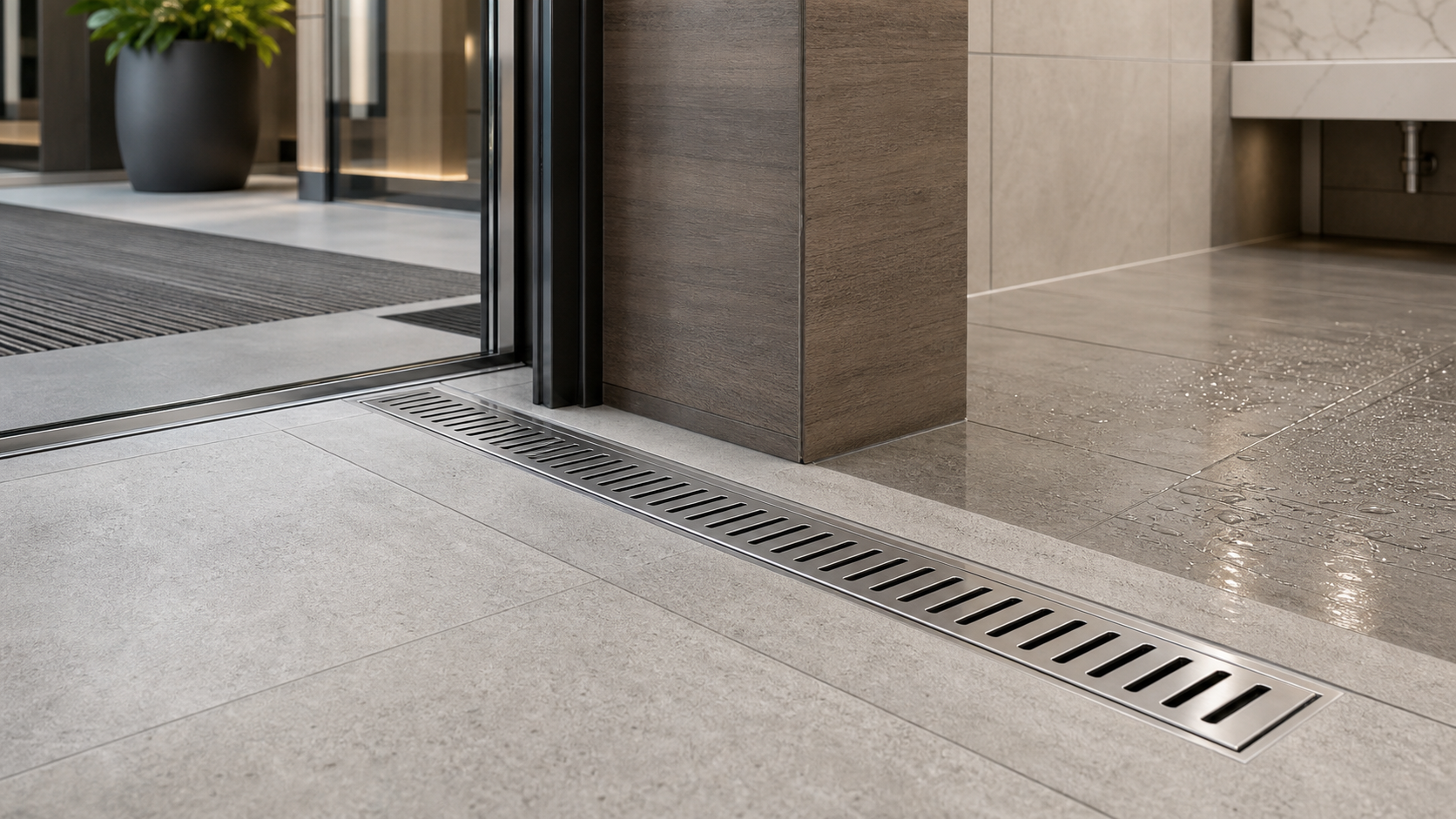
Stainless steel linear drain systems are used wherever water must be removed quickly, safely, and cleanly from a floor area. Compared with point drains, a linear drain creates a long collection line that can simplify floor slope design, improve appearance, and support higher drainage capacity across commercial, hospitality, public infrastructure, and industrial environments.
For architects, contractors, distributors, engineers, and OEM buyers, the best linear drain is not defined by appearance alone. Material grade, channel geometry, outlet design, grate structure, welding quality, load requirement, surface finish, installation method, and quality traceability all affect long-term performance. This guide explains how stainless steel linear drains are designed, manufactured, specified, and sourced.
Table of Contents
- What Is a Stainless Steel Linear Drain System?
- Main Components
- Types of Linear Drain Systems
- Material Selection
- Manufacturing Process
- Surface Finish Options
- Load Classes and Drainage Standards
- Typical Applications
- Installation Considerations
- Quality Control and Traceability
- Why Choose AODSON
- Frequently Asked Questions
What Is a Stainless Steel Linear Drain System?
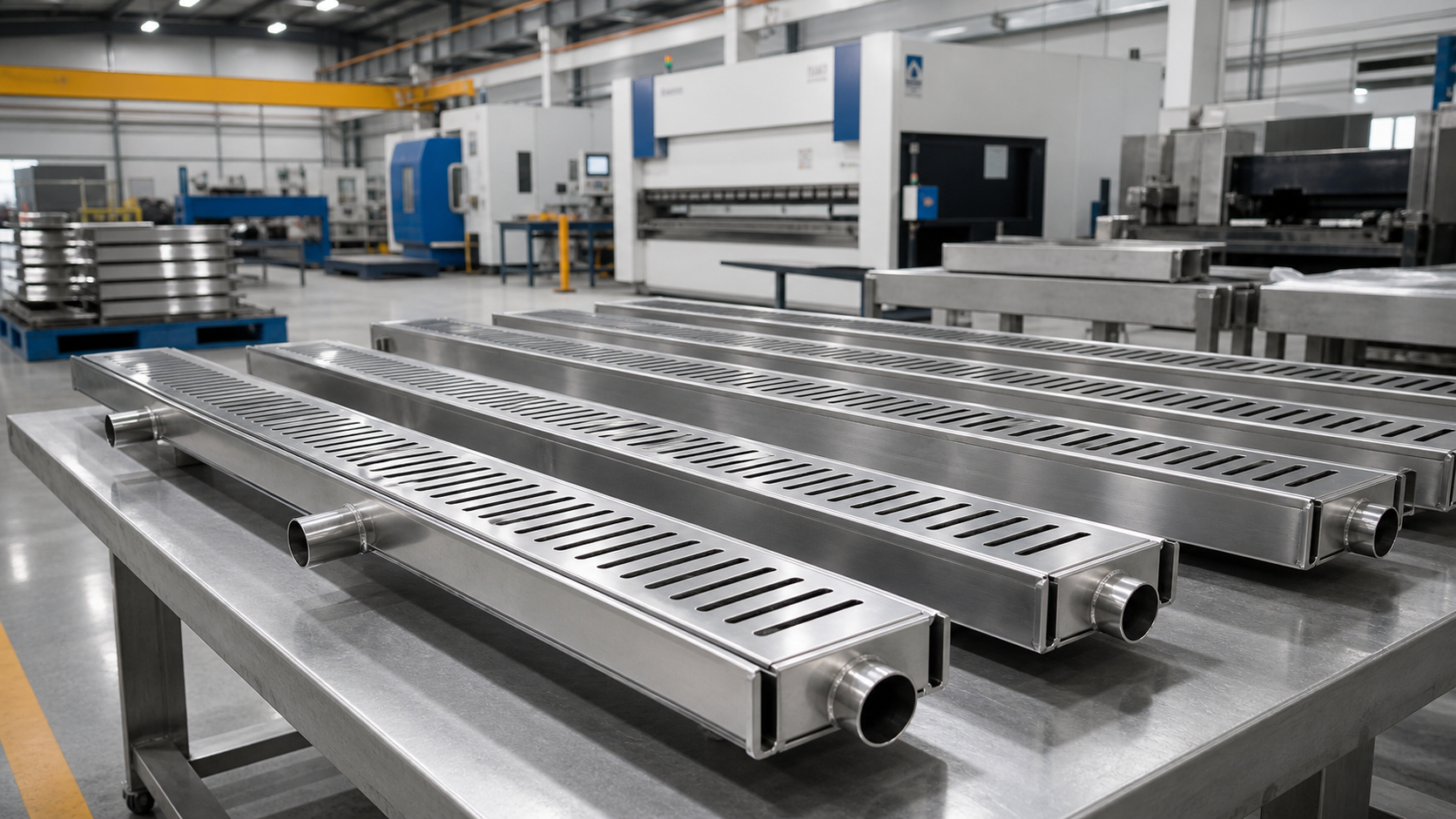
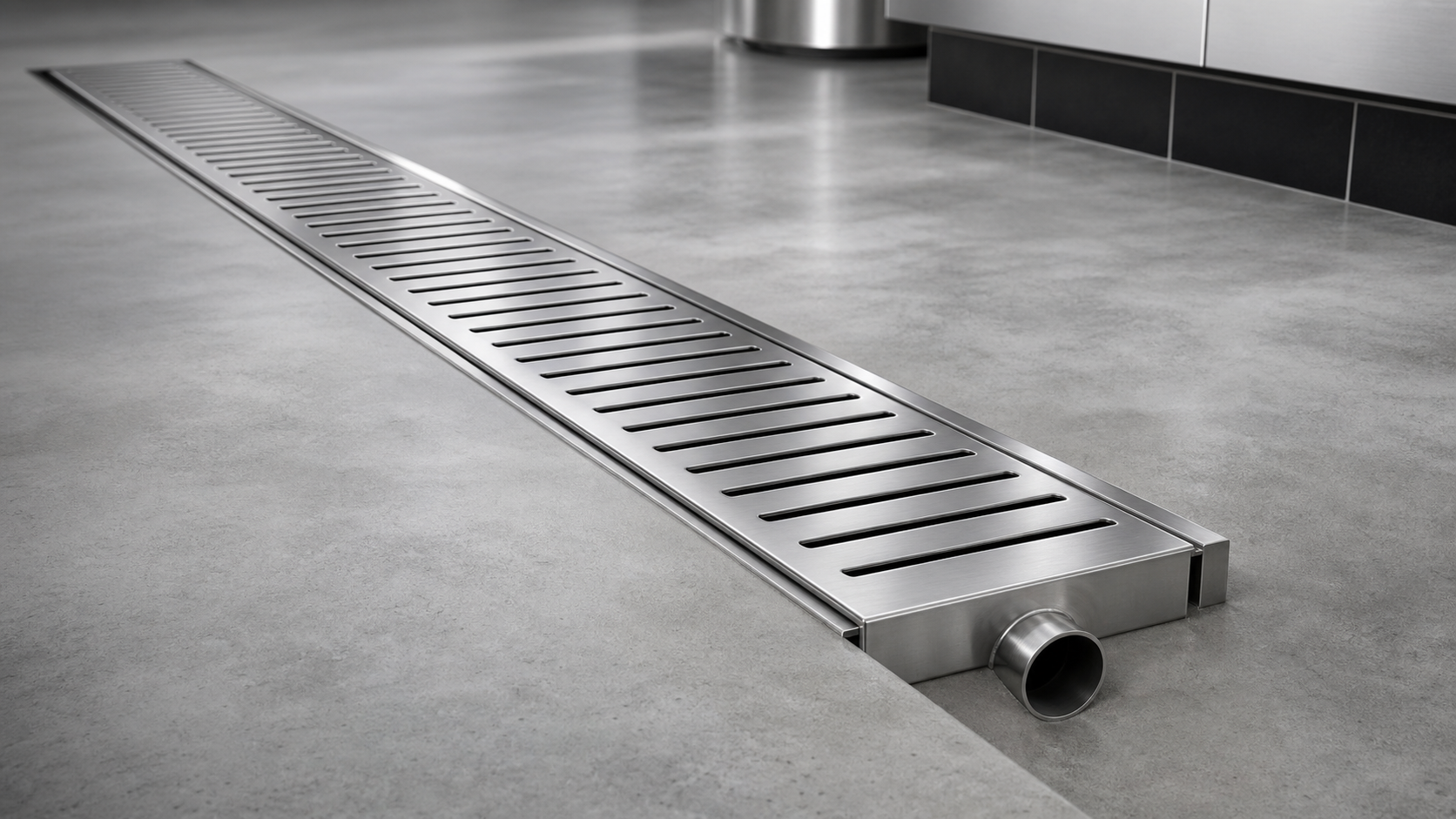
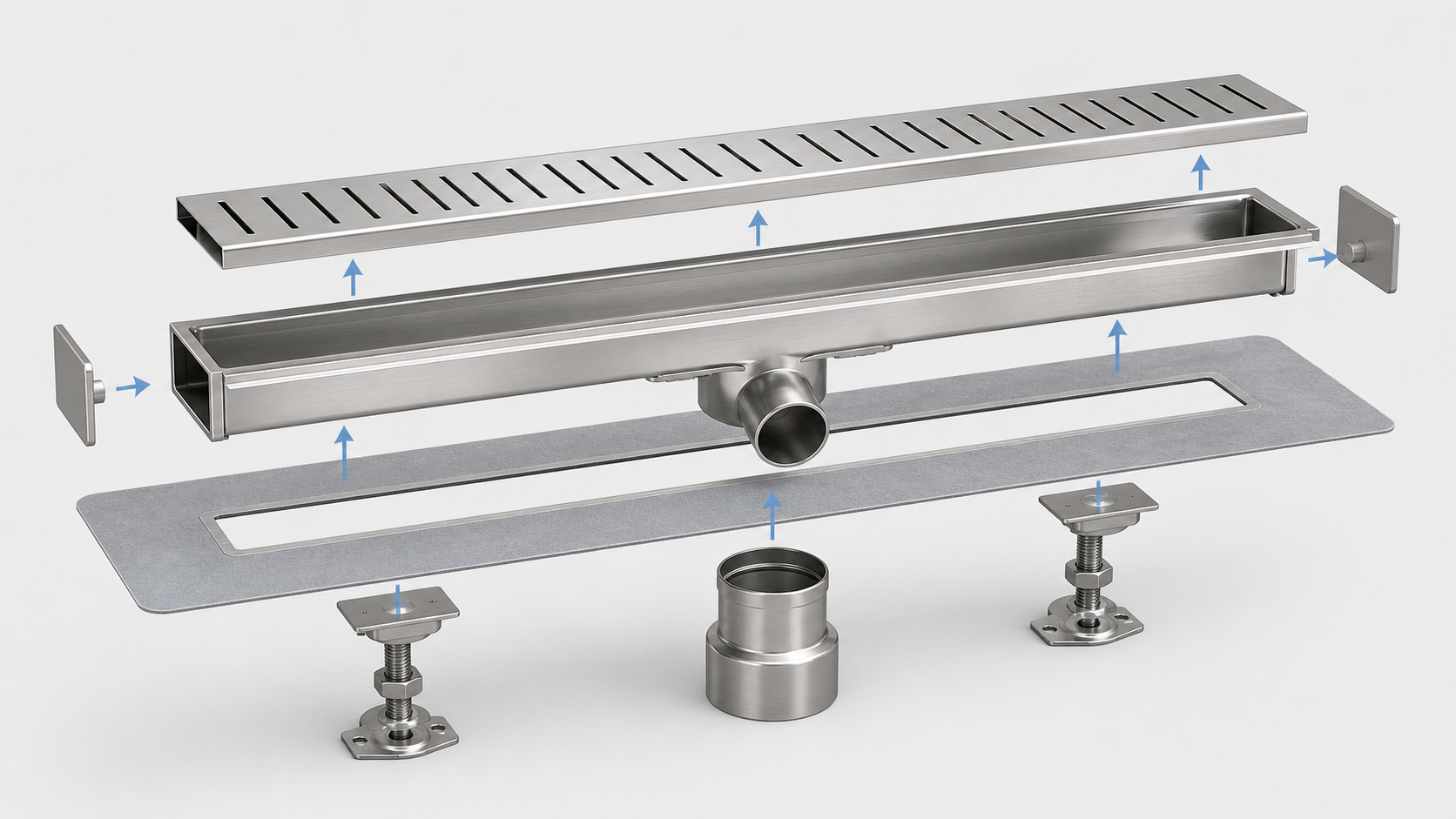
A stainless steel linear drain system is a long, narrow drainage assembly installed flush with the finished floor. It collects water along a channel and directs it to one or more outlets. The system normally includes a drain channel, grating or cover, outlet, end caps, leveling supports, and sometimes waterproofing flanges or anchoring features.
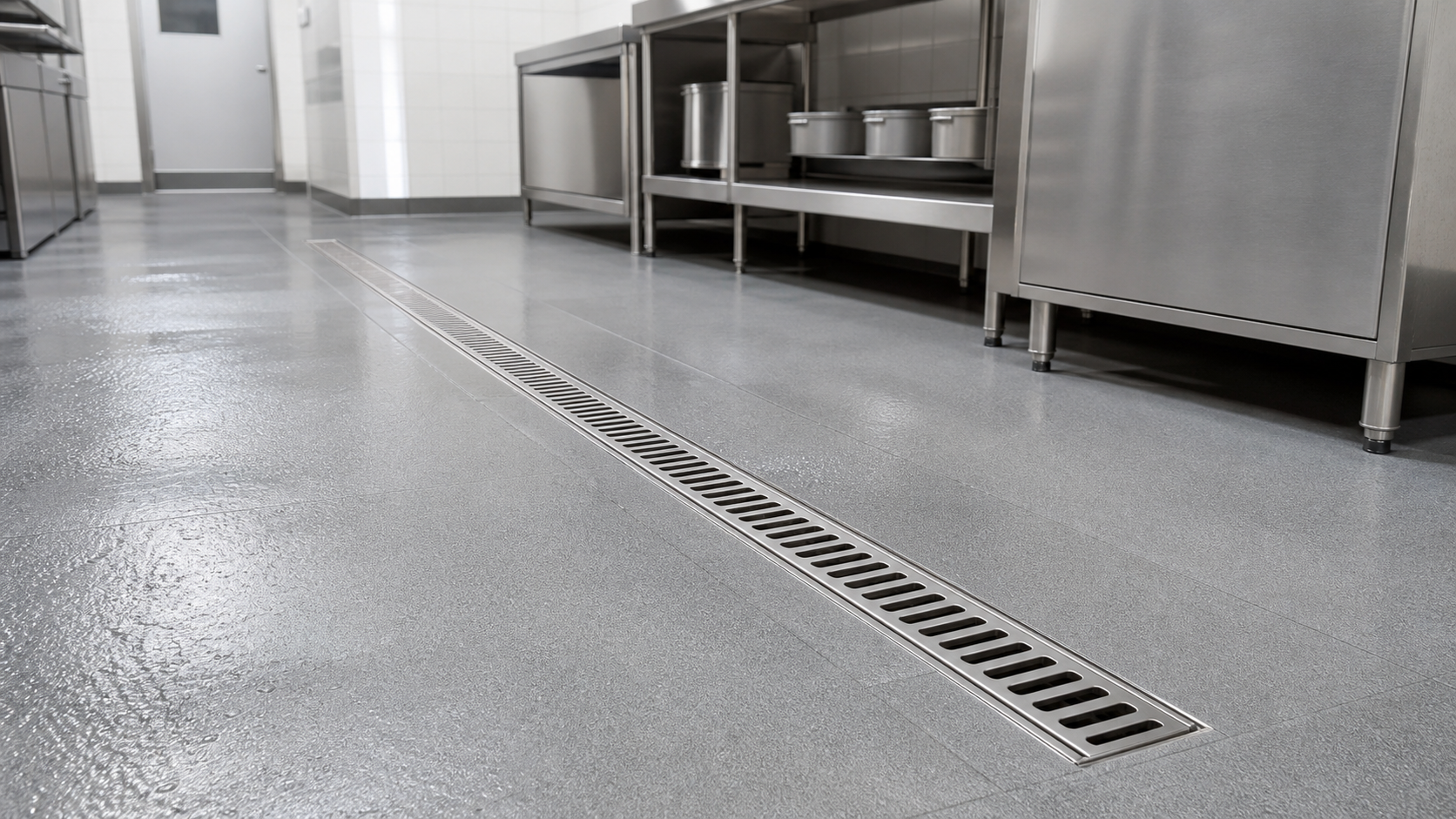
Linear drains are common in commercial bathrooms, hotel showers, kitchens, swimming pool areas, balconies, terraces, food processing zones, industrial workshops, and public infrastructure. Their main advantages are efficient water capture, easier cleaning, a cleaner architectural line, and flexible placement along walls, thresholds, equipment rows, or traffic paths.
Main Components
Drain Channel
The drain channel is the body of the system. It must hold water without deformation, guide flow toward the outlet, and resist corrosion from cleaning chemicals, moisture, and site conditions. Channel depth, width, slope, wall thickness, flange design, and outlet position should be selected according to expected flow rate and installation constraints.
Grating
The grating or cover protects the channel opening and supports pedestrian or wheel loads. Common grate patterns include slot, perforated, ladder, heel-proof, tile insert, and decorative profiles. The opening area and slot geometry affect drainage speed, safety, cleanability, and visual appearance.
Outlet
The outlet connects the channel to the drainage pipe. It may be vertical, horizontal, central, side-mounted, or customized. Outlet size, pipe compatibility, removable strainer design, and welding quality are important for reducing blockage risk and supporting easy maintenance.
End Caps and Accessories
End caps close the channel and prevent leakage. Leveling feet, anchoring brackets, waterproofing flanges, strainers, and removable inspection covers may be added depending on the project. OEM buyers often customize these components to match local installation habits and regional standards.
Types of Linear Drain Systems
| Type | Best For | Key Advantages | Specification Notes |
|---|---|---|---|
| Slot drain | Architectural floors, thresholds, public spaces | Minimal visual opening, modern appearance | Requires careful cleaning access and accurate floor slope |
| Grated drain | Kitchens, workshops, pool areas, utility zones | High intake area, easy inspection, broad load options | Grate pattern must match load and safety needs |
| Tile insert drain | Hotel bathrooms, premium showers, residential projects | Concealed finish with matching floor material | Check tile thickness, waterproofing, and maintenance access |
| Heel-proof drain | Public areas, pedestrian zones, changing rooms | Improves walking safety and reduces small object entry | Opening width should meet project safety requirements |
| Heavy-duty channel drain | Industrial floors, loading areas, processing plants | Higher load capacity and larger drainage volume | Requires structural coordination and correct anchoring |
Material Selection
Material selection is one of the most important decisions in stainless steel drainage. The right grade depends on humidity, cleaning chemicals, chloride exposure, temperature, load, budget, and expected service life.
| Material | Typical Use | Strengths | Limitations |
|---|---|---|---|
| 304 stainless steel | General commercial buildings, bathrooms, kitchens with moderate chemical exposure | Good corrosion resistance, widely available, cost-effective, easy to fabricate | Less suitable for high chloride or marine environments |
| 316 stainless steel | Swimming pools, coastal projects, food facilities, chemical wash-down areas | Better pitting resistance due to molybdenum content, strong long-term durability | Higher material cost than 304 |
| Duplex stainless steel | Demanding industrial and infrastructure projects | High strength and strong chloride stress corrosion resistance | Requires careful welding and project-specific sourcing |
For OEM and export programs, material certificates, batch traceability, and clear grade marking are essential. A drain that looks acceptable at delivery can fail early if the material grade is wrong for the environment.
Manufacturing Process
A reliable stainless steel linear drain is the result of controlled manufacturing, not only raw material selection. AODSON supports stainless steel drainage projects through sheet metal fabrication, investment casting components, CNC machining, TIG welding, surface finishing, inspection, and export packaging.
Sheet Metal Fabrication
Channels and grates are often made from stainless steel sheet. Cutting, bending, forming, and punching must be controlled to avoid distortion, sharp edges, inconsistent slot spacing, and poor fit between covers and channels.
Investment Casting Components
Complex outlet parts, decorative feet, brackets, strainers, and customized accessories can be produced by precision investment casting. Casting allows more complex geometry than simple sheet metal fabrication, especially when a component needs strength, repeatability, and a refined stainless steel surface.
CNC Machining
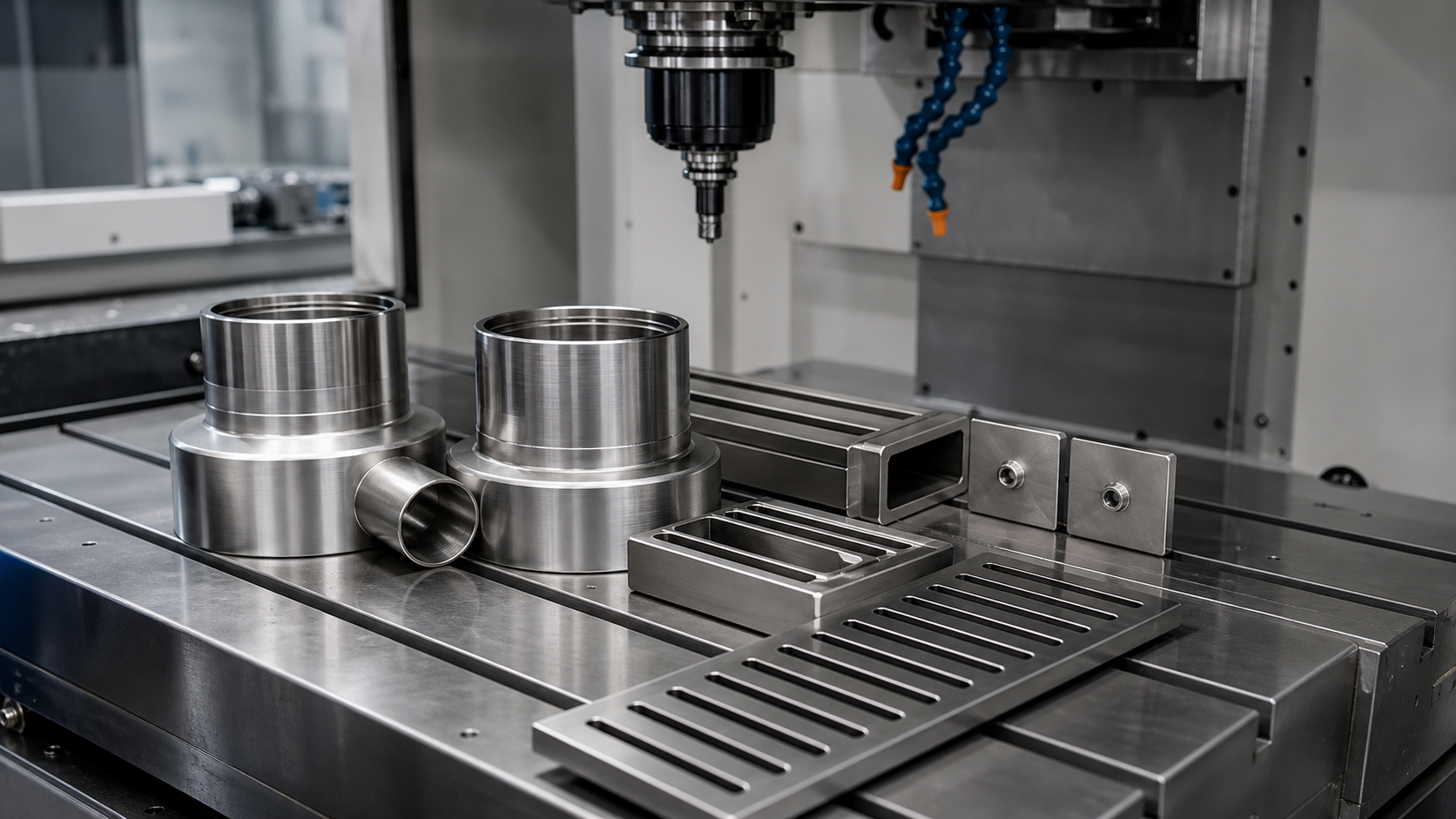
CNC machining improves dimensional control for outlets, threaded parts, custom connectors, and tolerance-sensitive components. It is especially important for OEM customers who need stable fit with existing pipe systems or branded installation kits.
TIG Welding
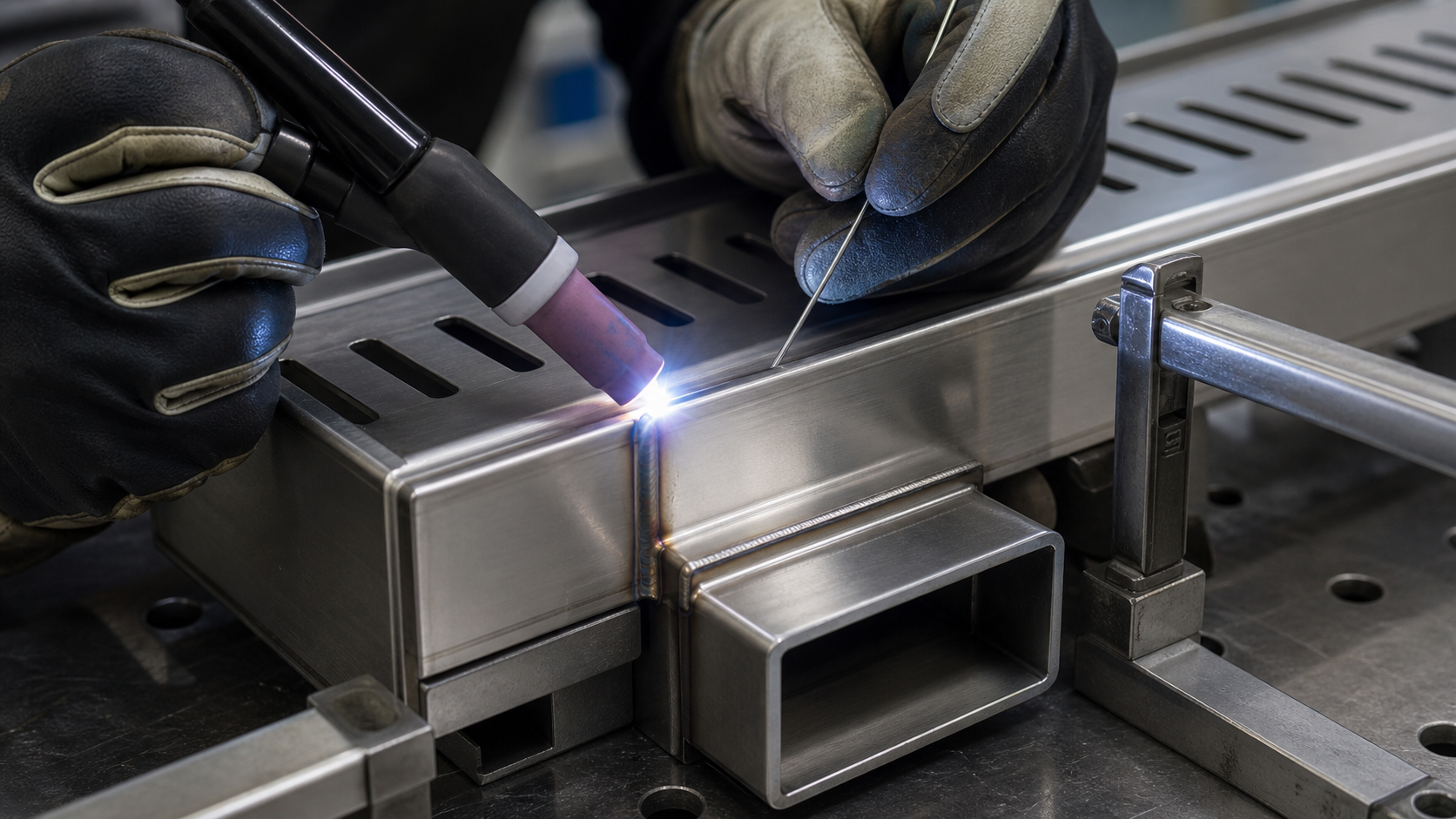
TIG welding is commonly used for stainless steel drain channels, outlets, end caps, and accessories. Good welding practice controls penetration, heat tint, distortion, and leakage risk. For hygienic applications, welds should be smooth enough to reduce contamination traps and support cleaning.
Surface Finishing
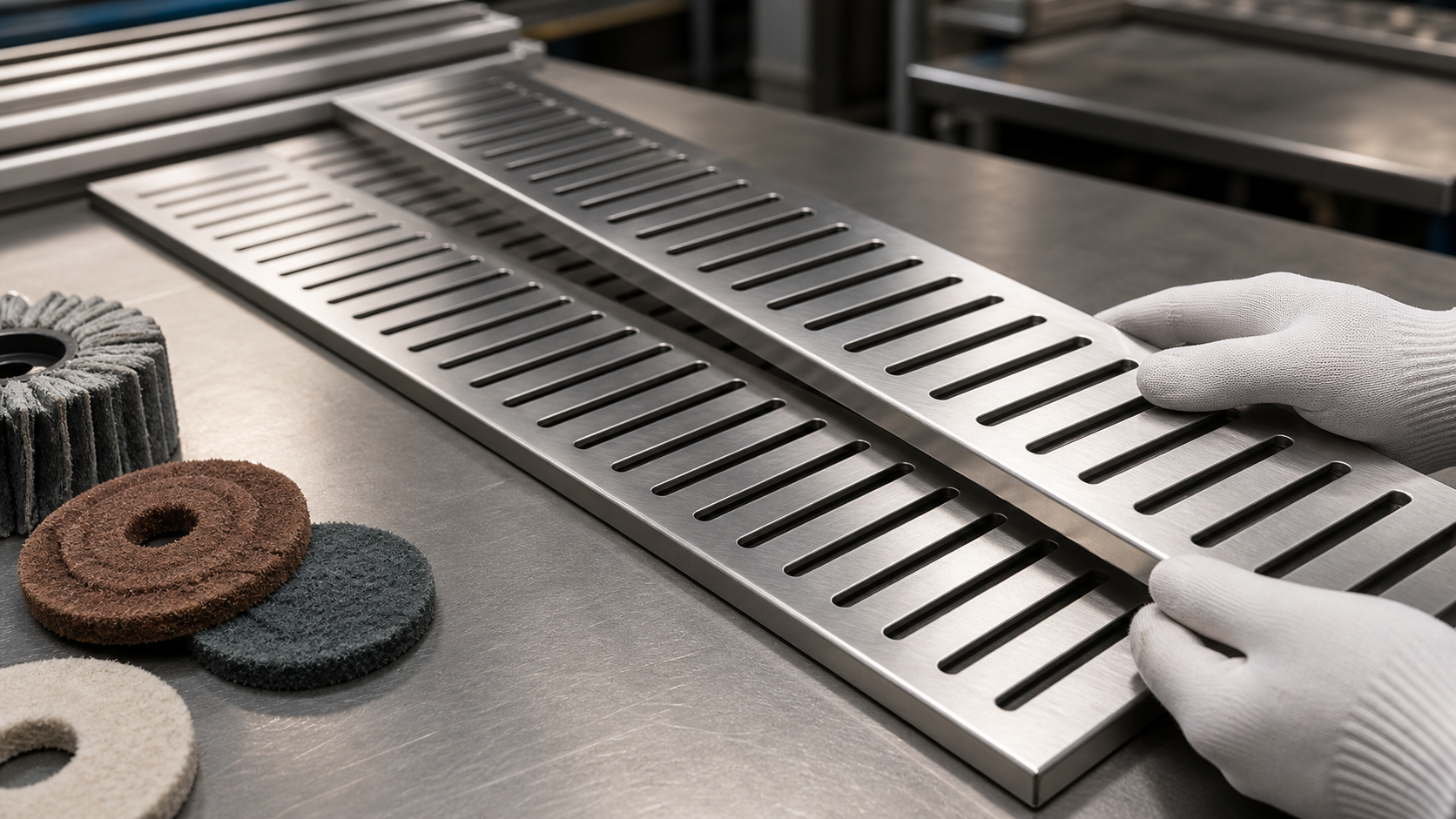
Finishing can include deburring, brushing, polishing, bead blasting, passivation, and cleaning. The finish should be chosen according to aesthetics, slip requirements, corrosion exposure, and maintenance expectations.
Surface Finish Options
| Finish | Appearance | Advantages | Common Applications |
|---|---|---|---|
| Brushed satin | Linear grain, low glare | Premium look, hides small scratches, common for architectural drains | Bathrooms, hotels, commercial interiors |
| Polished | Bright reflective surface | Decorative, easy visual inspection | Premium visible grates and accessories |
| Bead blasted | Matte uniform texture | Soft appearance, reduces reflections | Public spaces and modern interiors |
| Pickled and passivated | Clean industrial surface | Removes heat tint and improves corrosion resistance | Food, chemical, industrial drainage |
| Custom PVD or color finish | Decorative metallic tones | Matches interior design schemes | Hotel bathrooms and premium projects |
Load Classes and Drainage Standards
Load capacity must be selected according to the actual traffic over the drain. A shower drain, a hotel corridor threshold, a commercial kitchen drain, and an industrial forklift area have very different requirements. Engineers should consider grate thickness, support spacing, channel reinforcement, anchoring, floor structure, and the relevant local standard.
| Area | Typical Traffic | Recommended Design Focus | Notes |
|---|---|---|---|
| Bathrooms and showers | Barefoot and pedestrian traffic | Heel safety, clean appearance, waterproofing | Tile insert or slot designs are common |
| Commercial kitchens | Staff, carts, wash-down | Flow capacity, anti-slip grating, hygiene | Removable baskets and easy cleaning access help maintenance |
| Public buildings | Pedestrian traffic, luggage, cleaning machines | Heel-proof openings, durable grates, visual integration | Consider accessibility and maintenance frequency |
| Industrial facilities | Carts, pallet trucks, possible heavy loads | Reinforced channel, load-rated grates, anchoring | Project-specific engineering is recommended |
| Outdoor infrastructure | Weather exposure, sediment, variable loads | Corrosion resistance, debris control, drainage capacity | 316 or duplex stainless may be appropriate in chloride environments |
Typical Applications
| Application | Design Priorities | Common Specification Choices |
|---|---|---|
| Commercial buildings | Appearance, safety, maintenance | Brushed 304 or 316 stainless, heel-proof grates, concealed or slot designs |
| Hotels | Premium finish, quiet appearance, waterproofing | Tile insert drains, brushed satin grates, custom lengths |
| Commercial kitchens | Hygiene, wash-down capacity, cleanability | 316 stainless, removable grates, filter baskets, sloped channels |
| Swimming pools | Chloride resistance, barefoot safety, drainage volume | 316 stainless, anti-slip or heel-safe grates, passivated finish |
| Public infrastructure | Durability, safety, easy replacement | Load-rated grates, secure fasteners, robust channels |
| Industrial facilities | Load capacity, corrosion resistance, custom geometry | Reinforced channels, thicker grates, engineered outlets |
Installation Considerations
Even a well-manufactured drain can perform poorly if the installation is incorrect. The floor must slope toward the channel, the channel must be level or correctly sloped internally, waterproofing must connect properly to the drain body, and the outlet must match the plumbing design.
- Confirm flow rate, pipe size, and outlet position before production.
- Coordinate finished floor height, tile thickness, and drain cover height.
- Use leveling feet or supports to keep long channels straight during installation.
- Protect the drain during construction to avoid cement, grout, or debris contamination.
- Provide removable access for cleaning baskets, sediment, and maintenance inspection.
- Check compatibility with waterproofing membranes and local installation practice.
Quality Control and Material Traceability
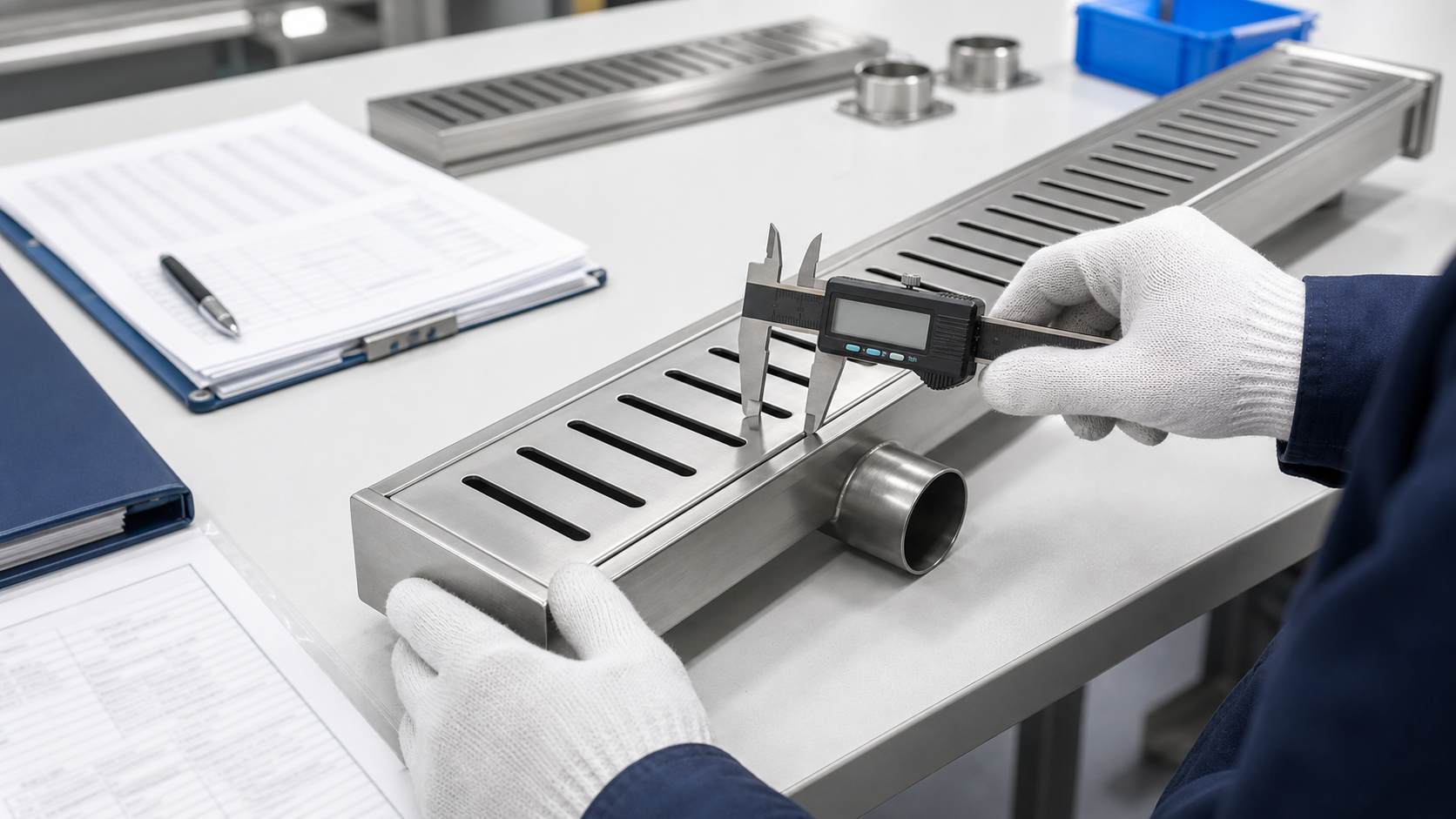
For distributors and OEM buyers, quality control should be defined before mass production. Important checks include material certificate review, dimension inspection, straightness, grate fit, weld quality, leak testing, surface finish, packaging, and consistency across batches.
| Inspection Item | What to Check | Why It Matters |
|---|---|---|
| Material grade | 304, 316, duplex certificate and batch traceability | Prevents corrosion failure in the wrong environment |
| Dimensions | Length, width, depth, outlet position, cover fit | Ensures installation compatibility |
| Welding | Leakage, penetration, distortion, heat tint | Protects water-tightness and corrosion performance |
| Surface finish | Grain direction, scratches, burrs, passivation | Improves appearance, safety, and cleanability |
| Load behavior | Grate thickness, support spacing, deformation risk | Reduces field failure in traffic areas |
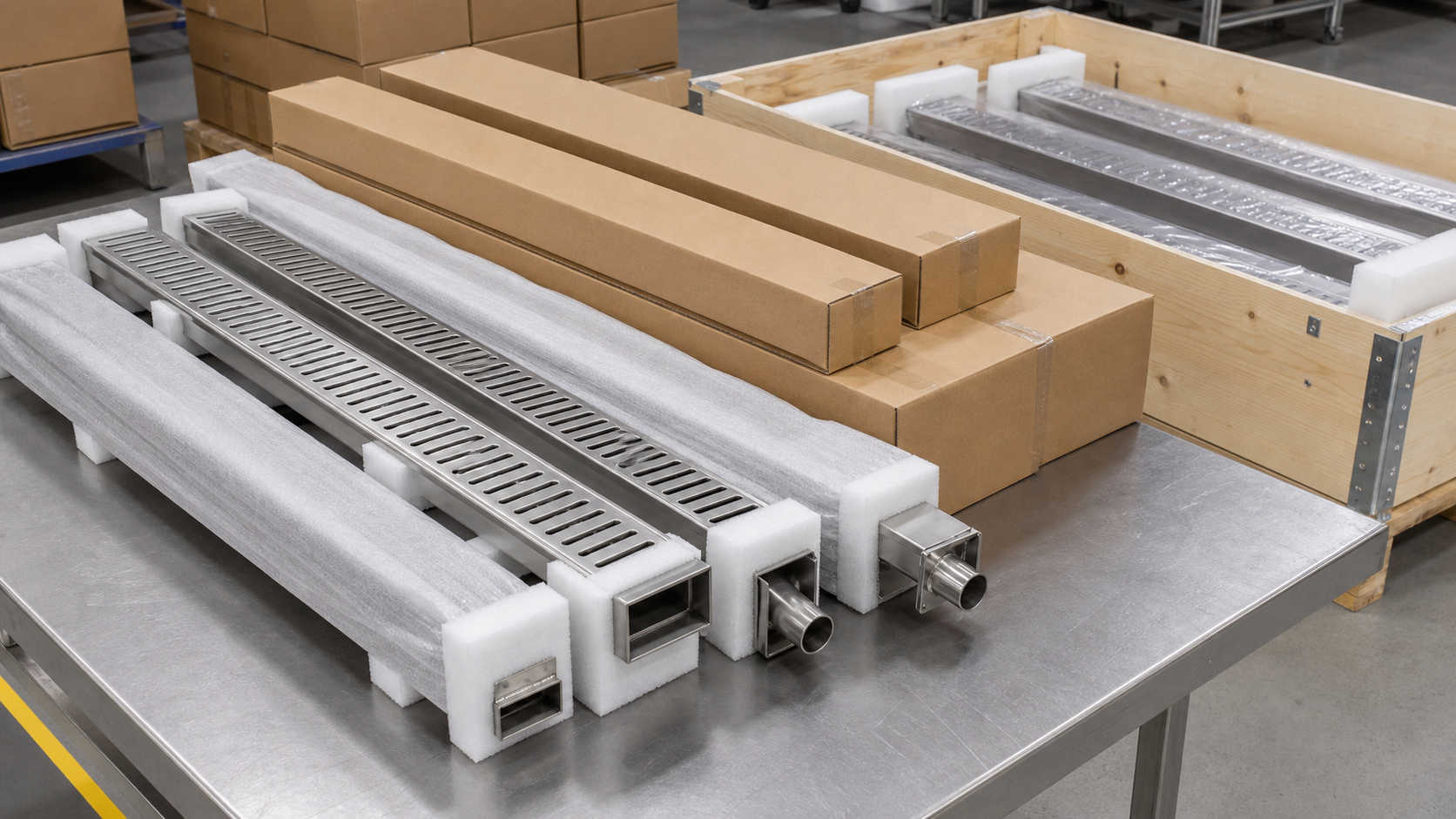
| Packaging | Protection, carton strength, labeling, export handling | Prevents transit damage and installation delays |
Why Choose AODSON as Your OEM Manufacturing Partner
AODSON manufactures stainless steel components and drainage-related products for customers who need stable engineering support, controlled production, and reliable export supply. For stainless steel linear drain projects, we can support product development from drawing review and material selection to fabrication, investment casting, CNC machining, TIG welding, surface finishing, inspection, and packaging.
- OEM and custom manufacturing for stainless steel drainage systems and related parts.
- Experience with linear drain, architectural hardware, and stainless steel fabricated products.
- Support for 304, 316, and project-specific stainless steel grades.
- Manufacturing options including sheet metal fabrication, casting, machining, welding, polishing, and passivation.
- Quality control with dimensional checks, surface inspection, material traceability, and export packaging review.
- Engineering communication for distributors, contractors, project buyers, and branded OEM programs.
Frequently Asked Questions
What is the main advantage of a linear drain compared with a point drain?
A linear drain collects water along a longer line, which can simplify floor slope design and improve drainage coverage. It is also preferred in many architectural projects because it creates a cleaner visual line than a central point drain.
Is 304 stainless steel enough for a linear drain?
304 stainless steel is suitable for many indoor commercial and residential environments. For swimming pools, coastal sites, food processing, or high-chloride cleaning conditions, 316 stainless steel is usually a safer choice.
When should I specify 316 stainless steel?
Specify 316 stainless steel when the drain will face chloride, salt, aggressive cleaning chemicals, outdoor exposure, or strict hygiene requirements. It offers better pitting resistance than 304 stainless steel.
Can stainless steel linear drains be customized?
Yes. Length, width, channel depth, outlet position, grate pattern, surface finish, material grade, filter basket, and installation accessories can be customized for OEM and project requirements.
What grate type is best for public pedestrian areas?
Heel-proof grates or narrow slot designs are often preferred for pedestrian areas. The exact opening size should be checked against local safety requirements and the expected traffic conditions.
How do I choose the right outlet size?
Outlet size depends on expected water volume, channel length, pipe capacity, slope, and local plumbing design. For high-flow areas, engineers should calculate drainage demand rather than selecting by appearance alone.
Why does welding quality matter in linear drains?
Welding affects leakage resistance, channel straightness, corrosion behavior, and appearance. Poor welding can create distortion, crevices, heat tint, or weak joints that reduce service life.
What surface finish is easiest to maintain?
Brushed satin stainless steel is a common choice because it looks premium and hides small handling marks better than mirror-polished surfaces. Industrial and hygienic applications may also require passivation after welding and finishing.
Can AODSON manufacture linear drains from customer drawings?
Yes. AODSON can review customer drawings, confirm manufacturability, recommend material and process options, and produce custom stainless steel drainage products for OEM and project buyers.
What information should I provide for a quotation?
Please provide drawings or sketches, material grade, dimensions, outlet requirements, grate type, surface finish, load requirement, quantity, packaging expectations, and application environment. You can start through the request a quote page or contact AODSON directly.
Conclusion
A stainless steel linear drain system is a technical product that must balance drainage performance, corrosion resistance, load capacity, cleanability, appearance, and installation reliability. The best result comes from matching the material, grate type, channel structure, outlet design, welding process, surface finish, and inspection plan to the actual project environment.
For OEM buyers, distributors, and project teams, AODSON can help turn stainless steel drainage requirements into manufacturable products with stable quality and export-ready packaging.