




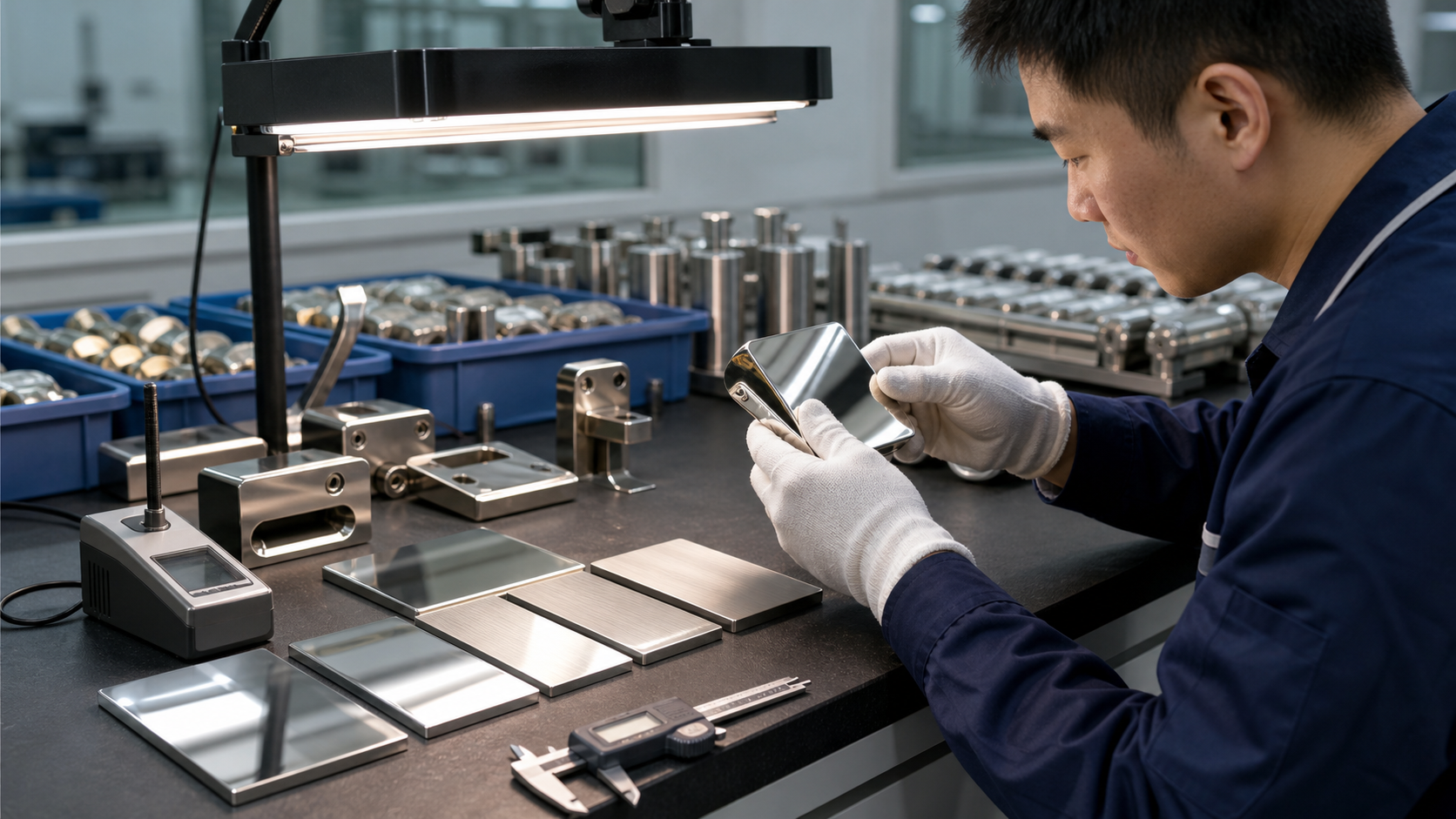
Surface finish is one of the first things people notice on stainless steel architectural hardware. A glass clamp, door handle, handrail bracket or balustrade connector may be dimensionally correct, but if the finish does not match the building environment, it can look wrong, show scratches too easily or create maintenance problems.
Mirror polish and satin finish are two of the most common options for stainless steel architectural hardware. Both can be premium finishes when produced correctly, but they serve different design goals. Mirror polish emphasizes reflection and visual impact. Satin finish emphasizes controlled grain, understated appearance and practical handling.
AODSON manufactures stainless steel architectural hardware through precision casting, CNC machining, surface polishing and quality control. This article compares mirror polish and satin finish from an engineering and procurement perspective, so architects, contractors, distributors and OEM buyers can specify the right surface for the right project.
What Is Mirror Polish?
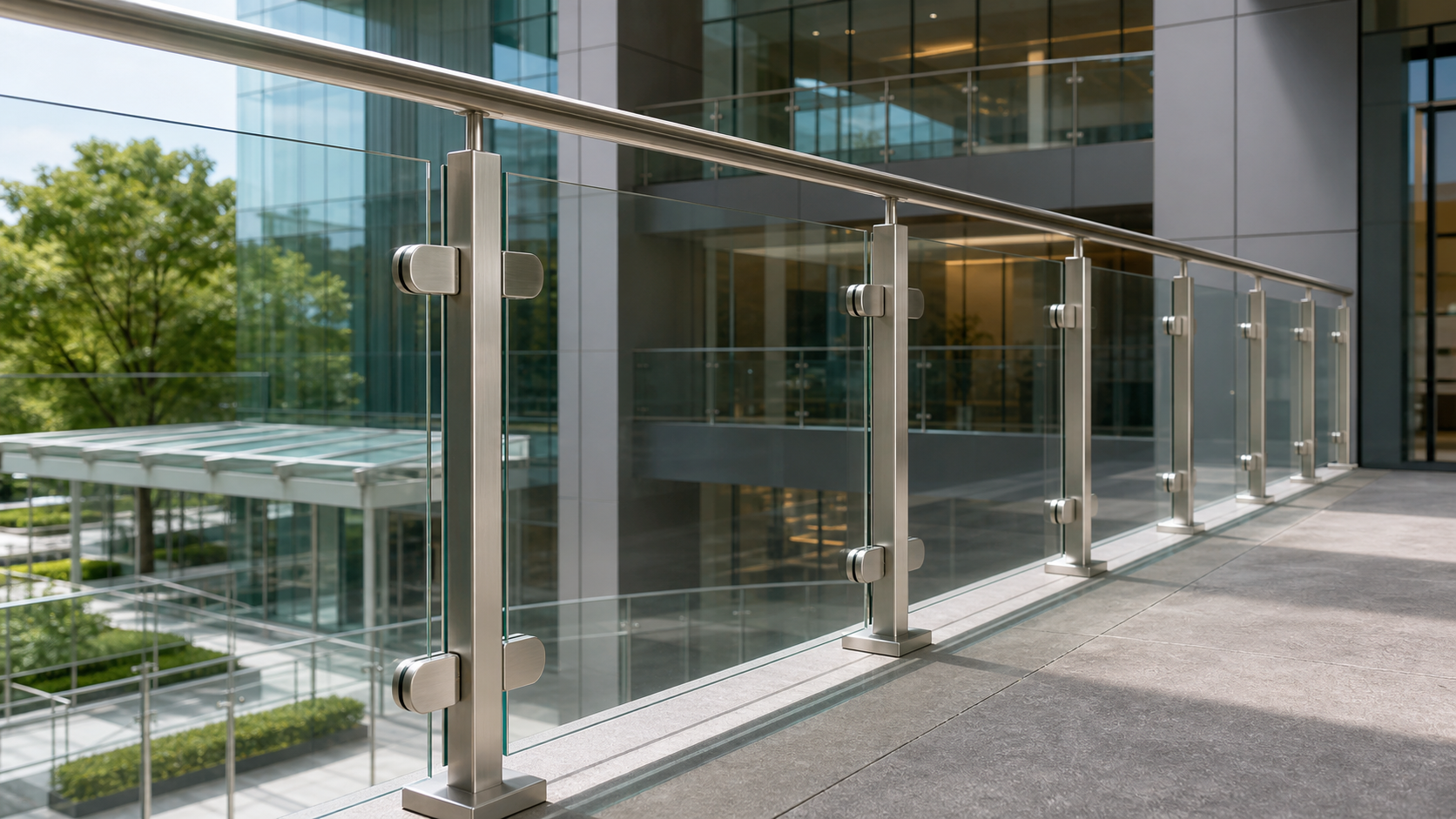
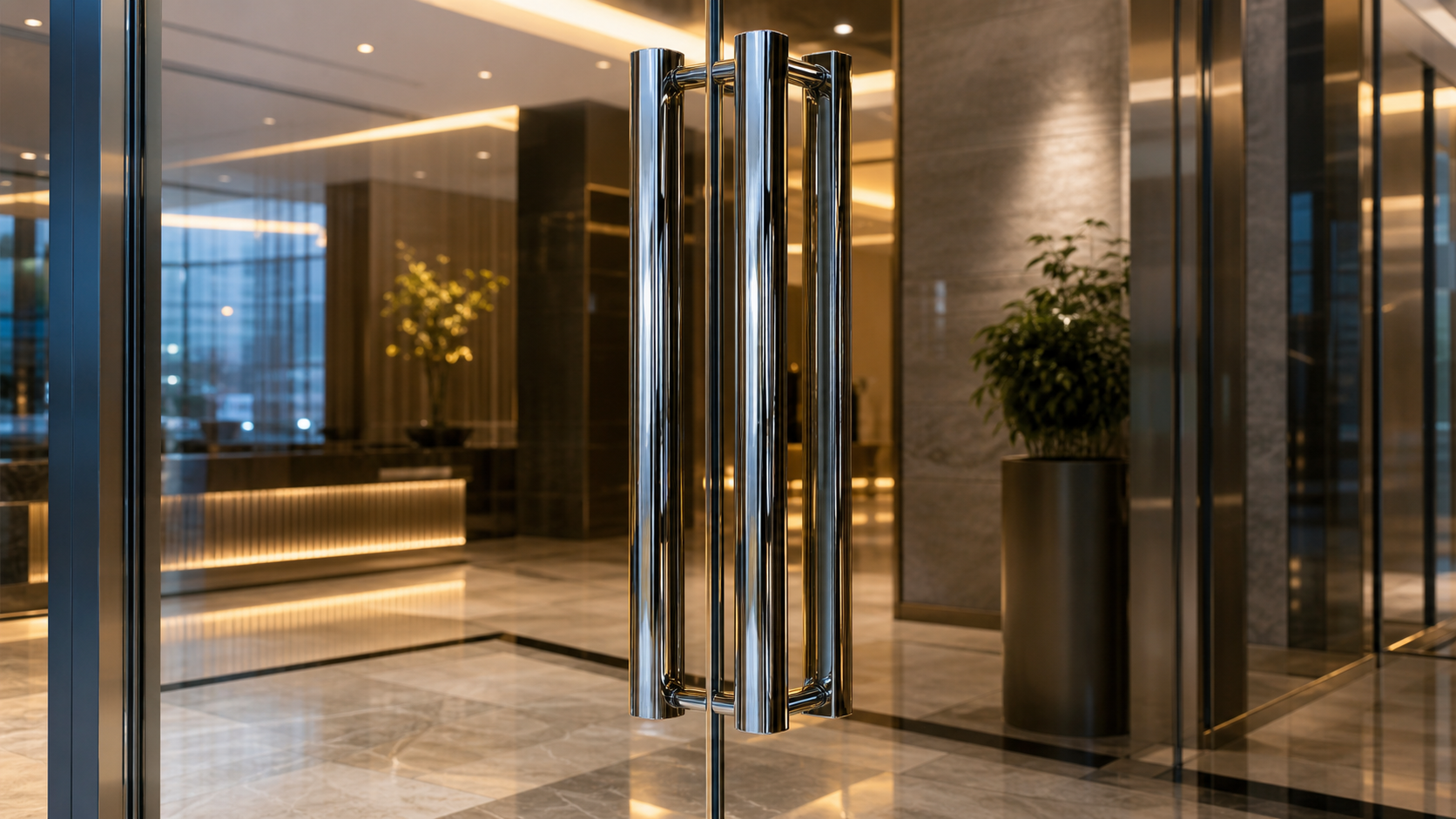
Mirror polish is a high-reflectivity stainless steel finish created by progressive grinding, polishing and buffing. The process removes surface scratches and reduces visible roughness until the surface reflects light clearly. It is often used for luxury door handles, decorative glass fittings, premium handrail details and high-end interior hardware.
The attraction of mirror polish is obvious: it looks bright, refined and expensive. The challenge is that the finish is unforgiving. Small pits, waves, scratches, polishing direction changes and handling marks can be highly visible. For cast or machined stainless parts, the polishing team must remove surface defects without distorting edges, threads, screw seats or functional faces.
What Is Satin Finish?
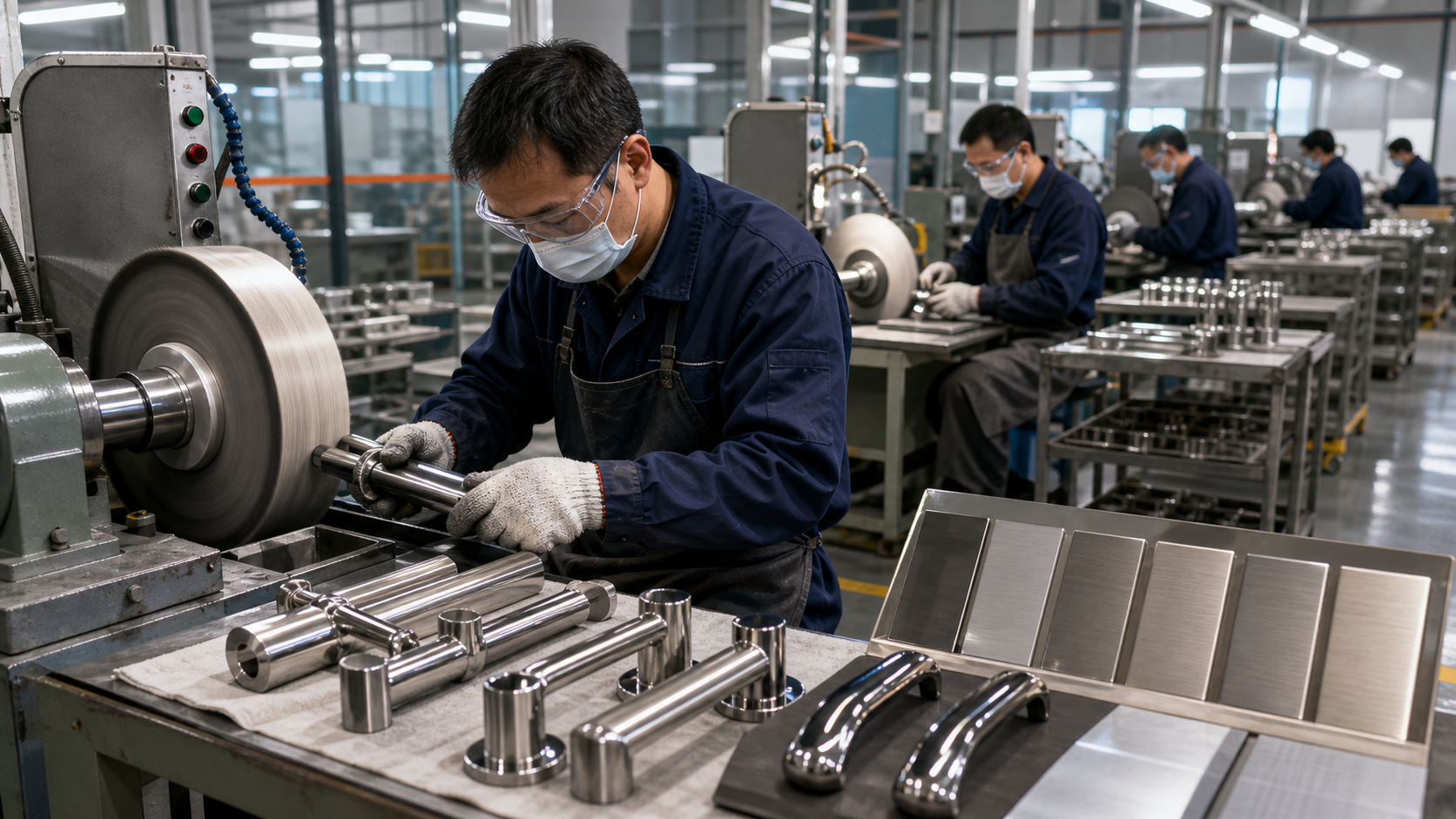
Satin finish, often called brushed finish, uses abrasive belts or wheels to create a controlled linear grain on stainless steel. It is less reflective than mirror polish and is commonly used in commercial buildings, glass railings, handrail systems, hotels, office interiors and frequently touched hardware.
The main advantage of satin finish is practicality. It gives stainless steel a consistent architectural look while hiding minor fingerprints, light handling marks and small scratches better than mirror polish. The key control point is grain consistency: direction, roughness and edge blending must be uniform across the full batch.
Manufacturing Process Comparison
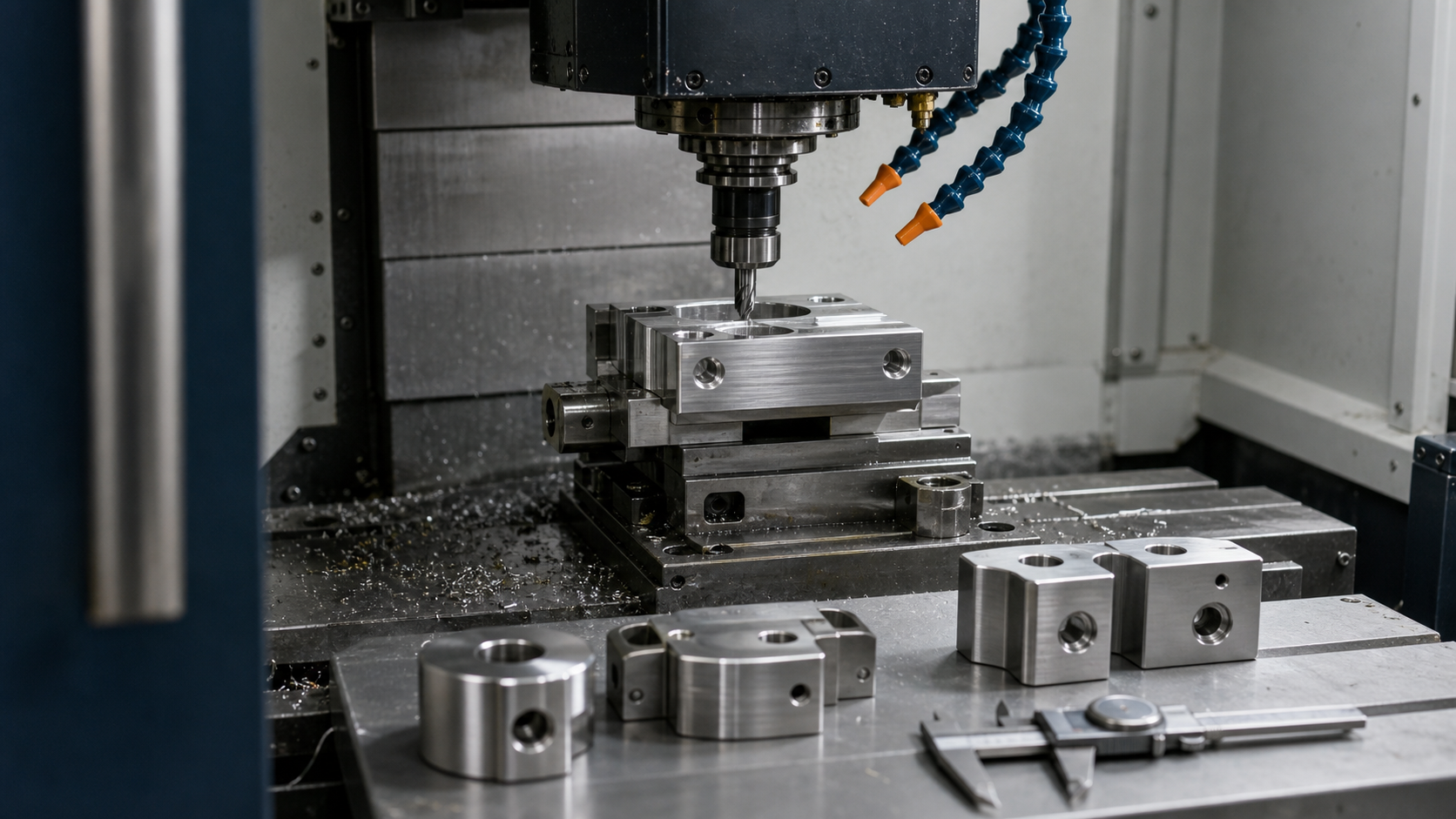
Mirror polish and satin finish both start with a good base surface. If casting defects, deep machining marks, weld discoloration or burrs remain, the final finish will expose those problems. The surface process therefore begins before polishing: casting quality, CNC machining, grinding allowance and handling control all matter.
| Step | Mirror Polish | Satin Finish | Control Point |
|---|---|---|---|
| Base preparation | Requires careful removal of pits, tool marks and casting defects | Requires clean surface and consistent pre-grinding | Do not leave defects for final polishing to hide |
| Abrasive sequence | Progressively finer grinding and buffing | Controlled brushing to target grain | Follow a repeatable process for each batch |
| Edge control | Edges can become rounded if over-polished | Edges must blend with grain direction | Protect functional faces and sharp design lines |
| Inspection | Checks reflection, waves, scratches and pits | Checks grain direction, roughness and uniformity | Use consistent lighting and acceptance samples |
| Handling | Needs strong scratch and fingerprint control | More forgiving but still needs protection | Use protective film or separated packaging |
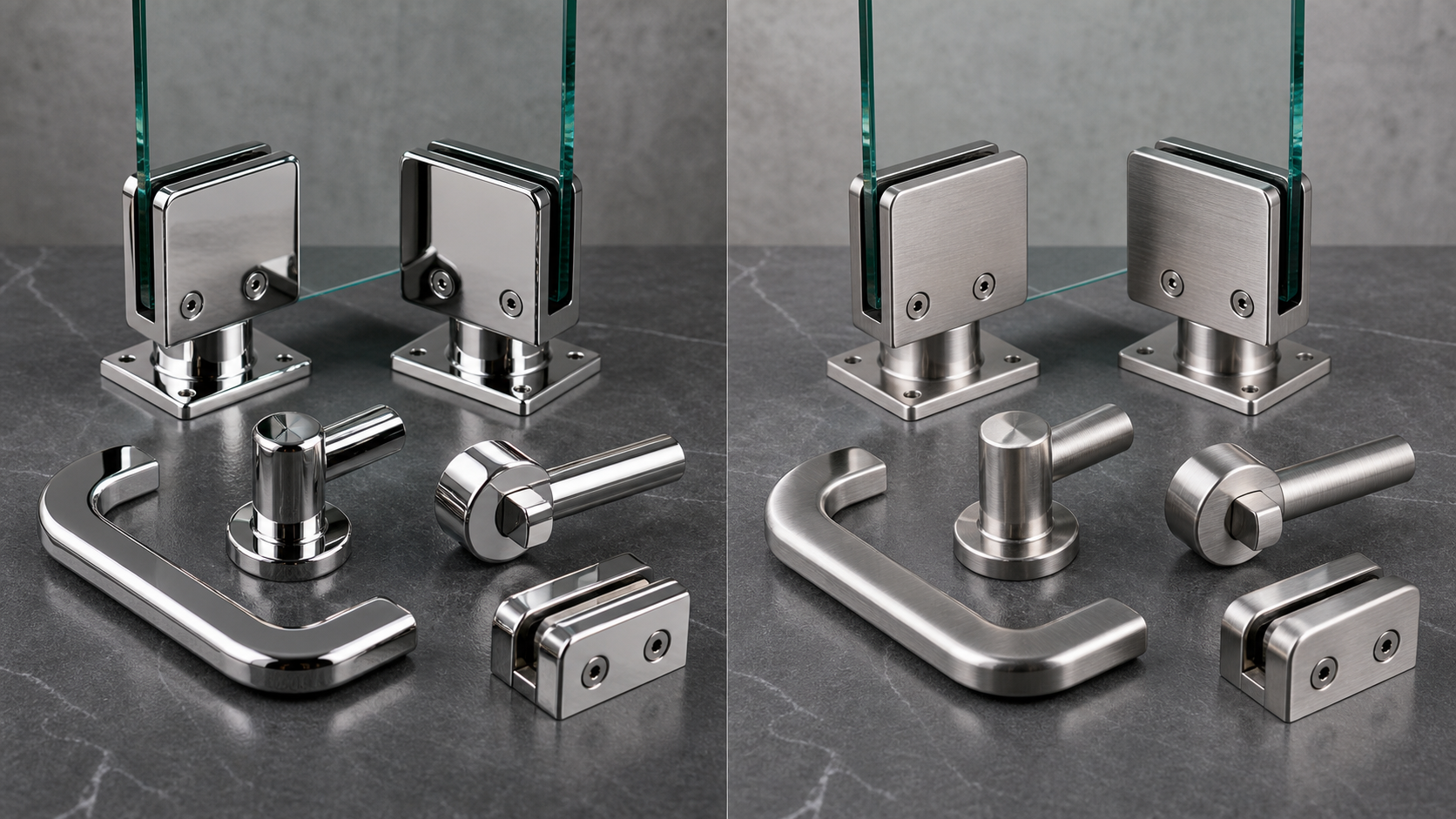
CNC machining is especially important for functional surfaces. Threads, mounting faces, countersinks and gasket interfaces must remain accurate after finishing. AODSON’s CNC machining capability helps control the geometry before polishing begins.
Appearance Comparison
The most important difference is visual intent. Mirror polish reflects surrounding materials and lighting. Satin finish absorbs more light and presents a softer, directional grain. In a bright hotel lobby, mirror polish may feel premium. In a busy commercial staircase, satin finish may look cleaner for longer.
| Factor | Mirror Polish | Satin Finish |
|---|---|---|
| Visual character | Bright, reflective, decorative | Soft, brushed, technical |
| Best design language | Luxury interiors, decorative entrances, premium handles | Modern commercial buildings, railings, practical public spaces |
| Fingerprints | More visible | Less visible |
| Lighting sensitivity | Highly sensitive to reflected light and surface waves | More stable under varied lighting |
| Batch matching | Requires close reflection and polish consistency | Requires consistent grain direction and roughness |
Corrosion Resistance
Surface finish can influence corrosion behavior, but it does not replace material selection. Stainless steel corrosion resistance comes mainly from alloy chemistry and the chromium-rich passive layer. A clean, smooth surface can help reduce dirt and chloride retention, but a poorly selected grade can still stain or corrode in aggressive environments.
For indoor dry spaces, 304 stainless steel with satin or mirror finish may be suitable. For outdoor, humid or coastal projects, 316 stainless steel is usually preferred. For severe exposure or high-strength requirements, duplex 2205 may be considered. See 304 vs 316 Stainless Steel Architectural Hardware for more grade selection detail.
Scratch Resistance and Maintenance
Mirror polish is visually sensitive. It can show fine scratches, fingerprints and cleaning marks quickly, especially on frequently touched hardware. Satin finish does not prevent scratching, but its grain can hide small marks and make maintenance easier in high-traffic areas.
| Maintenance Factor | Mirror Polish | Satin Finish | Practical Recommendation |
|---|---|---|---|
| Fingerprints | Highly visible | Moderately visible | Use satin for high-touch public hardware unless mirror appearance is essential |
| Fine scratches | Easy to see under light | Often blends with grain | Specify satin for busy railings and handles |
| Cleaning | Requires soft cloth and careful method | More forgiving but should follow grain direction | Avoid abrasive cleaners unless approved |
| Site repair | Difficult to restore perfectly | Minor marks can sometimes be re-brushed | Approve repair method before use |
| Packaging sensitivity | Very high | Medium to high | Separate finished parts and protect visible faces |
Cost Comparison
Mirror polish generally costs more than satin finish because it requires more polishing stages, more defect removal, higher inspection sensitivity and more careful packaging. Satin finish is often more economical and faster to produce, especially for large batches of railings, glass clamps and handrail fittings.
| Cost and Performance Factor | Mirror Polish | Satin Finish |
|---|---|---|
| Polishing labor | Higher | Moderate |
| Defect rejection risk | Higher because small flaws are visible | Lower when grain is controlled |
| Packaging cost | Higher due to scratch sensitivity | Moderate but still needs protection |
| Public-use practicality | Best for controlled premium areas | Better for high-traffic commercial areas |
| Premium visual impact | Very high | High but understated |
Best Applications for Each Finish
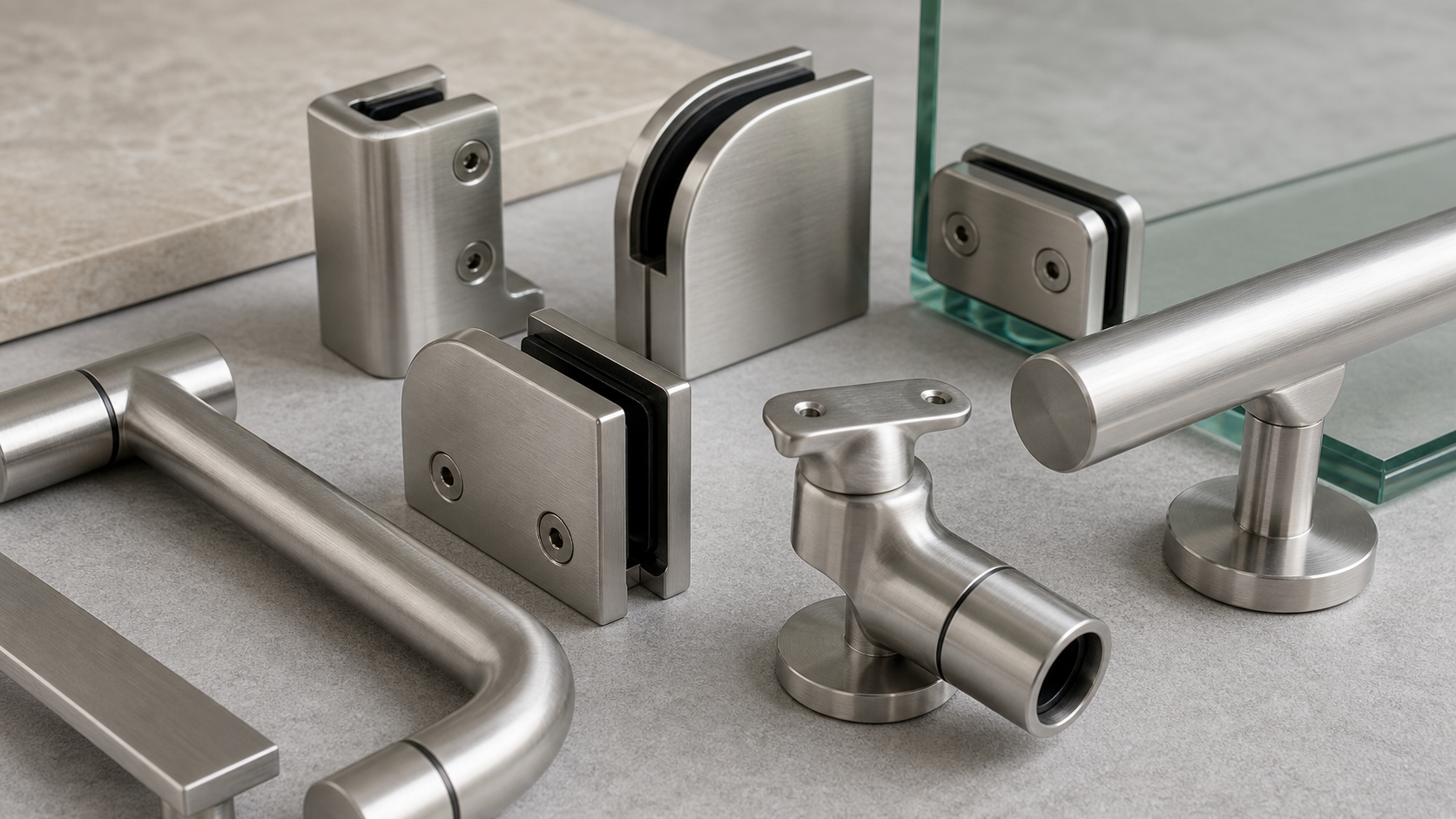
Choosing the finish should begin with the application. Door handles, glass clamps, handrail brackets and balustrade components are used differently, touched differently and maintained differently.
| Application | Recommended Finish | Reason |
|---|---|---|
| Luxury hotel door handles | Mirror polish or high-end satin | Premium appearance and tactile quality |
| Commercial glass railings | Satin finish | Practical maintenance and consistent architectural look |
| Decorative glass clamps | Mirror polish or satin depending on design | Mirror for visual impact, satin for daily use |
| Office handrail brackets | Satin finish | Hides fingerprints and minor scratches |
| Retail display hardware | Mirror polish | Bright, premium and product-focused appearance |
| Outdoor balcony fittings | Satin finish on 316 stainless steel | Maintenance practicality and corrosion-resistant material choice |
Material Selection: 304, 316 and Duplex 2205
The finish should be specified together with the stainless steel grade. A mirror-polished 304 part is still 304; it does not become suitable for every coastal or chloride-rich environment. Likewise, satin finish on 316 stainless steel can be a strong choice for exterior architectural hardware when properly processed and maintained.
| Material | Typical Finish Pairing | Best Use | Notes |
|---|---|---|---|
| 304 stainless steel | Mirror or satin | Indoor dry interiors and mild environments | Good cost-performance but limited chloride resistance |
| 316 stainless steel | Satin, mirror or passivated finish | Outdoor, humid and coastal architectural hardware | Preferred for many exposed building applications |
| Duplex 2205 | Satin or project-specific finish | High-strength or severe-corrosion applications | Requires careful manufacturing and finishing control |
For investment cast parts, material and finish planning should be included during DFM review. AODSON’s article Investment Casting for Architectural Hardware explains how casting, machining and finishing connect in the manufacturing route.
Quality Inspection Standards
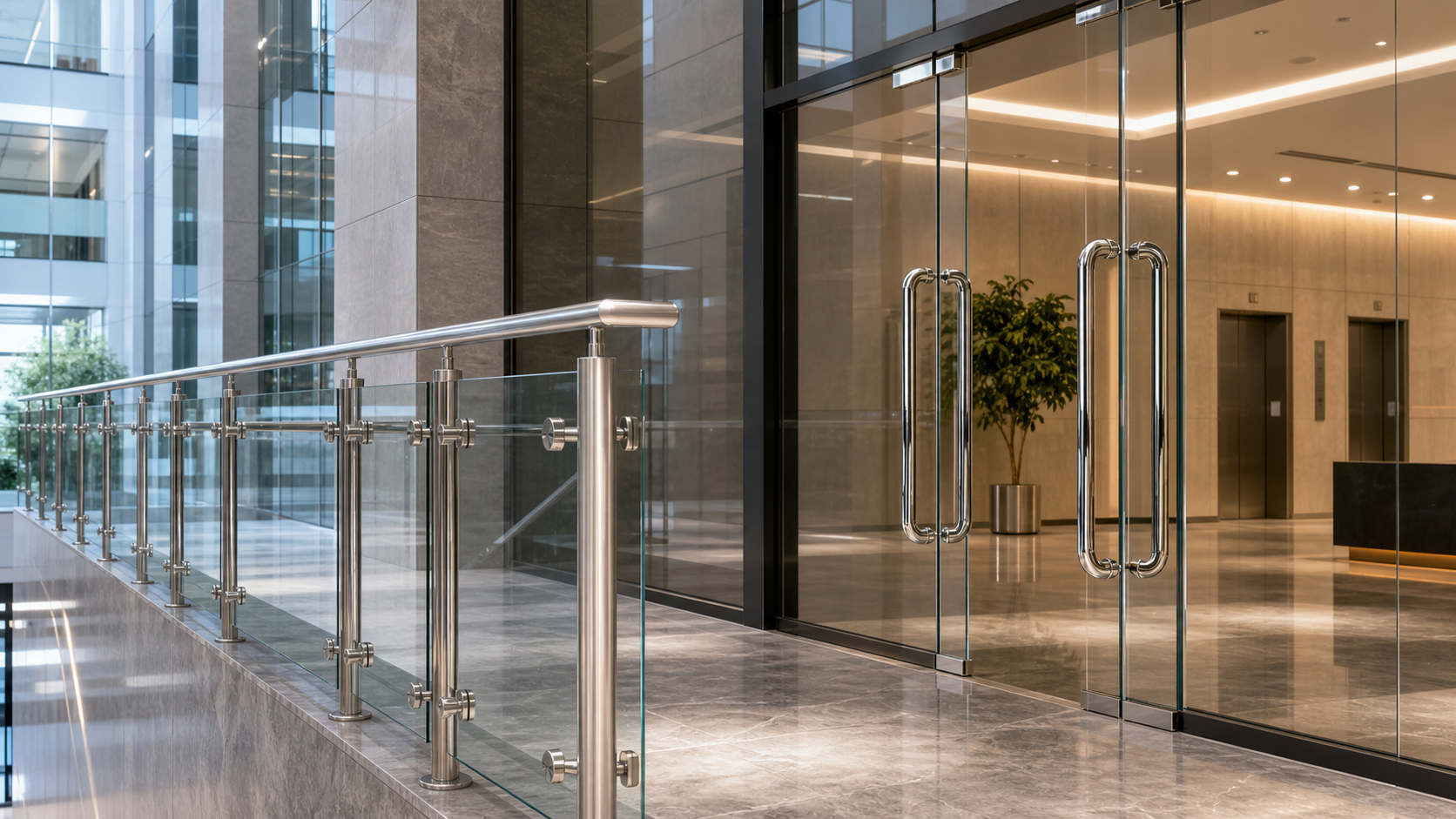
Surface inspection should be based on agreed samples and measurable requirements where possible. For mirror polish, inspectors look for scratches, pits, orange peel, waves, uneven buffing and reflected distortion. For satin finish, inspectors focus on grain direction, roughness, color consistency, scratches and transition areas.
Inspection can include visual comparison under controlled lighting, roughness measurement, dimensional checks after polishing, thread and fit inspection, material certificate review and packaging verification. AODSON’s quality control process helps align the final finish with drawings, samples and customer requirements.
How AODSON Produces Premium Surface Finishes
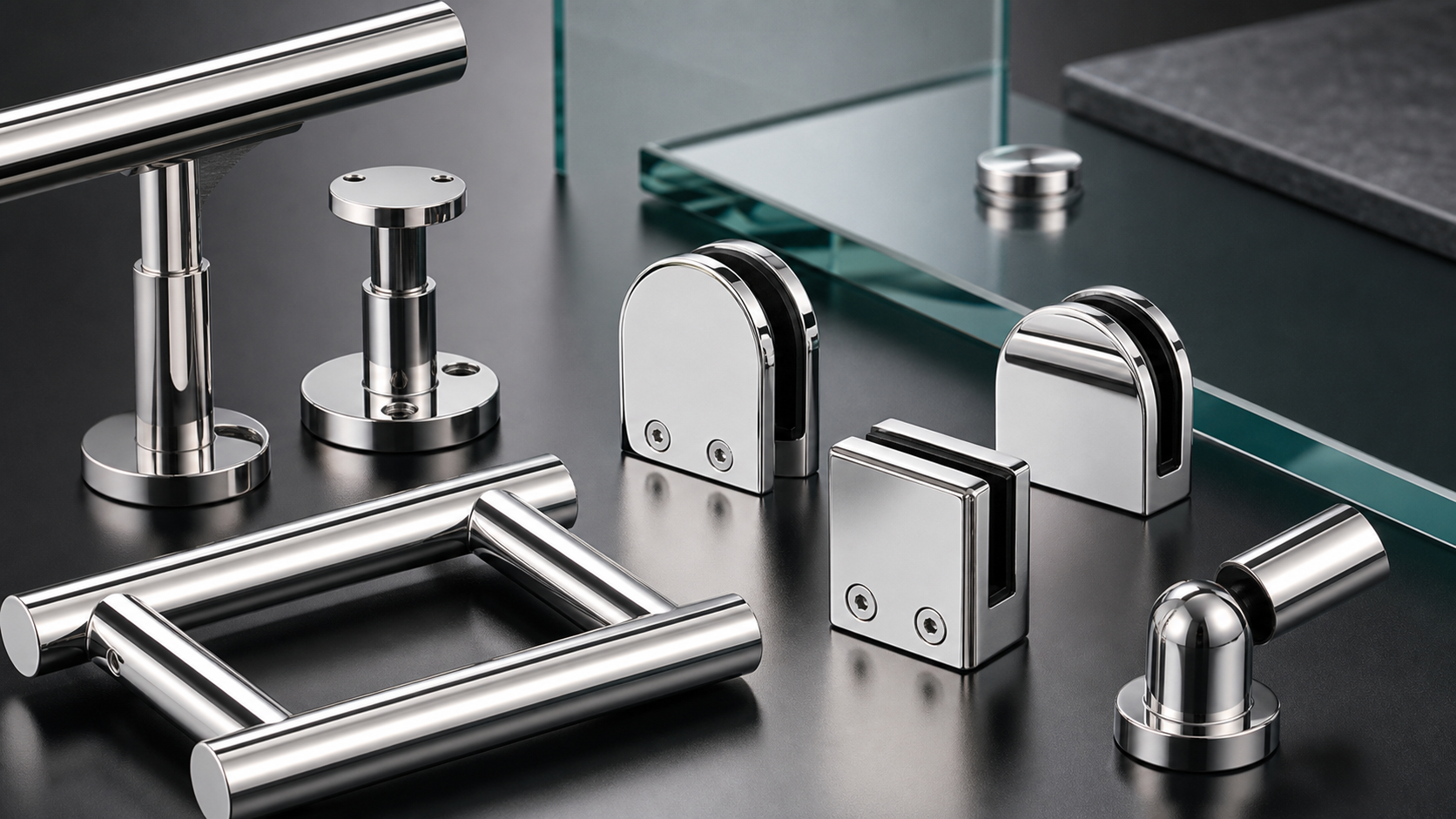
AODSON produces stainless steel architectural hardware through an integrated workflow: material selection, precision casting or machining, CNC finishing, grinding, polishing, inspection and export packaging. This matters because the final finish depends on everything that happens before the polishing wheel touches the part.
For OEM projects, AODSON can manufacture glass clamps, handrail fittings, door handles, balustrade components and custom connectors with mirror polish, satin finish or project-specific surface requirements. Finish samples can be approved before production so that grain direction, polish level and inspection standards are clear.
For broader product context, see AODSON’s architectural hardware capabilities, the article How Architectural Hardware Is Manufactured, and Stainless Steel Glass Clamps: Types, Materials & Applications.
Frequently Asked Questions
Is mirror polish or satin finish better for stainless steel architectural hardware?
Neither is universally better. Mirror polish is best for premium decorative impact, while satin finish is often more practical for commercial railings, handles and frequently touched hardware.
Does mirror polish improve corrosion resistance?
A smoother polished surface can reduce dirt retention, but corrosion resistance still depends mainly on stainless grade, contamination control, passivation and environment.
Is satin finish more scratch resistant than mirror polish?
Satin finish does not prevent scratches, but its directional grain hides minor handling marks better than mirror polish in many public-use applications.
Which finish is better for coastal buildings?
For coastal buildings, 316 stainless steel is usually more important than finish alone. Satin or mirror finishes can both work if polishing, passivation and maintenance are controlled.
Can 304 stainless steel be mirror polished?
Yes. 304 stainless steel can be mirror polished, but it should be used in suitable indoor or mild environments rather than severe chloride exposure.
Can satin finish be repaired on site?
Minor satin scratches can sometimes be blended with the correct abrasive direction, but repair quality depends on grain consistency, access and installer skill.
Why is mirror polish more expensive?
Mirror polish usually requires more grinding, buffing, defect removal and inspection because surface waves, pits and scratches are highly visible.
What surface roughness is typical for mirror and satin finishes?
Targets vary by specification, but mirror polish generally requires lower roughness than satin finish, while satin finish is defined by a controlled directional grain.
Which finish is best for glass clamps?
Satin finish is common for commercial glass clamps because it hides fingerprints and handling marks, while mirror polish is selected for high-end decorative projects.
Can AODSON produce both mirror polish and satin finish?
Yes. AODSON can manufacture stainless steel architectural hardware with mirror polish, satin finish and related surface treatments after casting or CNC machining.
Conclusion
Mirror polish and satin finish are both valuable stainless steel finishes, but they solve different problems. Mirror polish delivers premium reflection and decorative impact. Satin finish delivers a refined, practical surface that performs well in commercial and high-touch environments.
The best choice depends on application, lighting, maintenance expectations, material grade, budget and inspection criteria. For OEM buyers and project teams, the safest approach is to define the finish sample, stainless grade, roughness or visual standard, packaging method and inspection process before production begins.
Need stainless steel architectural hardware with mirror polish or satin finish? Send your drawings, samples or surface finish requirements through Request a Quote or Contact.