Local Service, Global Capabilities.
Local Service, Global Capabilities.

2026-07-01
A practical engineering guide to stainless steel pump impeller manufacturing, covering material selection, investment casting, CNC machining, balancing, inspection, defects and finishing.
2026-06-04
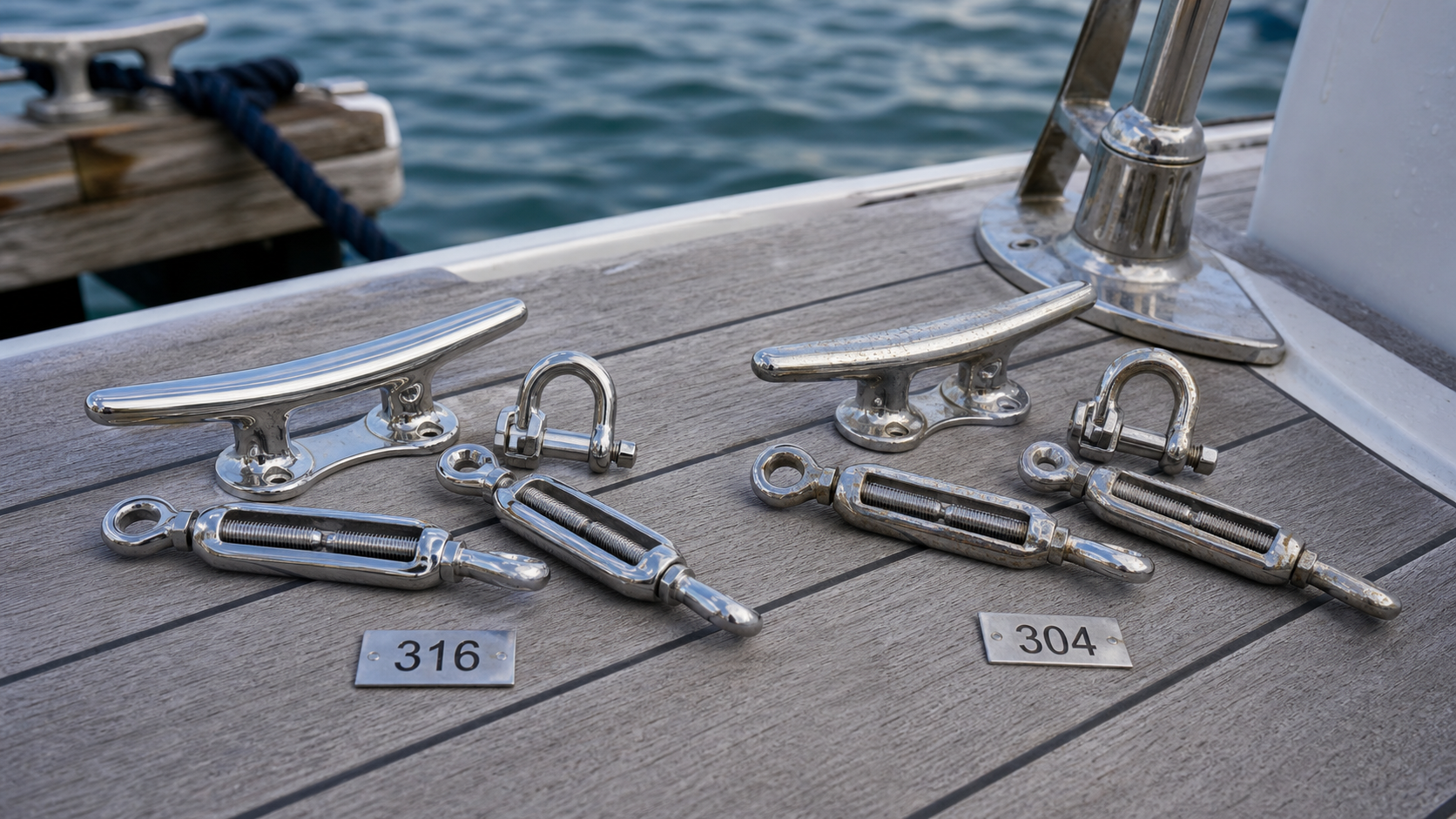
If you are choosing stainless steel hardware for a boat, the usual answer is quick: use 316. It is the grade most people expect to see on quality marine hardware because it resists salt better than 304. But the useful answer is a little more careful. 316 is better for most exposed boat fittings, especially in saltwater, yet it is not magic. Poor polishing, trapped seawater, mixed metals, bad weld cleaning, or stagnant crevices can make even 316 stain or pit. That is why a smart comparison of 316 vs 304 stainless steel marine hardware should look beyond the grade name. The real question is where the part is installed, how wet it stays, whether salt can dry on the surface, and how easy it is to rinse and inspect. Sourcing Custom Marine Hardware For an OEM fitting or a replacement component, start with the drawing or sample, installation location, material specification, finish and order quantity. Identify load-bearing features and the inspection requirements on the drawing. Review our custom marine hardware manufacturing services and marine hardware product range, then request a quote for your fitting. Include sample photographs if the part must match an existing assembly. Why Stainless Steel Is Used on Boats Marine hardware has to survive a hard combination of loads and chemistry. Cleats, shackles, turnbuckles, hinges, deck plates, bow eyes, rail fittings, fasteners, and rigging parts are pulled, vibrated, splashed, and handled constantly. Stainless steel is popular because it offers good strength, a clean appearance, and a naturally protective chromium oxide layer on the surface. That passive layer is the reason stainless steel looks so durable. When oxygen is available, the surface can repair itself after minor scratches. Saltwater changes the story. Chloride ions attack weak points in the passive film, especially inside small gaps where oxygen…
2026-06-04
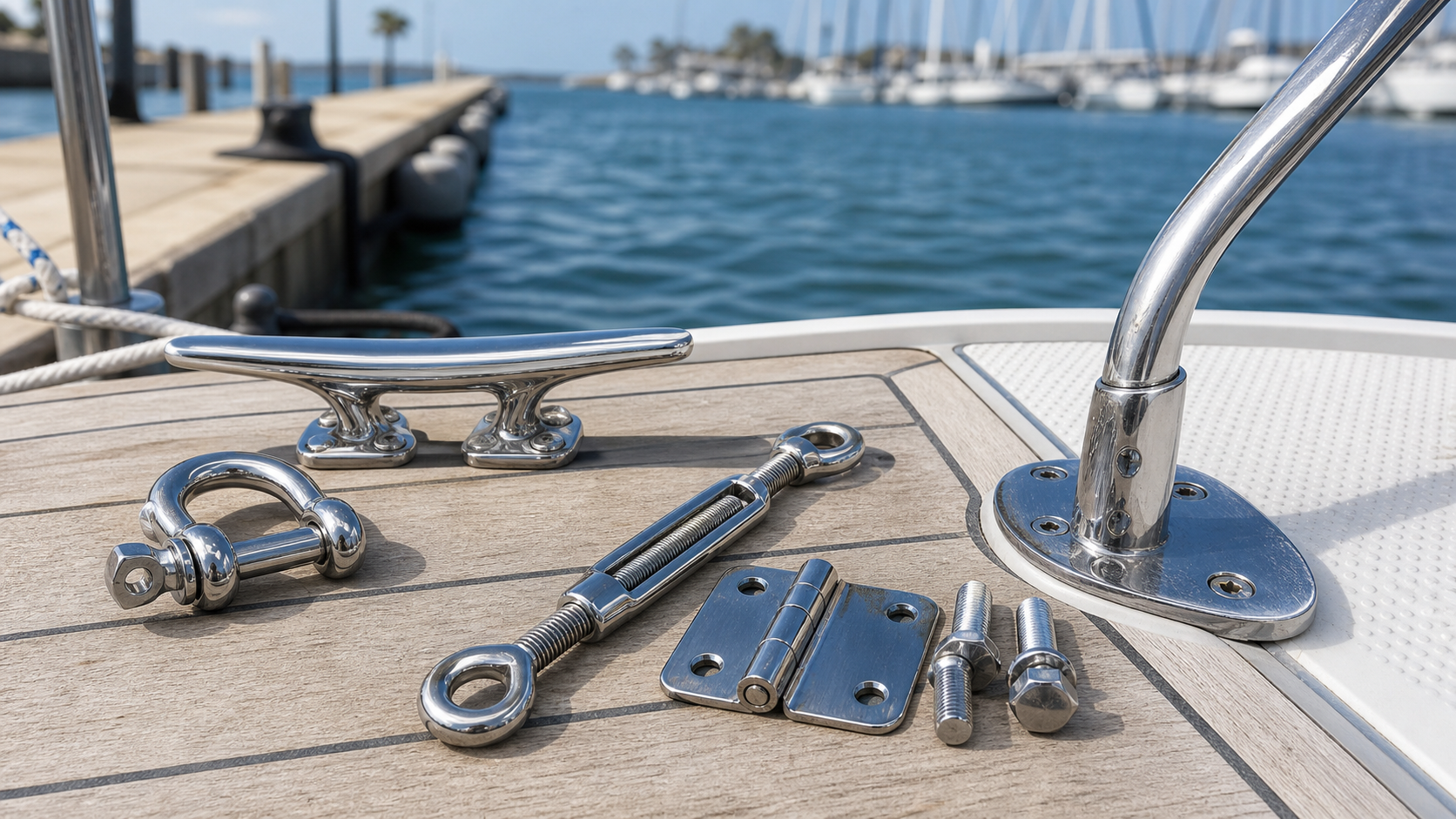
Stainless steel marine hardware has to survive one of the most demanding environments for metal components: saltwater. A fitting that looks perfectly acceptable in a warehouse can begin staining, seizing, or pitting after a few months on a dock, workboat, yacht, or coastal structure. The problem is not simply water. It is the combination of chlorides, oxygen, heat, crevices, wet-dry cycling, and mechanical load. Choosing stainless steel marine hardware therefore requires more than picking a shiny part from a catalog. The right decision depends on the grade of stainless steel, the design of the fitting, the surface finish, the fasteners used with it, and how the part will be installed and maintained. This guide explains the practical details buyers, engineers, boat builders, and marine contractors should consider before selecting hardware for saltwater service. Start with the Real Exposure Conditions “Marine grade” can mean very different things depending on where the part is used. A handrail inside a cabin has a much easier life than a deck cleat exposed to spray every day. Before comparing grades, define the actual environment: This first step matters because stainless steel does not fail in saltwater in one simple way. Exposed smooth surfaces may remain clean for years, while the same alloy can pit under a washer or inside a threaded connection where oxygen is limited and chlorides concentrate. Understand What Stainless Steel Actually Does in Saltwater Stainless steel resists corrosion because chromium in the alloy forms a thin passive oxide layer on the surface. When the surface is clean and oxygen is available, this passive layer repairs itself. Saltwater challenges that protection because chloride ions attack weak points in the film, especially in stagnant or crevice areas. The most common saltwater problems include: A good marine hardware choice reduces these risks through alloy selection,…

2025-06-05
Mirror-polished SS316 cross bollard cleats with four line-retaining arms and OEM mounting dimensions for yachts, workboats and docks.

2025-06-05
Mirror-polished SS316 marine fairlead chocks with smooth line-guiding surfaces and custom mounting patterns for yachts and workboats.

2025-06-05
Mirror-polished SS316 straight boat cleats with two mounting bases and OEM dimensions for yachts, workboats and marine deck hardware.

2025-06-05
Mirror-polished SS316 marine rail end fittings with eye connections and set-screw retention for boat rails, canopies and hardware assemblies.

2025-06-05
Mirror-polished SS316 four-horn boat cleats with custom mounting dimensions for yacht, workboat and marine mooring applications.

2025-06-05
Mirror-polished SS316 single marine mooring bollards with cross pins and custom mounting bases for yachts, docks and workboats.

2025-06-05
Mirror-polished SS316 boat steering wheels with custom hub interfaces and OEM production for yachts, workboats and marine control systems.