




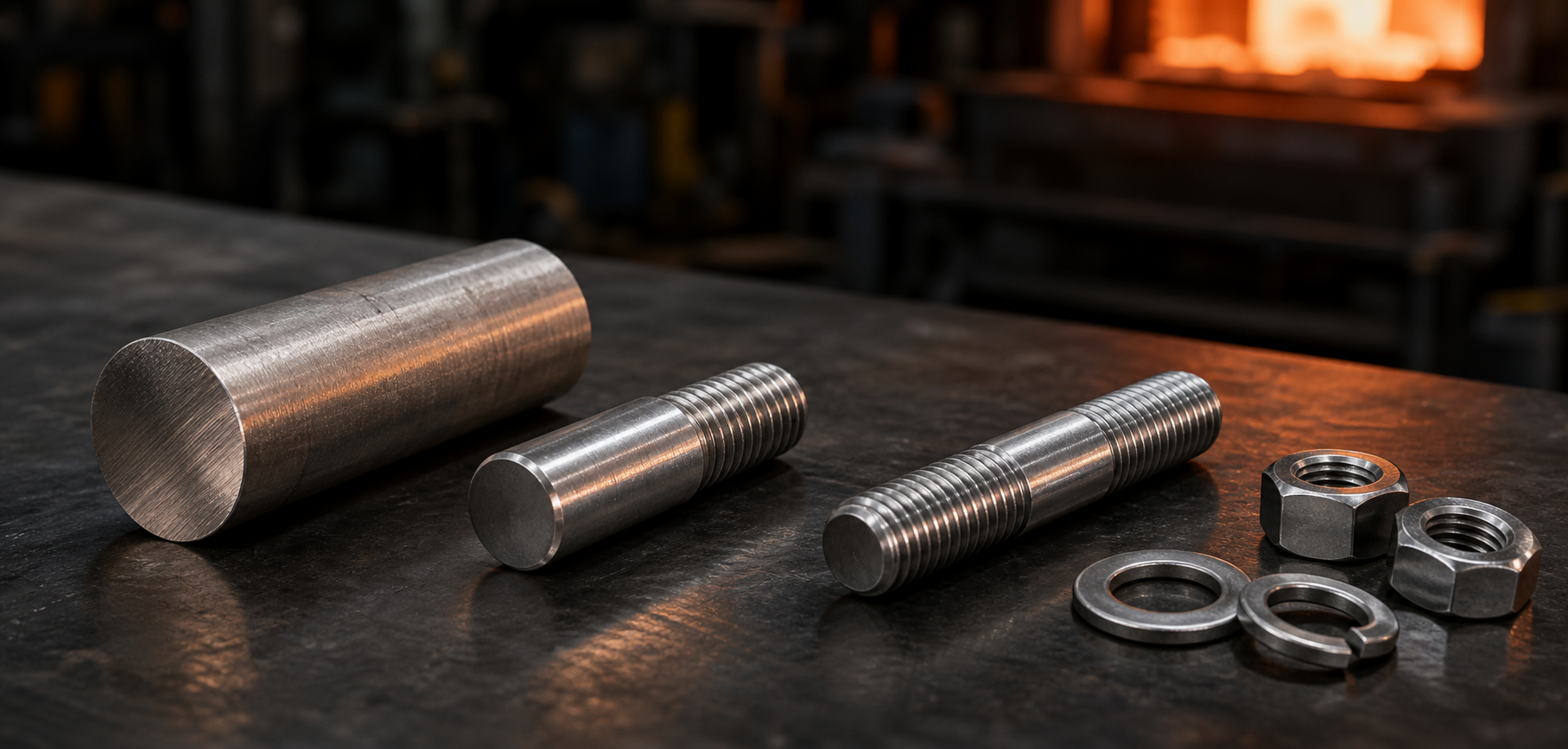
The Birth of a High-Performance Fastener
From Raw Material
to High-Performance Fasteners
A visual manufacturing journey showing how industrial fasteners are made, inspected and prepared for demanding applications.
Every reliable fastener starts long before the thread is formed. Material selection, forming method, heat treatment, thread accuracy, surface finishing and final inspection all affect performance in real working environments.
Chapter 01
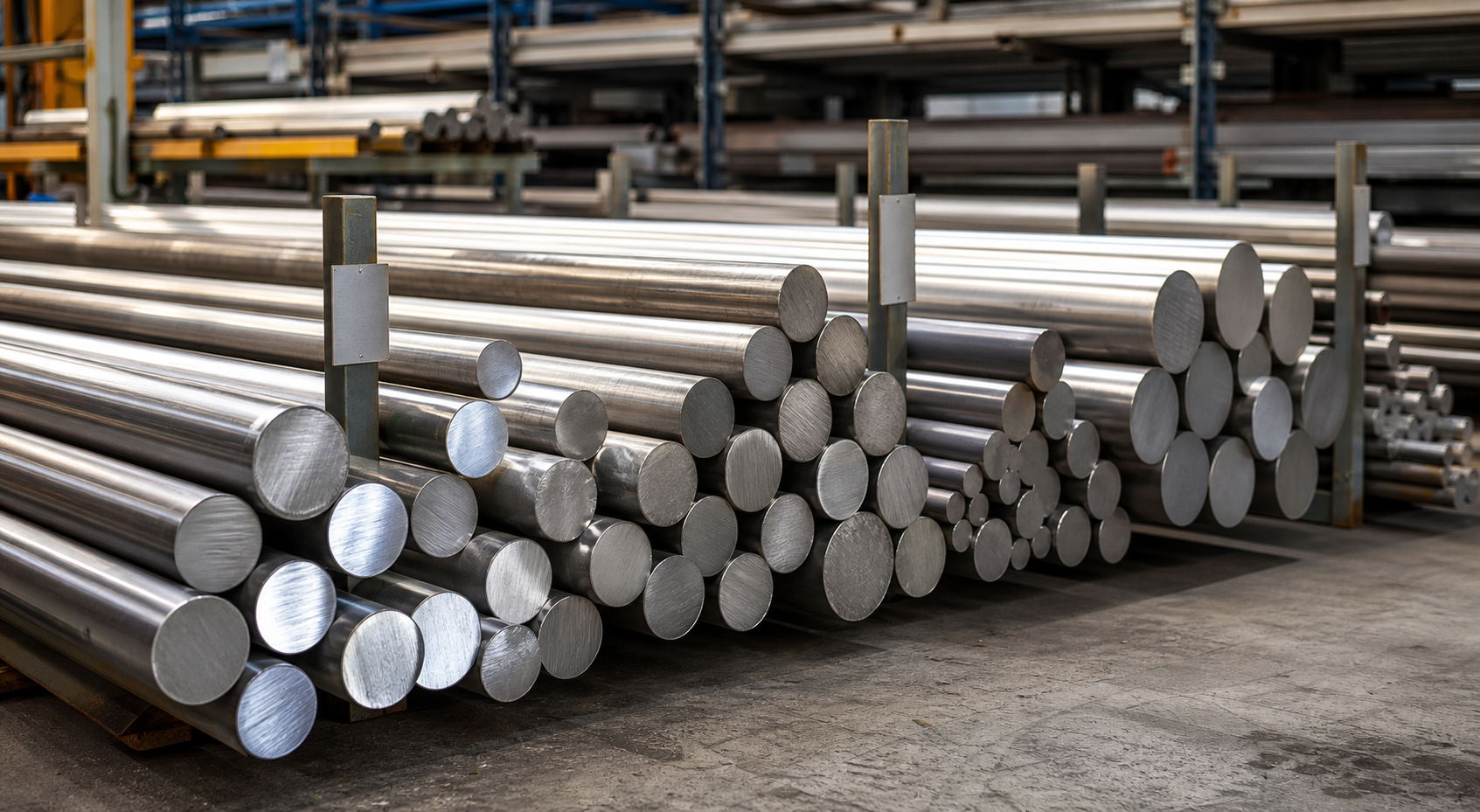
A Fastener Begins Before It Has a Shape
The performance of a fastener begins with raw material. Stainless steel, duplex stainless steel, heat-resistant alloys and nickel-based alloys each respond differently to load, temperature, corrosion and machining. Choosing the correct material is the first engineering decision.
Chapter 02
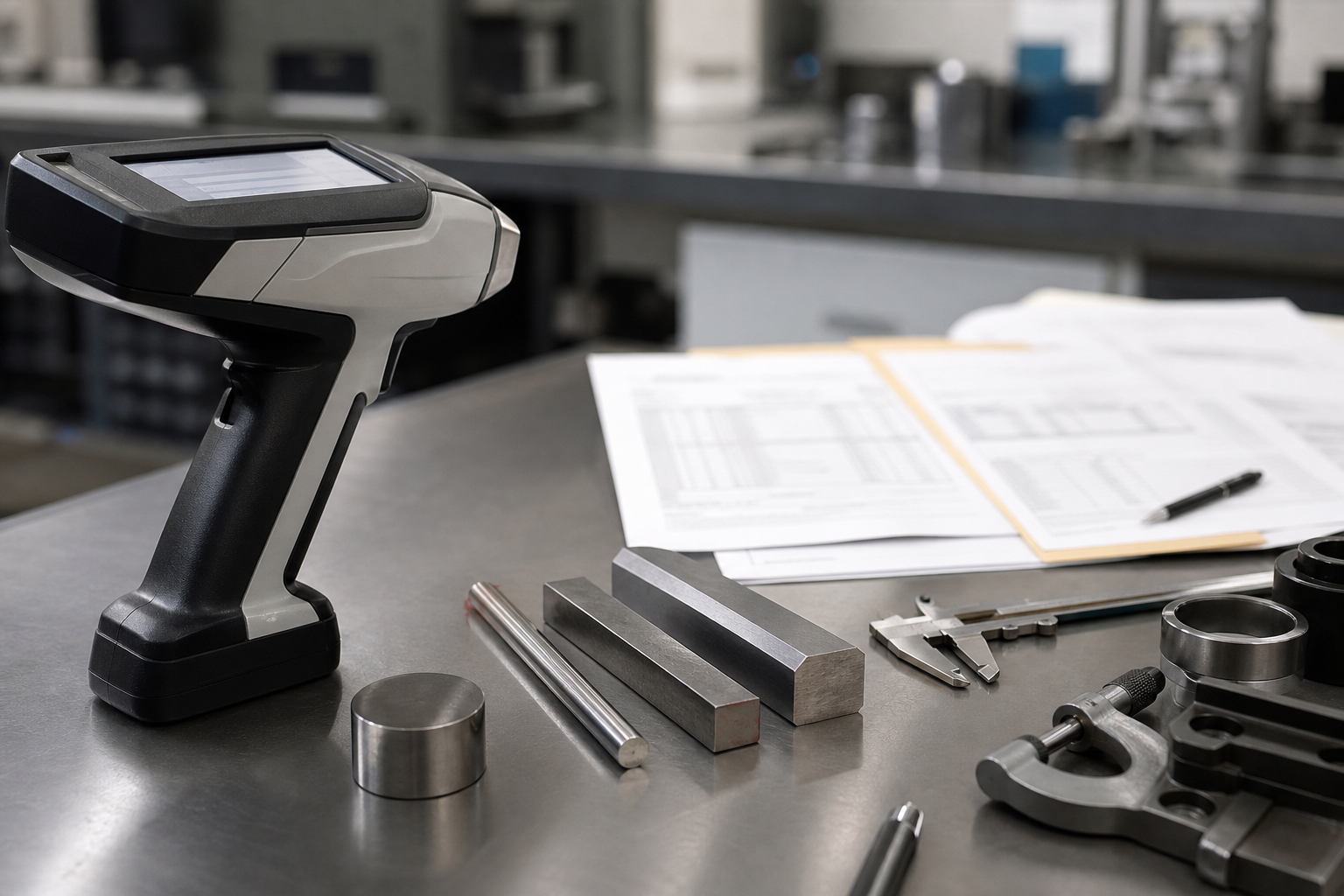
Trust Starts With Material Verification
Before manufacturing begins, material identity and certificate information must be checked. For high-performance fasteners, the wrong material can lead to corrosion failure, insufficient strength, premature cracking or unsafe assembly conditions.
Chapter 03
The Manufacturing Journey
Material transforms step by step through verification, cutting, forming, heat treatment, threading, finishing, inspection and packing.
Raw Material
Bars and rods are selected according to grade, application and mechanical requirements.
Verification
Material identity and certificate information are checked before production begins.
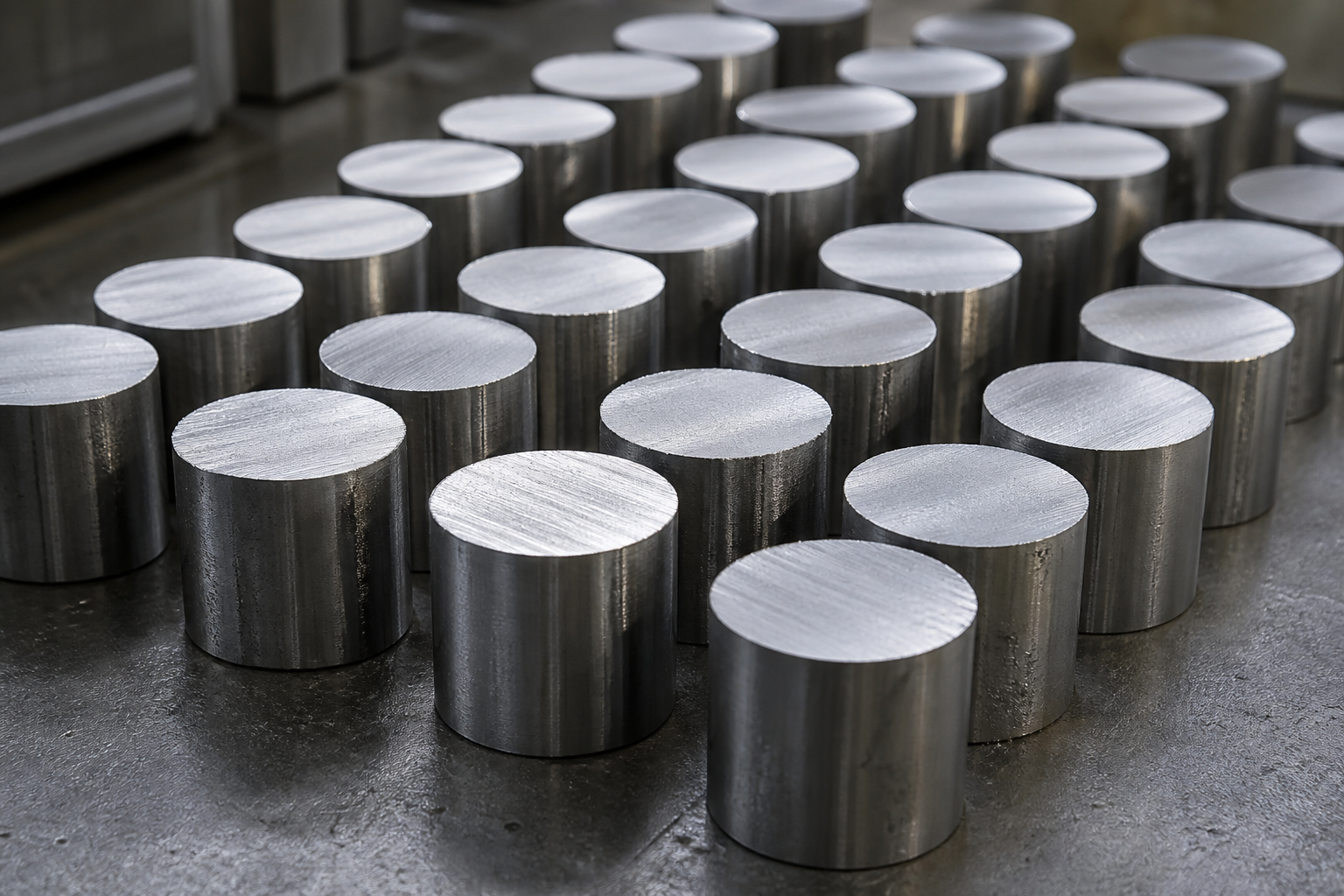
Cutting
Raw bars are cut into controlled blanks for forming or machining.
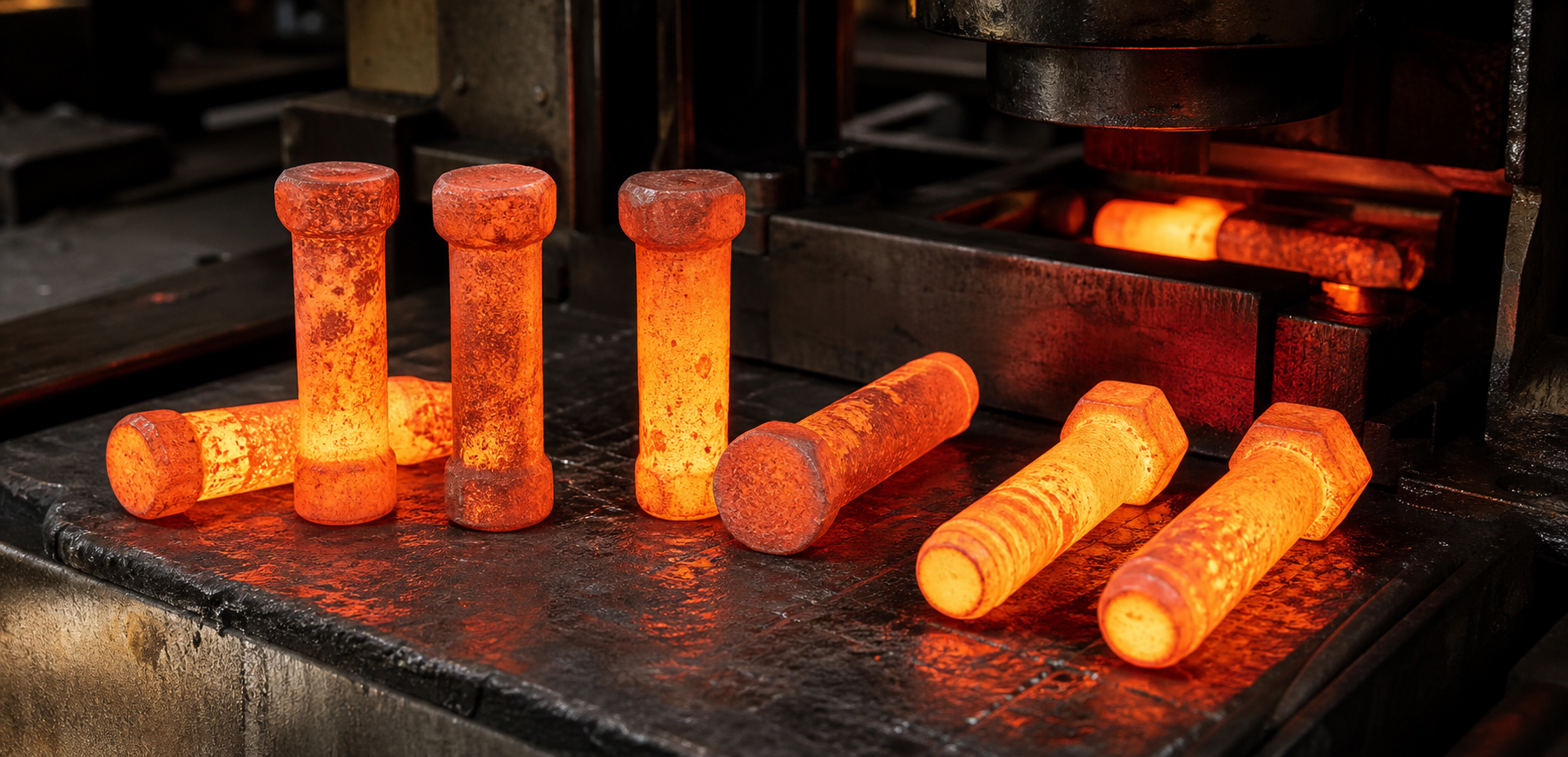
Forging / Heading
Cold heading or hot forging forms the basic fastener shape and improves production efficiency.
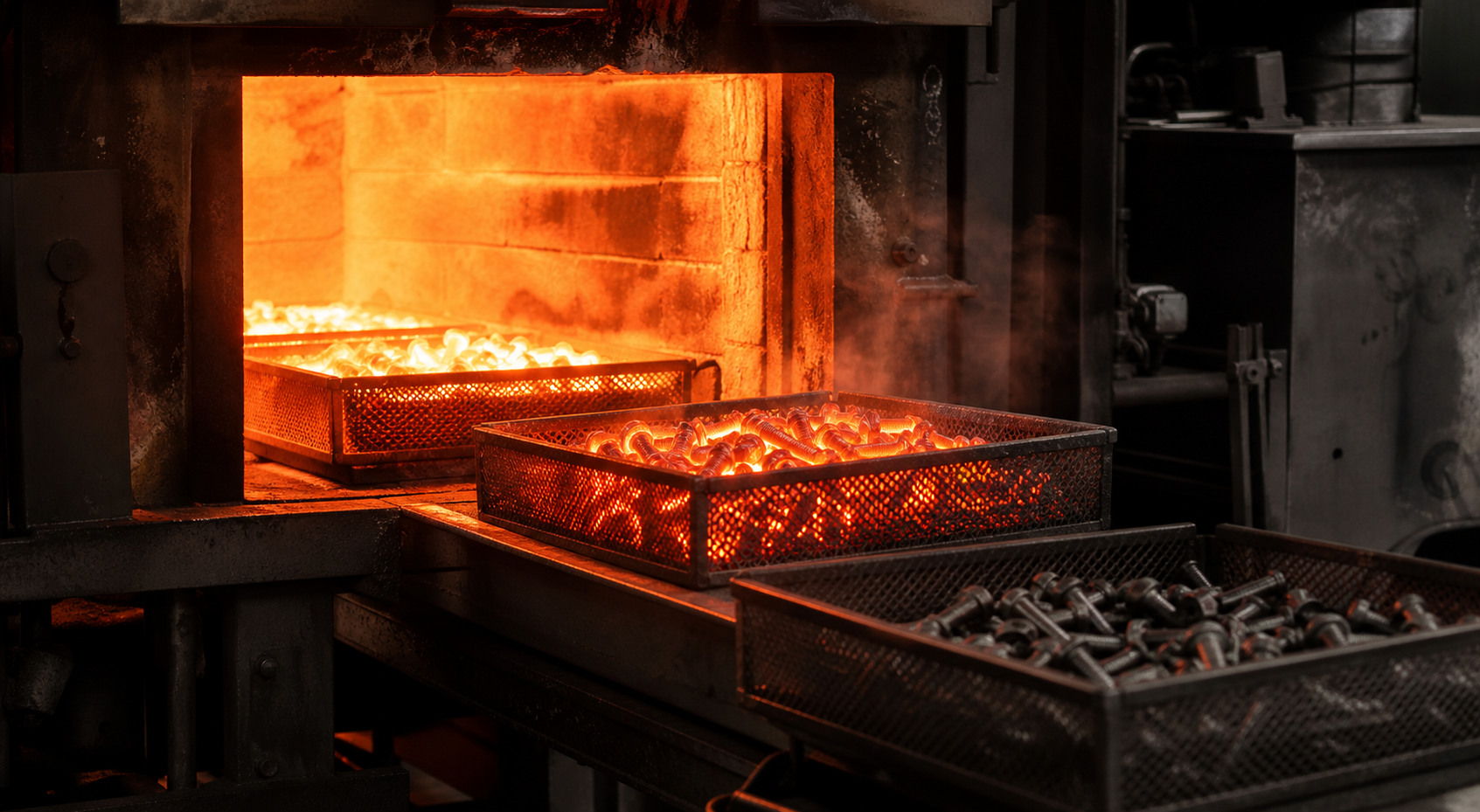
Heat Treatment
Heat treatment can improve strength, hardness and service stability when required.
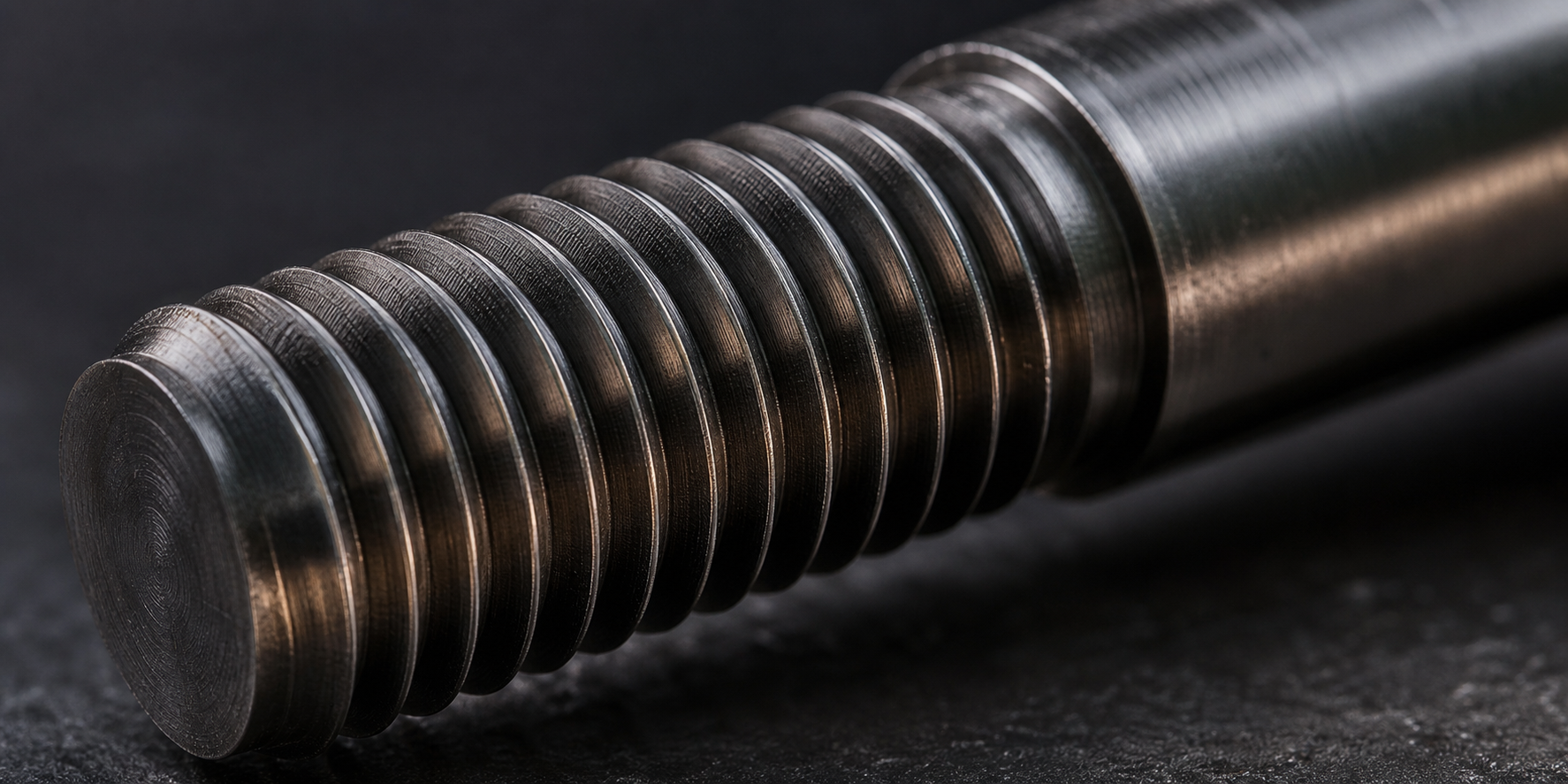
Thread Rolling
Thread rolling forms stronger and smoother threads compared with simple cutting in many applications.
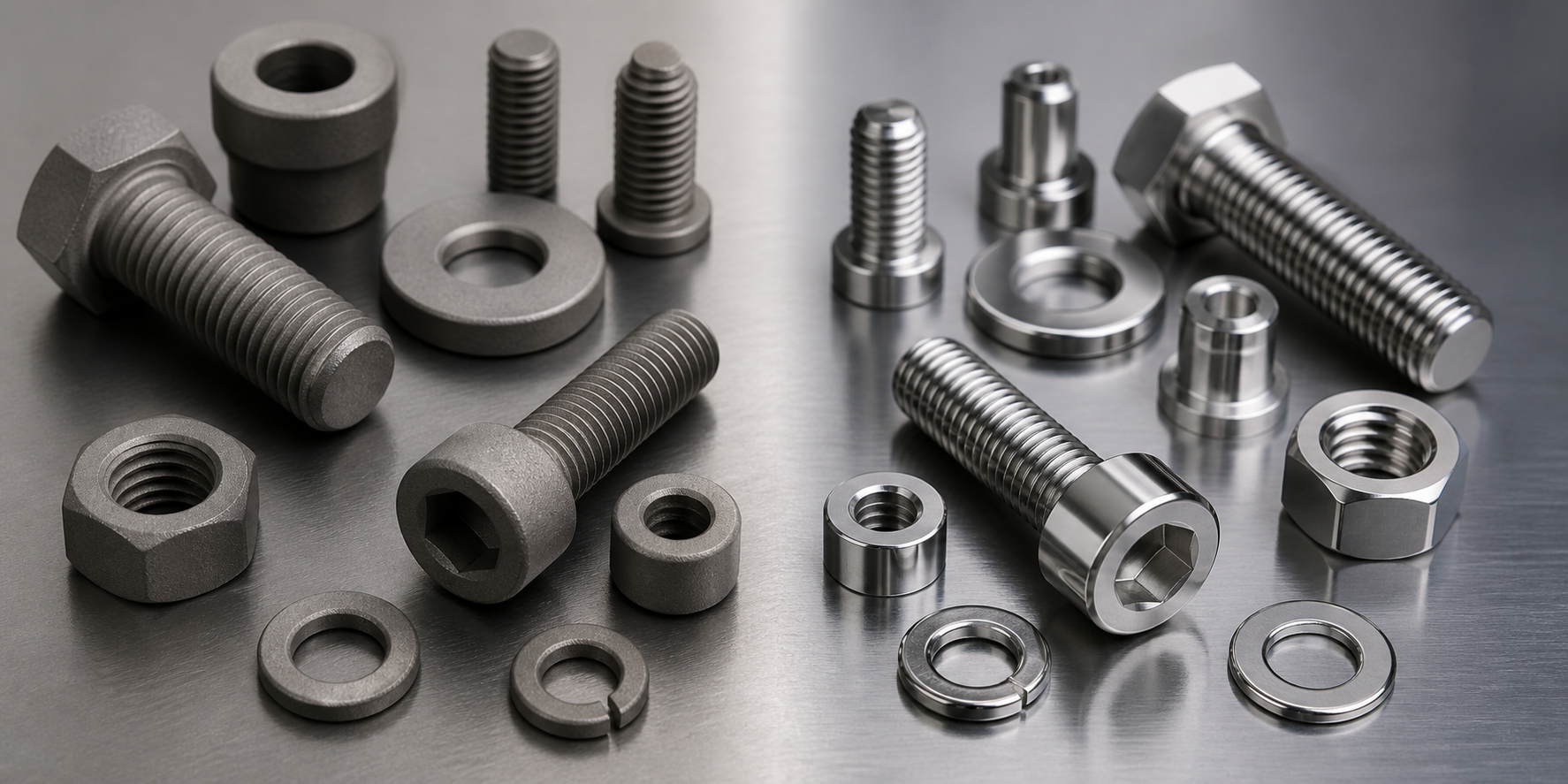
Surface Finishing
Passivation, polishing, blasting or other treatments improve appearance and corrosion resistance.
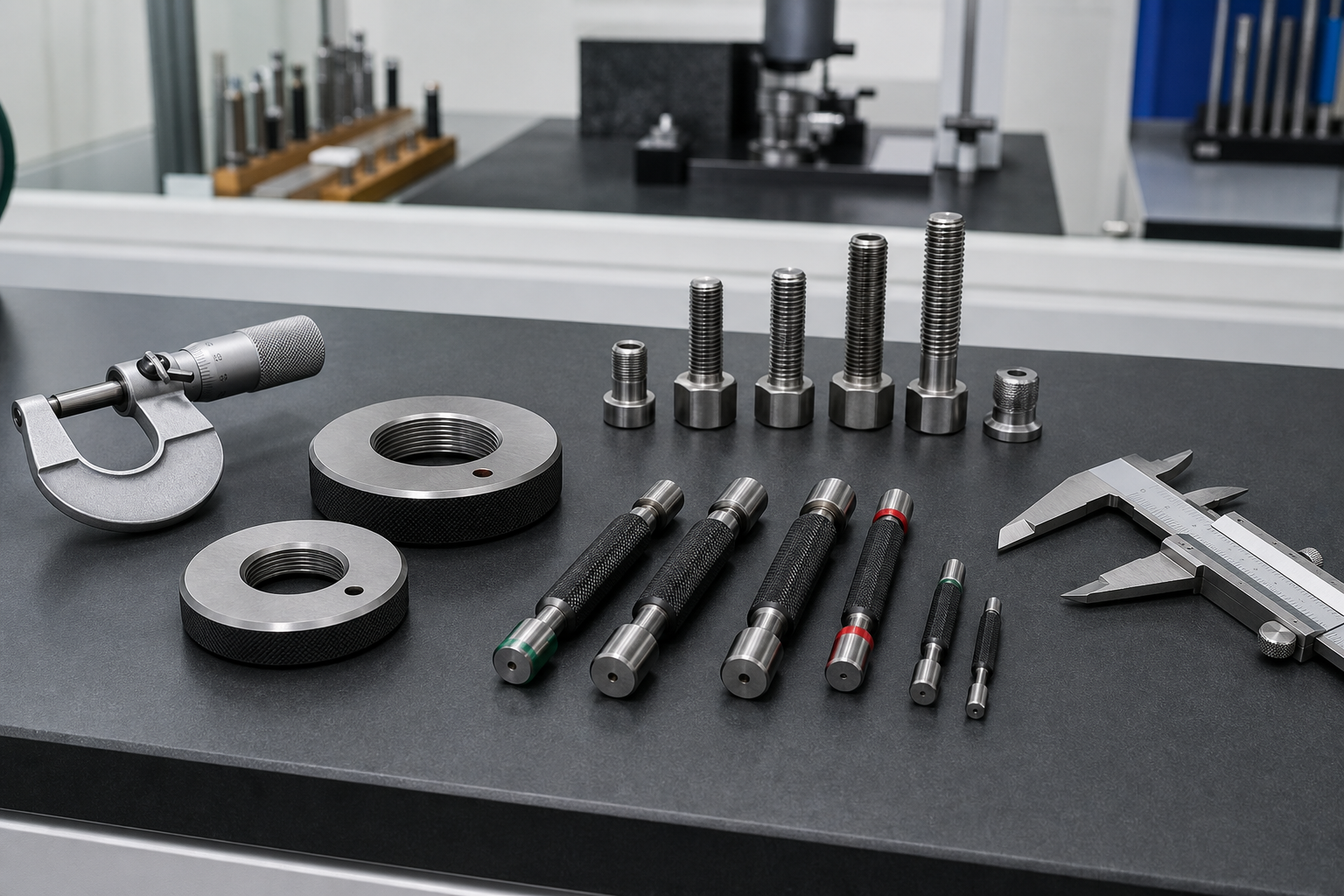
Final Inspection
Dimensions, threads, surface condition and packaging requirements are checked before shipment.
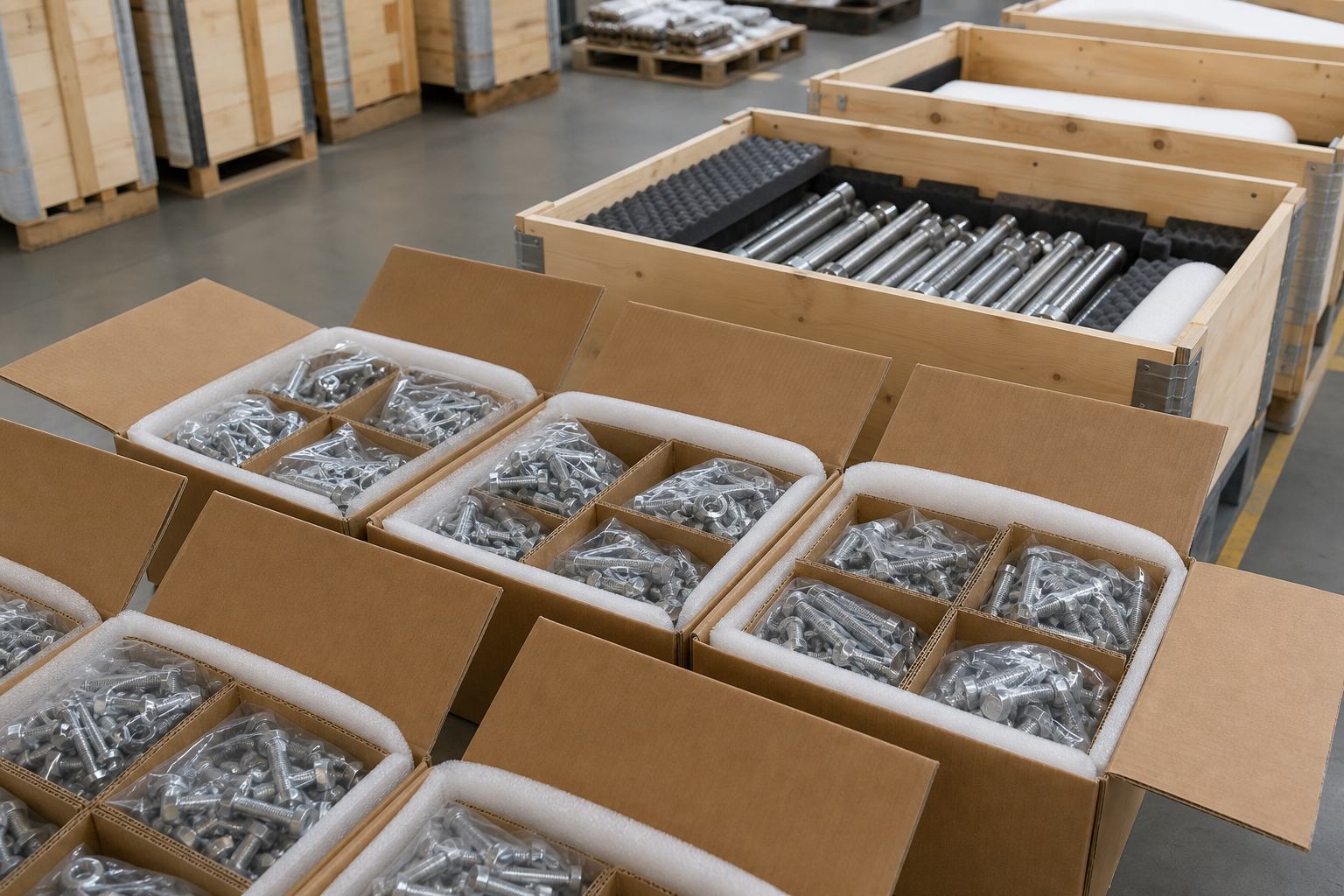
Packing & Delivery
Fasteners are packed according to customer requirements and prepared for export delivery.
Chapter 04
Precision Is Invisible Until It Fails
Thread profile, pitch accuracy, surface condition and fit directly affect assembly reliability. For custom and high-performance fasteners, thread inspection is a critical step before delivery.
Chapter 05
Not All Fasteners Are Made the Same
Engineering control matters because small process differences can decide whether a fastener performs reliably in demanding service conditions.
Low-Control Process
- Unverified material
- Poor thread consistency
- Rough surface
- Unstable hardness
- Weak packing protection
Controlled Manufacturing
- Material verification
- Controlled forming or machining
- Thread inspection
- Surface finishing
- Drawing-based final check
- Export-ready packing
Chapter 06
Materials Change Everything
AODSON supports stainless steel, duplex stainless steel, heat-resistant alloys and nickel alloys for fasteners used in demanding industrial applications.
304 / 316 Stainless Steel
General corrosion resistance for industrial and marine environments.
UseGeneral stainless bolts, nuts, washers and studs.
2205 Duplex
Higher strength and chloride corrosion resistance.
EnvironmentMarine equipment, pumps, valves and industrial assemblies.
2507 Super Duplex
Aggressive seawater and offshore environments.
ApplicationHigh-strength bolting for severe corrosion exposure.
310S
Heat-resistant stainless steel for elevated temperatures.
ApplicationFasteners near heat treatment and furnace equipment.
Alloy 926
Alloy 926 is designed for aggressive chloride environments where conventional stainless steels may not provide sufficient resistance to pitting, crevice corrosion or stress corrosion cracking.
Typical applicationsOffshore equipment, seawater systems, desalination plants, flue gas desulfurization, chemical processing and high-performance fasteners.
Inconel 600
Oxidation resistance at elevated temperatures.
ApplicationHeat-resistant bolting and special alloy parts.
Inconel 625
Excellent corrosion resistance and strength.
EnvironmentMarine, chemical and high-performance assemblies.
Inconel 718
High strength at elevated temperature.
ApplicationHigh-strength special alloy fasteners.
Monel 400
Seawater and marine corrosion resistance.
ApplicationMarine hardware and seawater systems.
Hastelloy C276
Aggressive chemical and acid environments.
ApplicationBolting for chemical processing equipment.
A286
High-strength precipitation-hardening alloy for high-temperature bolting.
ApplicationDemanding high-temperature fastener projects.
Chapter 07
Surface Finishing Is Not Decoration
Surface finishing affects appearance, cleanliness and corrosion resistance. Depending on the project, fasteners may require passivation, polishing, blasting, pickling or other finishing treatments before shipment.
Chapter 08
Before Leaving Our Factory
Before shipment, fasteners are checked according to drawing requirements, thread requirements, surface condition and packing instructions.
- Dimensional inspection
- Material verification
- Thread check
- Surface finish check
- Quantity check
- Packing protection
Chapter 09
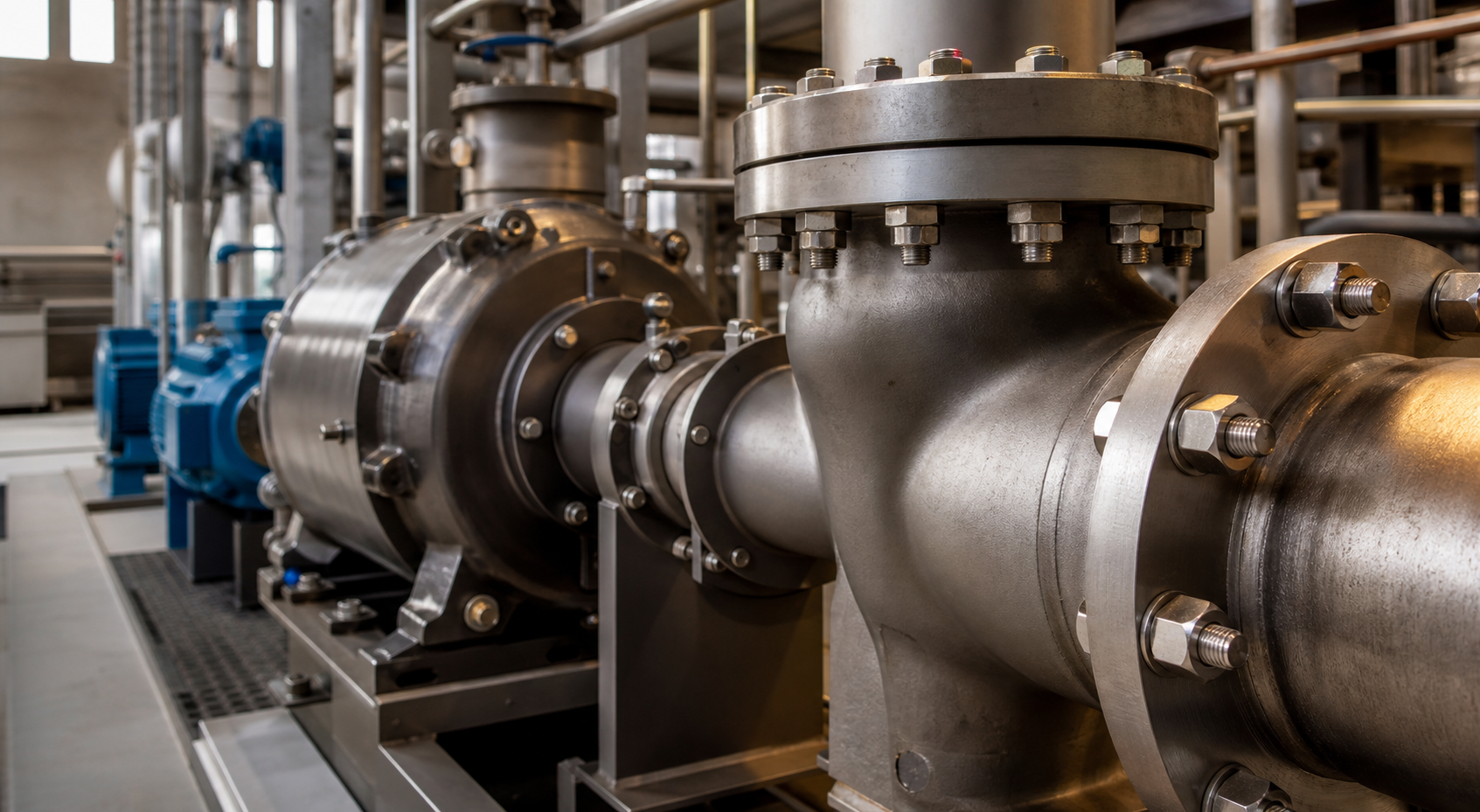
Built for Demanding Industries
High-performance fasteners are used where corrosion, temperature, load and maintenance conditions make ordinary hardware a risk.
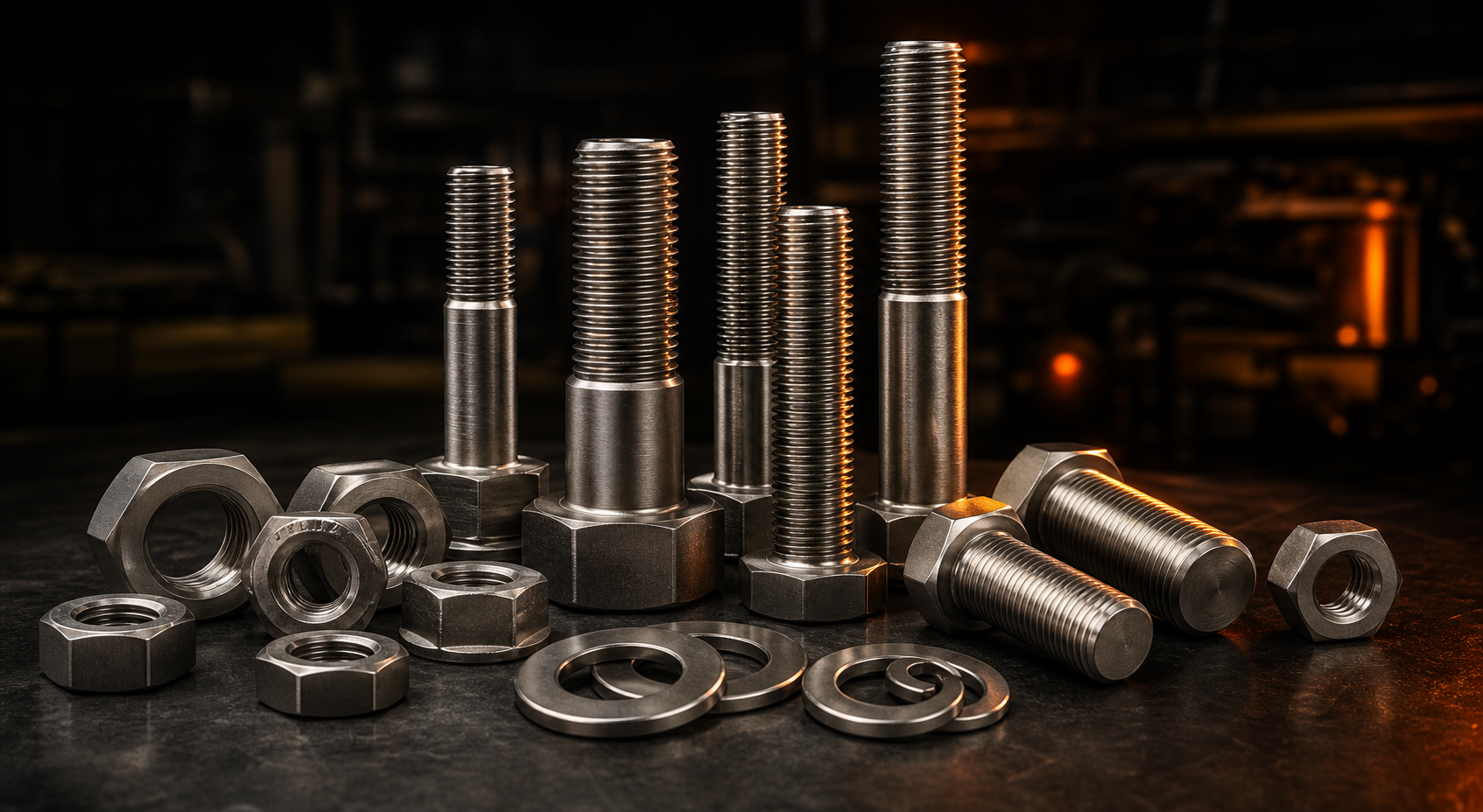
Project Support
Start Your Fastener Project
Whether you need stainless steel fasteners, duplex fasteners, nickel alloy bolts or custom engineered components, AODSON can support material selection, manufacturing, surface finishing and inspection according to your drawings or requirements.
FAQ
Fastener Manufacturing Questions
How are industrial fasteners manufactured?
Industrial fasteners are typically manufactured through material selection, cutting, forging or machining, heat treatment, thread rolling or threading, surface finishing, inspection and packing.
What materials can be used for custom fasteners?
AODSON can support stainless steel, duplex stainless steel, heat-resistant stainless steel, nickel alloys and other special alloys according to project requirements.
Is thread rolling better than thread cutting?
Thread rolling can improve surface finish and thread strength in many applications, while thread cutting may be suitable for low volume, special sizes or difficult materials. The suitable method depends on material, quantity and drawing requirements.
Can AODSON make fasteners from drawings?
Yes. AODSON can manufacture custom fasteners according to drawings, samples or technical requirements.
Can you manufacture special alloy fasteners?
Yes. AODSON can support special alloy fasteners such as nickel alloy, duplex stainless steel, heat-resistant stainless steel and project-specific materials.
Do you provide inspection before shipment?
Yes. Fasteners are inspected before shipment according to drawing requirements, thread requirements, surface condition and packing instructions.
Define the fastener before requesting a quote
Fastener performance depends on more than dimensions. Include the service environment and documentation requirements from the start.
Send Drawing for Review- 01Standard number or custom drawing
- 02Material grade and strength class
- 03Thread, diameter and length
- 04Order quantity and delivery schedule
- 05Coating, testing and certificate needs