




304 and 316 stainless steel are both widely used for architectural hardware, but they are not interchangeable in every project. For glass railing systems, stainless steel clamps, door handles, brackets, standoffs, handrail fittings and custom facade components, the better choice depends on exposure, design life, surface finish, budget and manufacturing process.
In simple terms, 304 stainless steel is the practical choice for most indoor and low-corrosion environments. 316 stainless steel is the safer choice for coastal, marine, poolside, chemical and highly exposed outdoor projects because its molybdenum content improves resistance to chloride attack.
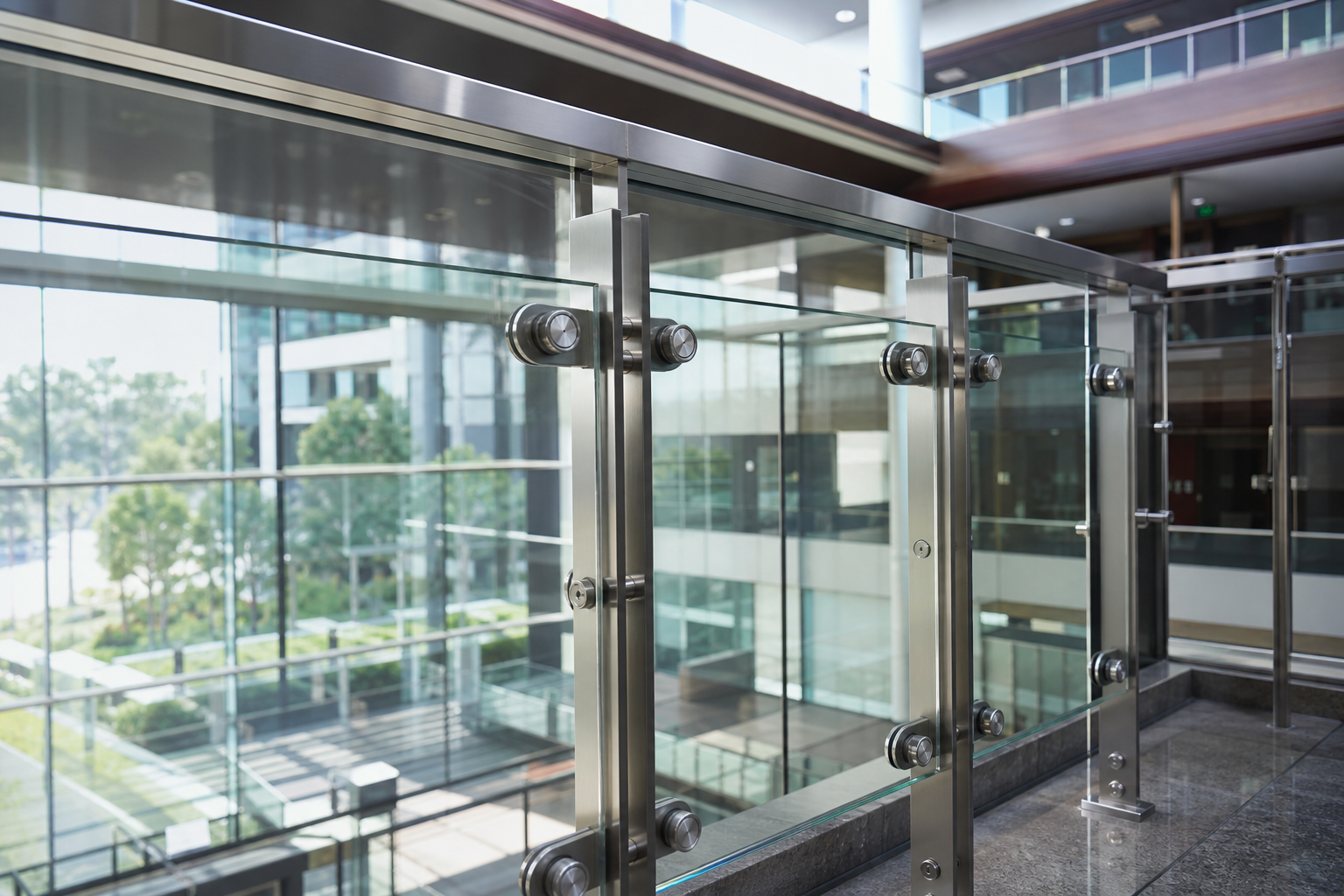
As an OEM manufacturer of stainless steel architectural hardware, AODSON evaluates material grade together with casting design, CNC machining tolerance, surface finishing, passivation and inspection requirements. This guide explains the engineering differences so buyers, engineers and project managers can select the right material with fewer surprises after installation.
Quick Answer: Is 304 or 316 Better?
Neither grade is universally better. 304 stainless steel is better for cost-effective indoor architectural hardware where corrosion risk is moderate. 316 stainless steel is better for outdoor, coastal and chloride-rich environments where long-term corrosion resistance matters more than material cost.
| Project Condition | Recommended Grade | Reason |
|---|---|---|
| Interior office doors, hotel interiors, retail fit-outs | 304 | Good corrosion resistance with lower cost |
| Outdoor railing in normal urban conditions | 304 or 316 | Depends on pollution, cleaning cycle and finish |
| Coastal balconies, seaside hotels, marine air | 316 | Better chloride resistance |
| Pool areas, chemical cleaning exposure | 316 | Improved resistance to pitting and crevice corrosion |
| Budget-sensitive decorative hardware | 304 | Lower alloy cost and strong availability |
| Long-life export projects with harsh exposure | 316 | Lower corrosion risk over the service life |
Understanding 304 Stainless Steel
304 stainless steel is an austenitic stainless steel containing chromium and nickel. It is the most common stainless grade used in architectural hardware because it offers a strong balance of corrosion resistance, formability, machinability, weldability and price.
For hardware such as indoor glass clamps, door handles, hinge bodies, railing brackets, decorative covers and non-marine fastener housings, 304 is often sufficient. It forms a passive chromium oxide film on the surface, which helps resist rust when the component is properly finished and maintained.
However, 304 is not immune to corrosion. In environments with salt spray, de-icing salts, pool chemicals, acidic cleaning agents or trapped moisture, 304 can develop tea staining, pitting or crevice corrosion. These issues often appear first around joints, screw holes, gasket contact areas and rough polished surfaces.
Understanding 316 Stainless Steel
316 stainless steel is also an austenitic stainless steel, but it contains molybdenum. This alloying element is the main reason 316 performs better against chloride-induced pitting and crevice corrosion.
For architectural hardware, 316 is commonly specified for coastal glass railings, balcony systems, handrail fittings, poolside hardware, exterior door pulls, marine-adjacent buildings and projects where maintenance access is limited. When a component is small but failure would be costly, the additional material cost of 316 can be a sensible risk-control decision.
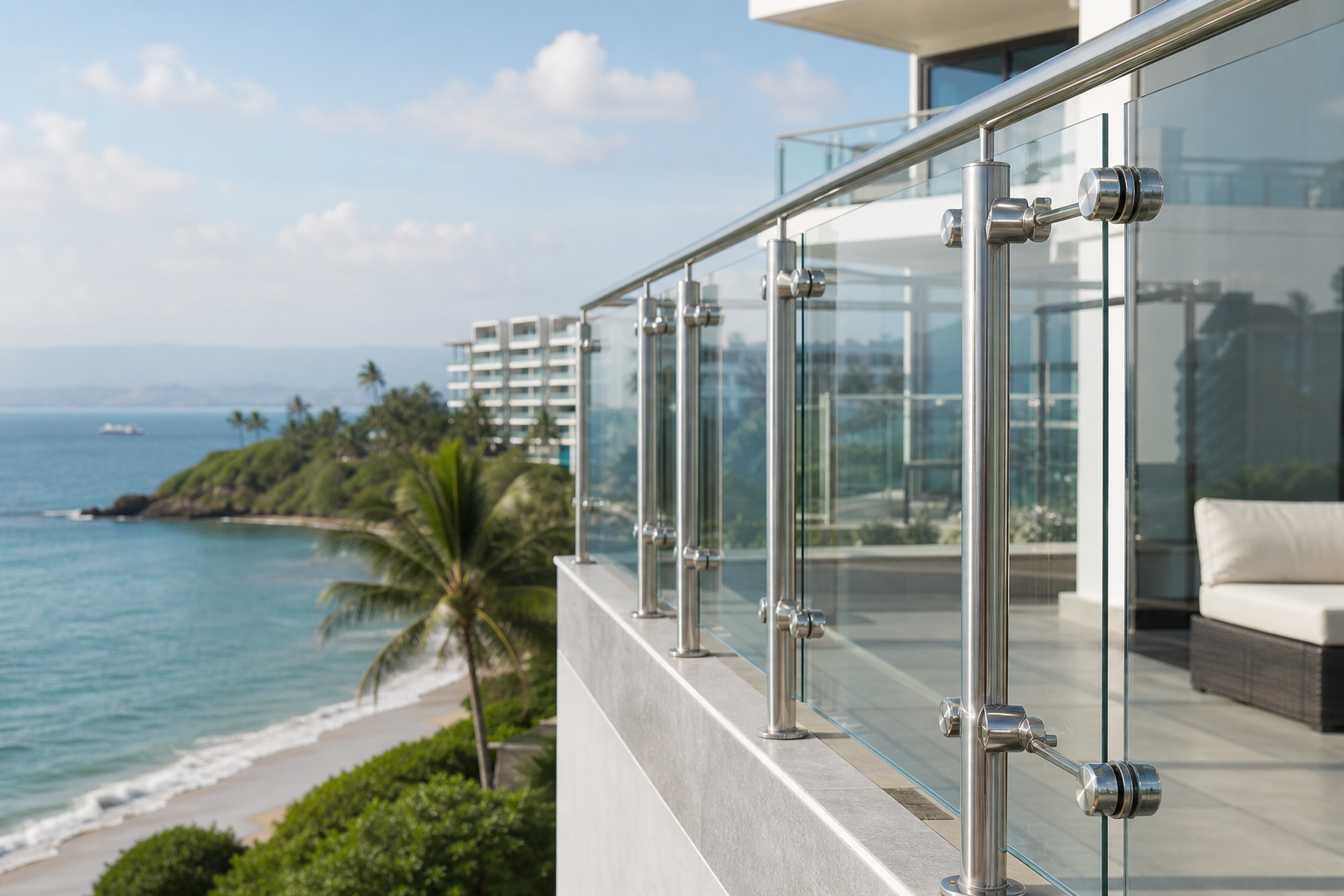
316 does not mean maintenance-free. Surface contamination, iron particles, aggressive cleaners and poor drainage can still cause staining. But under the same exposure and finish quality, 316 normally provides a wider safety margin than 304.
Chemical Composition Comparison
The most important difference is molybdenum. 304 typically contains no intentional molybdenum addition, while 316 normally contains about 2.0-3.0% molybdenum. This improves resistance to localized corrosion, especially in chloride environments.
| Element | 304 Stainless Steel | 316 Stainless Steel | Engineering Impact |
|---|---|---|---|
| Chromium | About 18-20% | About 16-18% | Builds the passive corrosion-resistant surface film |
| Nickel | About 8-10.5% | About 10-14% | Supports austenitic structure, toughness and formability |
| Molybdenum | Usually not intentionally added | About 2-3% | Improves pitting and crevice corrosion resistance |
| Carbon | Low, typically max 0.08% | Low, typically max 0.08% | Lower carbon helps reduce sensitization risk |
| Manganese and silicon | Controlled minor elements | Controlled minor elements | Affect processing, deoxidation and mechanical consistency |
For OEM hardware production, the material certificate should identify the grade and heat number. This supports material traceability, especially for export projects, public buildings and contracts where the specified grade must be verified.
Corrosion Resistance Comparison
Corrosion resistance is the main reason buyers compare 304 and 316. In clean indoor air, both grades perform well. In chloride-rich environments, 316 has a clear advantage.
| Exposure Condition | 304 Performance | 316 Performance | Recommendation |
|---|---|---|---|
| Dry indoor environment | Excellent | Excellent | 304 is usually enough |
| Humid indoor environment | Good | Very good | 304 or 316 depending on cleaning chemicals |
| Normal outdoor urban environment | Good with maintenance | Very good | 316 for longer service life or low maintenance |
| Coastal atmosphere | Moderate risk of tea staining and pitting | Better resistance | 316 strongly preferred |
| Poolside or chloride cleaners | Higher risk | Better, but still requires care | 316 preferred with passivation and cleaning plan |
| Crevices, gasket areas and water traps | More vulnerable | More resistant | Improve design drainage and use 316 where exposure is severe |
Mechanical Properties
For most architectural hardware, the strength difference between 304 and 316 is not the deciding factor. Both grades can meet demanding requirements when the component is correctly designed, cast, machined and inspected.
| Property | 304 Stainless Steel | 316 Stainless Steel | Notes for Architectural Hardware |
|---|---|---|---|
| Tensile strength | Generally similar | Generally similar | Actual values depend on product form and processing |
| Yield strength | Generally similar | Generally similar | Design geometry often matters more than grade |
| Ductility | Good | Good | Useful for forming and impact tolerance |
| Hardness | Comparable | Comparable | Can vary with machining and finishing history |
| Weldability | Good | Good | Low-carbon variants may be selected for welded assemblies |
| Machinability | Good with proper tooling | Slightly more demanding | 316 can require careful tool and feed control |
Load-bearing hardware still requires proper engineering. Glass clamp dimensions, wall thickness, screw engagement, radius design, casting quality and installation torque can affect performance as much as the stainless grade.
Surface Finish Options
Surface finish has a direct effect on appearance and corrosion performance. A smoother, cleaner surface holds fewer contaminants and is easier to maintain.
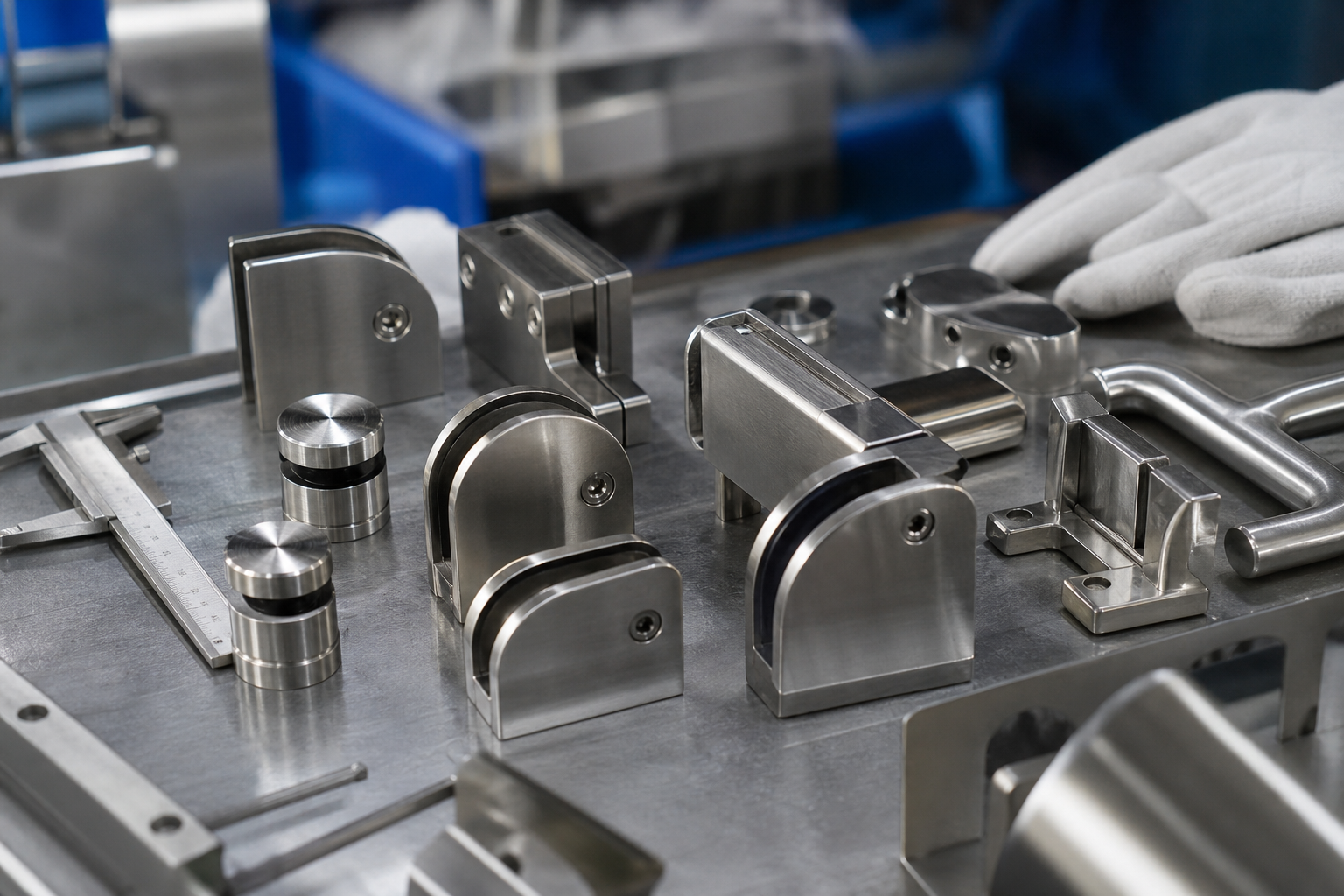
Common finishes for architectural hardware
Satin brushed finish is widely used for door handles, railing fittings and glass clamps because it hides fingerprints and minor scratches better than a mirror finish.
Mirror polish creates a bright decorative surface but requires careful polishing control. It is more sensitive to visible scratches and can increase production time.
Bead blasted or matte finish provides a uniform low-gloss look. For outdoor projects, the blasting media must be clean and controlled to avoid embedding contaminants.
Passivated finish improves the stainless surface by removing free iron and supporting a stable passive film. Passivation is especially useful after machining, welding, polishing or blasting.
Indoor vs Outdoor Applications
Indoor architectural hardware usually faces fingerprints, mild humidity, cleaning agents and normal wear. In these conditions, 304 is often the most economical and practical grade.
Outdoor hardware faces rainwater, airborne pollution, UV exposure, temperature changes and more aggressive cleaning. In normal inland environments, 304 can perform well with a suitable finish and cleaning routine. For high-value exterior applications, 316 reduces the risk of staining and corrosion complaints.
| Application | Typical Grade | Key Consideration |
|---|---|---|
| Interior door handles | 304 | Cost-effective, attractive finish, good durability |
| Interior glass partitions | 304 | Low chloride exposure |
| Shopping mall railing fittings | 304 or 316 | Depends on cleaning chemicals and humidity |
| Exterior balcony railings | 304 or 316 | 316 for harsh weather, pollution or low maintenance |
| Seaside hotel hardware | 316 | Chloride-rich air |
| Poolside clamps and brackets | 316 | Chloride and chemical exposure |
| Custom facade brackets | 304 or 316 | Structural requirement and exposure assessment |
Coastal and Marine Environments
Coastal environments are the classic reason to specify 316 stainless steel. Salt particles can settle on the hardware surface and concentrate in moisture films, especially in gaps and shaded areas that dry slowly.
For coastal glass railing systems, the risk is not only red rust. Early staining can reduce the visual quality of premium architecture and create maintenance disputes. 316 stainless steel, a smooth finish, correct passivation, drainage-friendly design and regular washing all work together to reduce that risk.
For severe marine exposure, even 316 may need additional engineering review. Duplex stainless steel, special surface treatments or alternative fastener strategies may be considered for projects directly exposed to seawater or constant salt spray.
Cost Comparison
316 stainless steel costs more because it contains more nickel and molybdenum. The exact price gap changes with raw material markets, part weight, geometry, machining time and finishing requirements.
| Cost Factor | 304 Stainless Steel | 316 Stainless Steel | Buyer Notes |
|---|---|---|---|
| Raw material cost | Lower | Higher | 316 contains molybdenum and usually more nickel |
| Casting cost | Lower to moderate | Moderate to higher | Grade, yield and finishing affect final price |
| CNC machining cost | Efficient with proper tooling | May be slightly higher | 316 can be tougher on tools |
| Surface finishing cost | Depends on finish | Depends on finish | Mirror polishing and strict cosmetic standards add cost |
| Maintenance risk | Higher in chloride environments | Lower in chloride environments | 316 can reduce lifetime service issues |
| Total project value | Best for low-risk environments | Best for harsh or premium environments | Evaluate lifecycle cost, not only unit price |
Manufacturing Considerations for Stainless Steel Architectural Hardware
Material grade selection is only one part of a successful hardware project. The same stainless grade can perform differently depending on casting quality, machining accuracy, surface contamination, finishing sequence and inspection discipline.
Investment Casting
Investment casting is suitable for complex stainless steel hardware such as glass clamps, brackets, hinge bodies, railing supports and irregular custom fittings. It allows near-net-shape production, reduces machining allowance and supports complex geometry that would be costly to machine from solid bar.
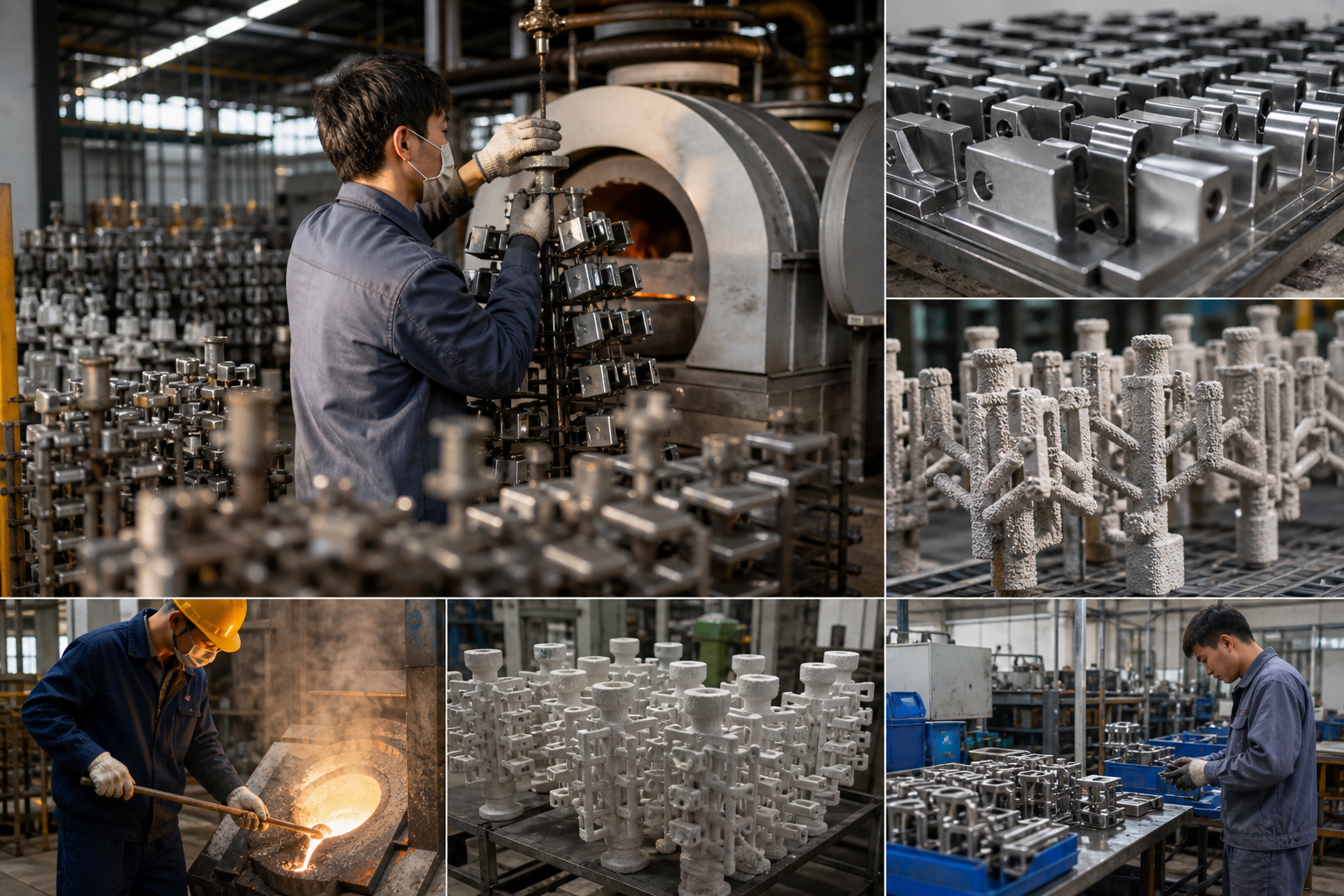
For 304 and 316 cast components, foundry control should include alloy verification, wax pattern quality, shell integrity, pouring control, heat treatment where required, cut-off control and defect inspection. Poor casting quality can create porosity, inclusions or weak cosmetic surfaces regardless of grade.
CNC Machining
CNC machining is used to create accurate screw holes, flat mounting faces, grooves, threads, bearing surfaces and gasket seats. For architectural hardware, machining tolerance affects installation fit, glass alignment, clamping force and final appearance.
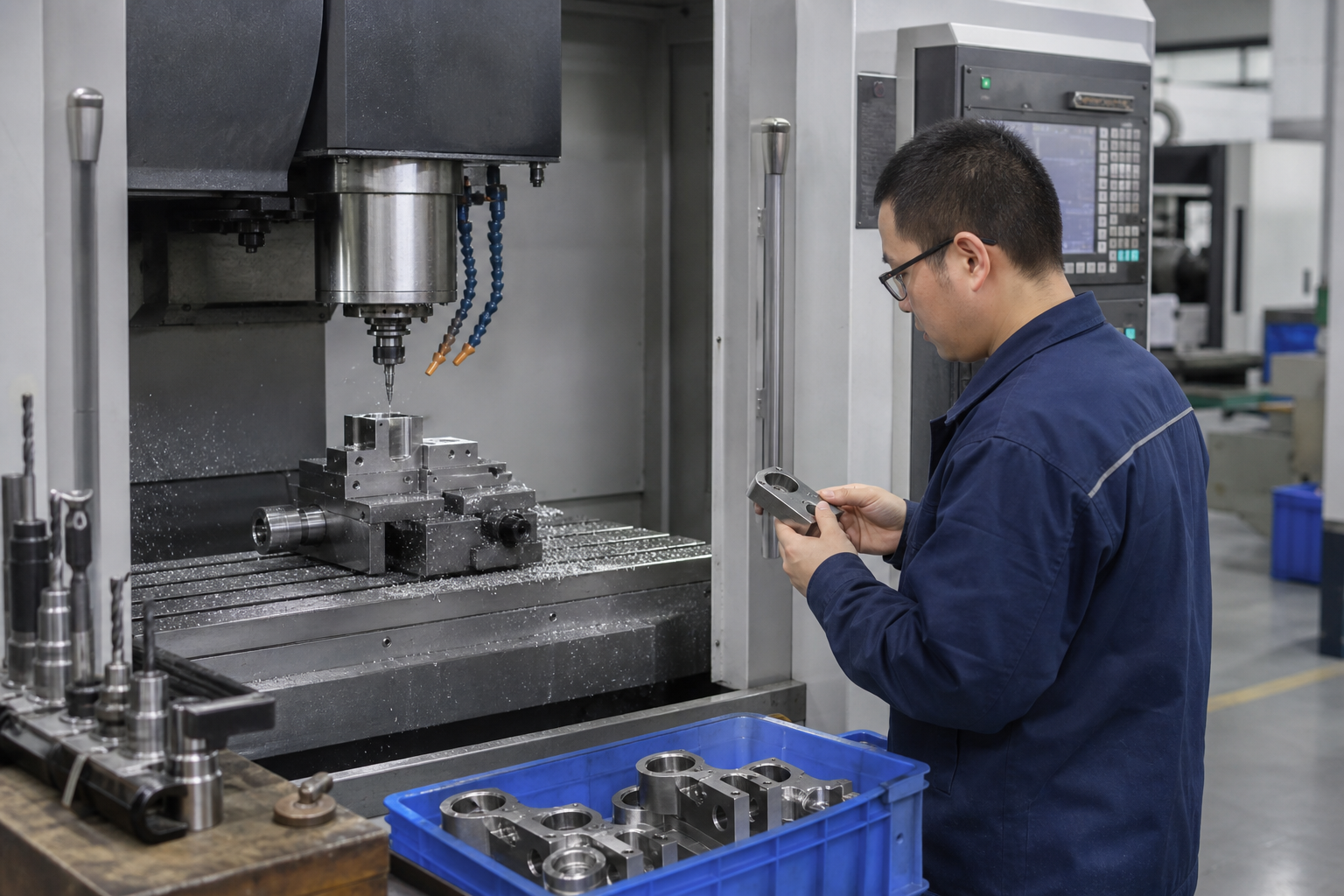
316 stainless steel can be more demanding to machine than 304. Tool selection, coolant control, cutting speed and fixture stability should be adjusted to prevent work hardening, chatter and poor surface finish.
Surface Finishing and Passivation
After casting and machining, surface finishing determines the visual quality of the product. AODSON can support common finishes such as brushed satin, mirror polish, matte finish and customer-defined cosmetic standards.
Passivation is recommended when parts have been machined, polished or handled through multiple production steps. It helps remove free iron contamination and supports the natural chromium oxide layer. For coastal or export projects, passivation requirements should be specified clearly before production.
Quality Control
Quality control for stainless steel architectural hardware should include both dimensional and material checks. Typical inspection points include alloy grade, critical dimensions, thread quality, surface finish, polishing direction, edge condition, assembly fit and packaging protection.
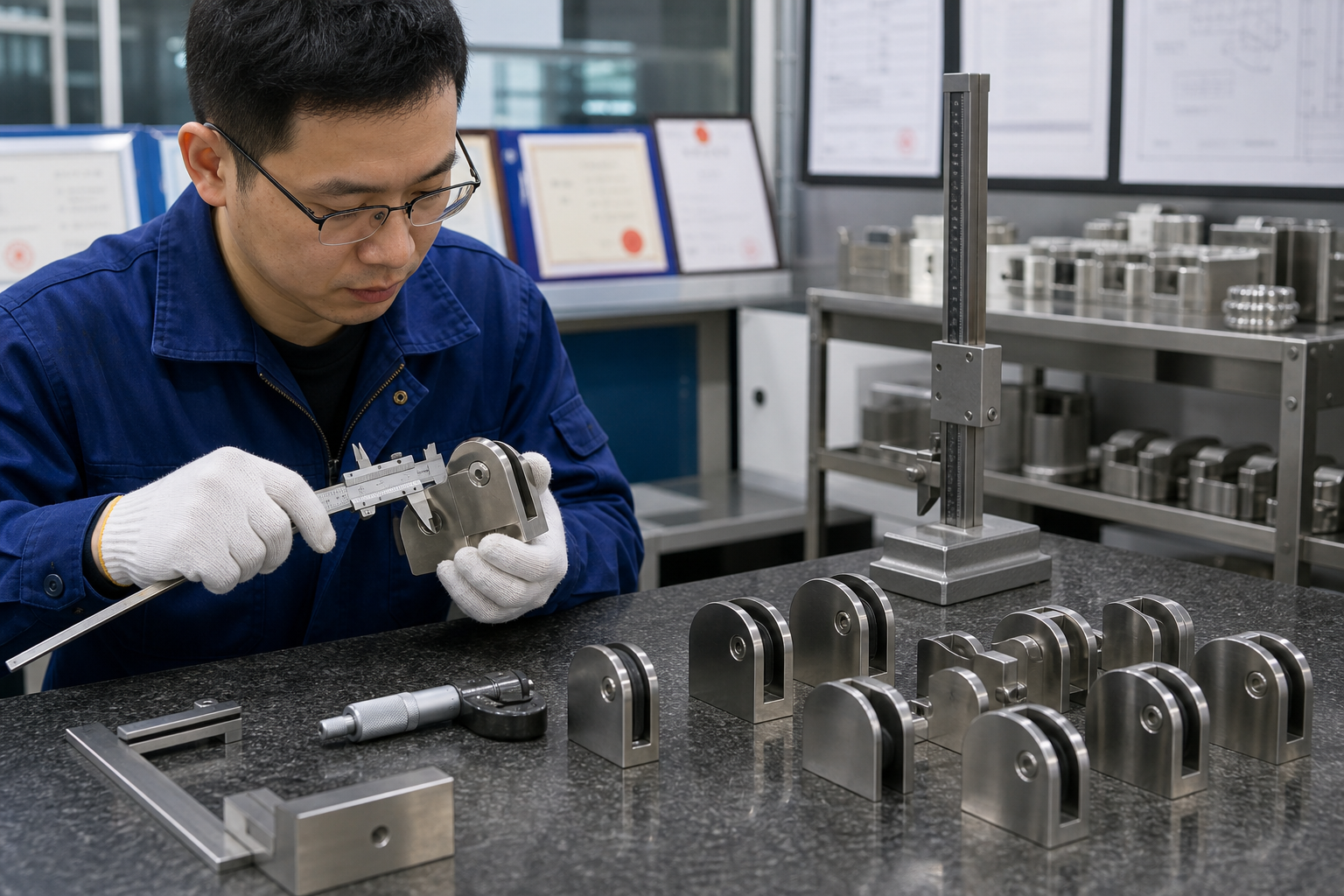
Material traceability is important when the project requires a confirmed 304 or 316 grade. Heat numbers, material certificates and inspection records reduce risk in export supply chains and help project teams document compliance.
How AODSON Manufactures Custom Architectural Hardware
AODSON manufactures custom stainless steel architectural hardware for OEM customers, project contractors and hardware brands. Production can include investment casting, CNC machining, drilling, tapping, polishing, passivation, assembly, inspection and export packaging.
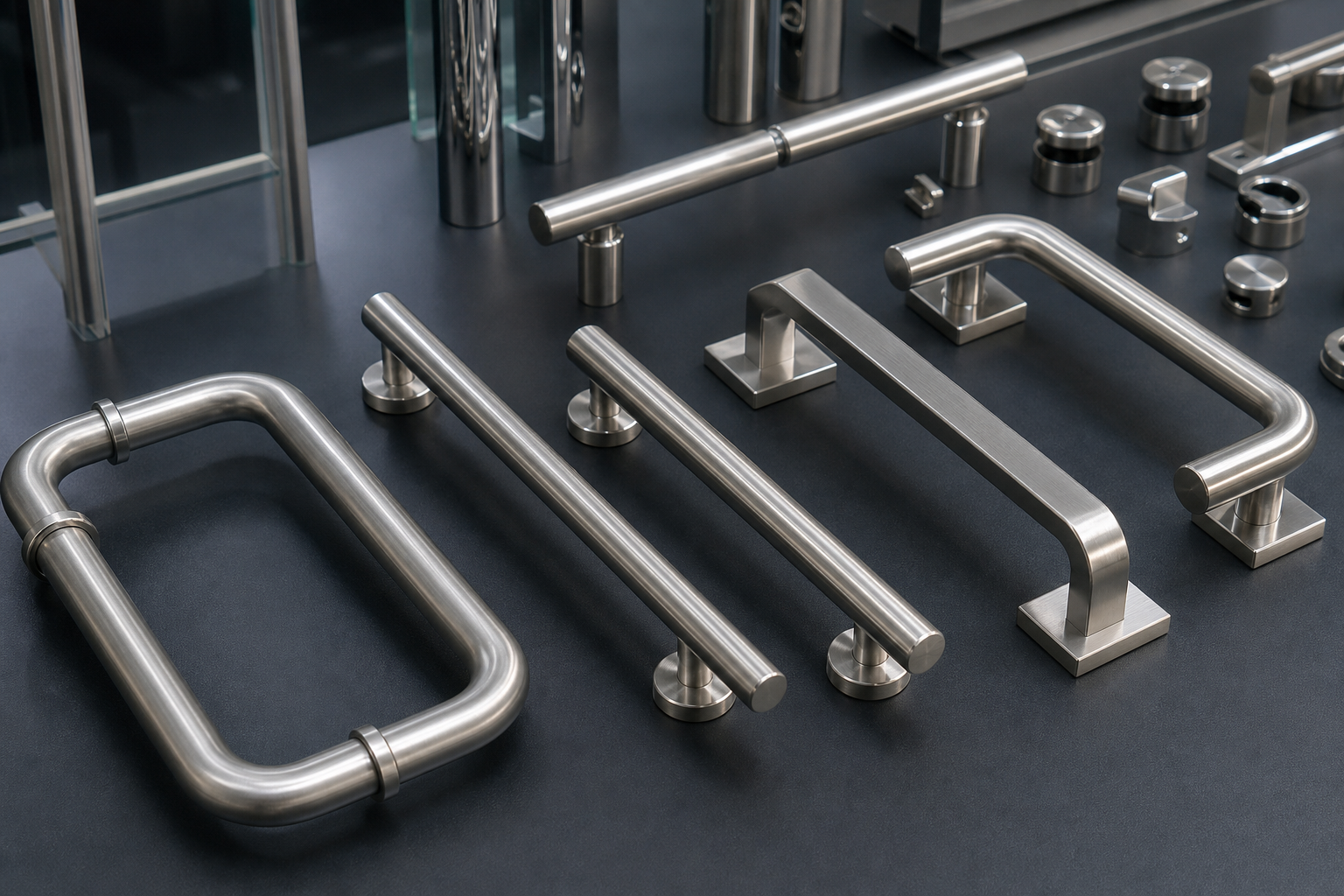
For a new project, the most useful information includes drawings, 3D files, target grade, application environment, finish requirement, annual quantity, installation method and quality standard. If the part will be installed near the sea, swimming pools, chemical plants or heavy pollution, the environment should be discussed before choosing 304 or 316.
AODSON can help customers review manufacturability, casting structure, machining allowances, visible surfaces, tolerance priorities and finish expectations. This reduces rework and helps the final hardware match both technical and visual requirements.
Frequently Asked Questions
Is 316 stainless steel always better than 304 for architectural hardware?
No. 316 has better chloride corrosion resistance, but 304 is often the better value for indoor and low-corrosion applications. The right choice depends on exposure, budget and service-life expectations.
Can 304 stainless steel be used outdoors?
Yes, 304 can be used outdoors in many inland environments when the surface finish is suitable and the hardware is cleaned periodically. For coastal, poolside or highly polluted environments, 316 is usually a safer choice.
Why is 316 stainless steel better near the sea?
316 contains molybdenum, which improves resistance to chloride-induced pitting and crevice corrosion. Sea air carries salt particles that can settle on hardware surfaces and accelerate corrosion.
Will 316 stainless steel rust?
316 is corrosion-resistant, not rust-proof. It can still stain or corrode if exposed to severe chlorides, iron contamination, poor drainage or aggressive chemicals. Proper finishing, passivation and maintenance are still important.
What is tea staining on stainless steel?
Tea staining is a brown surface discoloration that can appear on stainless steel, especially in coastal or polluted environments. It is usually cosmetic at first, but it signals that cleaning, finish quality or grade selection should be reviewed.
Which grade is better for glass railing clamps?
For indoor glass railing clamps, 304 is often sufficient. For exterior balconies, coastal buildings, swimming pools or marine-adjacent projects, 316 is normally recommended.
Does mirror polishing improve corrosion resistance?
A smoother surface can improve cleanability and reduce places where contaminants collect. However, polishing must be done with clean tools and proper process control. Passivation after polishing can further improve surface condition.
Is 316 harder to machine than 304?
316 can be slightly more demanding because it is tough and can work-harden. Experienced CNC machining teams adjust tooling, feeds, speeds and coolant to control surface finish and tolerance.
Should fasteners also be 316 when the main hardware is 316?
Usually yes for harsh environments. If 316 hardware is installed with lower-grade fasteners, the fasteners can become the weak point. The full assembly should be reviewed, including screws, pins, anchors and washers.
Can AODSON produce custom 304 and 316 stainless steel hardware?
Yes. AODSON supports OEM production of custom stainless steel architectural hardware using investment casting, CNC machining, surface finishing, passivation, quality inspection and export packaging.
Conclusion
For most indoor architectural hardware, 304 stainless steel delivers excellent value. For coastal, marine, poolside and harsh outdoor projects, 316 stainless steel is usually the better engineering choice because it provides stronger resistance to chloride-related corrosion.
The best result comes from matching grade selection with correct product design, investment casting control, CNC machining accuracy, surface finishing, passivation, inspection and maintenance planning. A well-made 304 component can outperform a poorly finished 316 component in the wrong conditions, while a properly specified 316 component can protect a project from avoidable long-term corrosion problems.
Need Custom Stainless Steel Architectural Hardware?
If you are sourcing stainless steel glass clamps, railing fittings, brackets, door handles or custom architectural hardware, AODSON can help you choose between 304 and 316 based on your application environment, drawing requirements and project budget.
Request a quote or contact AODSON to discuss OEM stainless steel architectural hardware for your next project.