




Last Updated: July 4, 2026
Stainless steel manhole covers are specified where durability, corrosion resistance, clean appearance, and long-term serviceability matter more than the lowest initial price. In commercial buildings, municipal utilities, food plants, hospitals, hotels, and industrial facilities, the cover is not just a floor plate. It is a fabricated access system that must carry load, sit flush with the finished surface, resist corrosion, and allow safe maintenance over many years.
AODSON manufactures custom stainless steel access solutions for OEM customers, contractors, distributors, and project buyers. This guide explains the main stainless steel manhole cover types, material choices, manufacturing processes, load considerations, surface finishes, installation details, and quality checks that should be reviewed before purchasing.
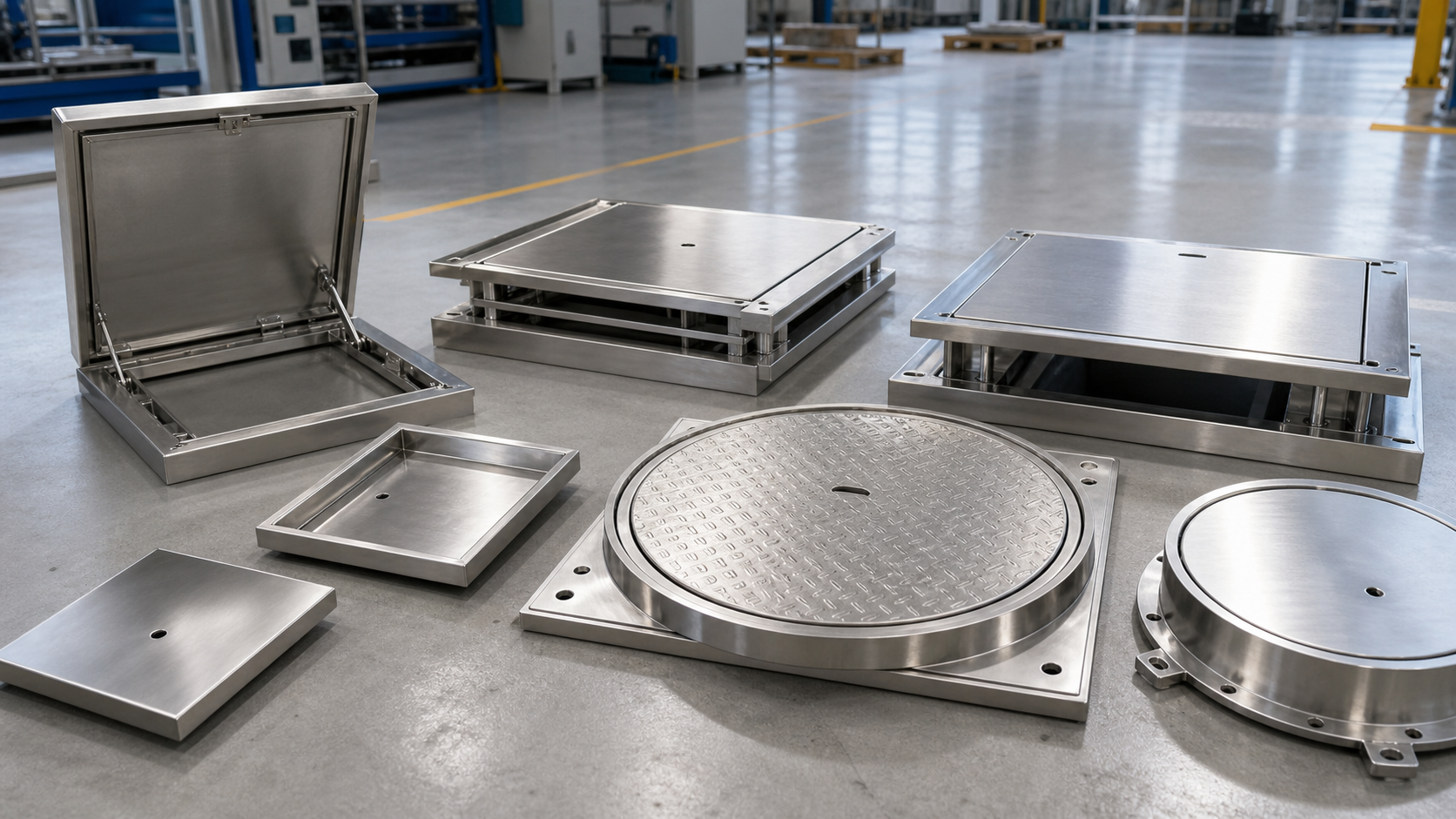
Table of Contents
- What Are Stainless Steel Manhole Covers?
- Main Types of Stainless Steel Manhole Covers
- Material Selection: 304, 316, and Duplex 2205
- Manufacturing Process
- Load Classes and Standards
- Surface Finish Options
- Typical Applications
- Installation Considerations
- Quality Control and Material Traceability
- Why Choose AODSON for OEM Manhole Covers?
- FAQ
What Are Stainless Steel Manhole Covers?
A stainless steel manhole cover is a fabricated access cover used to close an inspection chamber, utility trench, service pit, drainage opening, or equipment access point. Unlike cast iron covers, stainless steel covers are usually fabricated from plate, sheet, bar, tube, hinges, lifting points, gaskets, reinforcement ribs, and precision-machined components. This gives buyers more freedom to specify size, shape, load rating, finish, and installation detail.
Typical stainless steel covers are designed to meet one or more of these requirements:
- Flush installation with tile, stone, concrete, epoxy, or finished floor systems.
- Corrosion resistance in wet, hygienic, coastal, chemical, or washdown environments.
- Clean architectural appearance for commercial and public spaces.
- Safe lifting, locking, gasketing, or gas-tight sealing for maintenance access.
- Custom dimensions for OEM equipment, utility rooms, drainage systems, and infrastructure projects.
Many stainless steel manhole covers are part of broader architectural hardware or access solution programs, especially when the visible finish and installation tolerance are important to the final project appearance.
Main Types of Stainless Steel Manhole Covers
The right cover type depends on the finished floor, traffic load, access frequency, sealing requirement, and appearance target.
| Type | Best For | Key Design Features | Common Buyer Notes |
|---|---|---|---|
| Recessed covers | Architectural floors, malls, hotels, public buildings | Tray-style cover accepts tile, stone, concrete, or screed infill | Requires accurate infill depth and frame level control |
| Solid top covers | Utility rooms, service corridors, industrial floors | Visible stainless top plate, reinforced underside, lifting points | Simple to clean and easy to inspect |
| Tile infill covers | Commercial interiors where the cover should visually blend into the floor | Recessed tray, edge frame, reinforcement, optional lifting keys | Tile thickness, adhesive bed, and grout joint need early coordination |
| Heavy-duty covers | Industrial plants, loading zones, maintenance areas | Thicker plate, ribs, structural frame, stronger lifting system | Load requirement should be verified before fabrication |
| Gas-tight covers | Wastewater, utility chambers, odor control, technical rooms | Gasket, bolting or locking, machined sealing surface | Seal design and maintenance access must be balanced |
Recessed Manhole Covers
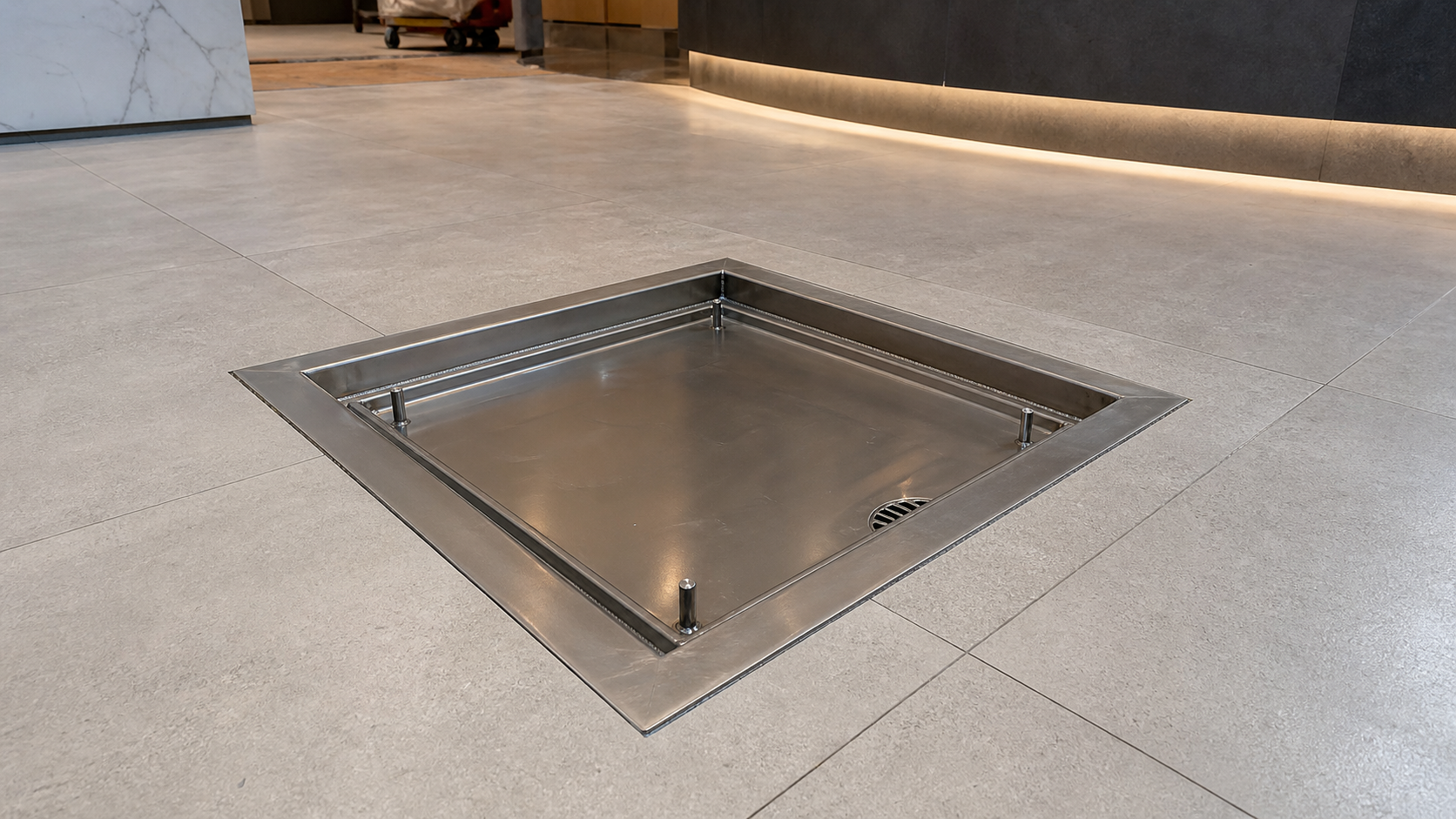
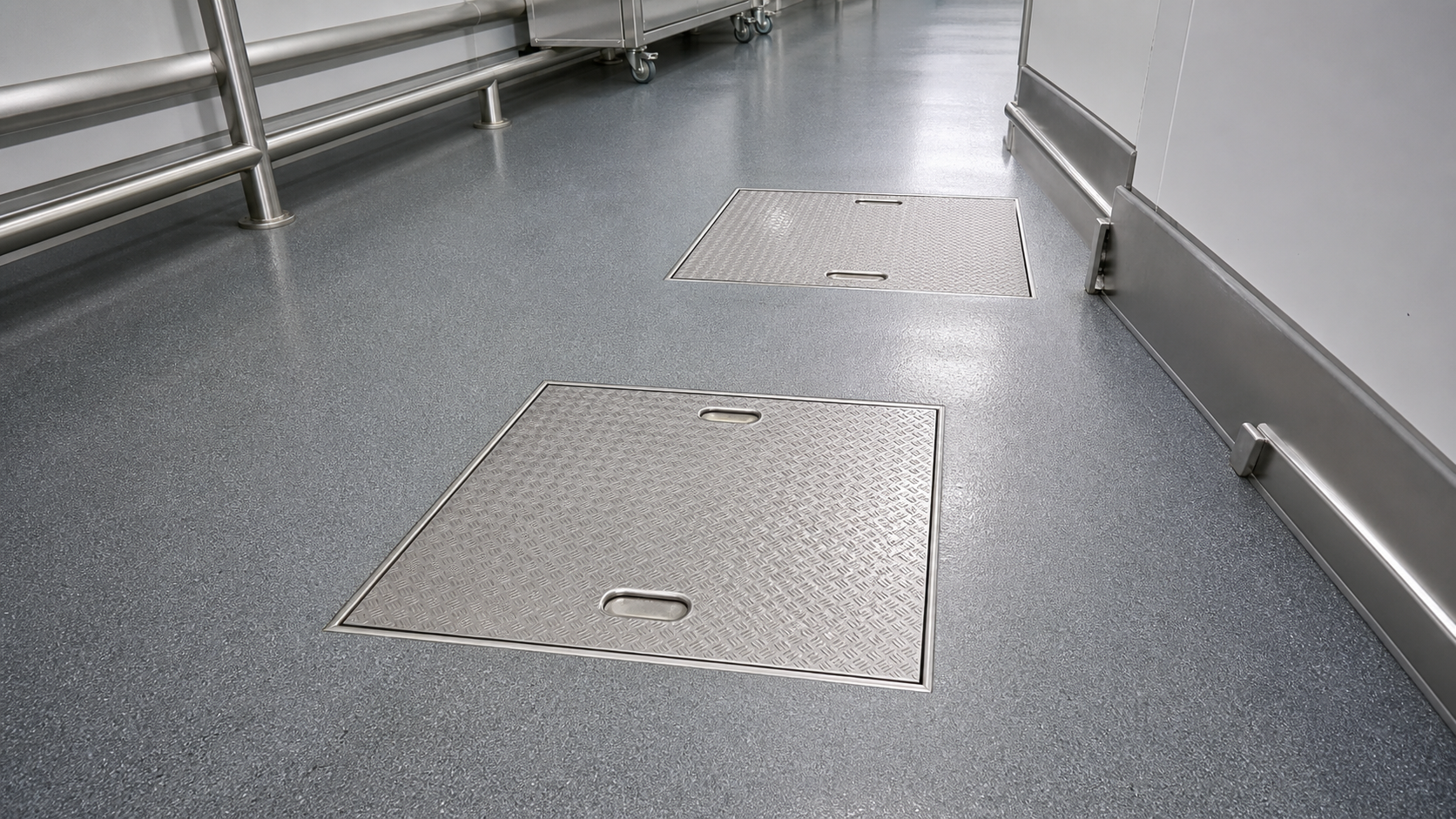
Recessed stainless steel manhole covers are designed with a tray that receives floor finish material. They are commonly used when the cover must blend into tile, stone, terrazzo, concrete, or resin flooring. The stainless frame remains visible as a clean perimeter while the central area matches the surrounding surface.
Solid Top Covers
Solid top covers use stainless steel plate as the visible wearing surface. They are practical for utility rooms, plant floors, kitchens, service corridors, equipment rooms, and other areas where easy cleaning and durability are priorities. Solid tops can be supplied with brushed, bead blasted, anti-slip, or patterned surfaces.
Tile Infill Covers
Tile infill covers are a specific recessed cover style used in finished interior floors. The most common purchasing mistake is ignoring the full build-up: tile thickness, adhesive bed, tolerance, frame depth, and drainage slope all affect whether the cover sits flush after installation.
Heavy-Duty Covers
Heavy-duty covers use thicker stainless plate, structural ribs, reinforced frames, and carefully located welds to resist deflection. For projects with forklifts, pallet trucks, maintenance vehicles, or equipment loads, the cover should be designed from a load case rather than chosen from a catalog picture.
Gas-Tight Covers
Gas-tight and odor-resistant covers use gaskets, machined contact surfaces, compression bolts, or locking systems to improve sealing. They are common in wastewater, chemical, mechanical, and building service areas. The best design keeps the seal replaceable and the cover serviceable.
Material Selection: 304, 316, and Duplex 2205
Material grade has a direct effect on corrosion resistance, cost, weldability, and long-term appearance. For most stainless steel manhole covers, the practical choices are 304, 316, and duplex 2205.
| Material | Strengths | Limitations | Recommended Environments |
|---|---|---|---|
| 304 stainless steel | Good general corrosion resistance, widely available, cost-effective, easy to fabricate | Less resistant to chloride and aggressive chemicals than 316 | Indoor commercial buildings, dry utility areas, general architectural hardware |
| 316 stainless steel | Better chloride resistance, improved performance in wet and hygienic environments | Higher material cost than 304 | Coastal projects, food processing, hospitals, hotels, washdown areas |
| Duplex 2205 | High strength, excellent chloride stress corrosion resistance, good durability | Higher cost and more controlled welding requirements | Marine, chemical, wastewater, heavy industrial, demanding OEM projects |
For buyers comparing stainless steel with cast iron, galvanized steel, or aluminum, the decision should consider not only the purchase price but also corrosion exposure, appearance, cleaning frequency, replacement cost, and the risk of downtime.
Manufacturing Process
A high-quality stainless steel manhole cover is the result of controlled fabrication, not just material selection. AODSON combines sheet metal fabrication, CNC machining, welding, finishing, and inspection to produce covers for project-specific requirements.
Laser Cutting
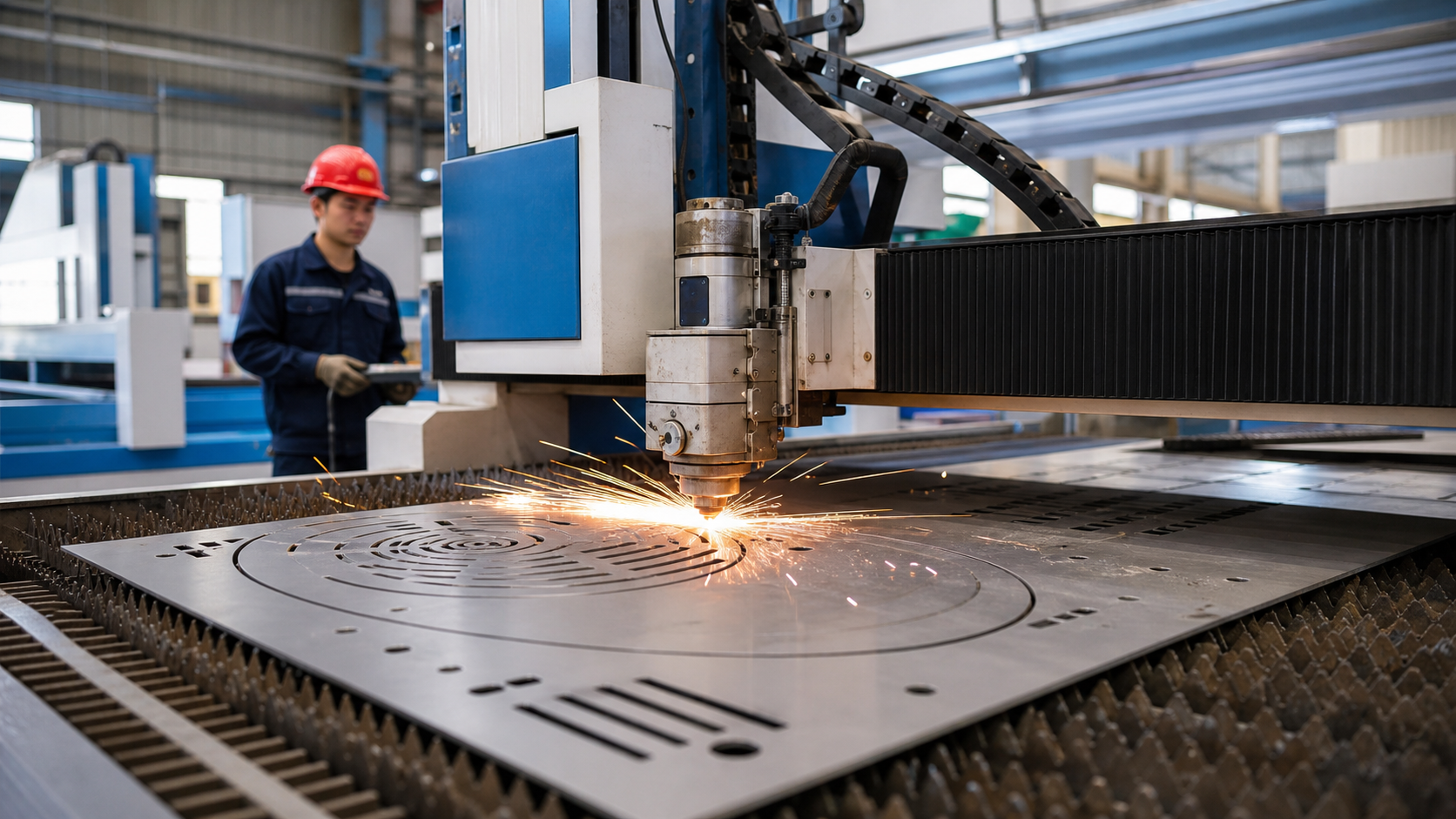
Laser cutting creates accurate blanks, slots, lifting holes, hinge cutouts, and frame components from stainless plate or sheet. It reduces burrs and improves repeatability, especially for custom sizes and OEM batch production.
Sheet Metal Fabrication
Fabrication may include bending, forming, rolling, punching, countersinking, reinforcement layout, and fixture preparation. For recessed covers, dimensional accuracy matters because the tray depth must match the finished flooring system.
TIG Welding
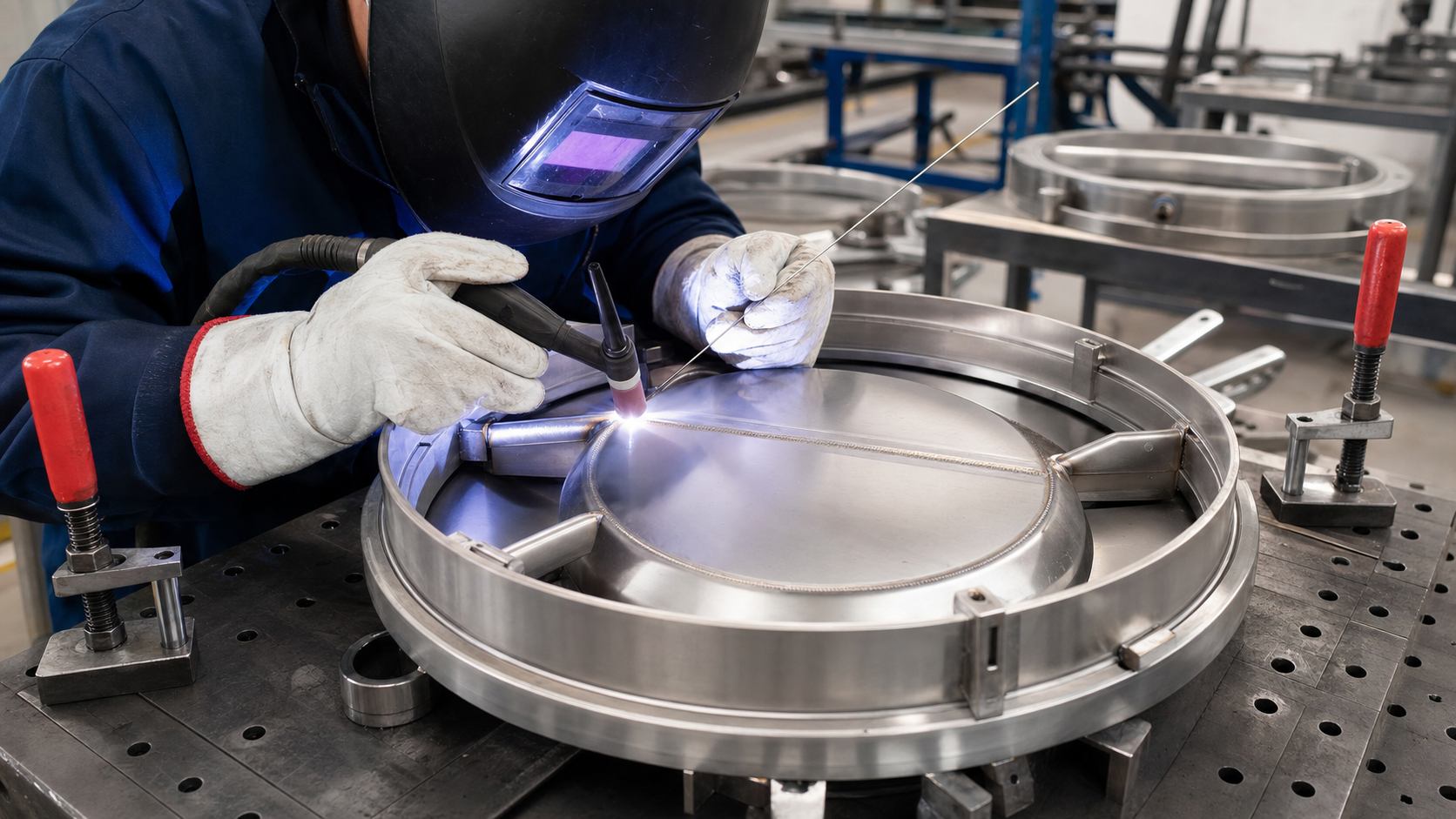
TIG welding is widely used for stainless steel cover frames because it provides clean, controlled welds with good appearance. Proper fit-up, heat input, shielding, and post-weld cleaning are essential to reduce distortion and preserve corrosion resistance.
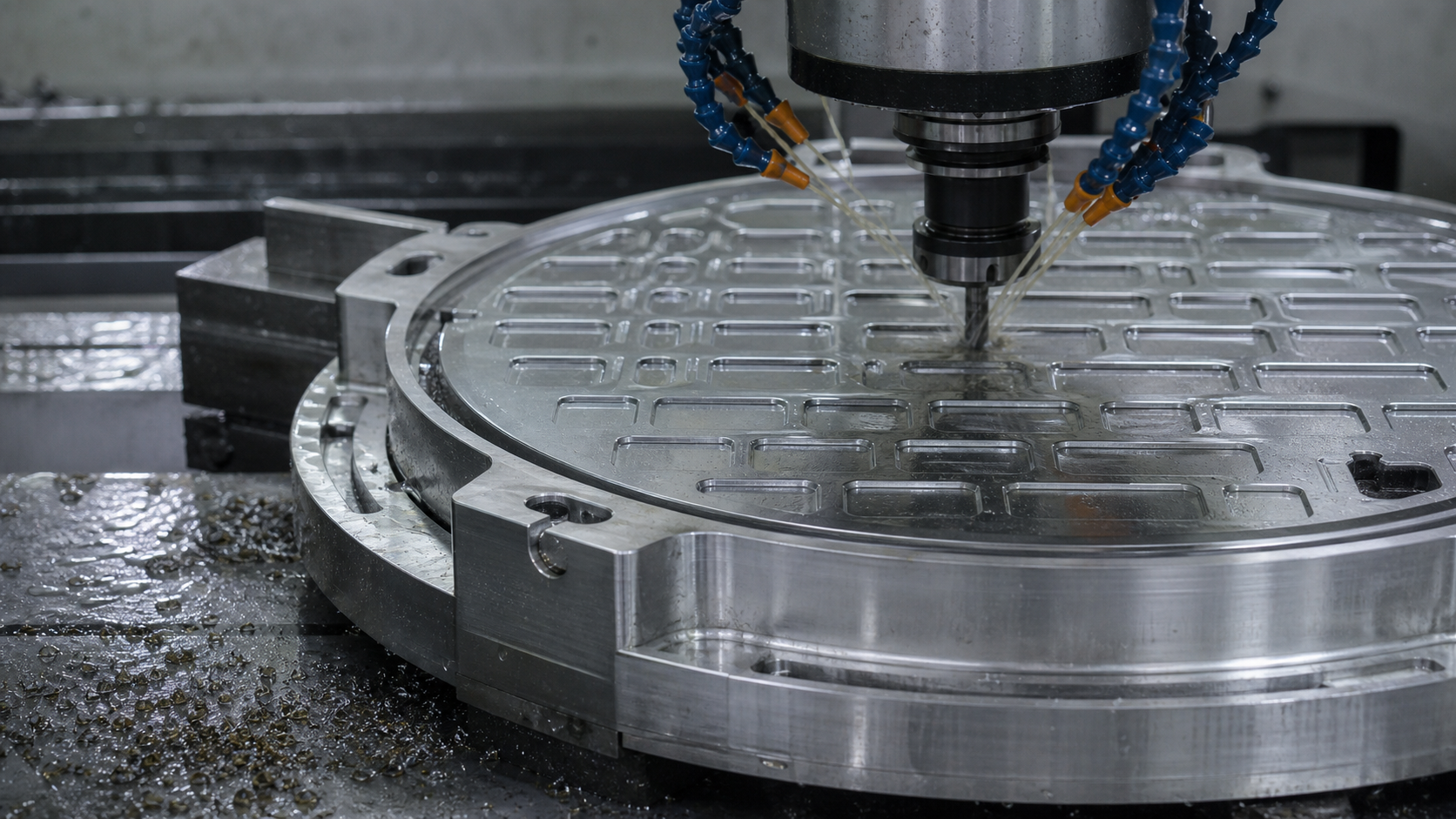
CNC Machining
CNC machining is used where tight tolerance features are required: hinge pockets, lifting key slots, bolt seats, gasket grooves, locking parts, and machined sealing surfaces. It is especially important for gas-tight covers and OEM access assemblies.
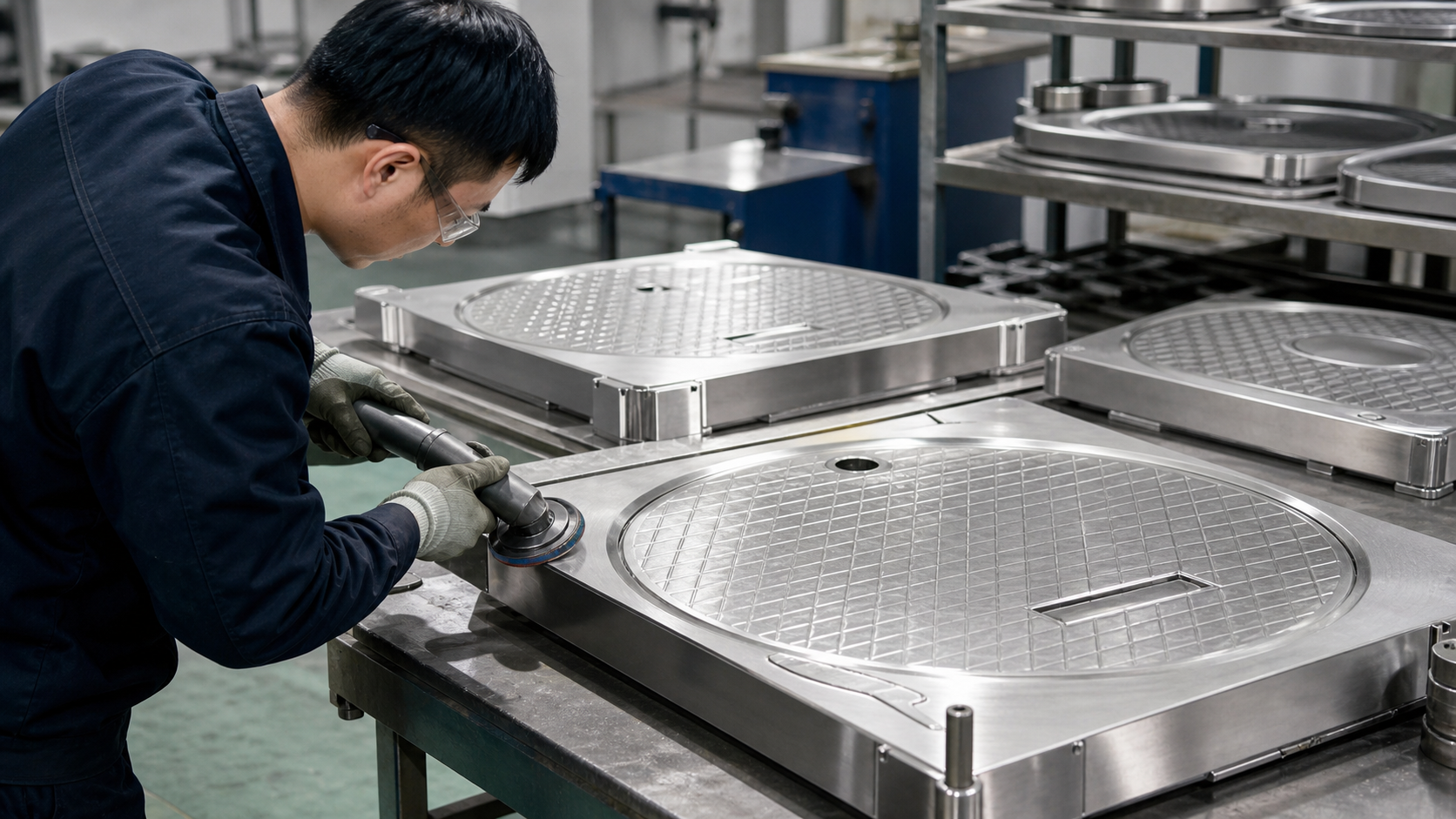
Surface Finishing
Surface finishing affects both appearance and corrosion behavior. Stainless steel covers may be brushed, polished, bead blasted, passivated, or treated with anti-slip textures depending on the project environment.
For projects that combine fabricated stainless steel with cast or machined components, buyers may also review AODSON’s precision casting capabilities for compatible OEM hardware parts.
Load Classes and Standards
Load capacity should be defined early. Covers used only by pedestrians do not need the same structure as covers exposed to pallet trucks, forklifts, delivery vehicles, or municipal traffic. Many projects reference EN 124 load classes, local municipal specifications, or project-specific engineering loads.
| Load Scenario | Typical Area | Design Recommendation | Buyer Check |
|---|---|---|---|
| Pedestrian | Hotels, malls, hospitals, walkways | Flush cover with adequate stiffness and slip-resistant finish | Confirm heel safety, surface finish, and cleaning method |
| Light service traffic | Utility rooms, back-of-house corridors | Reinforced solid top or recessed cover | Confirm trolley and maintenance equipment loads |
| Industrial handling | Factories, warehouses, food plants | Heavy-duty frame, ribs, thicker plate, controlled deflection | Define forklift wheel load and contact area |
| Outdoor or municipal service | Drainage, utility access, public works | Project-specific structure and corrosion grade | Confirm standard, traffic class, drainage, and environment |
| Sealed technical access | Wastewater, chemical, odor-control zones | Gasketed or gas-tight design with locking/bolting | Confirm sealing target and maintenance frequency |
When exact standards are not specified, buyers should provide opening size, clear span, expected load, installation support, traffic type, and deflection expectations so the manufacturer can recommend a practical structure.
Surface Finish Options
The surface finish should match the environment. A decorative finish may be ideal in a hotel lobby, while a hygienic or anti-slip finish may be more important in a food plant.
| Finish | Appearance | Advantages | Common Applications |
|---|---|---|---|
| Brushed | Linear grain, satin metallic look | Premium appearance, hides minor handling marks better than mirror polish | Commercial interiors, hotels, architectural floors |
| Polished | Smoother and brighter surface | Easy to clean, refined appearance | Visible architectural and hygienic areas |
| Bead blasted | Uniform matte finish | Reduces glare, consistent appearance | Public buildings, industrial areas |
| Anti-slip patterned | Embossed or textured grip surface | Improves traction in wet or service areas | Factories, kitchens, outdoor access points |
| Passivated | Chemically cleaned stainless surface | Improves corrosion resistance after fabrication | Food, medical, coastal, chemical, and washdown environments |
Typical Applications
Stainless steel manhole covers are used wherever access, corrosion resistance, hygiene, or architectural appearance matter.
| Application | Common Cover Type | Material Choice | Key Requirement |
|---|---|---|---|
| Commercial buildings | Recessed or tile infill | 304 or 316 | Flush appearance, safe pedestrian traffic, clean edges |
| Municipal projects | Heavy-duty or sealed cover | 316 or duplex 2205 | Load capacity, corrosion resistance, secure access |
| Food processing | Solid top, hygienic, gasketed cover | 316 | Washdown resistance, easy cleaning, smooth welds |
| Hospitals | Recessed or solid top | 304 or 316 | Cleanability, low trip risk, quiet access |
| Hotels | Tile infill or brushed recessed cover | 304 or 316 | Visual integration with premium finishes |
| Industrial plants | Heavy-duty solid top | 316 or duplex 2205 | Equipment load, chemical exposure, maintenance access |
Installation Considerations
Even a well-made cover can perform poorly if installation details are ignored. The frame must be fully supported, level, aligned with the finished floor, and protected from distortion during concrete or tile work.
- Opening size: Confirm clear opening, frame outside size, and cover removal clearance.
- Frame support: Provide continuous bearing around the frame to avoid rocking or deflection.
- Finished floor level: Coordinate tile, adhesive, screed, concrete, or epoxy thickness before fabrication.
- Drainage: Consider slope, water exposure, and whether the cover needs drainage holes or sealing.
- Lifting method: Choose lifting keys, handles, hinges, gas struts, or removable sections based on access frequency and weight.
- Safety: Review slip resistance, edge gaps, heel safety, locking, and safe maintenance handling.
Quality Control and Material Traceability
For OEM projects and export manufacturing, quality control should be documented. AODSON can support dimensional inspection, weld visual checks, surface finish review, material traceability, and packaging verification according to project requirements.
| Inspection Item | What to Check | Why It Matters |
|---|---|---|
| Material grade | 304, 316, duplex 2205 certificate or PMI when required | Confirms corrosion resistance and specification compliance |
| Dimensions | Frame size, clear opening, tray depth, diagonal tolerance | Ensures fit during installation |
| Flatness and deflection | Cover flatness, reinforcement, support contact | Reduces rocking, noise, and trip risk |
| Weld quality | Continuity, penetration where required, cleaning, discoloration | Protects strength and corrosion resistance |
| Surface finish | Grain direction, scratches, passivation, anti-slip texture | Affects appearance and cleanability |
| Accessories | Gaskets, bolts, hinges, lifting keys, locking parts | Ensures the cover can be safely used and maintained |
| Packaging | Protective film, edge protection, crates, labeling | Prevents transit damage for export orders |
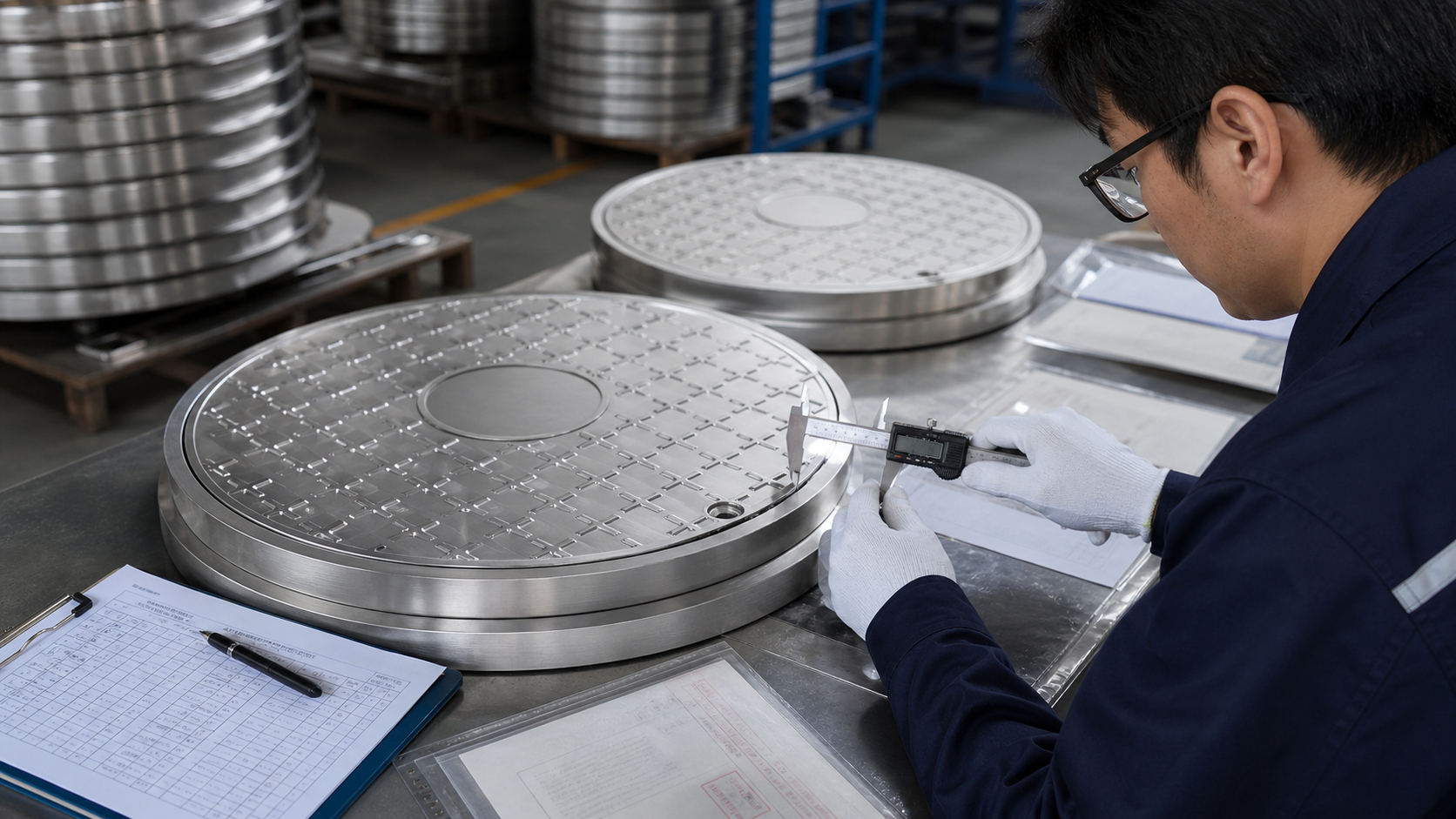
Learn more about AODSON’s inspection approach on our quality control page.
Why Choose AODSON for OEM Manhole Covers?
AODSON supports custom stainless steel fabrication projects where buyers need more than a standard catalog item. Our team works with drawings, samples, specifications, and application requirements to manufacture access covers and related stainless steel hardware for export customers.
- Custom stainless steel fabrication for recessed, solid top, tile infill, heavy-duty, and gasketed covers.
- Material options including 304, 316, and duplex stainless steel for demanding environments.
- Laser cutting, bending, TIG welding, CNC machining, polishing, brushing, and passivation support.
- OEM manufacturing experience for commercial, municipal, industrial, hygienic, and architectural projects.
- Inspection, packaging, and export coordination for international buyers.
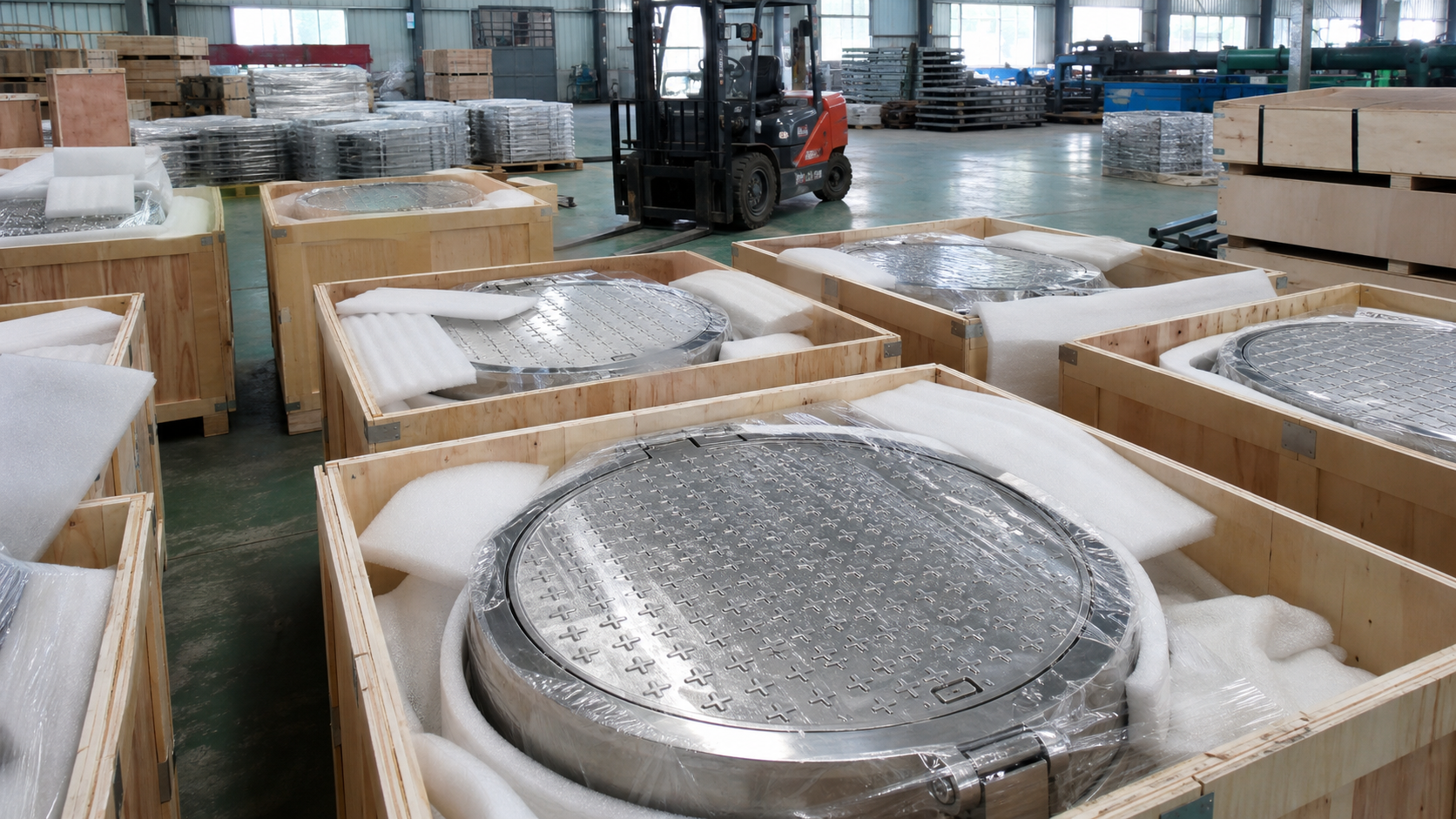
If you have drawings, load requirements, flooring details, or a sample cover to develop, send the project information through Request a Quote or contact AODSON for engineering and manufacturing support.
FAQ
Are stainless steel manhole covers better than cast iron covers?
They are better for applications that need corrosion resistance, clean appearance, hygienic surfaces, or custom fabrication. Cast iron may still be suitable for some road and utility applications, but stainless steel is often preferred for commercial, food, hospital, coastal, and OEM projects.
Should I choose 304 or 316 stainless steel?
Choose 304 for dry indoor and general architectural use. Choose 316 for coastal, wet, washdown, food processing, hotel, hospital, or chloride-exposed environments. For severe chloride or chemical exposure, duplex 2205 may be considered.
Can stainless steel manhole covers be made to custom sizes?
Yes. Fabricated stainless steel covers are well suited to custom opening sizes, frame depths, load requirements, hinge designs, lifting systems, and surface finishes.
What information is needed for a quotation?
Provide cover size, clear opening, frame dimensions, material grade, load requirement, cover type, surface finish, installation environment, drawings if available, quantity, and packaging or export requirements.
Can recessed covers accept tile or stone infill?
Yes. Recessed and tile infill covers are designed to receive tile, stone, concrete, or other flooring materials. The tray depth must match the full flooring build-up, including adhesive or bedding material.
How can a cover be made gas-tight?
Gas-tight designs typically use a gasket, compression bolts or locking points, and a machined or controlled sealing surface. The gasket material should match the chemical and temperature environment.
Do stainless steel covers need surface passivation?
Passivation is recommended after fabrication for many wet, hygienic, coastal, or chemically exposed applications. It helps restore the stainless surface after cutting, welding, and finishing.
Can stainless steel manhole covers support forklifts?
Yes, but the design must be engineered for the actual wheel load, contact area, span, support condition, and acceptable deflection. A standard light-duty cover should not be used for forklift traffic without verification.
What surface finish is best for public areas?
Brushed or bead blasted finishes are common for visible public areas. If the surface may become wet, an anti-slip texture or patterned surface should be reviewed.
Can AODSON manufacture related stainless steel access hardware?
Yes. AODSON can manufacture frames, lifting keys, hinges, locking parts, machined components, and related OEM stainless steel hardware depending on the project drawings and requirements.
Conclusion
Stainless steel manhole covers provide a strong combination of corrosion resistance, clean appearance, custom design flexibility, and long service life. The best specification starts with the environment, load requirement, installation detail, material grade, and maintenance expectations. From there, fabrication quality, welding control, machining accuracy, surface finishing, and inspection determine how well the cover performs after installation.
For OEM stainless steel manhole covers, recessed access covers, tile infill covers, or heavy-duty fabricated covers, AODSON can help review drawings, recommend materials, and manufacture custom solutions for global projects. Request a quote or contact us to discuss your application.
Author
AODSON Engineering Team
AODSON’s engineering and manufacturing team works with stainless steel fabrication, precision machining, surface finishing, and export quality control for custom metal components and architectural access solutions.