




Last Updated: July 4, 2026
Choosing between tactile studs and tactile strips is not simply a matter of appearance. The better solution depends on the accessibility function, local standard, installation surface, traffic level, maintenance plan, and project environment. For architects, accessibility consultants, contractors, engineers, distributors, and OEM buyers, the goal is to create a tactile guidance system that is detectable, durable, compliant, and suitable for the building or infrastructure project.
In general, tactile studs are used for warning or hazard detection, while tactile strips are used for directional guidance. Many projects need both. AODSON manufactures stainless steel tactile studs, tactile strips, warning indicators, directional indicators, and custom OEM accessibility hardware for public buildings, transportation facilities, commercial interiors, and infrastructure projects.
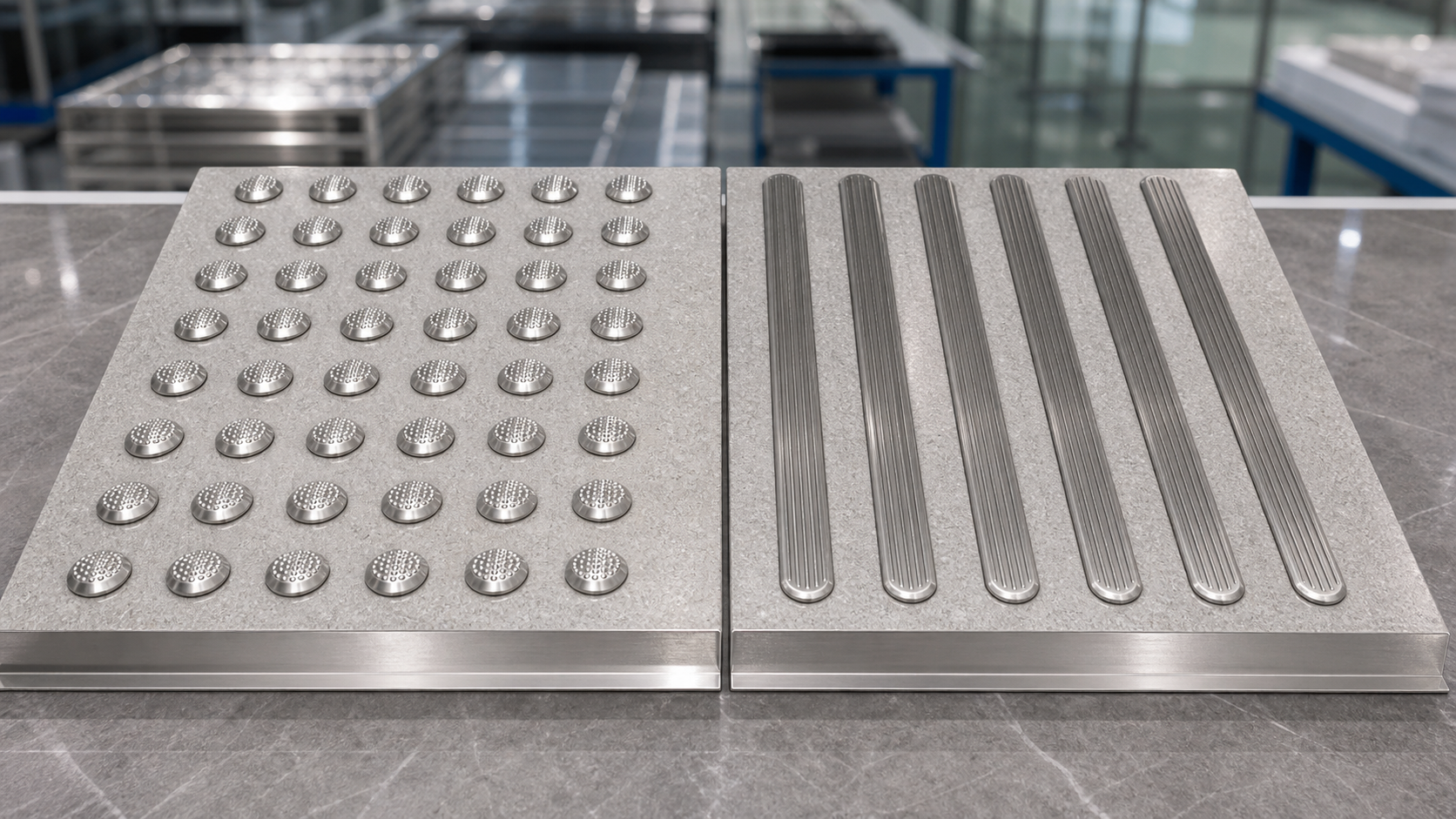
Table of Contents
- What Are Tactile Studs?
- What Are Tactile Strips?
- Key Differences at a Glance
- Material Comparison
- Manufacturing Methods
- Installation Methods
- Performance Comparison
- Best Applications
- Which Solution Is Better for Your Project?
- OEM Manufacturing with AODSON
- Frequently Asked Questions
What Are Tactile Studs?
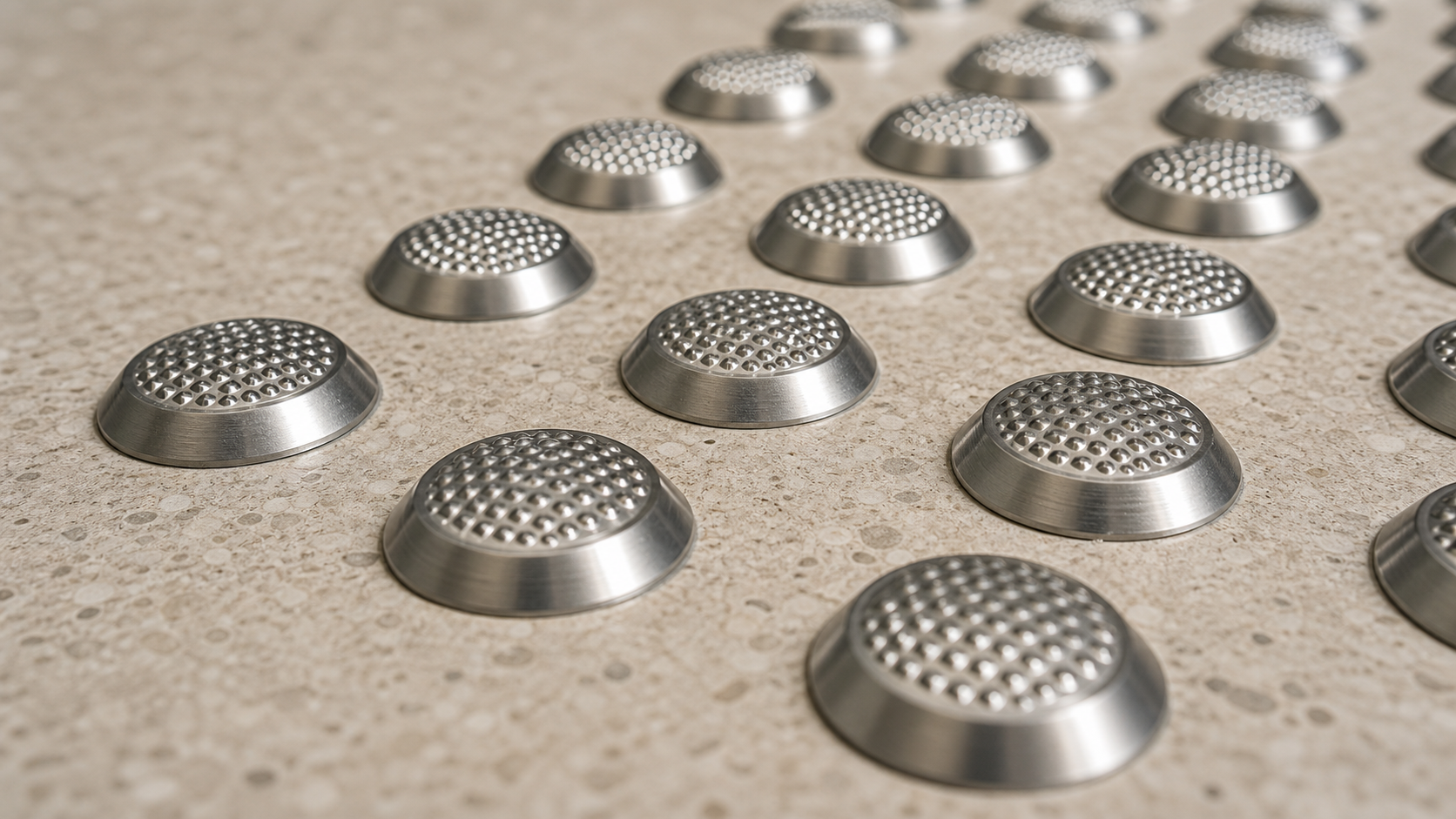
Tactile studs are individual raised domes, buttons, or truncated domes installed in a regular pattern on a walking surface. They are designed to be detected underfoot or with a cane and are most commonly used as warning indicators. Stainless steel tactile studs are often specified near stairs, escalators, platform edges, pedestrian crossings, ramps, elevators, and other hazard or decision areas.
Studs can be adhesive-fixed, mechanically anchored, supplied with threaded stems, or installed using templates. Stainless steel gives them strong wear resistance, corrosion resistance, and a premium architectural finish.
What Are Tactile Strips?
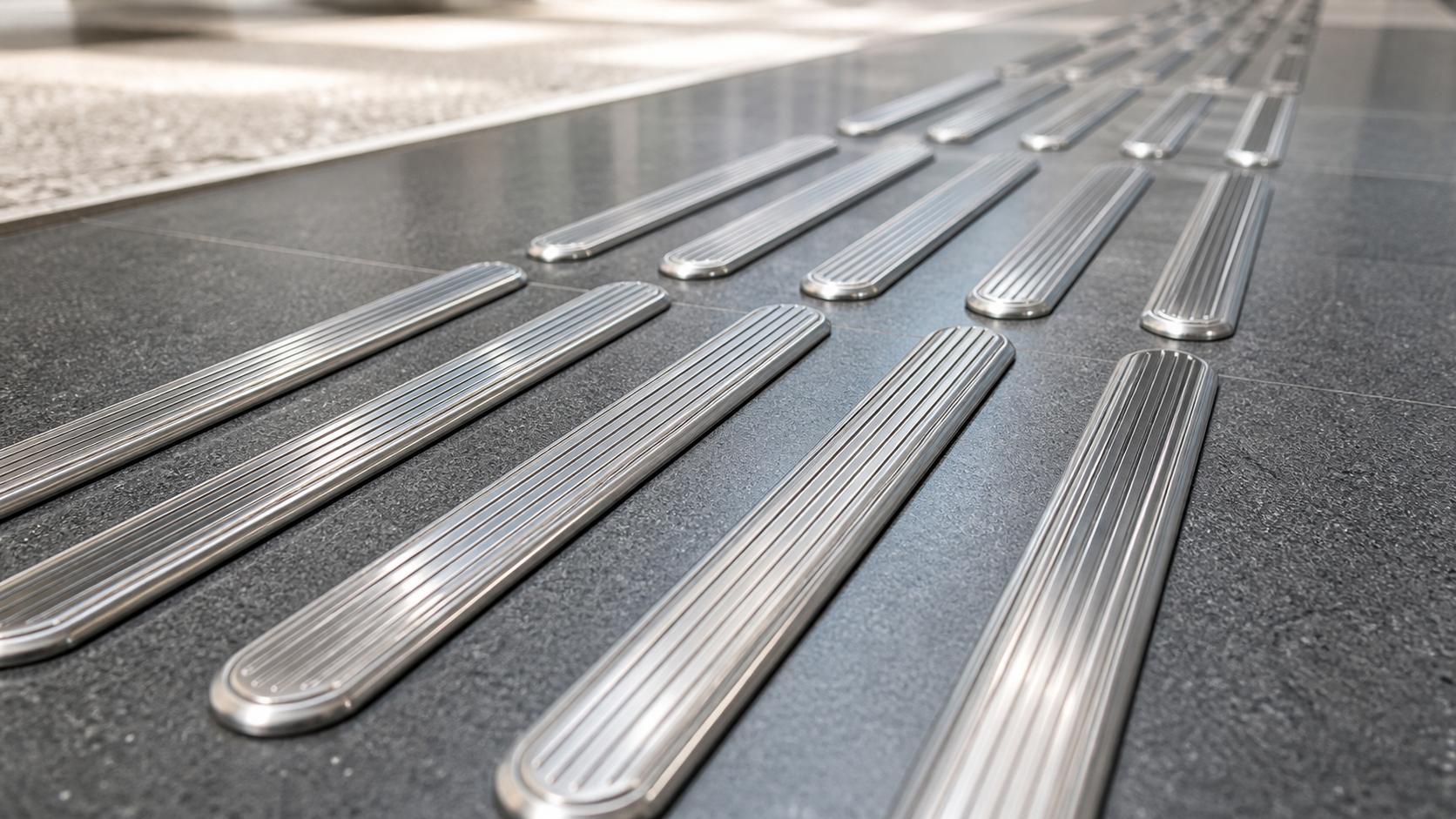
Tactile strips are raised linear bars installed in parallel rows to guide movement along an accessible route. They are most often used as directional indicators in airports, railway stations, hospitals, universities, shopping centers, civic buildings, and transport interchanges.
Stainless steel tactile strips can be supplied as individual bars, grooved profiles, screw-fixed strips, adhesive-backed strips, or modular assemblies. They are useful where users need a continuous path rather than a warning zone.
Key Differences at a Glance
| Factor | Tactile Studs | Tactile Strips | Practical Recommendation |
|---|---|---|---|
| Main function | Warning and hazard detection | Directional guidance | Use studs for caution zones and strips for route guidance |
| Shape | Raised dots or domes | Raised linear bars | Follow local accessibility geometry requirements |
| Common locations | Stairs, platform edges, crossings, ramps | Corridors, concourses, airport walkways, stations | Match location to the accessibility purpose |
| Installation complexity | Requires accurate spacing of many individual points | Requires straight alignment and consistent parallel spacing | Use templates for both |
| Visual impact | More dotted, warning-focused appearance | Cleaner linear route expression | Coordinate with flooring and wayfinding design |
| Maintenance | Individual pieces may be replaced | Long strips can be easier to clean but may need full-strip replacement | Choose fixing method based on traffic and replacement plan |
Material Comparison: 304, 316, and Duplex Stainless Steel
Material grade affects corrosion resistance, cost, finish stability, and long-term service life. For most stainless steel tactile guidance products, the common choices are 304, 316, and duplex stainless steel.
| Material | Strengths | Limitations | Best Use |
|---|---|---|---|
| 304 stainless steel | Good general corrosion resistance, cost-effective, easy to polish or brush | Less resistant to chlorides than 316 | Indoor commercial buildings, offices, schools, shopping centers |
| 316 stainless steel | Better resistance to moisture, cleaning chemicals, and chloride exposure | Higher cost than 304 | Airports, hospitals, coastal buildings, outdoor public areas, heavy-cleaning zones |
| Duplex stainless steel | High strength and excellent chloride stress corrosion resistance | Higher cost and more controlled processing | Marine, transport infrastructure, aggressive outdoor or industrial environments |
For many architectural hardware projects, 304 is suitable indoors, while 316 is a safer choice for wet, outdoor, coastal, or cleaning-intensive applications.
Manufacturing Methods
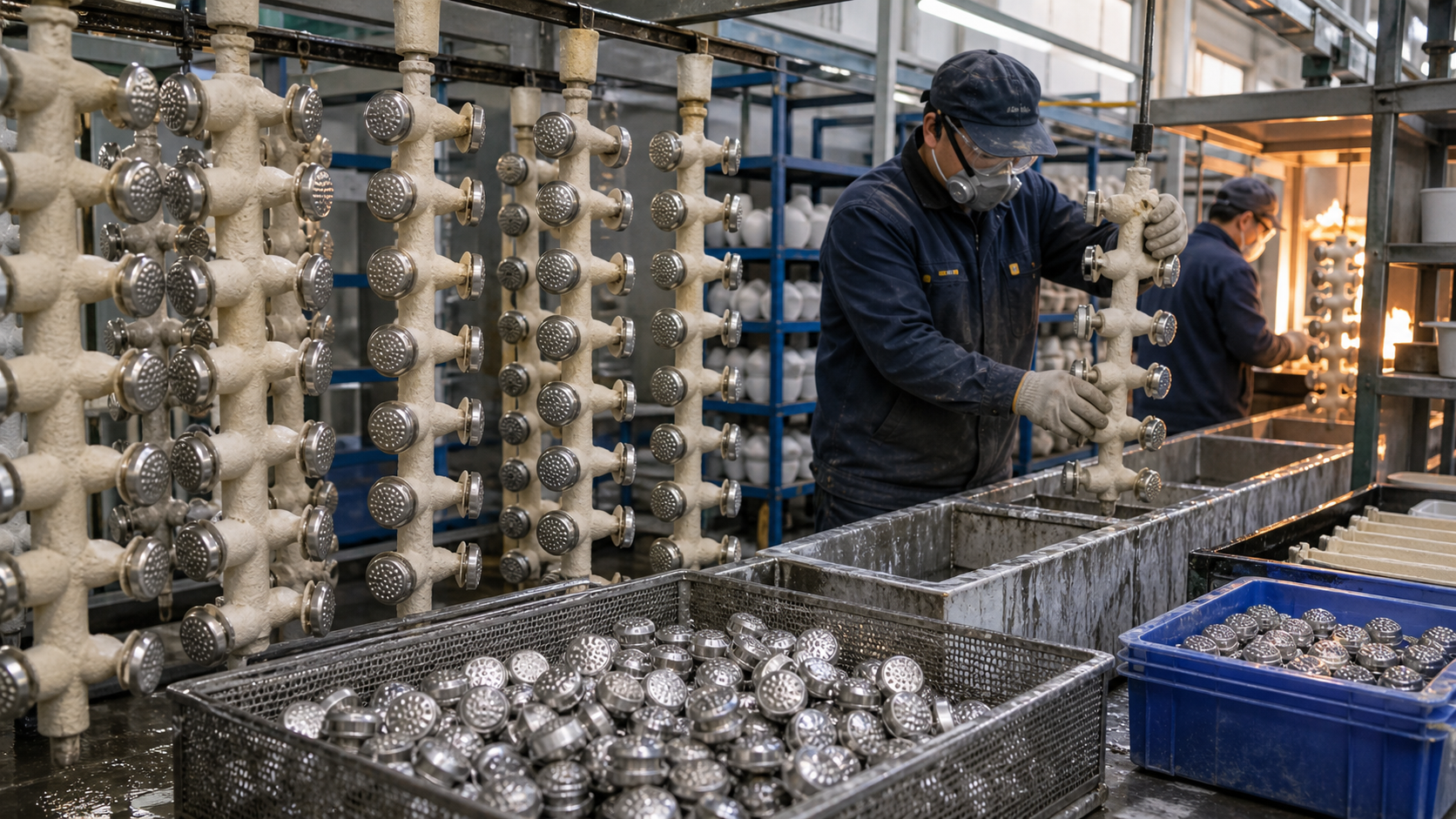
Investment Casting
Investment casting is suitable for stainless steel tactile studs with raised domes, stems, underside features, or complex geometry. It supports repeatability for OEM production and can reduce machining time for high-volume parts.
CNC Machining
CNC machining controls tactile stud diameter, height, threaded stems, grooves, countersinks, strip length, and anchor details. It is especially important when parts must match a strict installation template or when tactile strips require consistent edges and anti-slip grooves.

Surface Finishing
Finishing options include brushed, satin, bead blasted, mirror polished, grooved, or anti-slip textured surfaces. The finish should support contrast, cleanability, wear resistance, and slip performance. A decorative finish that becomes slippery or difficult to maintain is not a good accessibility solution.
Installation Methods
| Method | Studs | Strips | Best Use |
|---|---|---|---|
| Adhesive fixing | Good for smooth indoor floors and retrofits | Good for clean indoor routes | Low-disruption installation where floor surface is compatible |
| Mechanical anchors | Strong retention for high traffic and outdoor use | Less common but possible for selected strip designs | Concrete, stone, transport, and exterior zones |
| Threaded stems | Secure individual stud fixing | Not typical for long strips | New construction or prepared substrates |
| Screw fixing | Possible for selected stud assemblies | Common for strips and removable profiles | Serviceable systems and heavy-use public routes |
| Modular plates | Studs pre-mounted on panels | Strips pre-mounted on panels | Retrofit, temporary route changes, or fast installation |
Both systems need accurate layout. Studs require consistent point spacing; strips require straight alignment and parallel spacing. Installation templates reduce errors and help contractors meet project drawings.
Performance Comparison
| Performance Area | Tactile Studs | Tactile Strips | Design Note |
|---|---|---|---|
| Slip resistance | Depends on dome texture and spacing | Depends on groove/texture and strip profile | Specify anti-slip treatment for wet or high-traffic areas |
| Durability | Excellent when material and fixing method match traffic | Excellent when strip thickness and fixing are correct | 316 stainless steel improves corrosion resistance outdoors |
| Maintenance | Individual damaged studs can often be replaced | Strips are easier to clean along the route but may require full strip replacement | Plan replacement access before installation |
| Visual appearance | Clear warning signal, more dotted visual field | Clean linear guidance, strong architectural direction | Coordinate with flooring contrast and wayfinding design |
| Accessibility role | Warning/hazard cue | Route guidance cue | Use both when a route includes hazards and navigation paths |
| Maintenance Factor | Tactile Studs | Tactile Strips |
|---|---|---|
| Cleaning | Requires cleaning around many individual studs | Linear profile can be easier to wipe or machine clean |
| Replacement | Single studs can often be replaced individually | Damaged strips may require replacing a longer section |
| Debris buildup | Can occur between studs if spacing is tight | Can occur along grooves or strip edges |
| Inspection | Check missing studs, loose anchors, height consistency | Check straightness, lifting edges, screw/adhesive retention |
Best Applications
Many public environments need both warning and directional indicators. The better solution depends on the specific zone.
| Application | Better Choice | Why |
|---|---|---|
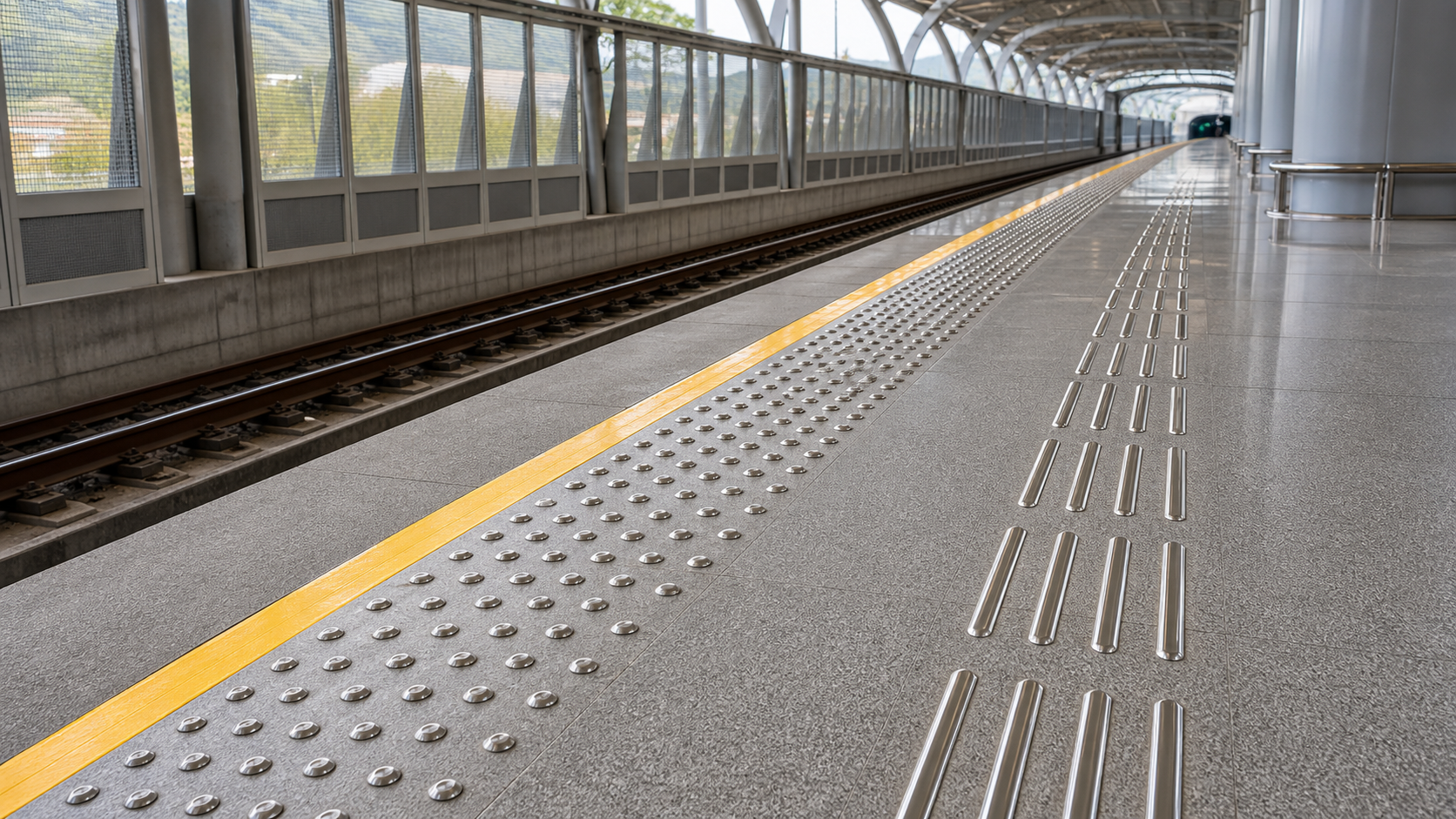
| Railway and metro platform edge | Tactile studs | Warning patterns are needed near hazards and edges |
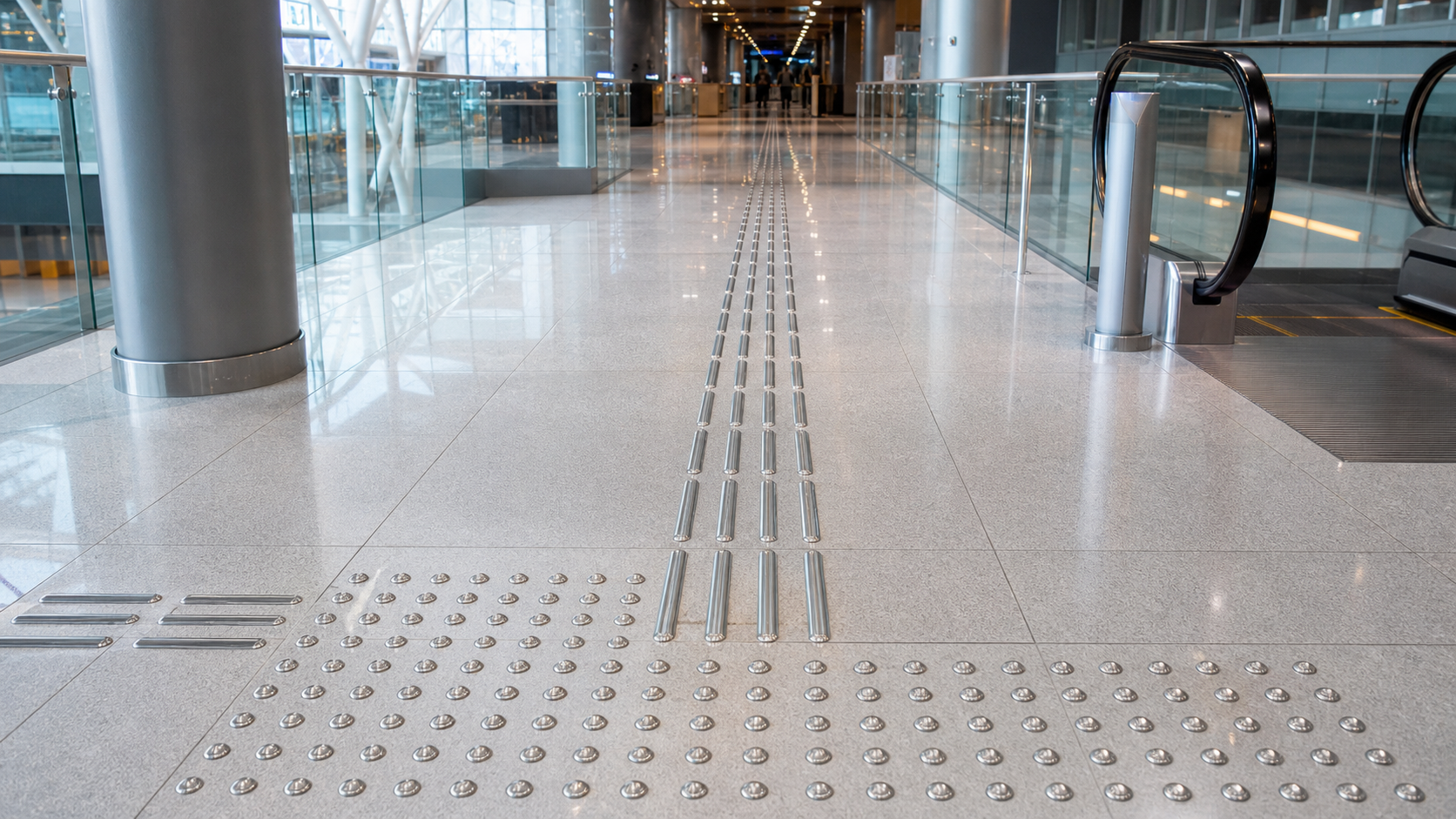
| Railway station concourse route | Tactile strips | Directional guidance supports navigation through large spaces |
| Airport walkway | Tactile strips, with studs at decision points | Strips guide movement; studs warn at escalators or transitions |
| Shopping center stairs or ramps | Tactile studs | Warning cue at level changes |
| Hospital corridor route | Tactile strips | Continuous guidance can support accessible circulation |
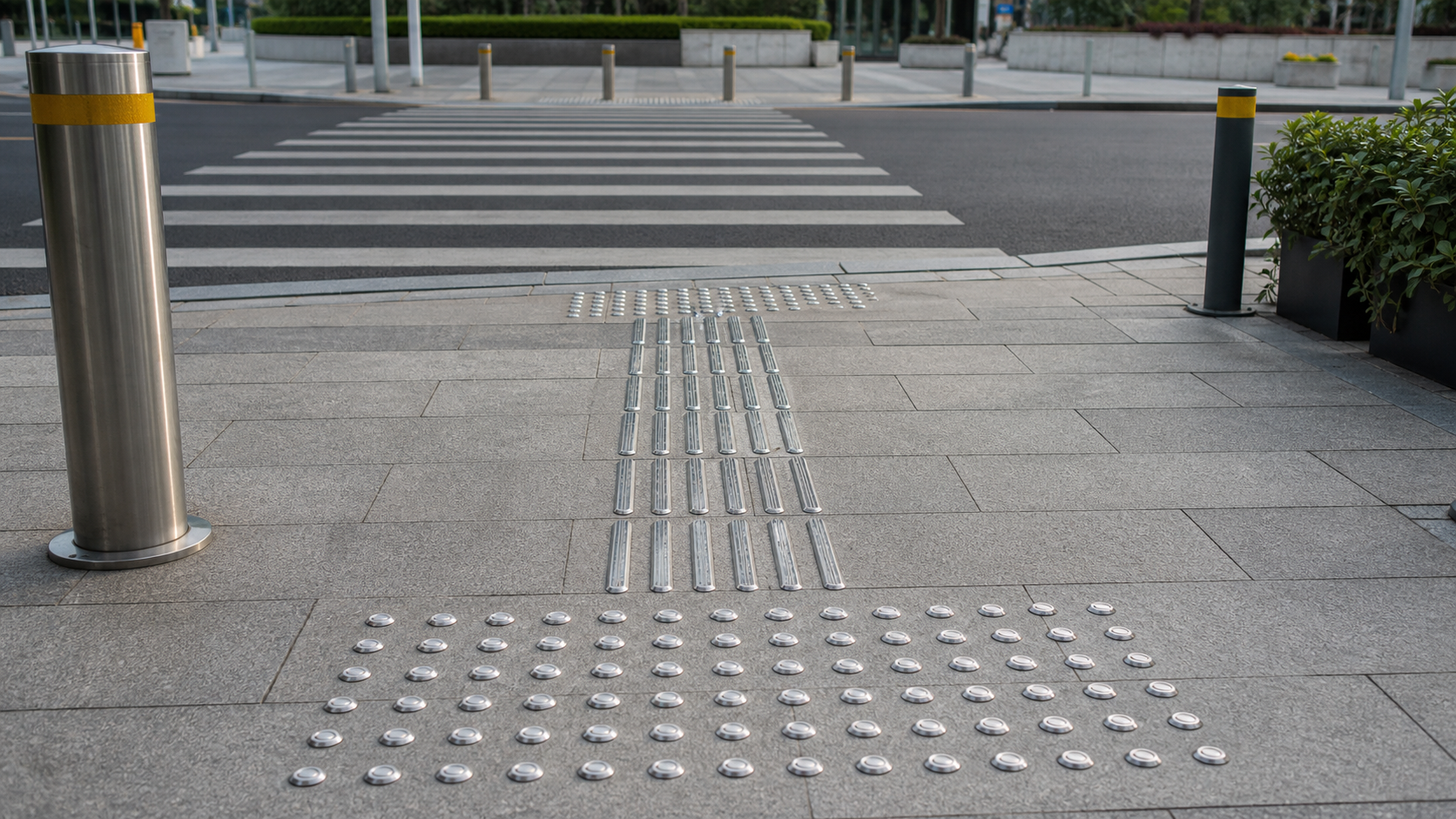
| University campus crossing | Tactile studs | Outdoor warning zones at crossings and ramps |
| Public infrastructure entrance | Combination | Guidance route plus warnings at hazards or decision points |
Which Solution Is Better for Your Project?
If the project needs a warning surface, tactile studs are usually the better choice. If the project needs a directional route, tactile strips are usually better. If a route passes through hazards, level changes, crossings, escalators, elevators, or platform edges, both may be required.
Use this practical decision process:
- Define the accessibility function: warning, directional guidance, or both.
- Confirm the applicable local accessibility standard or transport authority requirement.
- Check the floor material, traffic level, wet exposure, cleaning method, and replacement plan.
- Select material grade: 304 for many indoor areas, 316 for wet/coastal/outdoor zones, duplex for severe environments.
- Choose fixing method based on substrate and long-term retention.
- Review visual contrast, slip resistance, surface finish, and maintenance access.
OEM Manufacturing with AODSON
AODSON supports OEM tactile indicator manufacturing for project buyers, distributors, contractors, and accessibility hardware brands. We can work from drawings, samples, installation templates, or project specifications to manufacture stainless steel tactile studs, tactile strips, fixing hardware, and custom packaging.
- Investment casting and CNC machining for repeatable stainless steel tactile components.
- 304, 316, and duplex stainless steel options for different environments.
- Brushed, polished, bead blasted, grooved, and anti-slip surface options.
- Adhesive, threaded, screw-fixed, anchored, and modular installation options.
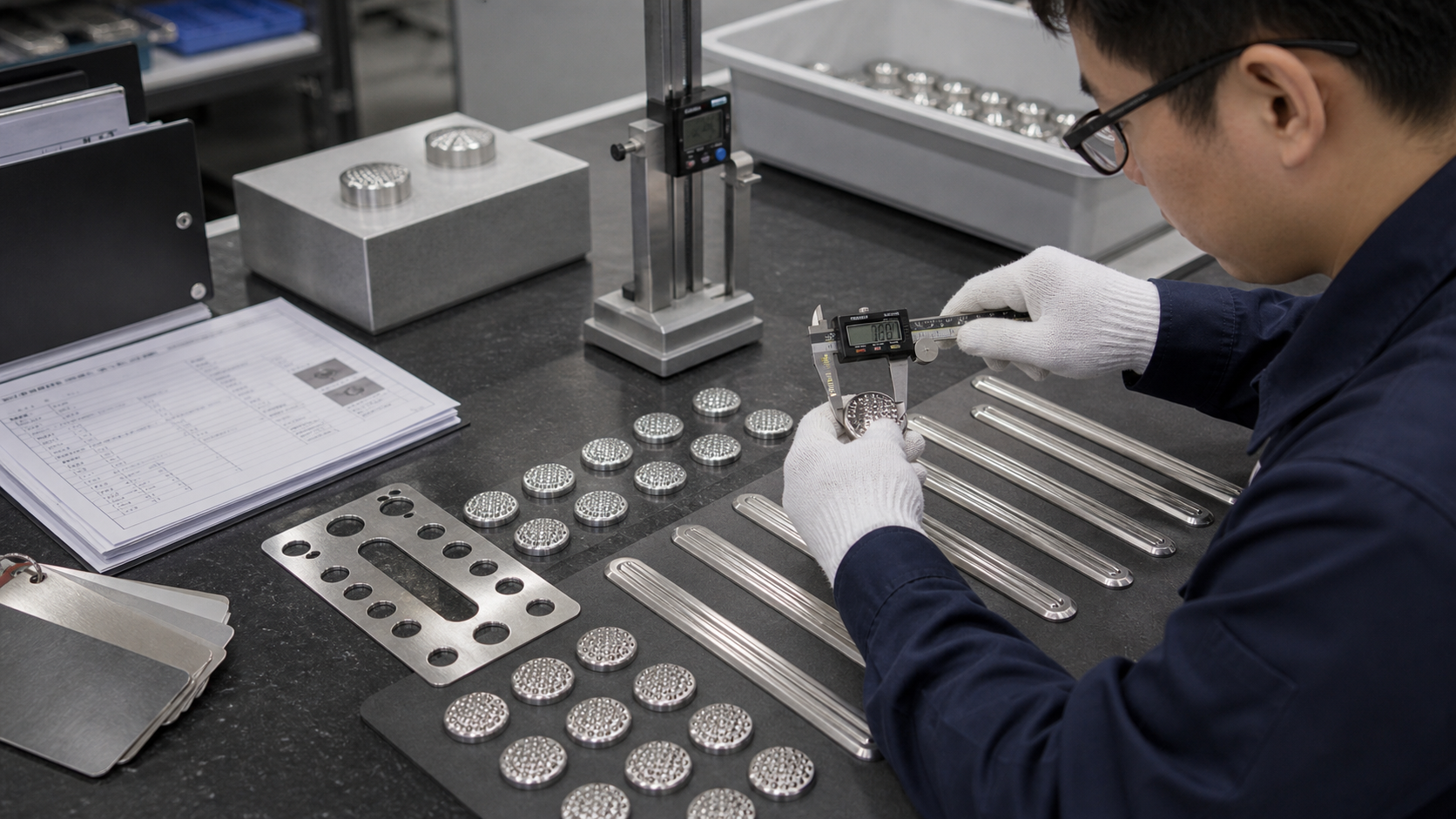
- Inspection, material traceability, export packaging, and batch documentation.
| Inspection Item | What to Check | Why It Matters |
|---|---|---|
| Material grade | 304, 316, duplex certificate or PMI when required | Confirms corrosion resistance and specification compliance |
| Stud geometry | Diameter, height, dome profile, edge radius, stem detail | Supports detectability and installation fit |
| Strip geometry | Length, width, height, groove detail, straightness | Ensures directional guidance and clean alignment |
| Surface finish | Brushing, polishing, anti-slip texture, contrast | Affects safety, appearance, and cleaning |
| Fixing method | Adhesive surface, screw holes, anchors, threaded stems | Determines retention and maintenance performance |
| Packaging | Sorting, protective film, foam, cartons, export crates | Prevents scratches, mixing, and transit damage |
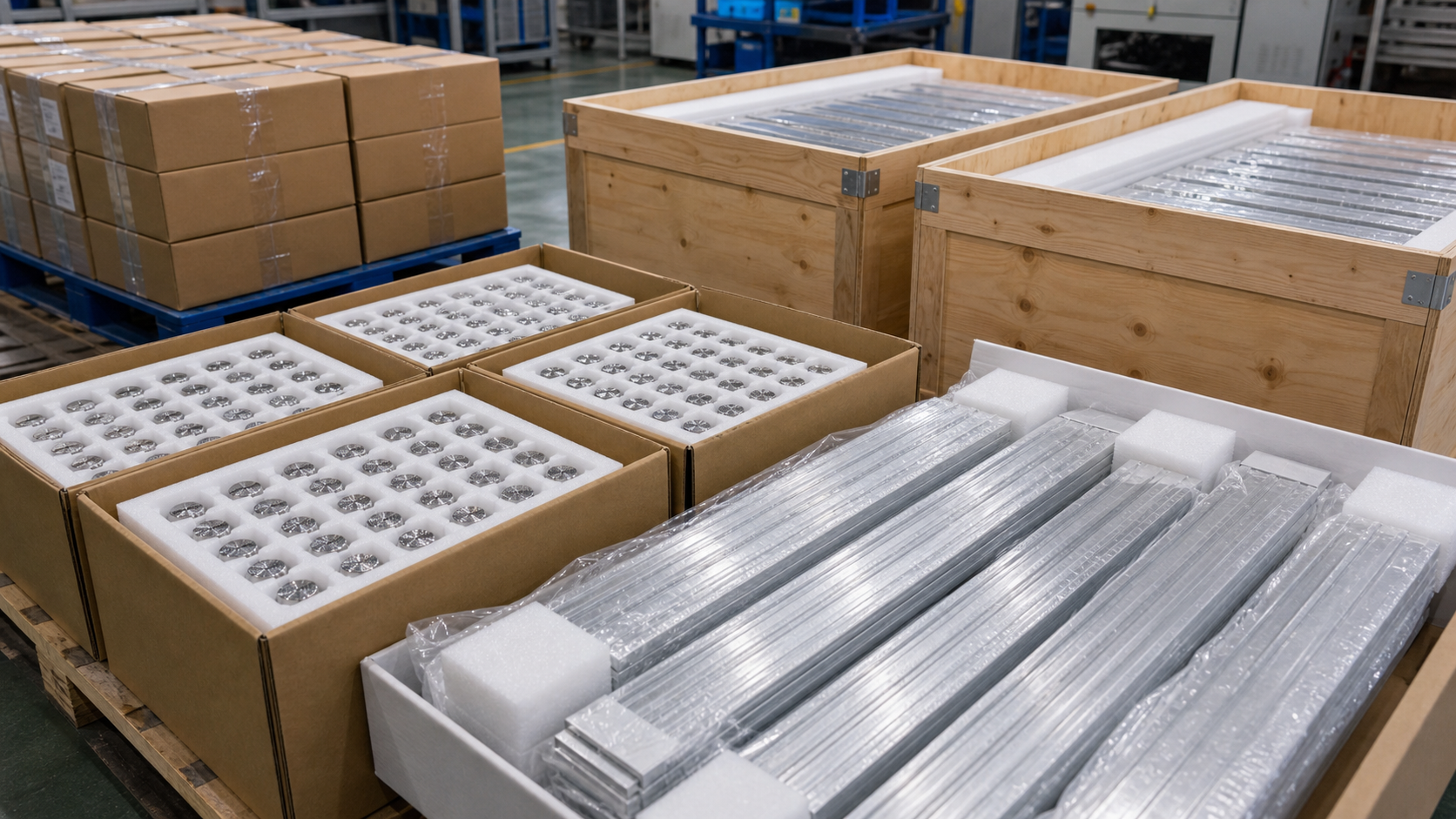
Learn more about AODSON’s inspection approach on our quality control page. To discuss a project, send drawings, material requirements, installation method, quantity, and standard references through Request a Quote or contact AODSON.
Frequently Asked Questions
Are tactile studs or tactile strips better?
Neither is universally better. Tactile studs are better for warning and hazard detection, while tactile strips are better for directional guidance. Many projects need both.
Where should tactile studs be used?
Tactile studs are commonly used near stairs, escalators, ramps, platform edges, crossings, and other locations where users need a warning cue.
Where should tactile strips be used?
Tactile strips are used along accessible routes, corridors, airport walkways, station concourses, hospitals, universities, and other spaces where directional guidance is needed.
Can stainless steel tactile studs and strips be used outdoors?
Yes, but material and fixing method matter. 316 stainless steel is usually preferred for outdoor, wet, coastal, or chloride-exposed environments.
Which is easier to maintain, studs or strips?
Strips can be easier to clean along long routes, while studs can be easier to replace individually. Maintenance depends on traffic, fixing method, floor surface, and cleaning procedure.
Do tactile indicators need anti-slip surfaces?
Yes, especially in wet, outdoor, transport, hospital, and high-traffic areas. Grooved, textured, bead blasted, or other anti-slip treatments should be reviewed during specification.
Can AODSON customize tactile studs and strips?
Yes. AODSON can customize material, dimensions, finish, fixing method, anti-slip texture, packaging, and inspection requirements for OEM and project buyers.
What information is needed for a quotation?
Provide drawings, product type, dimensions, material grade, finish, installation method, applicable standard, quantity, packaging requirements, and project environment.
Are tactile studs more expensive than tactile strips?
Cost depends on material, geometry, fixing method, quantity, finish, and installation complexity. Stud systems may require more individual pieces, while strips may use longer machined profiles.
Should tactile guidance be planned before flooring installation?
Yes. Early coordination helps confirm layout, contrast, fixing method, substrate preparation, and compliance with accessibility requirements.
Conclusion
Tactile studs and tactile strips are complementary accessibility solutions. Studs are best for warning zones, while strips are best for directional guidance. The best project outcome comes from selecting the right product for each function, confirming local standards, matching material to environment, and using a reliable manufacturing and installation process.
For stainless steel tactile studs, tactile strips, combination systems, or OEM accessibility hardware, AODSON can support material selection, precision manufacturing, finishing, inspection, and export supply. Request a quote or contact us to discuss your project.
Author
AODSON Engineering Team
AODSON’s engineering and manufacturing team works with stainless steel investment casting, CNC machining, surface finishing, quality control, and export manufacturing for custom architectural hardware and accessibility components.