




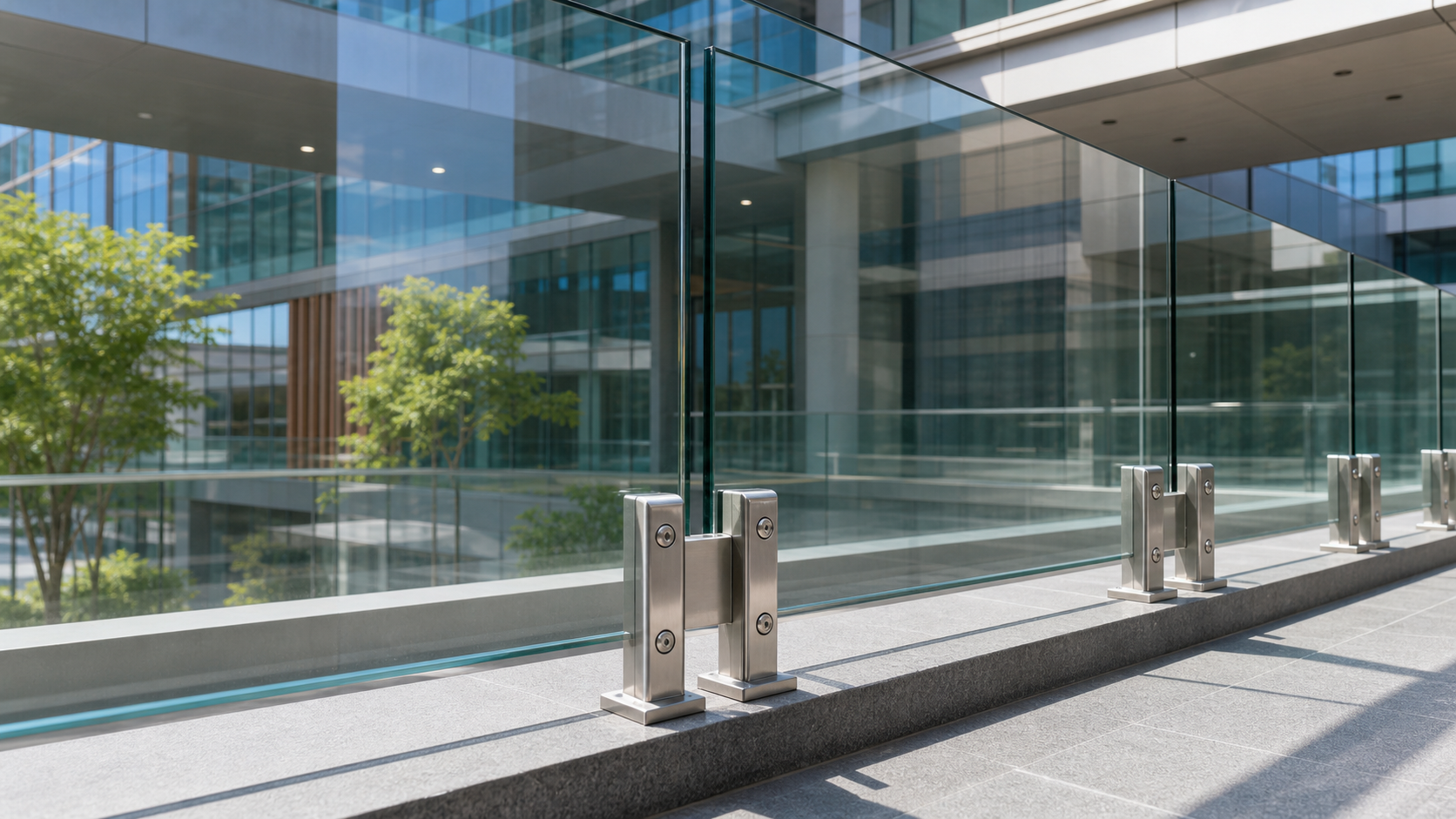
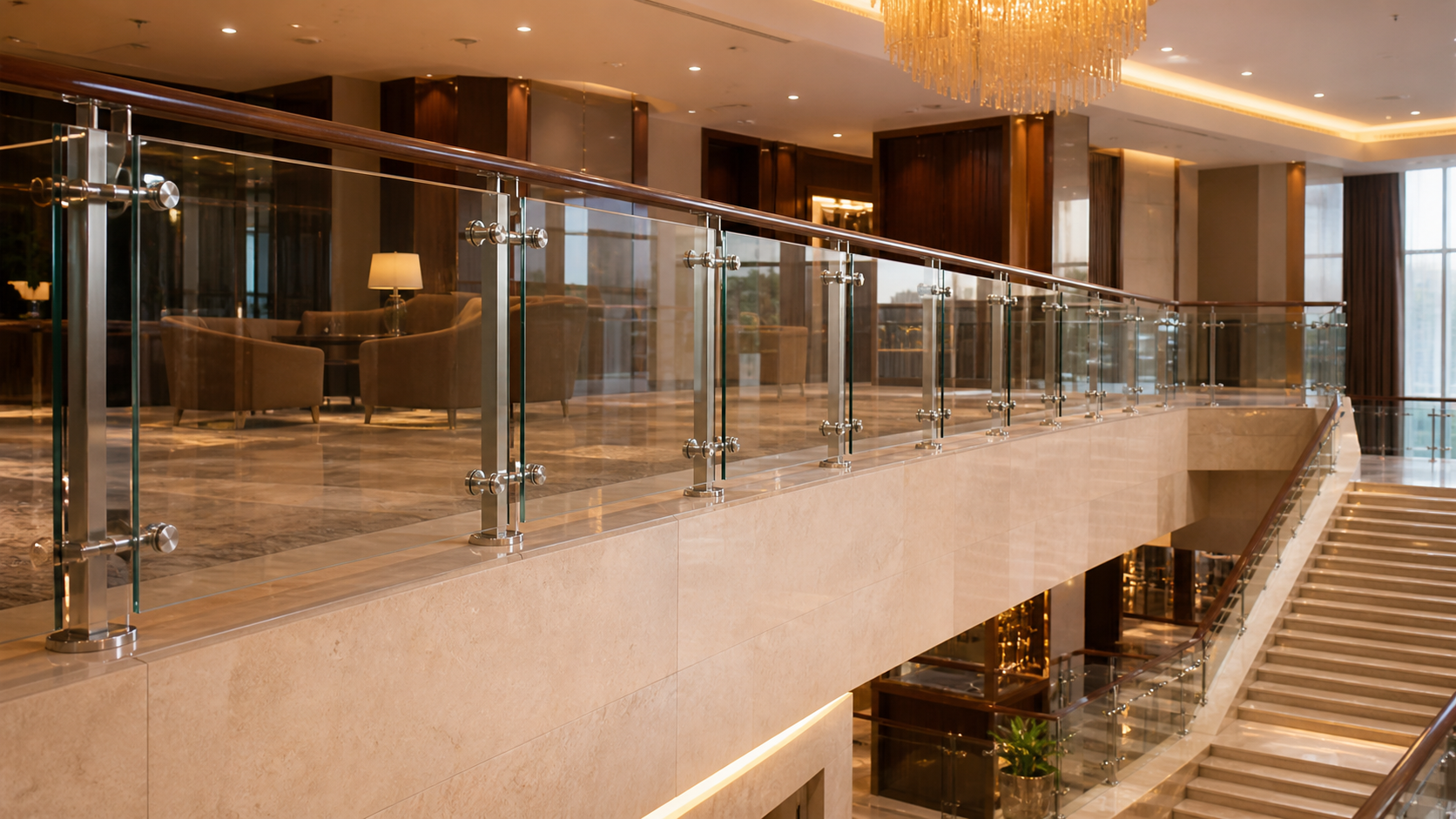
Stainless steel glass clamps are widely used in modern architecture because they allow glass panels to be fixed cleanly without heavy frames. You see them in frameless railings, balustrades, staircases, balconies, hotel interiors, shopping malls, office buildings and exterior guardrail systems.
Although a glass clamp may look like a simple fitting, its performance depends on material grade, clamp geometry, gasket design, screw engagement, surface finish, manufacturing accuracy and the surrounding structure. For architects, engineers, distributors, fabricators and OEM buyers, understanding these details helps prevent installation problems and improves project durability.
AODSON manufactures stainless steel architectural hardware through precision casting, CNC machining, surface finishing, assembly and quality control. This guide explains the main types of stainless steel glass clamps, how to choose materials and finishes, and how OEM manufacturing supports reliable project supply.
What Are Stainless Steel Glass Clamps?
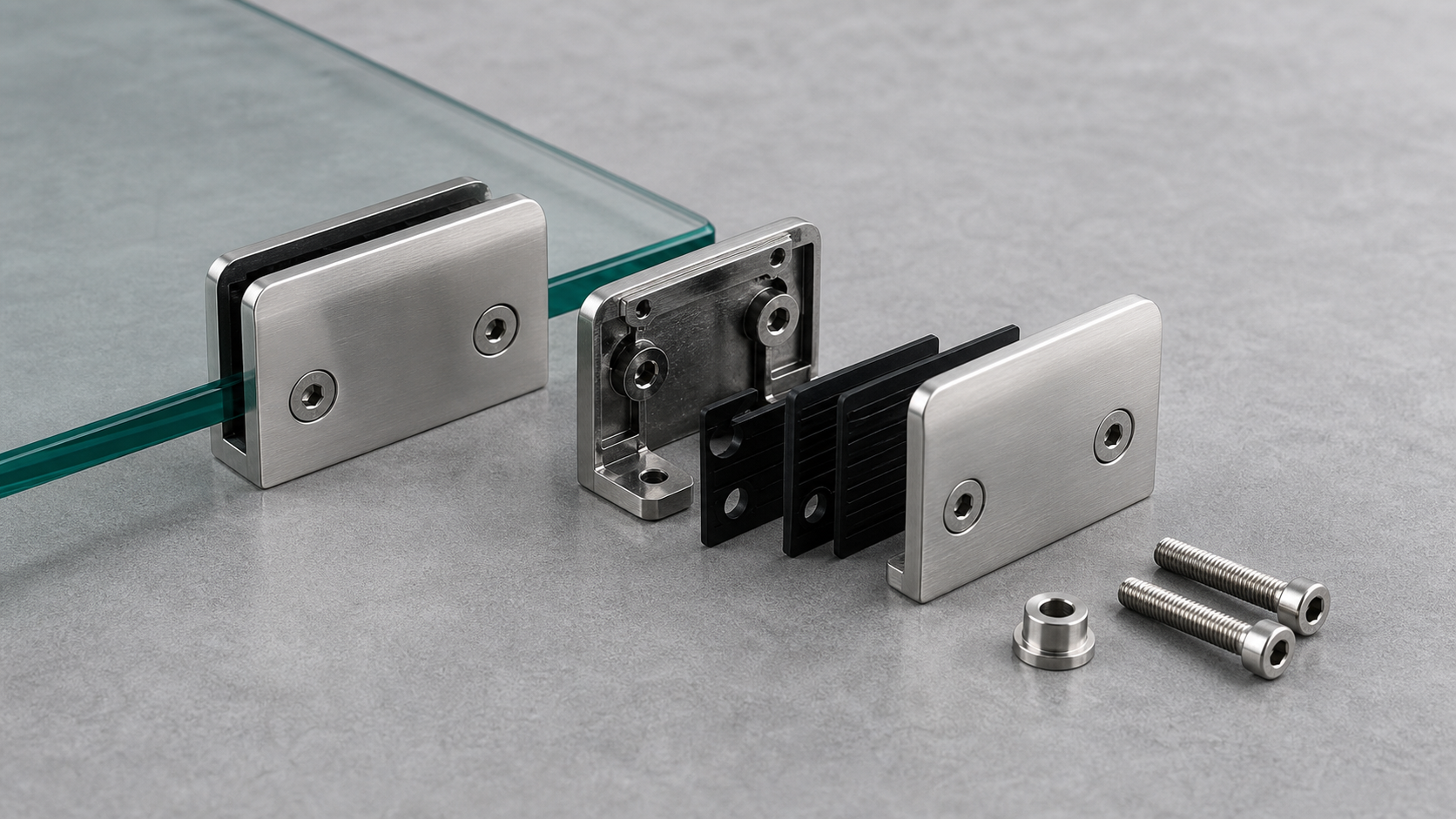
Stainless steel glass clamps are mechanical fittings used to hold glass panels to posts, walls, handrail systems, base structures or other support frames. The clamp body usually grips the glass through rubber or polymer gaskets, while screws, pins or mounting bolts connect the fitting to the structural support.
The clamp does not work alone. It is part of a system that includes glass thickness, glass type, post spacing, fastener type, substrate strength, installation tolerance and code requirements. A visually similar clamp can behave very differently if its material, machining accuracy or gasket design is poor.
Glass clamps are one category within stainless steel architectural hardware. For the broader manufacturing chain behind these parts, see AODSON’s article How Architectural Hardware Is Manufactured.
Main Types of Glass Clamps

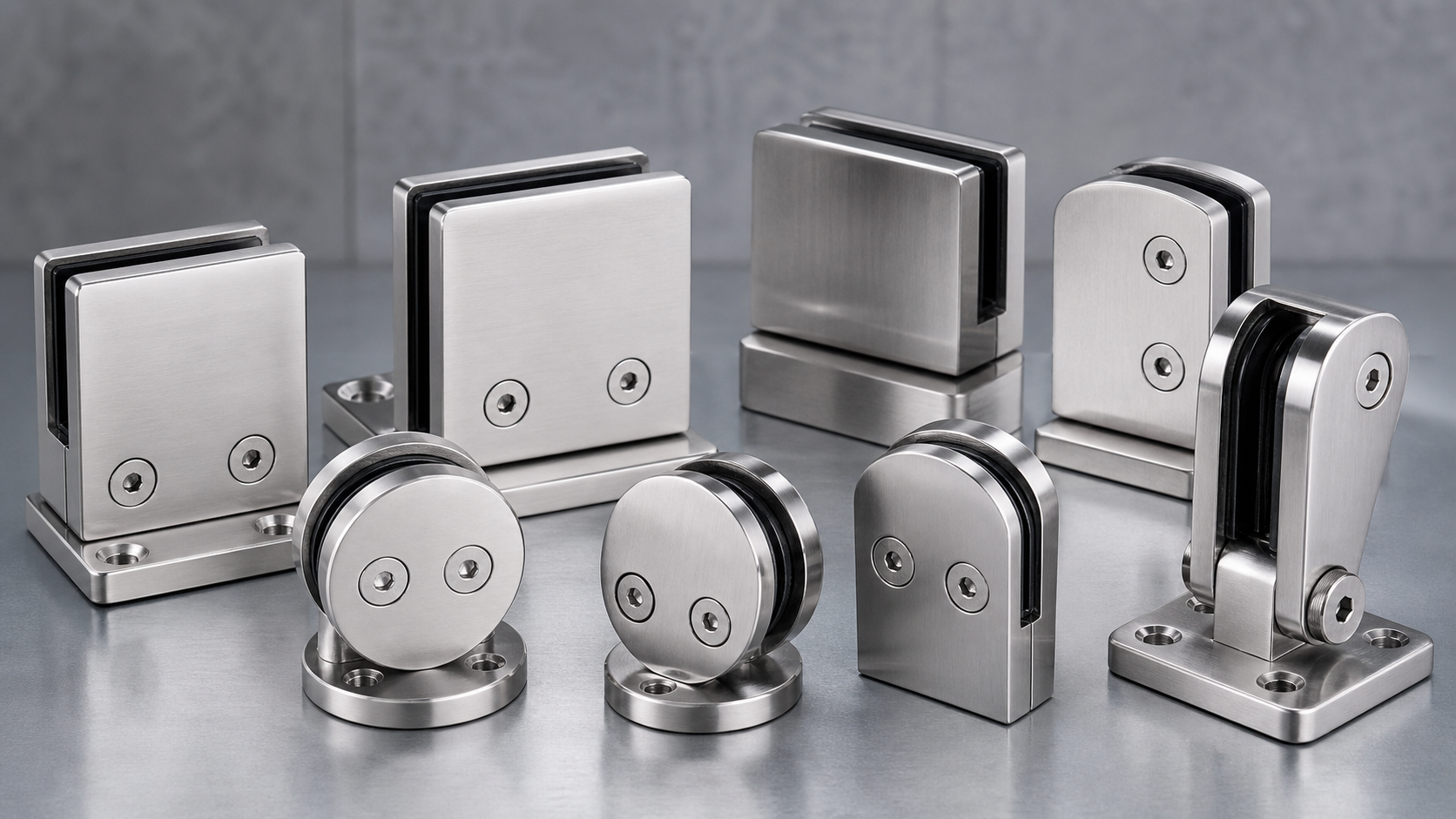
Square Glass Clamps
Square glass clamps are popular in modern commercial architecture because they create clean lines and match rectangular posts, handrails and facade details. Their flat faces also provide a practical surface for machining, polishing and inspection.
Round Glass Clamps
Round glass clamps have a softer appearance and are often selected for curved railings, decorative interiors, hotels and public spaces. They can be visually less severe than square clamps while still providing strong glass support when properly engineered.
Adjustable Glass Clamps
Adjustable clamps help installers compensate for small alignment differences in glass, posts or substrate conditions. They are useful on renovation projects and long railing runs, but adjustability must not reduce locking strength or gasket contact quality.
Heavy-Duty Glass Clamps
Heavy-duty clamps are used where larger panels, thicker glass, higher traffic, exterior exposure or increased safety margins are required. They typically need stronger bodies, deeper screw engagement, controlled material selection and more careful inspection.
| Clamp Type | Typical Design | Best Use | Key Buying Point |
|---|---|---|---|
| Square glass clamp | Flat, angular body | Modern railings, commercial interiors, posts with flat surfaces | Check edge finish, flatness and gasket fit |
| Round glass clamp | Curved or circular body | Hotels, decorative interiors, curved railing systems | Check polishing consistency around curved surfaces |
| Adjustable clamp | Compensation or slotted mounting feature | Projects with installation tolerance variation | Confirm locking method and adjustment range |
| Heavy-duty clamp | Larger body and stronger screw engagement | Exterior railings, high-use public areas, thicker glass | Confirm load requirement, material grade and test plan |
Material Comparison
Material choice should follow the installation environment rather than only the purchase price. Indoor offices, coastal balconies, swimming pool fences and industrial buildings have very different corrosion risks.
304 Stainless Steel
304 stainless steel is commonly used for indoor glass clamps and mild environments. It offers good corrosion resistance and cost efficiency, but it is not the best choice for chloride-rich outdoor exposure.
316 Stainless Steel
316 stainless steel contains molybdenum, improving resistance to chloride-related corrosion. It is commonly specified for outdoor railings, coastal buildings, humid commercial spaces and premium exposed hardware.
Duplex Stainless Steel
Duplex stainless steel grades such as 2205 provide higher strength and excellent corrosion resistance. They are used when the project needs greater safety margin or exposure resistance, but manufacturing and welding control become more demanding.
| Material | Recommended Environment | Advantages | Notes for Buyers |
|---|---|---|---|
| 304 stainless steel | Indoor and dry architectural spaces | Available, cost-effective, good general corrosion resistance | Avoid relying on 304 for severe coastal or poolside use |
| 316 stainless steel | Outdoor, humid and many coastal projects | Improved chloride resistance and premium market acceptance | Still requires proper polishing, passivation and maintenance |
| Duplex stainless steel | High-load or aggressive exposure projects | High strength and excellent corrosion resistance | Confirm casting, machining and welding procedures with the manufacturer |
For a deeper grade comparison, read 304 vs 316 Stainless Steel Architectural Hardware and 316L vs 2205 Stainless Steel Castings.
Surface Finish Options
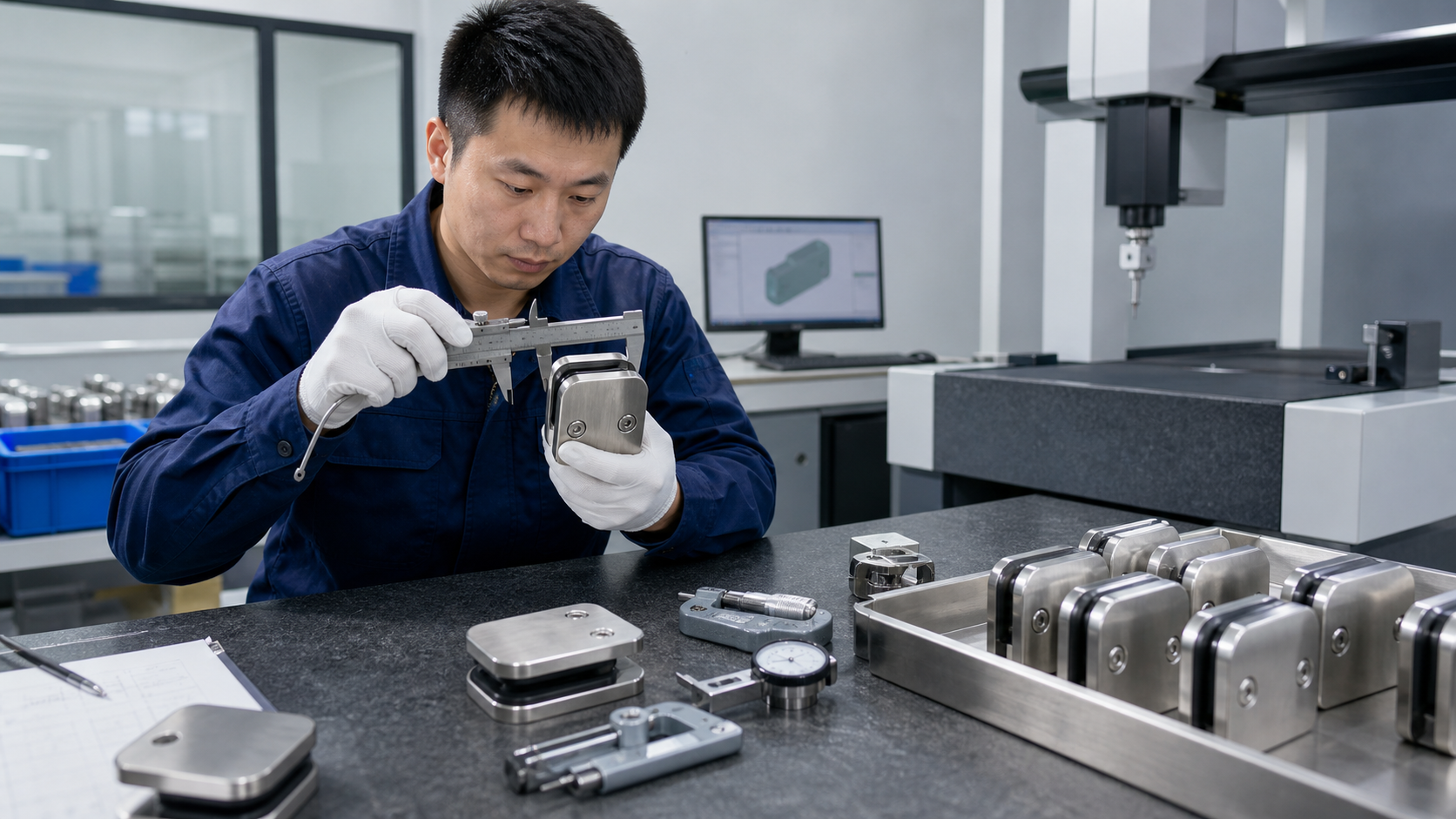
Mirror Polish
Mirror polishing creates a highly reflective surface for premium visible applications. It is often used in hotel interiors, luxury retail spaces and decorative railings. The finish requires careful polishing because scratches and surface waves are easy to see.
Satin Finish
Satin finish, also called brushed finish, gives stainless steel a directional grain. It is widely used in commercial buildings because it looks refined and hides minor handling marks better than mirror polish.
PVD Coating
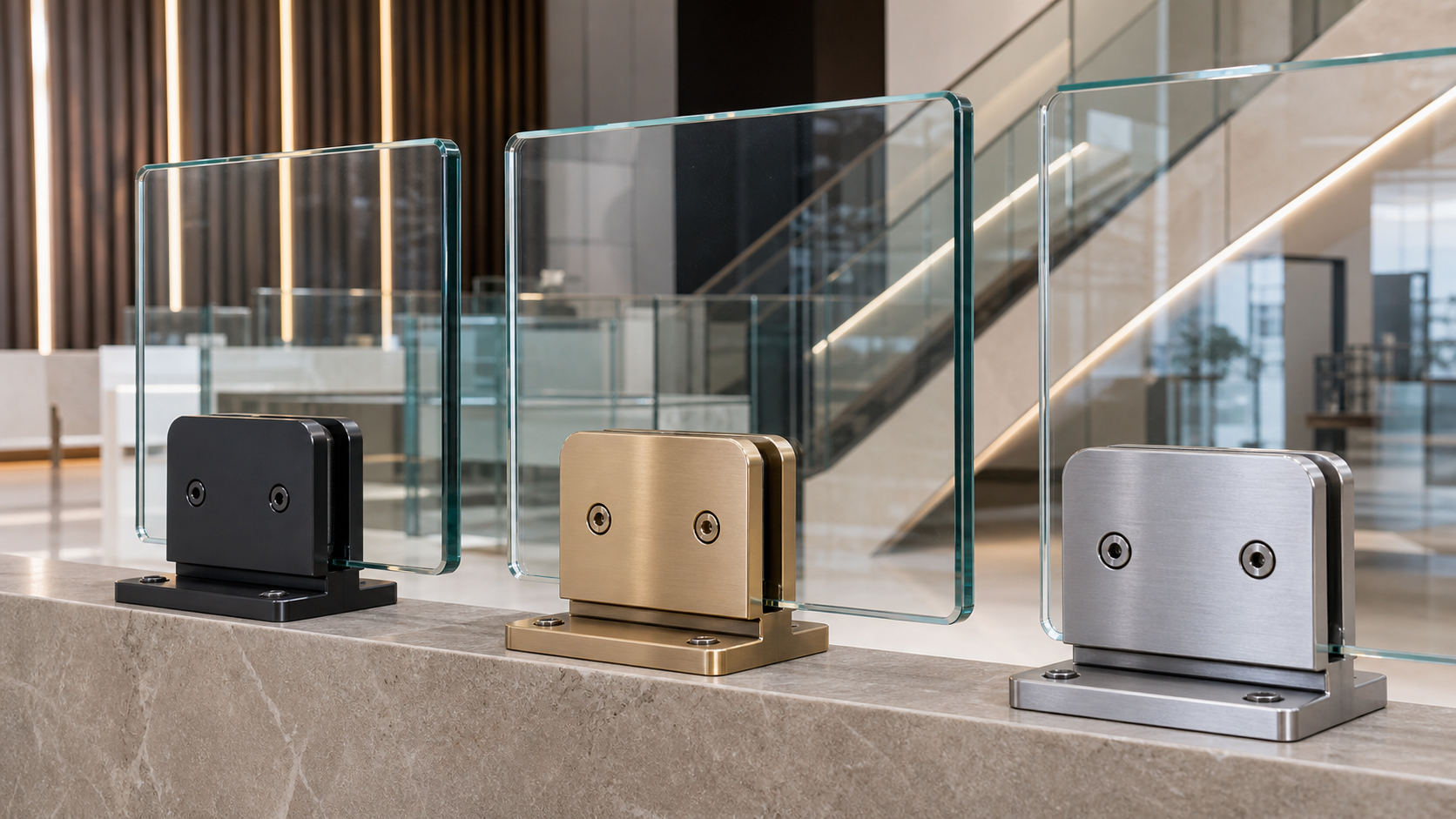
PVD coating can produce black, champagne, gold, bronze and other architectural colors on stainless steel. It is attractive for design-led projects, but the base polishing quality and coating adhesion must be controlled before production approval.
| Finish | Appearance | Typical Application | Control Point |
|---|---|---|---|
| Mirror polish | Bright reflective surface | Luxury interiors, visible decorative railings | Scratch removal and consistent reflection |
| Satin finish | Linear brushed grain | Commercial buildings, hotels, offices | Uniform grain direction and roughness |
| PVD coating | Black, champagne, bronze, gold or custom tones | Design-focused interiors and premium projects | Base finish, color consistency and adhesion |
Manufacturing Process
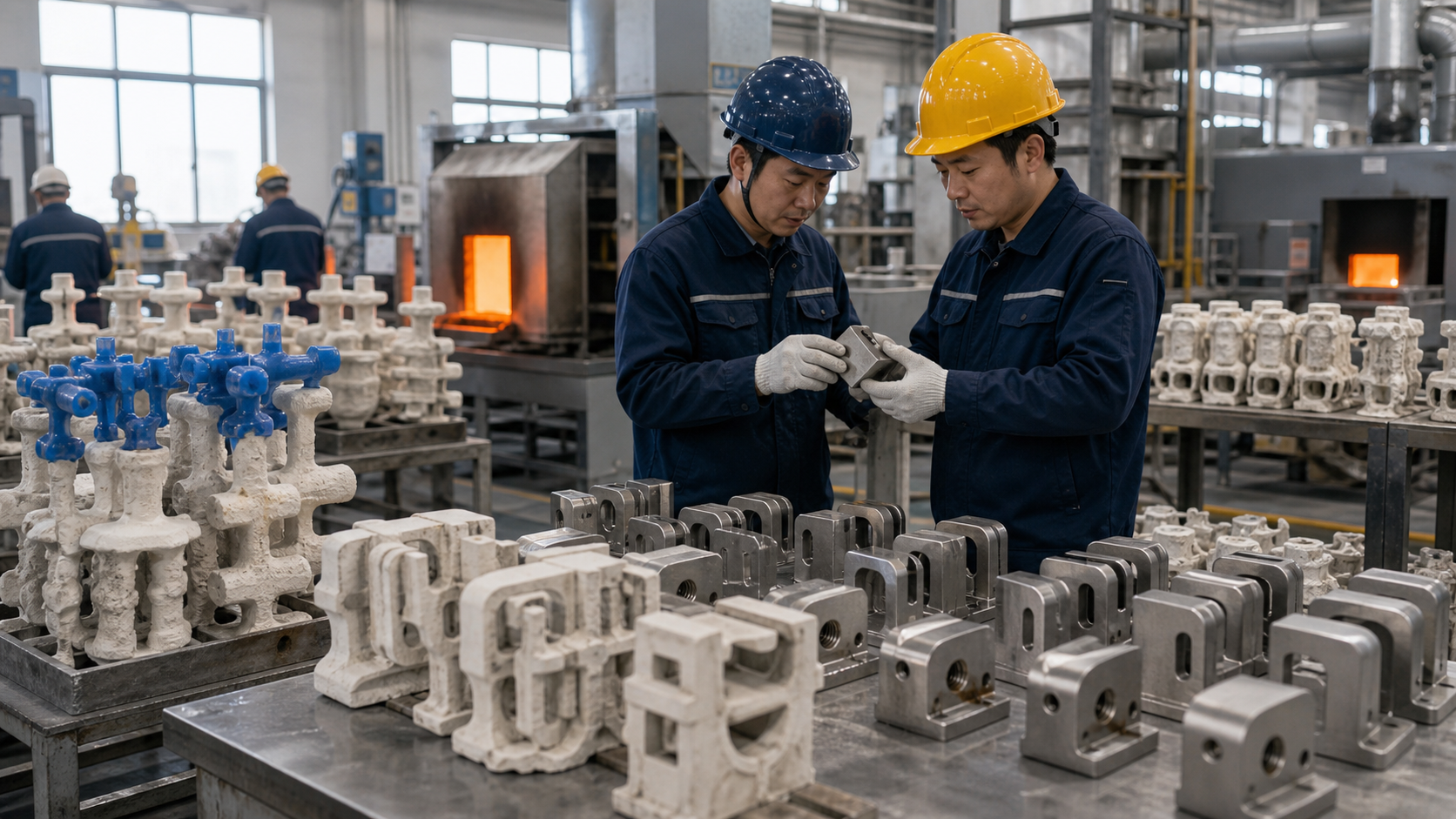
Investment Casting
Investment casting is suitable for glass clamp bodies with rounded contours, integrated bosses, complex geometry or a premium shaped appearance. The process produces near-net-shape stainless parts that can then be machined where tighter tolerances are needed. AODSON’s precision casting capability supports custom architectural hardware projects where geometry and finish both matter.
Engineering details such as wall thickness, radii, machining allowance and surface requirements should be confirmed before tooling. For design background, see Stainless Steel Casting Design Guide for Engineers.
CNC Machining
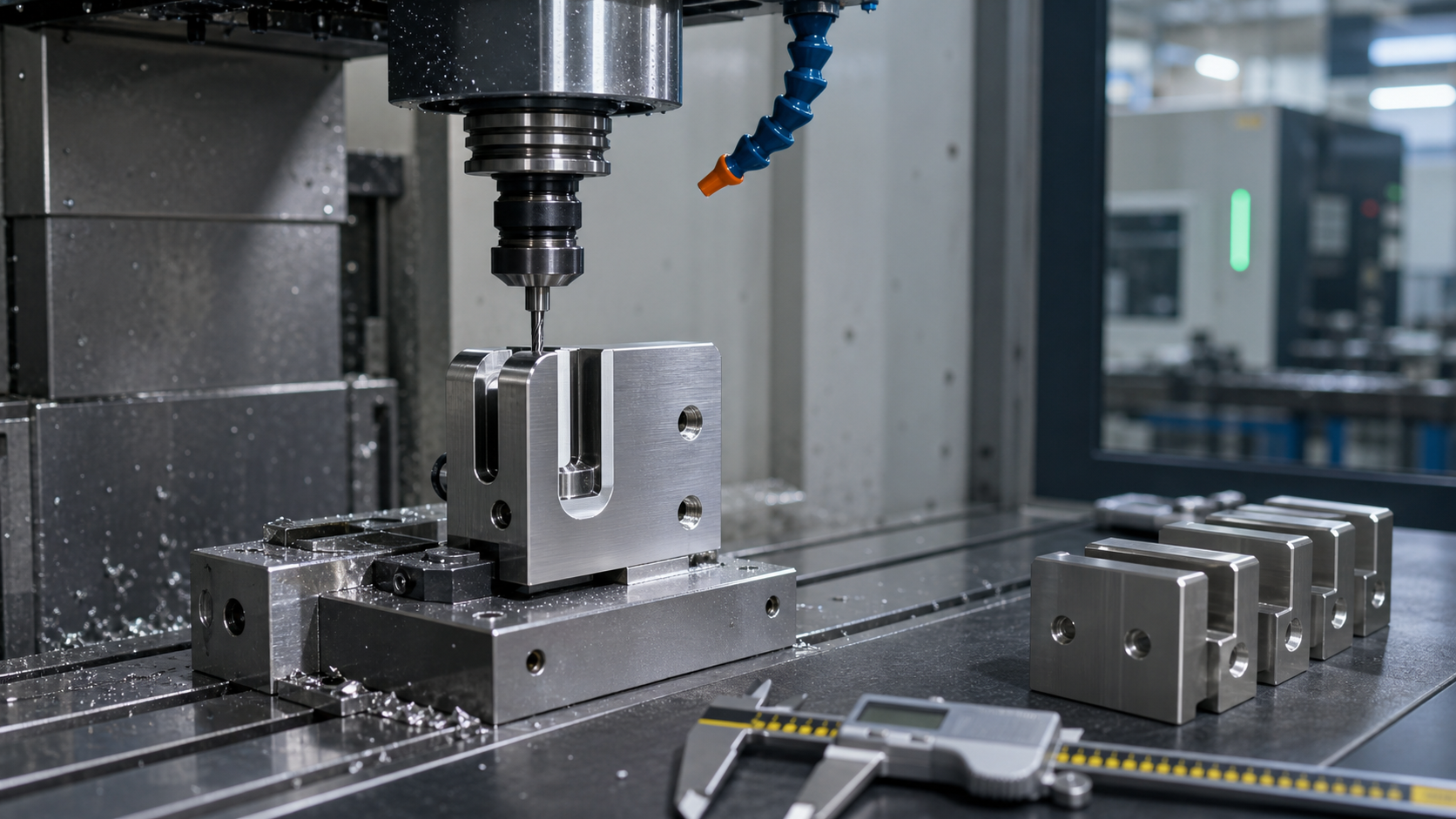
CNC machining is critical for clamp performance. It controls hole locations, screw seats, gasket grooves, mounting faces and mating surfaces. If these features are inaccurate, the clamp may grip unevenly, damage gaskets, misalign with posts or create installation delays.
Precision Polishing

Polishing removes casting marks, machining marks and handling scratches. For glass clamps, polishing must protect edges, screw seats and gasket areas while producing the specified finish on visible faces.
Quality Inspection
Inspection should confirm material grade, dimensional accuracy, thread quality, gasket fit, screw engagement, surface finish, coating condition and packaging. For export batches, AODSON can align inspection records with project requirements and customer specifications through its quality control process.
Typical Applications
Stainless steel glass clamps are used wherever transparent barriers, safety guardrails or visual openness are required. Their compact size makes them attractive in modern architecture, but each application has different technical priorities.
| Application | Recommended Clamp Focus | Material Guidance | Finish Guidance |
|---|---|---|---|
| Glass railings | Strong grip, compatible glass thickness, reliable gasket design | 304 indoors, 316 outdoors | Satin or mirror polish |
| Balustrades | Clean appearance, alignment tolerance, safety margin | 316 for exposed or humid areas | Satin for commercial use, mirror for premium interiors |
| Staircases | Vibration resistance, screw engagement, installation access | 304 or 316 depending on environment | Satin finish is common |
| Balconies | Weather resistance, drainage, fastener compatibility | 316 or duplex for demanding exposure | Satin or PVD with validated coating quality |
| Commercial buildings | Batch consistency, maintenance durability, project documentation | 304 or 316 based on site conditions | Consistent satin grain is often preferred |
| Hotels | Premium appearance, tactile finish, hidden fastener quality | 316 for humid or coastal hotels | Mirror, satin or PVD depending on design intent |
How to Choose the Right Glass Clamp
Choosing the right clamp starts with the glass system, not the fitting alone. Buyers should confirm glass thickness, post or wall material, panel height, indoor or outdoor exposure, local code requirements, desired finish, batch quantity and any test documentation required by the project.
| Selection Factor | What to Confirm | Why It Matters |
|---|---|---|
| Glass thickness | Exact panel thickness and tolerance | Determines gasket size and clamp cavity design |
| Installation environment | Indoor, outdoor, coastal, poolside or industrial exposure | Guides stainless grade and finish choice |
| Structural support | Post, wall, base or handrail connection | Controls mounting geometry and fastener selection |
| Design appearance | Square, round, mirror, satin or PVD finish | Ensures visual consistency across the project |
| Maintenance expectation | Cleaning frequency and user environment | Influences finish durability and corrosion prevention |
| OEM quantity | Prototype, small batch or repeat production | Determines tooling, machining fixture and inspection strategy |
Common Installation Considerations
Installation quality strongly affects glass clamp performance. Even a well-made clamp can fail to perform if it is installed on a weak substrate, paired with the wrong glass thickness, tightened unevenly or exposed to incompatible fasteners.
Installers should avoid direct metal-to-glass contact, over-tightening, missing gaskets, poor alignment, mixed-metal corrosion risks and uncontrolled site drilling. For large projects, mock-up installation and sample approval help align the architect, contractor, fabricator and hardware supplier before full production.
Why OEM Manufacturing Matters
OEM manufacturing matters when standard catalog clamps do not fully match the project, brand, installation condition or export market. Customization may involve clamp size, shape, surface finish, screw type, gasket design, material grade, packaging, branding-free supply or documentation.
A manufacturer with casting, machining, polishing and inspection capability can control the whole process rather than treating the clamp as a commodity. This is especially important for distributors and project buyers who need repeatable batches, stable appearance and reliable delivery.
How AODSON Manufactures Stainless Steel Glass Clamps
AODSON supports stainless steel glass clamp projects from drawings, samples or technical requirements. The team reviews material grade, geometry, tooling feasibility, machining datum, gasket interface, surface finish, inspection method and packaging before production.
Depending on the design, AODSON can manufacture glass clamps by investment casting followed by CNC machining, or by CNC machining from stainless stock for simpler geometries. Surface finishing options include satin, mirror and project-specific coating preparation. Final inspection checks dimensions, threads, gasket fit, surface quality and export packaging.
To start an OEM project, send drawings, 3D files, samples, target material, finish, quantity and application environment through Request a Quote or Contact AODSON.
Frequently Asked Questions
What are stainless steel glass clamps used for?
They are used to hold glass panels in railings, balustrades, staircases, partitions, balconies and commercial building systems.
Are glass clamps load-bearing?
Many clamps provide panel support and restraint, but final load performance depends on the full railing system, glass thickness, posts, fasteners and local code requirements.
Which stainless steel grade is best for glass clamps?
304 is common indoors, 316 is preferred outdoors or near chlorides, and duplex stainless steel is used for higher strength or aggressive environments.
What glass thickness can stainless steel clamps hold?
Many standard clamps are designed for glass around 8 mm to 12 mm. Thicker glass may require heavy-duty or custom-engineered clamps.
Do glass clamps need rubber gaskets?
Yes. Gaskets protect the glass, improve grip and help accommodate small tolerance differences during installation.
What is the difference between square and round glass clamps?
Square clamps create a sharper modern appearance, while round clamps offer a softer look for decorative or curved railing systems.
Can glass clamps be made by investment casting?
Yes. Investment casting is suitable for complex stainless steel clamp bodies and can be followed by CNC machining and polishing.
Why is CNC machining important for glass clamps?
CNC machining controls threaded holes, screw seats, gasket slots and mounting faces so the clamp assembles accurately and grips evenly.
Can AODSON manufacture OEM glass clamps?
Yes. AODSON manufactures custom stainless steel glass clamps from drawings, samples or specifications, including casting, machining, finishing, inspection and export packaging.
How should stainless steel glass clamps be inspected?
Inspection should cover material grade, dimensions, threads, gasket fit, surface finish, screw engagement, corrosion requirements and packaging protection.
Conclusion
Stainless steel glass clamps combine architecture, safety, material science and manufacturing precision in a compact component. The right clamp depends on glass thickness, application environment, material grade, finish, installation method and quality control.
For architects and project buyers, the best results come from specifying the full application conditions early and working with a manufacturer that understands both the visible finish and the hidden technical details. AODSON provides OEM stainless steel glass clamp manufacturing for architectural hardware projects that require dependable production, premium finishing and export-ready quality.
Need stainless steel glass clamps for a project or OEM product line? Send your drawings, samples or requirements through Request a Quote or Contact.