



Commercial coffee machines and espresso machines depend on metal parts that can handle repeated assembly, hot water, steam, pressure, cleaning agents and long production cycles. For coffee machine brands, OEM buyers, engineers and purchasing managers, the manufacturing process behind coffee machine parts directly affects dimensional accuracy, corrosion resistance, surface quality, food-contact safety considerations and stable supply. Two common manufacturing methods for coffee machine components are CNC machining and investment casting, and many custom projects use both processes together.
This guide explains how casting and CNC machining are used to manufacture metal coffee equipment components, when each process is more suitable, and why a combined manufacturing route can often support better cost control and production consistency.
Why Manufacturing Process Matters for Coffee Machine Parts
Coffee machine parts may look small, but their working conditions can be demanding. A threaded fitting, valve body, group head component or boiler connection must fit accurately with other parts, resist corrosion, maintain sealing performance and remain stable across repeated heating and cooling cycles.
The selected manufacturing process influences dimensional accuracy, surface finish, corrosion resistance, assembly stability, pressure and temperature resistance, and overall cost control. For OEM batch production, process selection also affects whether every lot can meet the same functional and appearance requirements.
If a part has complex geometry, internal passages or irregular shapes, starting with a near-net casting may reduce material waste. If a part requires tight tolerances, precise holes, threads or sealing surfaces, CNC machining is usually required. The key is not to choose one process in isolation, but to match the process to the drawing, material, tolerance, quantity and final application.
Common Coffee Machine Parts Made by Casting or CNC Machining
Metal coffee machine components can include both visible and internal parts. Some components require a polished appearance, while others are mainly designed for pressure, flow control, mechanical support or assembly alignment.
- Group head components: parts that may require accurate interfaces, stable structure and good surface quality.
- Portafilter parts: components where appearance, fit and mechanical strength are important.
- Valve bodies: parts with passages, sealing areas and threaded connections.
- Steam wand fittings: small components that may contact steam, water and cleaning agents.
- Boiler connections: fittings and adapters used in high-temperature water or steam systems.
- Pump fittings: connectors designed for reliable assembly and flow control.
- Brackets and structural parts: support components that require strength and repeatable dimensions.
- Stainless steel custom components: OEM parts made according to drawings or samples.
- Threaded fittings, connectors and adapters: parts that typically need accurate CNC finishing.
Investment Casting for Coffee Machine Parts
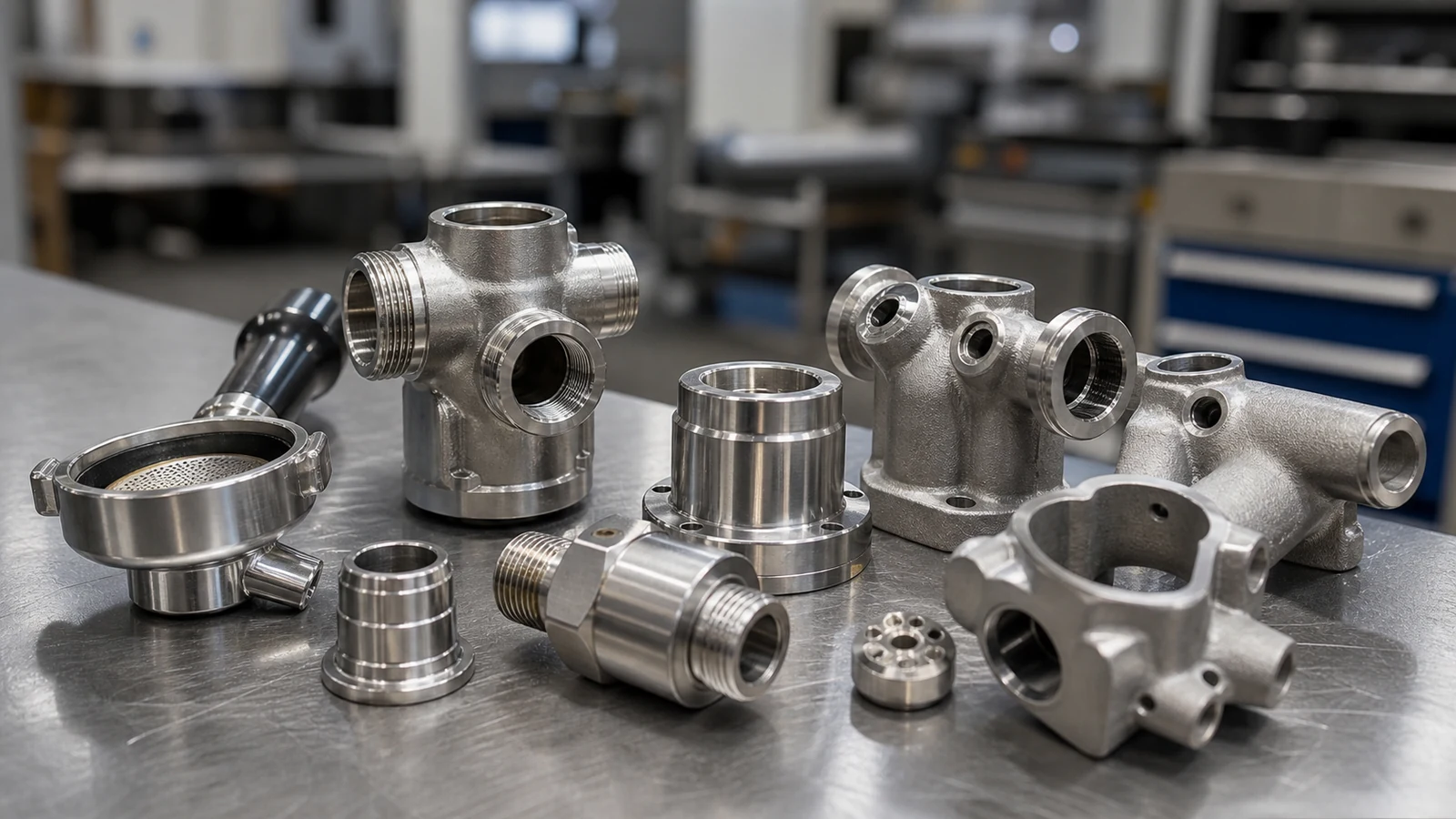
Investment casting is suitable for complex metal shapes and is often used for stainless steel coffee machine components that would be inefficient to machine directly from solid bar stock. The process creates a near-net shape, which means the casting is close to the final geometry before machining or finishing.
For parts with complex curves, multiple bosses, flow passages or irregular outlines, investment casting can improve material utilization and reduce machining time. It is often suitable for medium and batch production when tooling cost can be balanced against the production quantity.
However, casting does not replace machining in every area. Threads, precision holes, sealing surfaces, bearing surfaces and tight-tolerance assembly interfaces usually still need CNC machining after casting. This is why many OEM coffee equipment components use casting plus CNC machining as a combined route.
AODSON can support custom stainless steel investment casting, followed by CNC machining, polishing or other surface finishing according to drawings or samples.
Advantages of Investment Casting
- Complex geometries
- Reduced machining waste
- Good material utilization
- Suitable for stainless steel
- Scalable for OEM production
- Helpful for parts with irregular shapes
CNC Machining for Coffee Machine Components
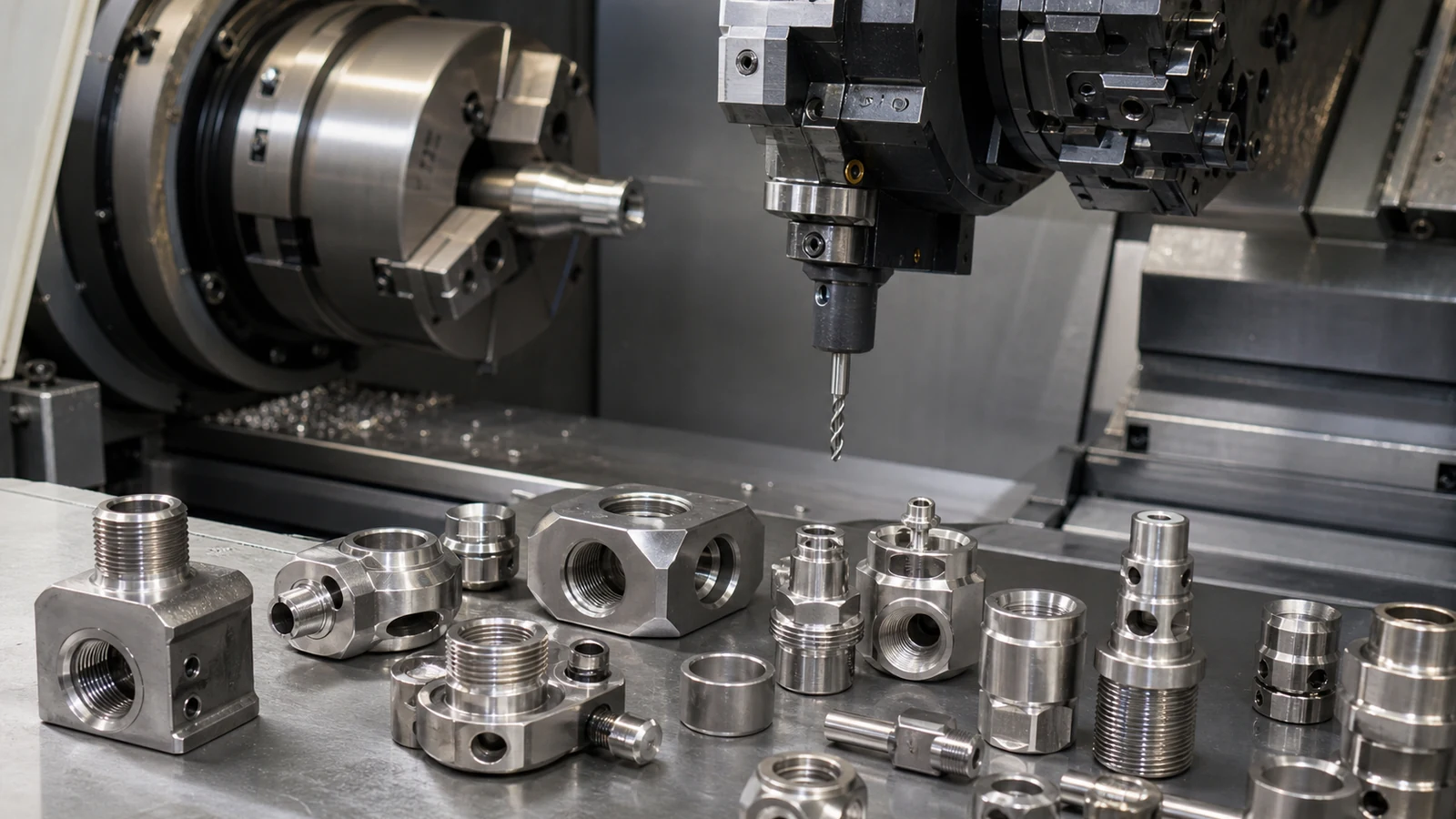
CNC machining is suitable for tight-tolerance dimensions and is widely used for holes, threads, sealing surfaces and assembly interfaces. It can be used directly from bar stock for simple or highly precise parts, or it can be used after investment casting to finish critical features.
For prototypes and early design validation, CNC machining is often flexible because it does not always require casting tooling. For production parts, CNC machining provides repeatability, consistent surface finish and reliable dimensional control when the process is set up properly.
In coffee equipment applications, CNC machined coffee machine parts may include threaded connectors, adapters, shafts, fittings, sealing surfaces and components with close assembly requirements. Even when the main body is cast, CNC machining is often the step that makes the component ready for assembly.
Advantages of CNC Machining
- Tight tolerances
- Accurate holes and threads
- Excellent surface finish
- Flexible prototyping
- Stable repeatability
- Suitable for small batches and precision finishing
Casting vs CNC Machining: Which One Should You Choose?
The right choice depends on the geometry, tolerance, production quantity and cost target. A simple round fitting may be efficient to machine directly, while a complex valve body may be more practical to cast first and then machine. For many OEM coffee machine parts, the most efficient solution is not casting or CNC machining alone, but a controlled combination of both.
| Requirement | Better Choice | Reason |
|---|---|---|
| Complex shape | Investment Casting | Creates near-net shapes with less material waste |
| Tight tolerance | CNC Machining | Provides accurate dimensions and stable repeatability |
| Threaded holes | CNC Machining | Threads and holes usually require machining |
| Low-volume prototype | CNC Machining | Faster for simple shapes and early design validation |
| Medium/high volume production | Casting + CNC Machining | Casting reduces material waste, machining controls precision |
| Stainless steel custom parts | Casting or CNC Machining | Depends on shape, tolerance and quantity |
| Cost control | Casting + CNC Machining | A combined process can reduce total production cost for complex parts |
For buyers, the practical starting point is the drawing. If the part has tight assembly requirements, define the critical dimensions clearly. If the part needs specific surface finishing, corrosion resistance or pressure-related performance, these requirements should be confirmed before tooling or machining begins.
Material Selection for Coffee Machine Parts
Material selection for coffee equipment components depends on water contact, temperature, pressure, cleaning agents, corrosion resistance, mechanical strength and customer drawings. There is no single material that fits every part.
304 stainless steel is commonly considered for many general stainless steel components where corrosion resistance and cleanability are important. 316 and 316L stainless steel may be selected when higher corrosion resistance is required, depending on the application environment and customer specification. Brass can be used for certain fittings or fluid-control components, while aluminum may be suitable for selected structural or non-critical parts where weight and machinability matter.
For food-contact safety considerations, material grade, surface finish, cleaning method and the final machine design should be evaluated together. AODSON can manufacture according to customer drawings or samples, but material approval and application requirements should be confirmed by the customer’s engineering and compliance teams.
Why AODSON Combines Casting and CNC Machining
AODSON is a precision casting and machining manufacturer. For coffee machine parts, AODSON can provide custom stainless steel casting, CNC machining, drilling, tapping and threading, polishing or surface finishing, dimensional inspection, and OEM production based on drawings or samples.
This combined capability is useful when a custom part needs a cast body for material efficiency and a machined interface for assembly precision. It also helps OEM buyers manage communication, process planning and quality requirements across casting, machining and finishing steps.
For more details about our custom coffee equipment component capabilities, visit our Coffee Machine Parts page.
Quality Control for Coffee Machine Components
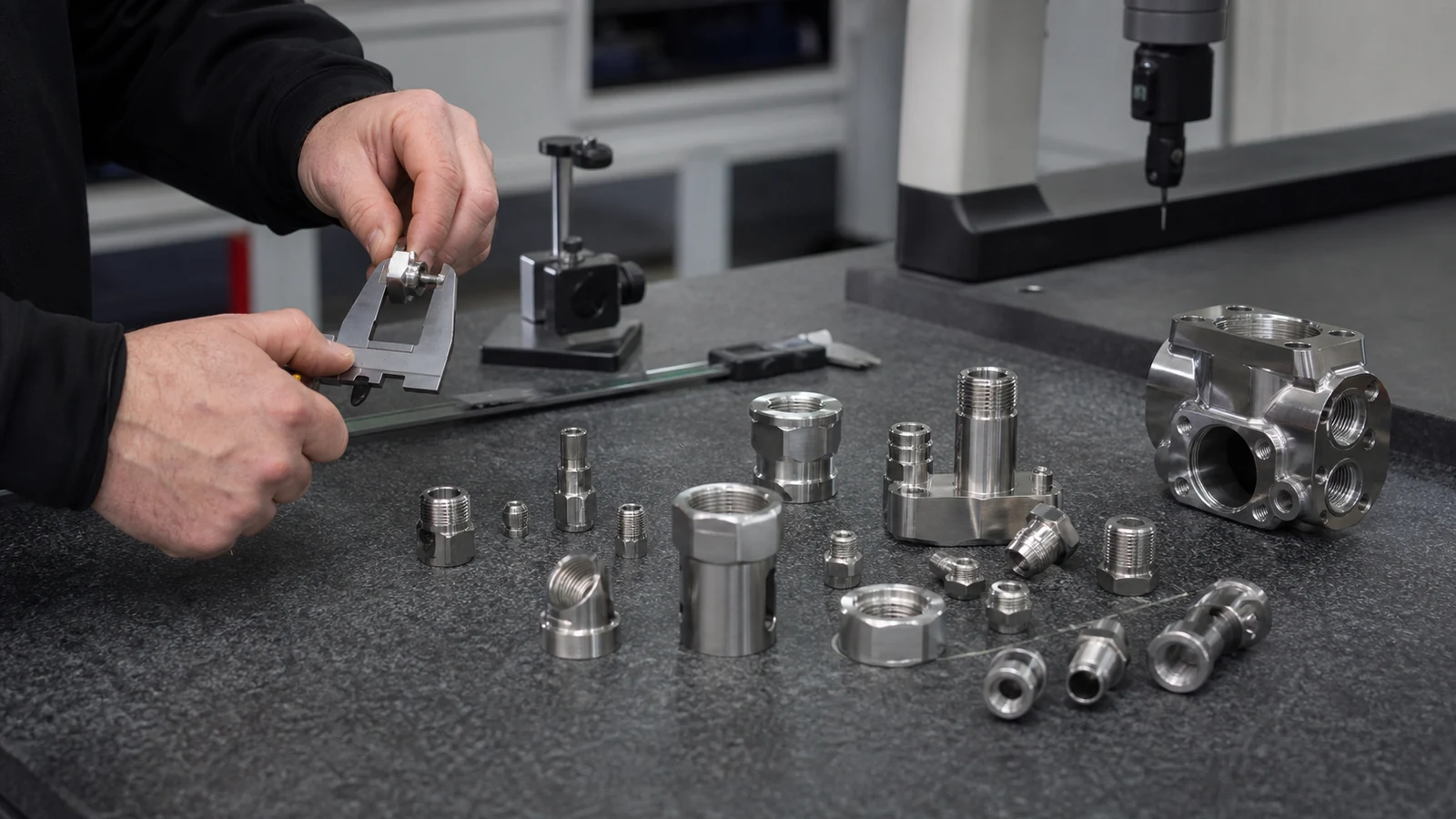
Quality control for custom coffee machine components should focus on the features that affect assembly, sealing, appearance and batch consistency. Depending on the drawing and order requirements, inspection may include dimensional inspection, material verification, surface inspection, thread inspection and assembly-related checks.
Batch production also requires consistency from lot to lot. Critical dimensions should be measured with suitable tools, and surface requirements should be checked against the agreed standard. Documentation can be provided if required by the customer. You can also learn more about AODSON’s inspection approach on the Quality Control page.
FAQ
Is casting or CNC machining better for coffee machine parts?
It depends on the part shape, tolerance, quantity and cost target. Complex parts often use investment casting followed by CNC machining, while simple high-precision parts may be machined directly.
Can stainless steel coffee machine parts be investment cast?
Yes. Stainless steel can be used for investment casting when the component has complex geometry and requires corrosion resistance.
Do cast coffee machine parts still need CNC machining?
Many cast parts still require CNC machining for threads, holes, sealing surfaces and tight-tolerance dimensions.
What materials are commonly used for coffee machine components?
Stainless steel, brass and aluminum are commonly used depending on pressure, temperature, water contact, corrosion resistance and design requirements.
Can AODSON manufacture custom coffee machine parts from drawings or samples?
Yes. AODSON can support custom casting, CNC machining and OEM production based on drawings or samples.
Need custom stainless steel coffee machine parts for your next project? Contact AODSON to discuss your drawings, samples or OEM production requirements.