




Choosing stainless steel is rarely a matter of selecting the grade with the highest number. A food equipment bracket, a coastal pump component and a brine-handling valve may all need stainless steel, but they do not face the same corrosion, load or wear conditions. For engineers and purchasers, the useful question is: when is 304 or 316L enough, and when does duplex stainless steel earn its place?
What Makes Duplex Stainless Steel Different?
304 and 316L are austenitic stainless steels. They are widely used because they form well, weld well and provide dependable corrosion resistance in suitable environments. Duplex stainless steels have a balanced ferritic-austenitic microstructure. With chromium, nitrogen and, in grades such as 2205 and 2507, molybdenum, this structure provides two practical advantages: higher strength and better resistance to chloride-related localized corrosion and stress corrosion cracking.
The higher strength is not a small detail. Duplex 2205 commonly offers roughly twice the proof strength of standard austenitic stainless steels. That can allow a designer to reduce section thickness in an appropriately engineered component or to add margin where loads, pressure or distortion matter.
The Main Grade Families at a Glance
| Grade family | Typical reference grade | What it does well | Common application direction |
|---|---|---|---|
| Austenitic | 304 / 304L | Economical general corrosion resistance, excellent fabrication | Indoor equipment, architectural parts, food-contact components in mild service |
| Austenitic with molybdenum | 316L | Improved pitting resistance over 304 in moderately chloride-bearing service; low carbon supports welded fabrication | Outdoor/coastal equipment, chemical and food process parts, many marine-adjacent components |
| Lean duplex | 2101 / 2304 | Higher strength than 304/316L with moderate alloy cost; corrosion performance depends on grade | Tanks, structures and components needing strength with moderate corrosion demand |
| Standard duplex | 2205 (UNS S32205 / S31803) | High strength and substantially stronger chloride pitting/SCC resistance than 316L in many environments | Pumps, valves, process piping, wastewater and marine or chemical equipment |
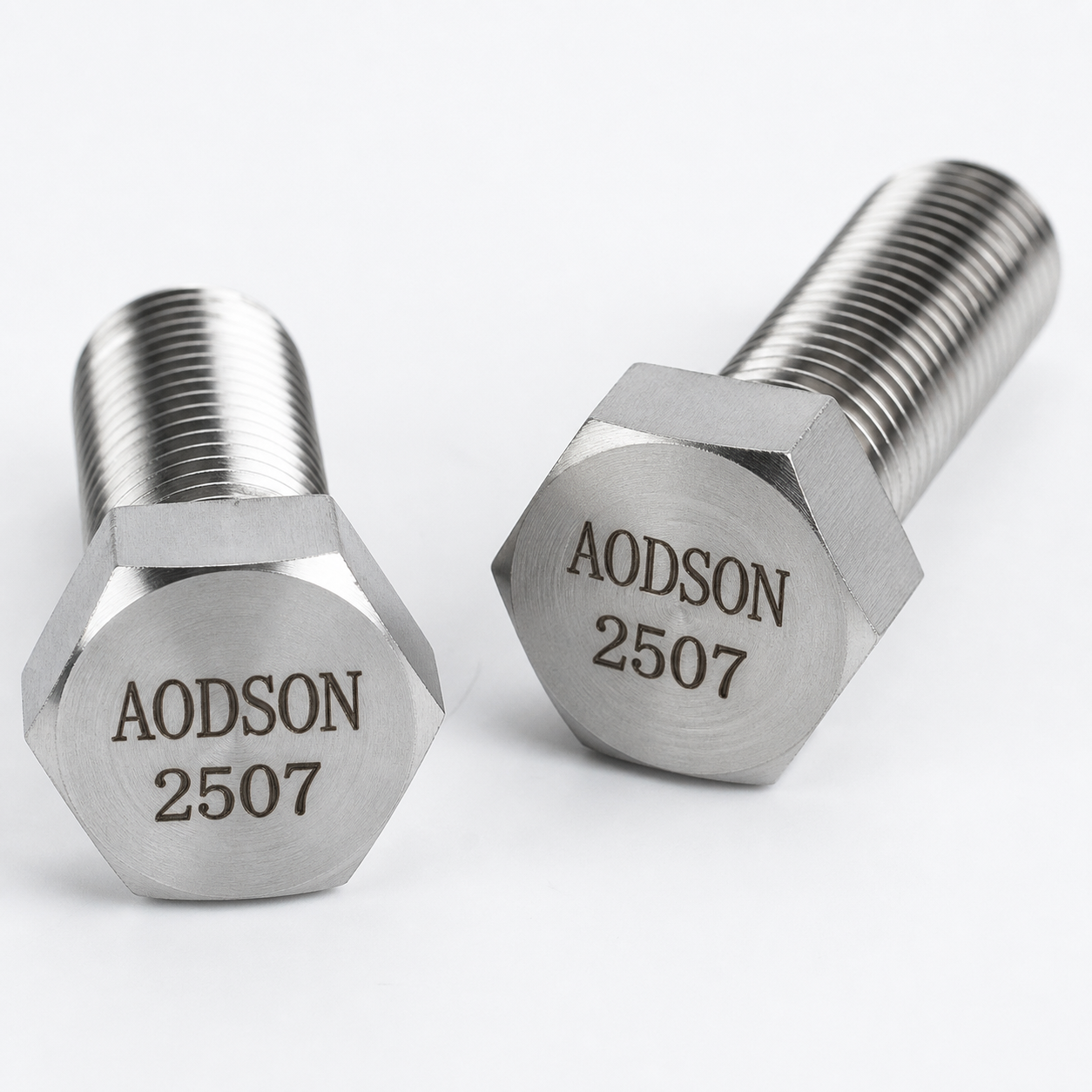
| Super duplex | 2507 (UNS S32750) | Very high resistance to pitting, crevice corrosion and SCC in aggressive chloride service | Seawater systems, desalination, offshore and demanding chemical process duty |
A convenient screening value for chloride pitting resistance is PREN (Pitting Resistance Equivalent Number). It is not a service-life guarantee, because finish, welding, temperature, deposits and actual chemistry all matter. Still, it helps with initial comparison: 304 is typically around 18, 316L around 24, lean duplex grades commonly sit in the mid-20s, 2205 is generally above 30 (optimized products may exceed 35), and 2507 is typically above 40.
304 vs 316L vs Duplex: Where the Difference Appears
304 / 304L: sensible in mild environments
304 remains a practical choice for clean indoor equipment, dry structural fittings, kitchen and food-processing parts where chlorides are limited and cleaning is controlled. It is readily formed and generally the most economical of the options discussed here. The mistake is using it in warm, wet chloride exposure and assuming “stainless” means maintenance-free.
316L: a useful step up, not a seawater cure-all
The molybdenum in 316L improves resistance to chloride pitting compared with 304. It is often appropriate for outdoor exposure, splash-prone food or pharmaceutical equipment, and moderate chemical service. The low-carbon “L” grade is particularly useful for welded parts because it limits sensitization risk around welds. However, stagnant crevices, warm chloride solutions, salt deposits and continuous seawater duty can exceed what 316L comfortably handles.
Duplex 2205: when corrosion and mechanical load meet
2205 is often the practical jump when 316L has insufficient margin: chloride-bearing water, wastewater, chemical process fluids, pressure-retaining parts, pump and valve components, or equipment where stress corrosion cracking is a concern. Its combination of corrosion resistance and strength can be valuable for cast and machined components that see both fluid exposure and mechanical loading.
Super duplex 2507: for severe chloride exposure
When the environment includes seawater, concentrated brine, elevated temperature or offshore conditions, super duplex 2507 can provide substantially greater localized corrosion resistance than 2205 and austenitic grades. That performance comes with higher material and fabrication requirements. Welding procedure, heat treatment, casting quality and verification of the final component become especially important.
What About Wear Resistance?
Wear needs a careful definition. Stainless grades are often selected for corrosion first, while wear may come from sliding contact, abrasive particles, impact, cavitation or erosion-corrosion in a moving fluid.
- Sliding or deformation-related wear: duplex grades generally have higher yield strength and hardness than annealed 304 or 316L, so they can better resist surface deformation and galling in some loaded contacts.
- Erosion-corrosion: in chloride-containing moving fluids, 2205 and 2507 can outperform 304 and 316L because they combine higher mechanical strength with a more robust passive surface. This is relevant to pump, impeller and valve applications.
- Severe dry abrasion: duplex stainless steel is not automatically the best wear material. A hard abrasive slurry, mineral handling part or repeated metal-to-metal scuffing may require hardened alloys, coatings, hardfacing or a replaceable wear insert rather than simply upgrading from 316L to duplex.
In other words, duplex is a strong candidate when corrosion and wear act together. Where abrasion alone controls failure, use application testing or a dedicated wear solution.
A Practical Selection Checklist
- Use 304/304L for mild, low-chloride, mostly indoor service where fabrication ease and cost are priorities.
- Use 316L when moderate chloride exposure, outdoor service or welded hygienic/chemical equipment requires added corrosion margin over 304.
- Consider lean duplex when higher strength and cost efficiency matter, provided its corrosion rating matches the actual environment.
- Choose duplex 2205 for chloride-bearing process service, higher mechanical loads, wastewater and many pump or valve duties where 316L is vulnerable to pitting or SCC.
- Specify super duplex 2507 for aggressive brine, seawater and offshore service where failure risk justifies tighter material and fabrication control.
Do Not Select by Grade Name Alone
The right specification should also consider fluid chemistry, chloride concentration, operating temperature, crevices, velocity, mechanical load, required life, casting geometry, weld procedure and surface finish. For a wear-critical part, describe the wear mechanism and request testing or past service evidence. Material certificates and appropriate inspection are as important as the grade written on a drawing.
For investment cast or machined stainless steel parts, Aodson can discuss material selection together with geometry, manufacturing route and inspection requirements so that the final component matches its real operating environment.
Technical References
- Alleima, SAF 2205 material datasheet: PREN comparison, strength and corrosion behaviour.
- Alleima, SAF 2507 material datasheet: super duplex corrosion and mechanical properties.
- Outokumpu, Forta duplex stainless steel range: duplex grade positioning and application context.