




Architectural hardware must do more than look clean. It has to hold glass, connect handrails, support balustrades, align with building structures, resist corrosion and maintain a premium appearance after years of use. Investment casting is widely used for this category because it can produce complex stainless steel shapes with repeatable quality and efficient material use.
For architects, engineers, distributors, project managers and OEM buyers, understanding the process helps explain why a well-designed cast fitting can outperform a fabricated or fully machined alternative in cost, appearance and production consistency.
AODSON manufactures stainless steel architectural hardware through precision investment casting, CNC machining, surface finishing, inspection and export packaging. This guide explains where investment casting fits, what benefits it provides and how to specify it for reliable OEM production.
What Is Investment Casting?
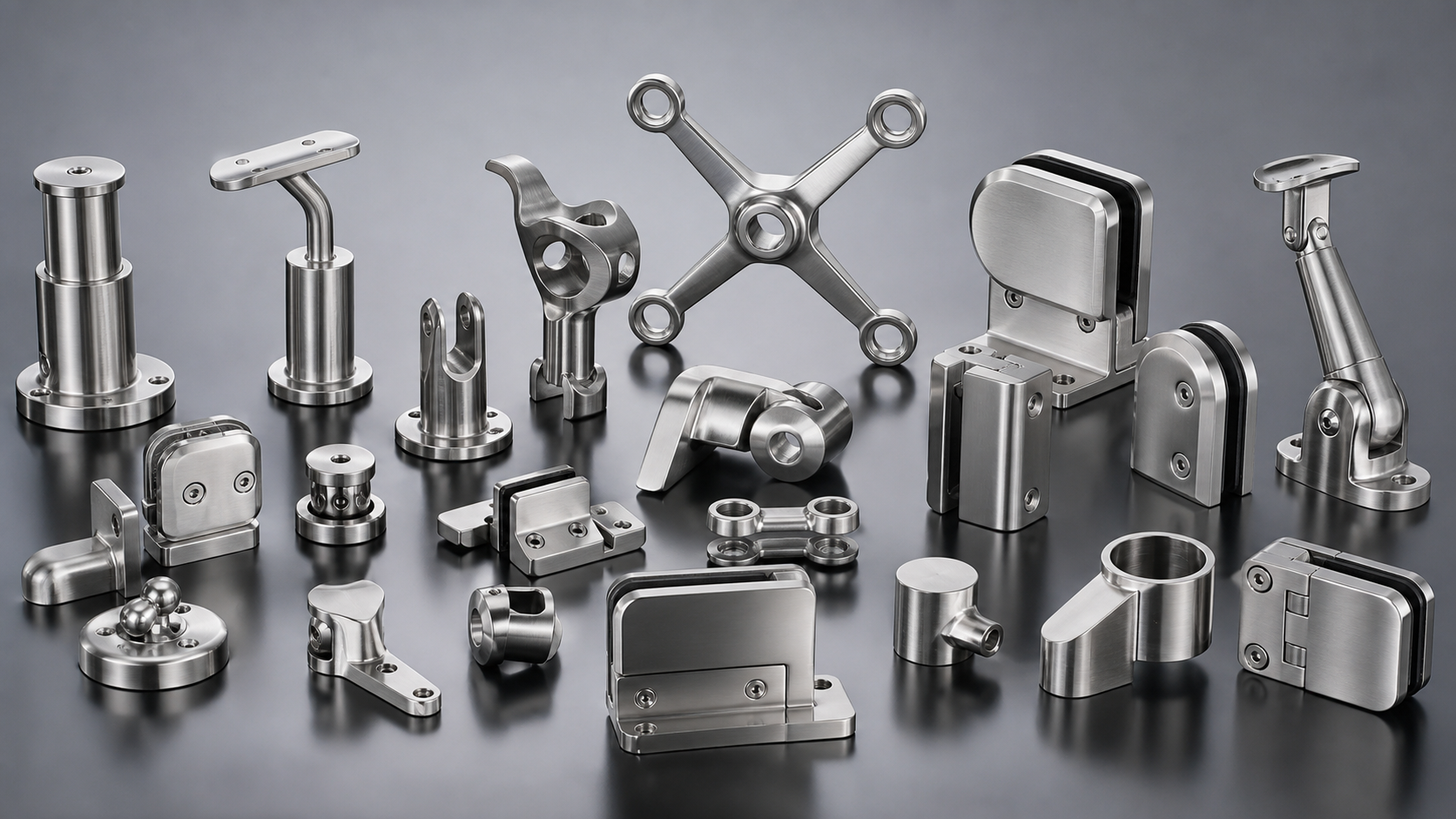
Investment casting, also called lost-wax casting, is a precision manufacturing process used to create metal parts from wax patterns. A wax replica of the part is produced, assembled into a casting tree, coated with ceramic shell, dewaxed and filled with molten metal. After solidification, the ceramic shell is removed and the casting is cut, cleaned, inspected, machined and finished.
The method is especially useful when a part has curves, bosses, blended transitions, internal features, decorative forms or shapes that would waste material if machined entirely from solid bar. For architectural hardware, this makes investment casting a practical route for stainless steel glass clamps, spider fittings, handrail brackets, door handles and custom connectors.
Unlike rough casting processes, investment casting is designed for near-net-shape production. It does not replace all machining, but it reduces machining time by forming most of the geometry close to the final shape.
Why Investment Casting Is Ideal for Architectural Hardware
Architectural hardware often combines structural and visual requirements. A fitting may need load capacity, corrosion resistance, a polished finish, accurate holes and a shape that matches an architect’s design intent. Investment casting supports this mix better than many other manufacturing routes.
For OEM buyers, the key advantages are repeatability, design freedom, material efficiency and scalable production. Once tooling and process parameters are controlled, batches can be produced consistently, then machined and finished to the required standard.
| Benefit | Why It Matters for Architectural Hardware | Typical Result |
|---|---|---|
| Complex geometry | Allows curved shapes, integrated bosses, decorative contours and compact load paths | Cleaner design with fewer welded or assembled pieces |
| Near-net shape | Forms most of the part before machining | Less material waste than CNC from solid bar |
| Good surface potential | Provides a suitable base for satin or mirror finishing when casting quality is controlled | Premium visible hardware appearance |
| Repeatability | Tooling and process control support batch production | Consistent fit and appearance across project orders |
| Material flexibility | Supports common stainless grades used in architecture | Material can be matched to indoor, outdoor or coastal environments |
Typical Architectural Hardware Produced by Investment Casting
Glass Clamps
Glass clamps often require a compact body, clean edges, gasket interfaces and screw features. Investment casting creates the body efficiently, while CNC machining controls threads, screw seats and clamp surfaces. For more detail, see Stainless Steel Glass Clamps: Types, Materials & Applications.
Spider Fittings
Spider fittings used in glass facades need smooth arms, accurate connection points and strong material. Casting forms the complex body shape, and machining controls the final attachment interfaces.
Handrail Fittings
Handrail brackets, elbows, supports and base fittings often have curved transitions that are difficult to fabricate cleanly. Investment casting reduces welding and helps create a more integrated appearance.
Door Handles
Door handles can benefit from casting when the design includes sculpted forms, ergonomic curves or custom branding-free geometry. Finishing quality is critical because handles are highly visible and frequently touched.
Balustrade Components
Balustrade connectors, bases and supports need alignment accuracy and attractive surfaces. Casting provides the main form, while machining and polishing complete the functional and visible surfaces.
Custom Connectors
Project-specific connectors are a strong fit for investment casting when the design cannot be made efficiently from standard profiles or simple fabrication.
| Product | Why Casting Helps | Common Secondary Operations |
|---|---|---|
| Glass clamps | Compact body with rounded or shaped surfaces | CNC threads, gasket faces, polishing |
| Spider fittings | Complex arms and integrated hub geometry | CNC holes, surface finishing, assembly checks |
| Handrail fittings | Curved transitions and integrated supports | Machining, welding when needed, satin finish |
| Door handles | Decorative and ergonomic shapes | Grinding, mirror polishing, passivation |
| Balustrade connectors | Strength with compact shape | Mounting holes, thread checks, finish inspection |
| Custom connectors | Design freedom for project-specific geometry | Fixture machining, inspection reports, export packaging |
Manufacturing Process
A reliable investment casting program depends on each step being controlled. The process is not only about pouring metal; it is a sequence of design review, tooling, pattern production, shell building, pouring, cleaning, machining, finishing and inspection.
| Step | Purpose | Key Control Point |
|---|---|---|
| Wax pattern | Create a precise replica of the part | Pattern dimensions, shrinkage allowance and surface quality |
| Ceramic shell building | Build a heat-resistant mold around wax patterns | Shell thickness, drying time and coating consistency |
| Pouring | Fill the ceramic shell with molten stainless steel | Metal chemistry, temperature and pouring stability |
| Knockout | Remove shell and separate castings | Avoid damage, check surface defects and remove gates correctly |
| Heat treatment | Improve material properties when required | Correct cycle for grade and project specification |
| CNC machining | Finish critical features | Datum strategy, hole position, threads and mating faces |
| Surface finishing | Create final appearance and surface condition | Grain direction, scratch control and passivation if required |
Wax Pattern
The wax pattern controls the casting geometry. Tooling must account for shrinkage, machining allowance, gate position and visible surface requirements. Problems at this stage can repeat across the entire batch.
Ceramic Shell Building
Ceramic shell building uses repeated dipping and stucco coating to create a mold strong enough for molten stainless steel. Shell quality affects surface finish, dimensional stability and casting consistency.
Pouring
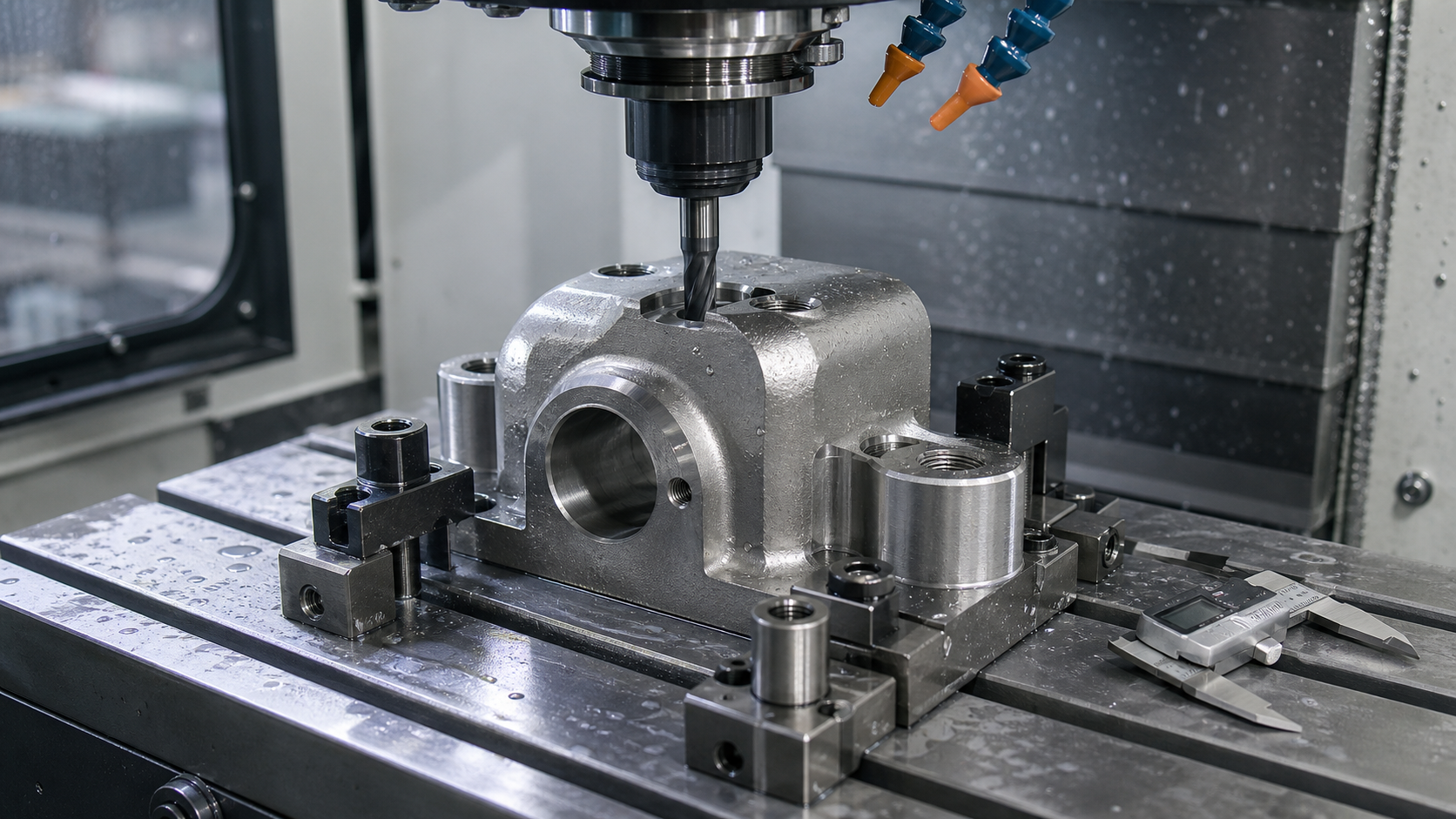
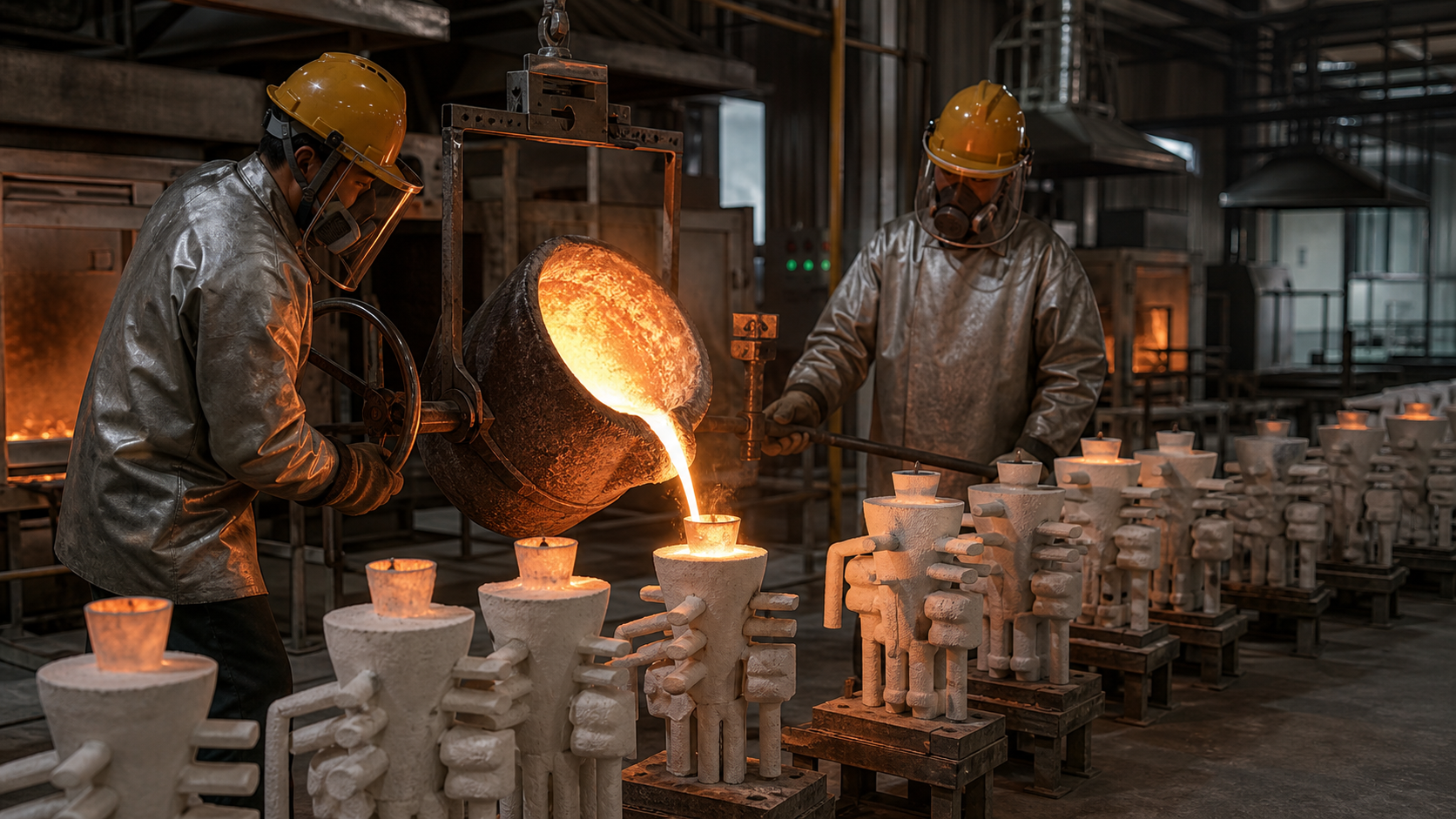
During pouring, molten stainless steel is introduced into the preheated ceramic shell. Temperature control, metal cleanliness and gating design all affect the final casting. Poor control can lead to misruns, shrinkage or surface defects.
Knockout
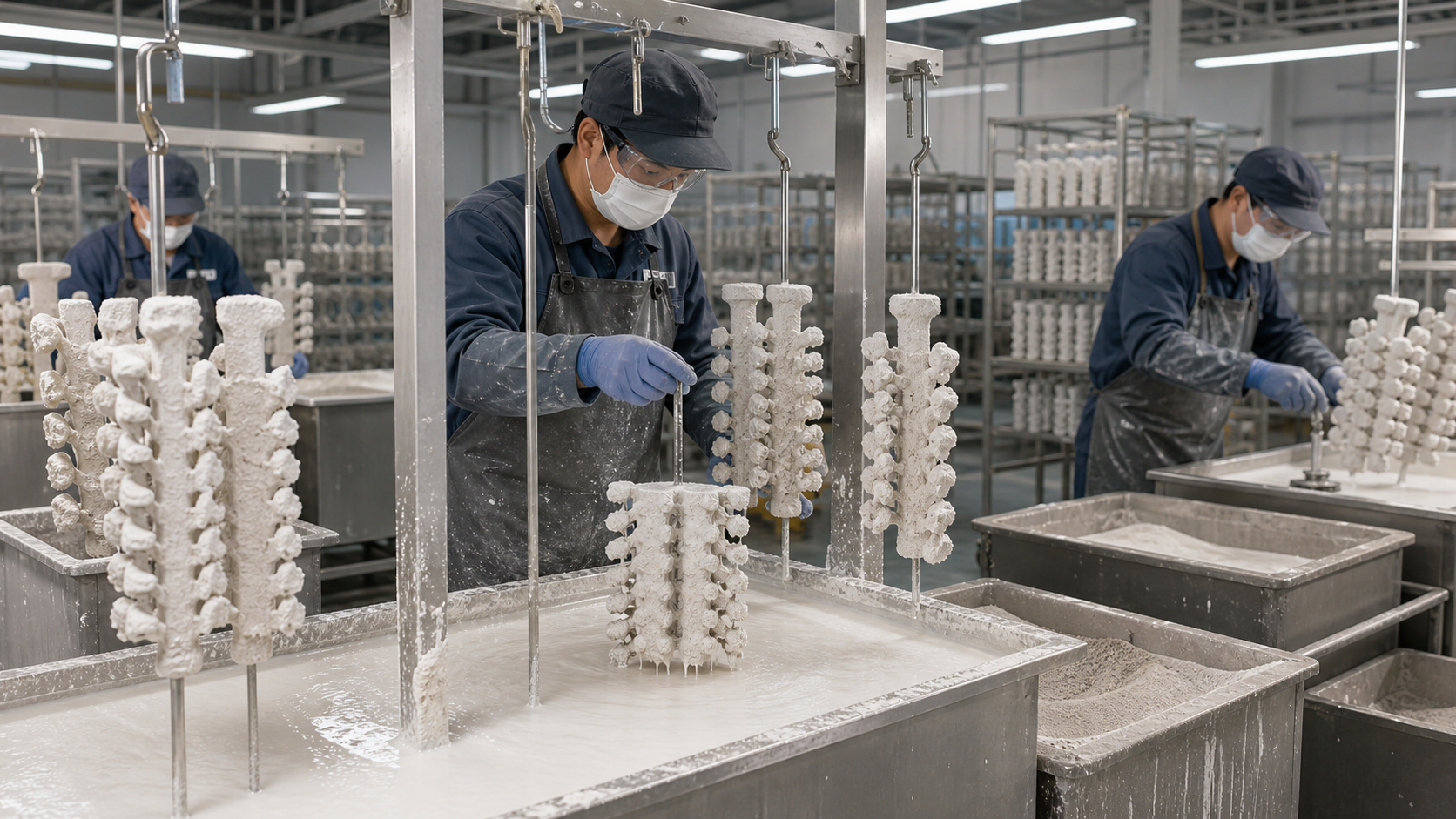
After cooling, the ceramic shell is removed. Castings are cut from the tree, gates are ground and initial inspection checks whether the blank is ready for machining and finishing.
Heat Treatment
Heat treatment may be used depending on alloy, mechanical requirements and customer specification. Not every architectural fitting needs heat treatment, but it should be considered when strength, corrosion resistance or material condition is critical.
CNC Machining
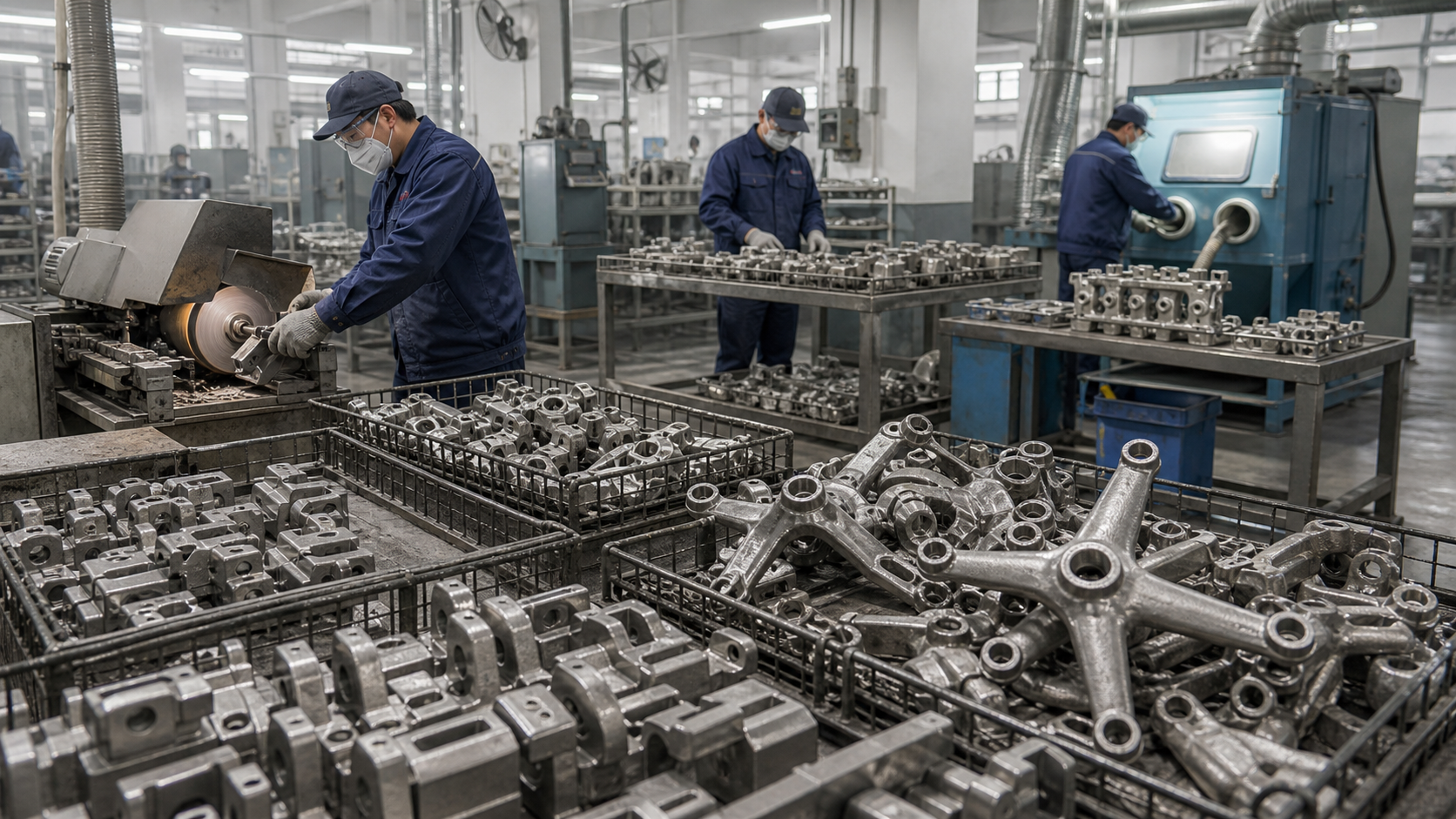
CNC machining completes features that cannot rely on casting tolerance alone. Typical machined areas include threaded holes, countersinks, pins, bearing surfaces, mounting faces and glass-contact interfaces. AODSON’s CNC machining capability supports this transition from near-net casting to finished hardware.
Surface Finishing
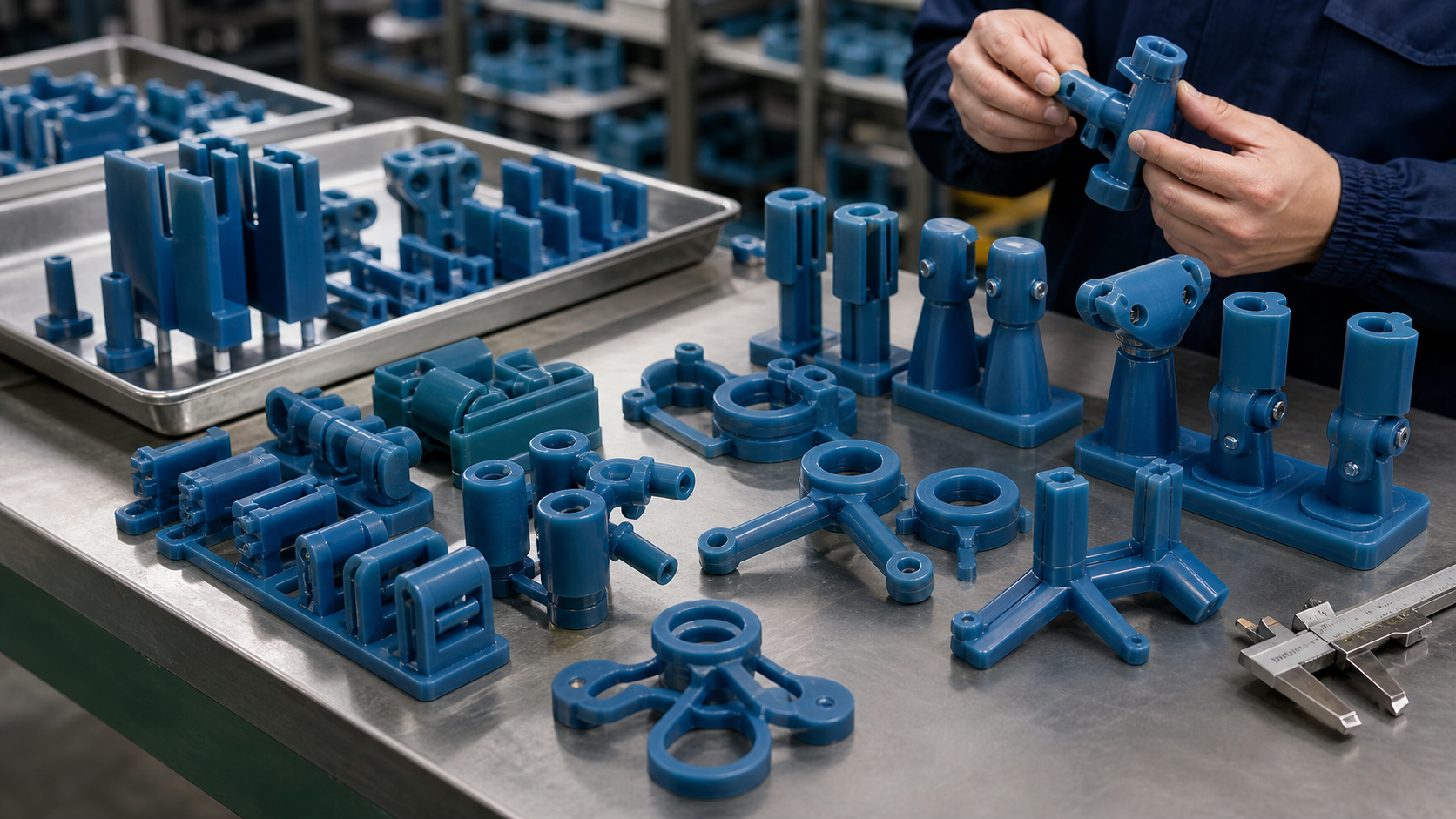
Surface finishing removes casting and machining marks while creating the specified appearance. Architectural hardware may require satin brushing, mirror polishing, electropolishing, passivation or coating preparation depending on the project.
Material Options
Material selection should reflect the installation environment. Indoor dry interiors, coastal balconies, swimming pool fences and industrial sites place very different demands on stainless steel hardware.
| Material | Typical Architectural Use | Advantages | Buyer Notes |
|---|---|---|---|
| 304 stainless steel | Indoor railings, handles, decorative fittings and general hardware | Good corrosion resistance, wide availability and cost efficiency | Best for dry or mild environments |
| 316 stainless steel | Outdoor hardware, humid buildings, coastal projects and premium exposed fittings | Better chloride resistance due to molybdenum | Recommended for many exterior architectural applications |
| Duplex 2205 | High-strength or severe-corrosion fittings | High strength and strong corrosion resistance | Requires careful casting, machining and welding control |
For related material guidance, see 304 vs 316 Stainless Steel Architectural Hardware and 316L vs 2205 Stainless Steel Castings.
Advantages Compared with Other Manufacturing Methods
Investment casting is not always the only possible manufacturing route. The right process depends on geometry, volume, tolerance, finish, strength and cost. However, for complex stainless architectural hardware, investment casting often gives the best balance.
| Method | Strengths | Limitations | Best Fit |
|---|---|---|---|
| Investment casting | Complex shapes, good surface potential, near-net efficiency | Requires tooling and process control | Glass clamps, spider fittings, connectors, custom hardware |
| Sand casting | Lower tooling cost for large simple parts | Rougher surface and lower detail than investment casting | Large industrial components where finish is less critical |
| Forging | Excellent strength for suitable shapes | Limited design freedom and often high tooling cost | Simple high-strength forms |
| Fabrication | Flexible for welded assemblies and low-volume structures | Weld distortion and visible seams may affect appearance | Frames, brackets and assemblies from plate or tube |
| CNC from solid bar | High accuracy and no casting tooling | Material waste and long machining time for complex forms | Simple geometry, prototypes or tight-tolerance features |
When designs include complex curves or integrated features, casting plus machining is often more efficient than removing large amounts of stainless steel from solid stock. For broader process context, see How Architectural Hardware Is Manufactured.
Surface Finish Options
The finish of architectural hardware is both aesthetic and technical. Visible stainless parts must look consistent, resist contamination and avoid roughness that can trap dirt or moisture.
| Finish | Appearance | Typical Use | Control Point |
|---|---|---|---|
| Satin finish | Directional brushed grain | Commercial railings, handrail fittings, glass clamps | Consistent grain direction and roughness |
| Mirror polish | Highly reflective surface | Luxury interiors, door handles, premium visible fittings | Scratch removal and reflection quality |
| Electropolishing | Bright and microscopically smoother surface | Cleanable or corrosion-sensitive parts | Uniform chemistry and edge control |
| Passivation | Little visual change | Machined, welded or exposed stainless hardware | Removal of free iron and proper rinsing |
| PVD preparation | Base surface for decorative coating | Black, champagne, bronze or design-led projects | Base polish and coating adhesion |
Quality Inspection and Material Traceability
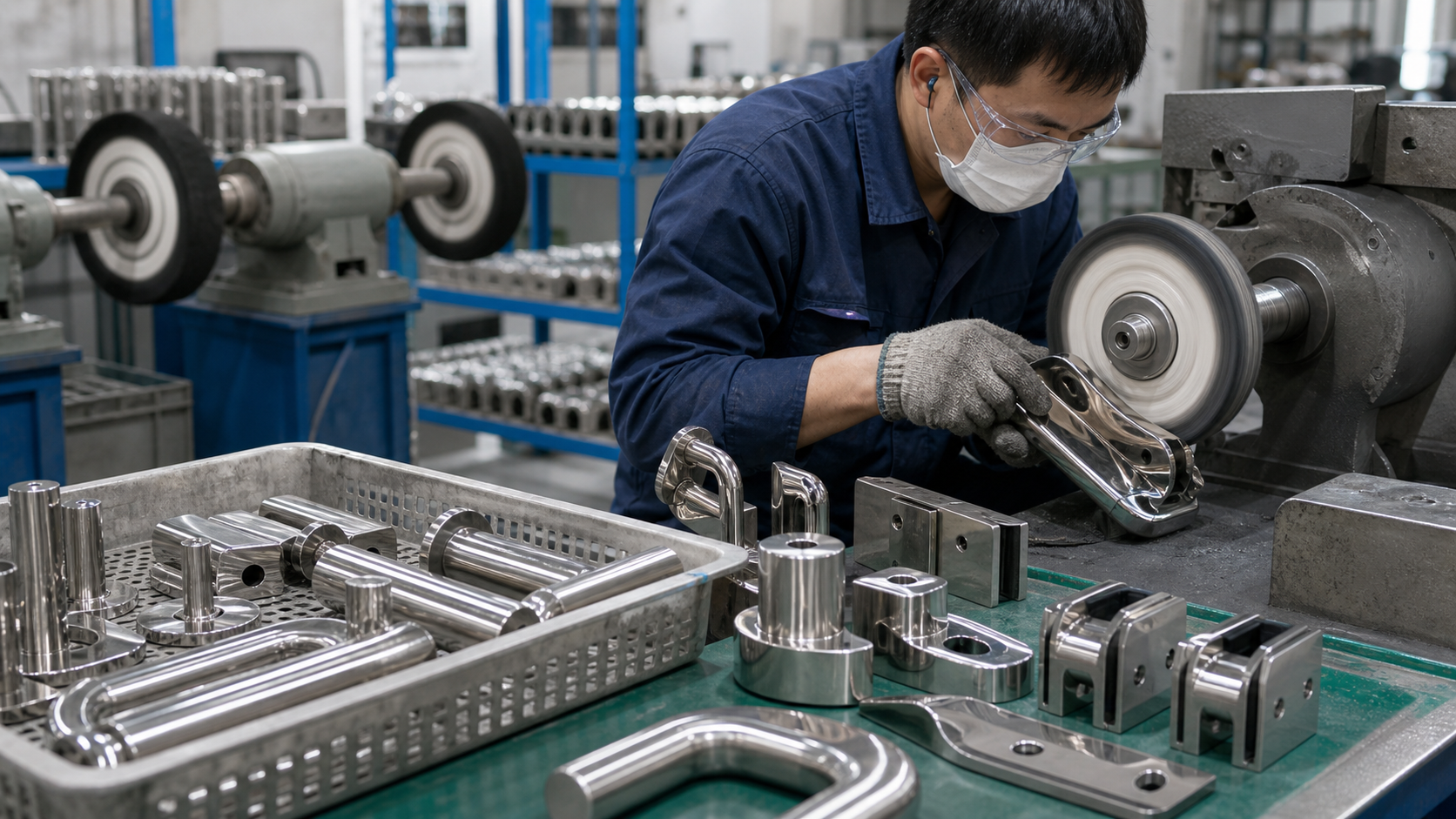
Quality control for investment cast architectural hardware should start before production and continue through final packing. Material certificates, heat numbers, casting parameters, machining inspection and finishing checks all support traceability.
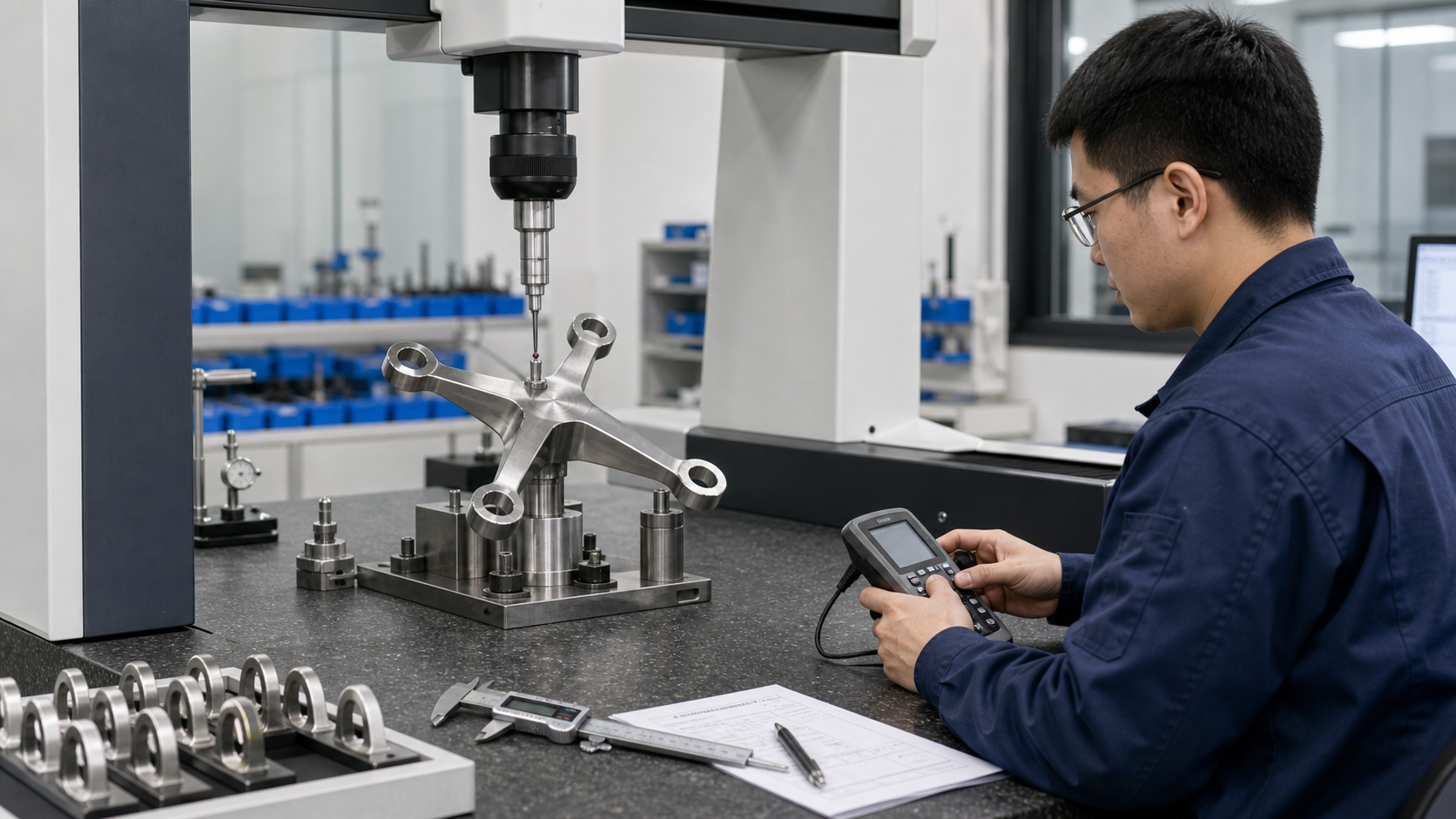
Inspection can include chemical composition review, visual inspection, dimensional checks, thread gauges, fit checks, surface finish review, corrosion-related verification when required and packaging inspection. AODSON’s quality control workflow helps OEM buyers confirm that production matches drawings, samples and project specifications.
Typical Applications
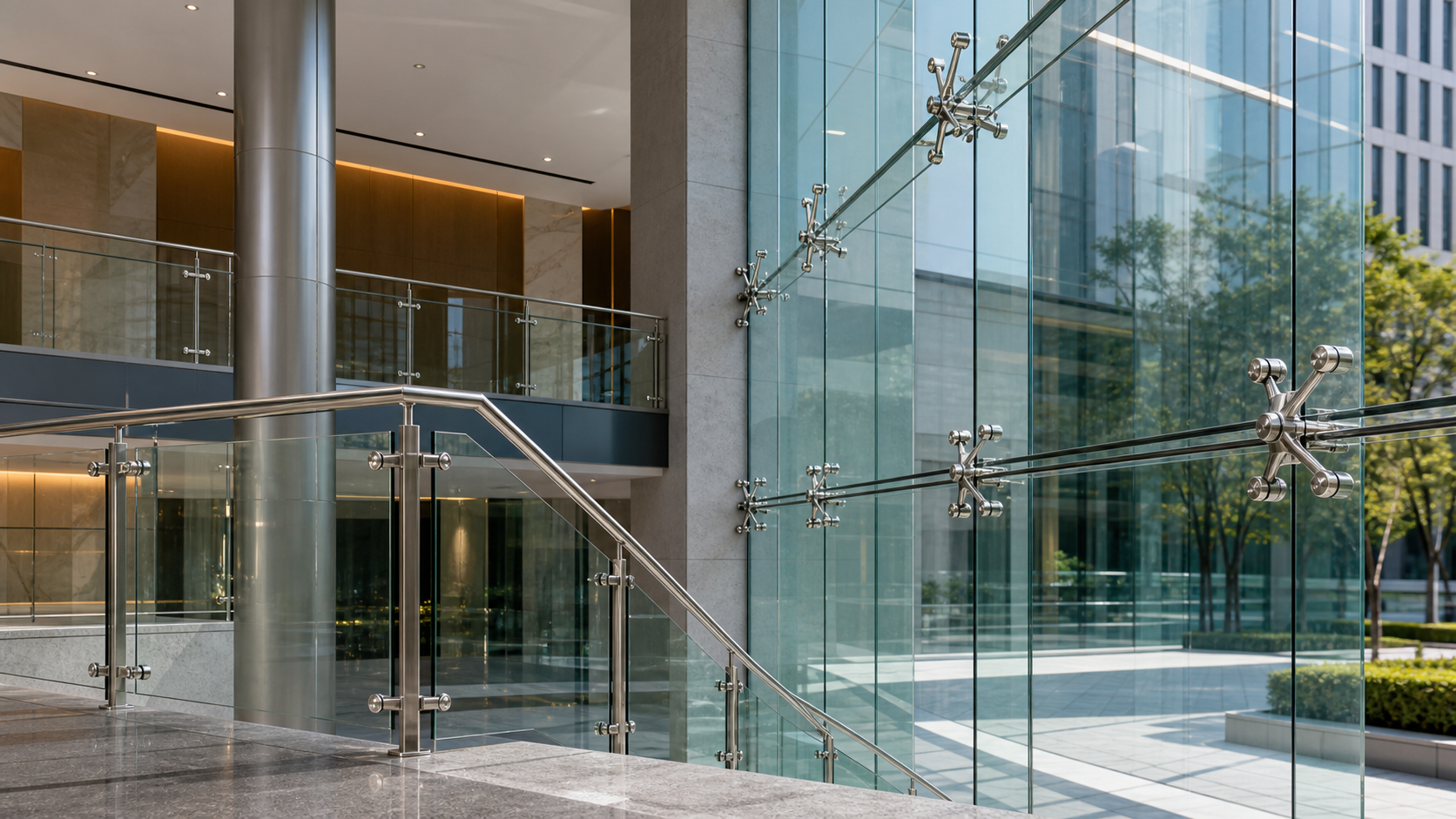
Investment cast stainless steel architectural hardware appears throughout modern buildings. Its value is strongest where visible form, compact strength and repeatable production are all needed.
| Application | Typical Cast Hardware | Important Requirement |
|---|---|---|
| Glass railings | Glass clamps, spigots, balustrade connectors | Glass thickness compatibility, corrosion resistance and polished finish |
| Facade systems | Spider fittings, point supports, custom connectors | Accurate connection geometry and material traceability |
| Staircases | Handrail brackets, supports and base fittings | Alignment, surface durability and installation accuracy |
| Hotels and commercial interiors | Door handles, decorative brackets, glass fittings | Premium finish and batch consistency |
| Balconies and outdoor areas | Railing fittings, clamps and anchors | 316 or duplex material selection and protective finishing |
| Custom OEM projects | Project-specific connectors and branded-free hardware | DFM review, tooling control, repeatability and export packaging |
How AODSON Manufactures OEM Architectural Hardware
AODSON supports OEM architectural hardware manufacturing from drawings, 3D files, samples or project specifications. The process begins with engineering review: material grade, geometry, casting feasibility, machining datum, visible surfaces, polishing requirement, inspection plan and packaging method.
For cast designs, AODSON develops tooling and process parameters, produces wax patterns, builds ceramic shells, pours stainless steel, removes and cleans the castings, machines critical features, completes surface finishing and inspects the finished components. The same manufacturing chain can support glass clamps, spider fittings, handrail hardware, balustrade parts, door handles and custom connectors.
To discuss a project, send drawings, samples, target material, finish, annual quantity and application environment through Request a Quote or Contact AODSON.
Frequently Asked Questions
Why is investment casting used for architectural hardware?
It creates complex stainless steel shapes with good surface quality and repeatability, making it suitable for glass clamps, spider fittings, handrail fittings and custom connectors.
What architectural hardware can be made by investment casting?
Typical products include glass clamps, spider fittings, handrail brackets, door handles, balustrade connectors, hinge bodies and custom stainless steel project hardware.
Is investment casting accurate enough for finished hardware?
Investment casting provides near-net shapes, while CNC machining is used for critical holes, threads, mounting faces and tight-tolerance features.
Which stainless steel grades are common for investment cast hardware?
304, 316 and duplex 2205 are common. The best choice depends on corrosion exposure, strength requirement, finish and project budget.
How does investment casting compare with sand casting?
Investment casting offers better detail, smoother surfaces and tighter dimensional capability than sand casting, especially for smaller premium architectural hardware.
Does investment casting eliminate CNC machining?
No. Casting reduces material waste and creates the main form, but CNC machining is still needed for precision holes, threads, flat faces and controlled assembly interfaces.
Can investment cast architectural hardware be mirror polished?
Yes. With suitable casting quality and finishing control, stainless steel investment cast hardware can be satin finished, mirror polished, passivated or prepared for coating.
What quality checks are important for investment cast hardware?
Important checks include material certificates, dimensional inspection, surface defect review, thread and fit checks, finish inspection and packaging verification.
Is investment casting suitable for OEM custom hardware?
Yes. It is well suited to OEM hardware when repeatable geometry, custom shapes, premium finishing and scalable production are required.
What files are needed for an investment casting quotation?
Provide drawings, 3D files if available, material grade, finish requirement, annual volume, tolerance notes, application environment and inspection requirements.
Conclusion
Investment casting is widely used for architectural hardware because it combines design freedom, stainless steel material performance, near-net-shape efficiency and premium surface potential. When paired with CNC machining, finishing and disciplined inspection, it becomes a practical route for reliable glass clamps, spider fittings, handrail fittings, door handles, balustrade components and custom connectors.
For OEM buyers and project teams, the best results come from defining material grade, installation environment, tolerance requirements and finish expectations early. AODSON helps customers turn those requirements into traceable, export-ready stainless steel architectural hardware through precision casting, machining and quality-controlled production.
Need investment cast stainless steel architectural hardware? Send your drawings, samples or project requirements through Request a Quote or Contact.