




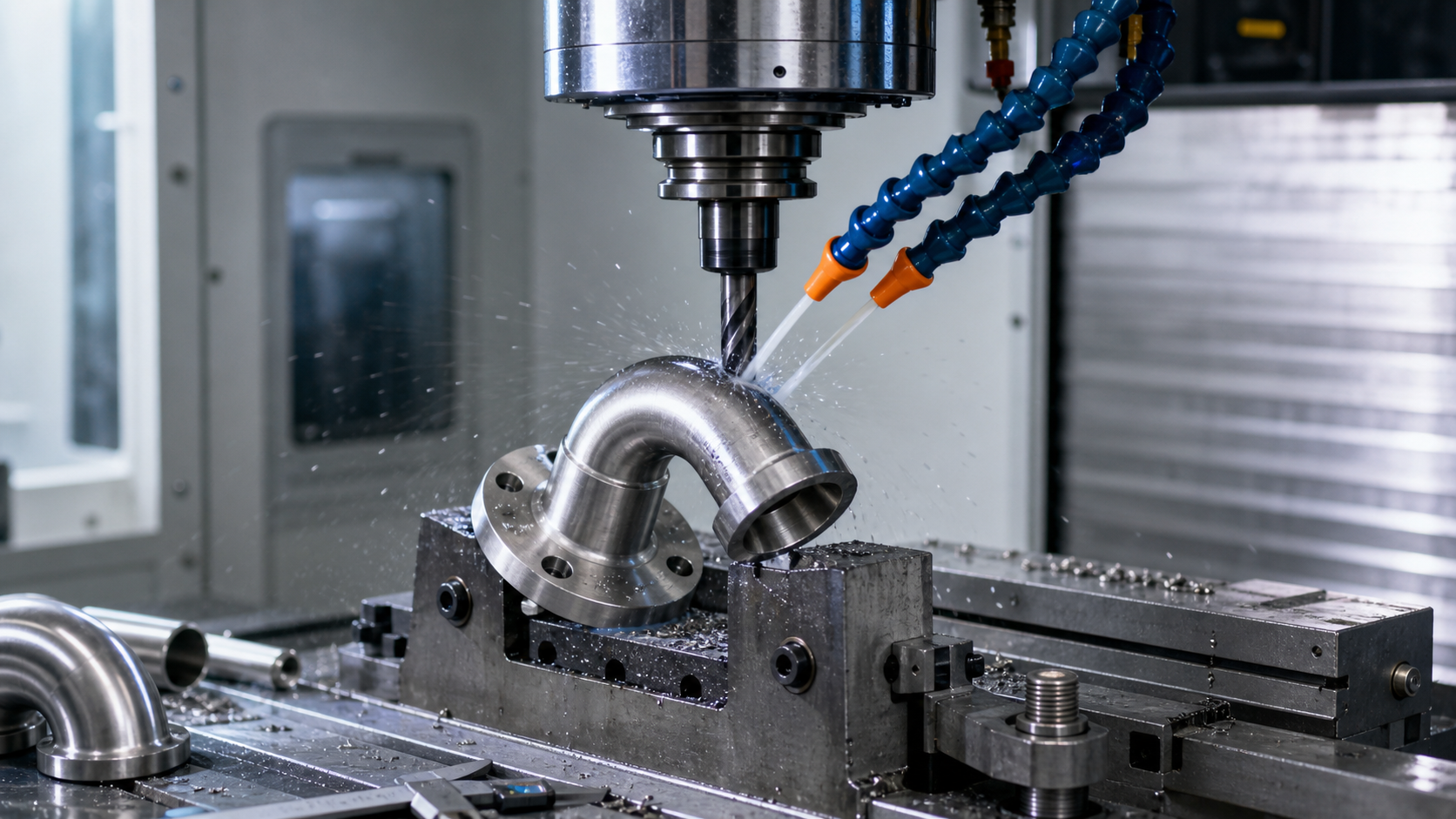
Stainless steel handrail fittings are small parts with a large responsibility. They connect tubes, support handrails, close tube ends, fix posts, align glass railing systems and help the finished installation look clean and safe. For architects, engineers, contractors, distributors and OEM buyers, choosing the right fitting is not only a matter of appearance; it affects installation accuracy, corrosion resistance, maintenance and long-term project performance.
AODSON manufactures stainless steel architectural hardware through precision investment casting, CNC machining, welding, surface finishing and quality control. This guide explains the main types of stainless steel handrail fittings, how to choose materials and finishes, and what to consider for indoor, outdoor, coastal and OEM projects.
What Are Stainless Steel Handrail Fittings?
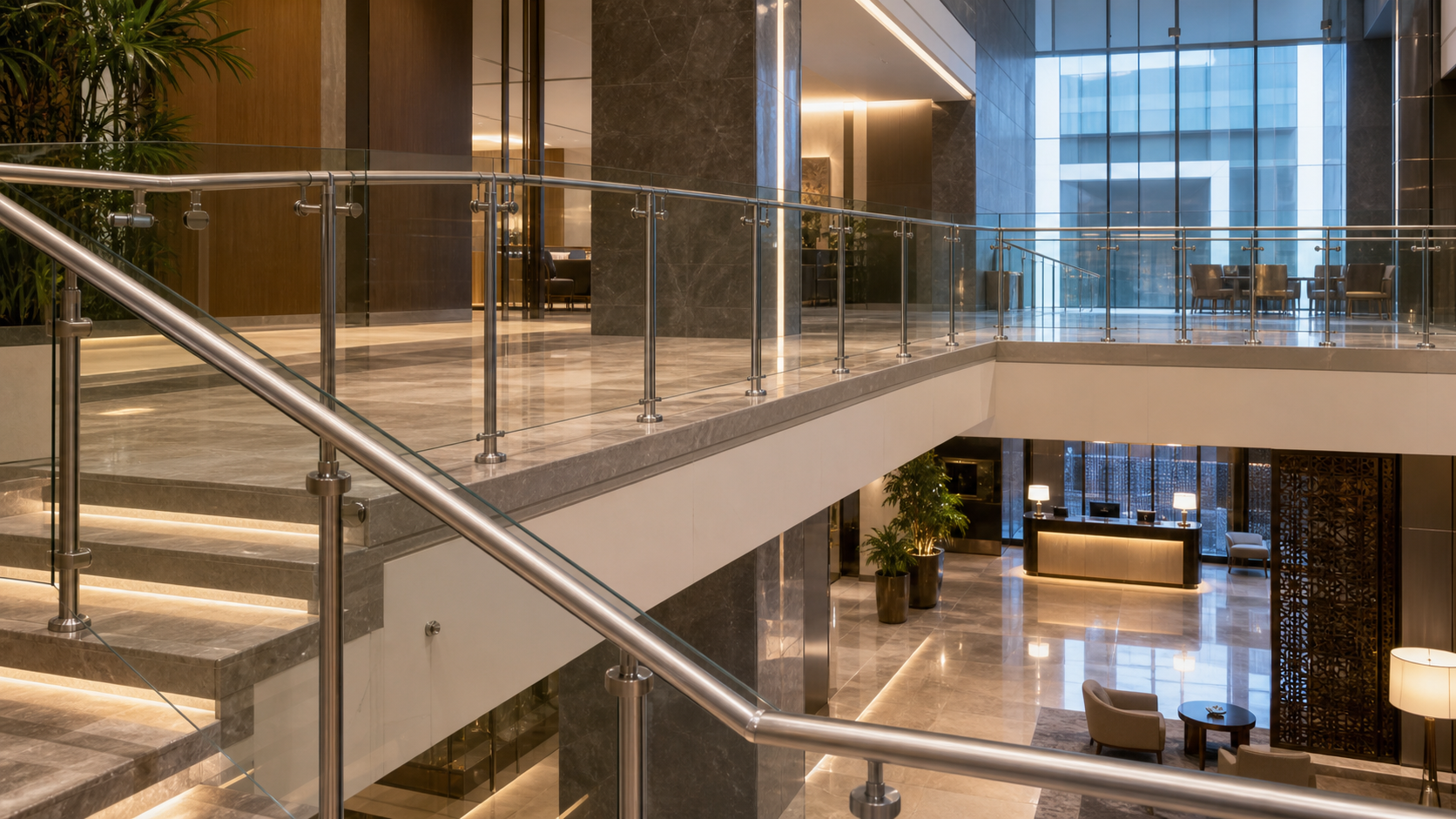
Stainless steel handrail fittings are the components used to join, support, mount, terminate or adjust a handrail system. They are commonly used in staircases, balconies, glass railings, commercial buildings, hotels, public facilities, residential projects and coastal architecture.
A handrail fitting may look simple, but it must match tube size, wall thickness, load path, fastener type, finish direction and installation environment. Poorly selected fittings can create visible misalignment, weak connections, corrosion complaints or costly site rework.
Handrail fittings are part of the wider category of stainless steel architectural hardware. For a complete manufacturing overview, see How Architectural Hardware Is Manufactured.
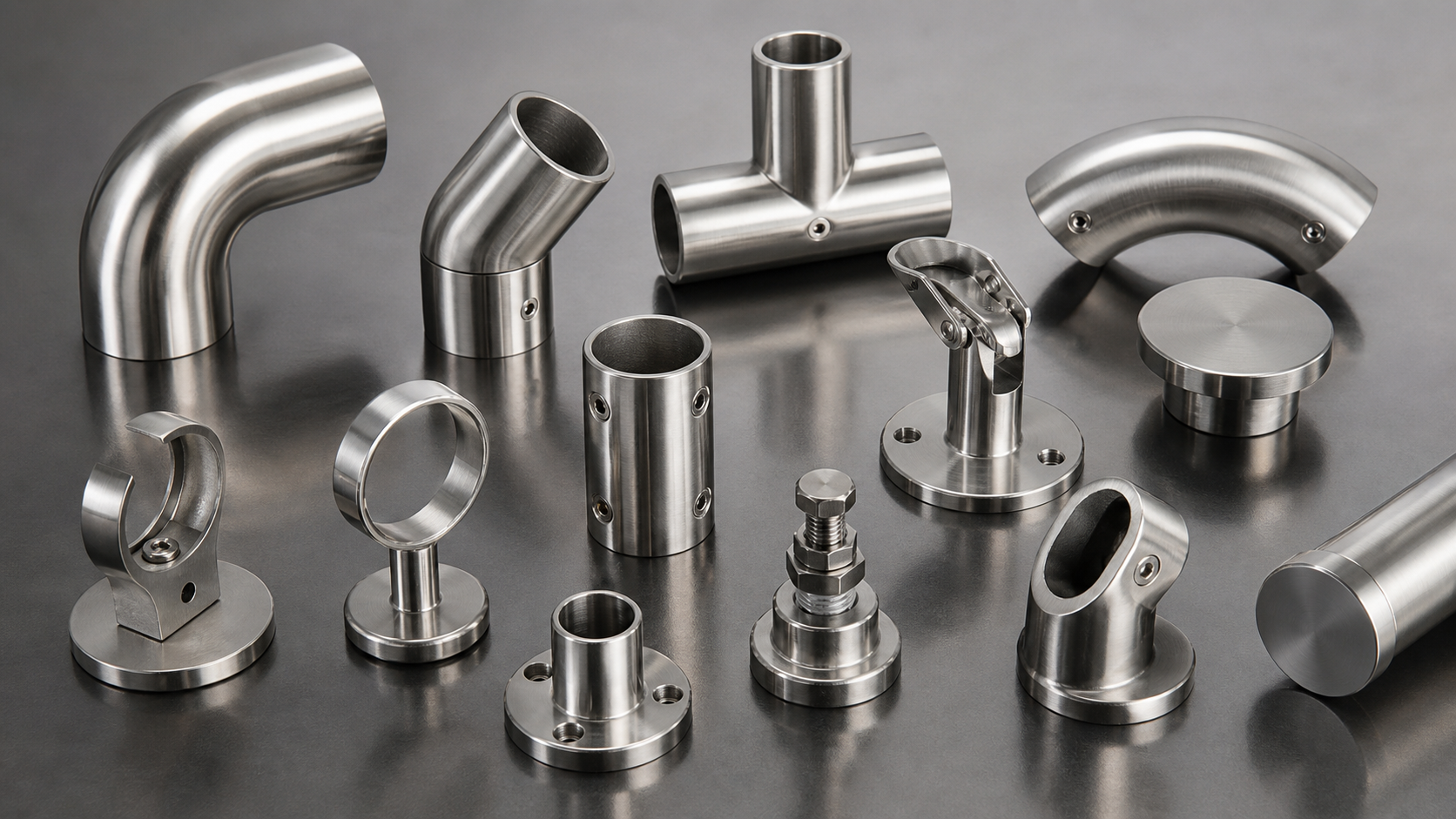
Main Types of Handrail Fittings
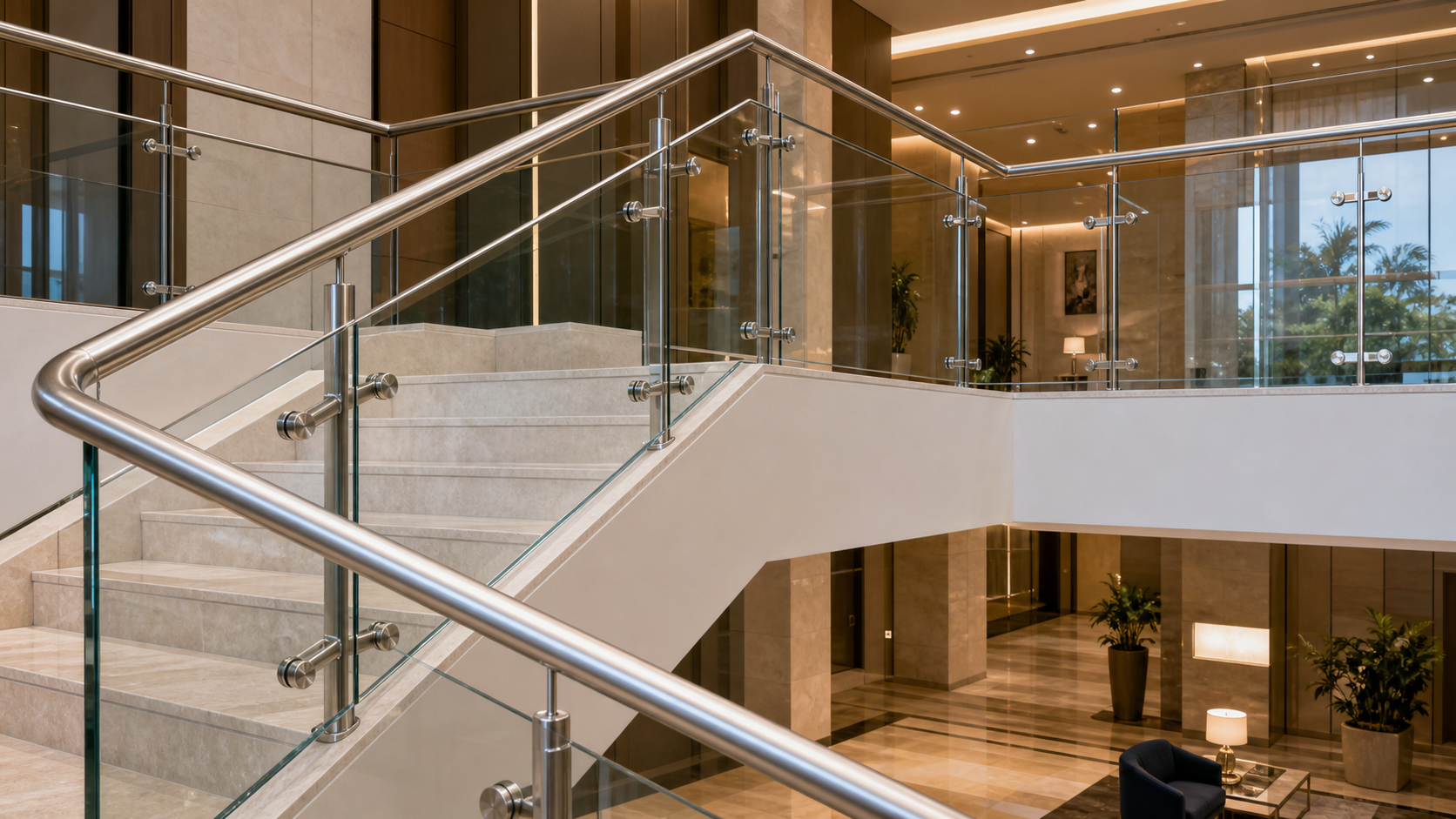
Elbows
Elbows connect handrail tubes at fixed or custom angles. They are used on stair transitions, corners, ramps and continuous railing systems. Casting can create clean curved elbows, while CNC machining controls tube fit and connection details.
Connectors
Connectors join straight tubes, offset sections or modular handrail runs. Accurate fit is important because small connection errors become visible across long railing lines.
End Caps
End caps close open handrail tubes and protect users from sharp tube edges. They may be flat, domed, decorative or custom-shaped depending on design intent.
Base Plates
Base plates anchor posts or supports to floors, walls or structural members. They must match fastener requirements, load direction and site substrate conditions.
Adjustable Connectors
Adjustable connectors help compensate for angle variations in staircases, ramps and renovation projects. The adjustment feature must still lock securely after alignment.
Tube Supports
Tube supports hold the handrail tube from posts, walls or glass systems. Their geometry affects both comfort and installation strength.
| Fitting Type | Main Function | Typical Application | Key Specification |
|---|---|---|---|
| Elbows | Change handrail direction | Stairs, ramps, corners | Angle, tube size, radius and finish |
| Connectors | Join tube sections | Long rail runs and modular systems | Fit tolerance and alignment |
| End caps | Close tube ends | Handrail terminations | Tube diameter, shape and polish |
| Base plates | Anchor posts or supports | Floors, walls and structural bases | Hole pattern, thickness and fastener type |
| Adjustable connectors | Compensate for angle variation | Stairs, ramps and renovation work | Adjustment range and locking strength |
| Tube supports | Support handrail tube | Posts, walls, glass railing systems | Load path, tube seat and mounting interface |
Material Selection: 304, 316 and Duplex 2205
Material selection should follow the environment. A dry indoor staircase, an outdoor shopping mall, a coastal hotel and a marine-adjacent terrace should not automatically use the same stainless grade.
| Material | Recommended Use | Advantages | Notes |
|---|---|---|---|
| 304 stainless steel | Indoor handrails, dry interiors and mild environments | Good corrosion resistance, availability and cost efficiency | Not ideal for chloride-rich coastal or poolside areas |
| 316 stainless steel | Outdoor, humid, coastal and premium exposed handrails | Improved chloride resistance due to molybdenum | Common choice for exterior architectural projects |
| Duplex 2205 | High-strength or severe-corrosion projects | High strength and excellent corrosion resistance | Requires more careful casting, machining and welding control |
For deeper grade selection, review 304 vs 316 Stainless Steel Architectural Hardware and 316L vs 2205 Stainless Steel Castings.
Manufacturing Process
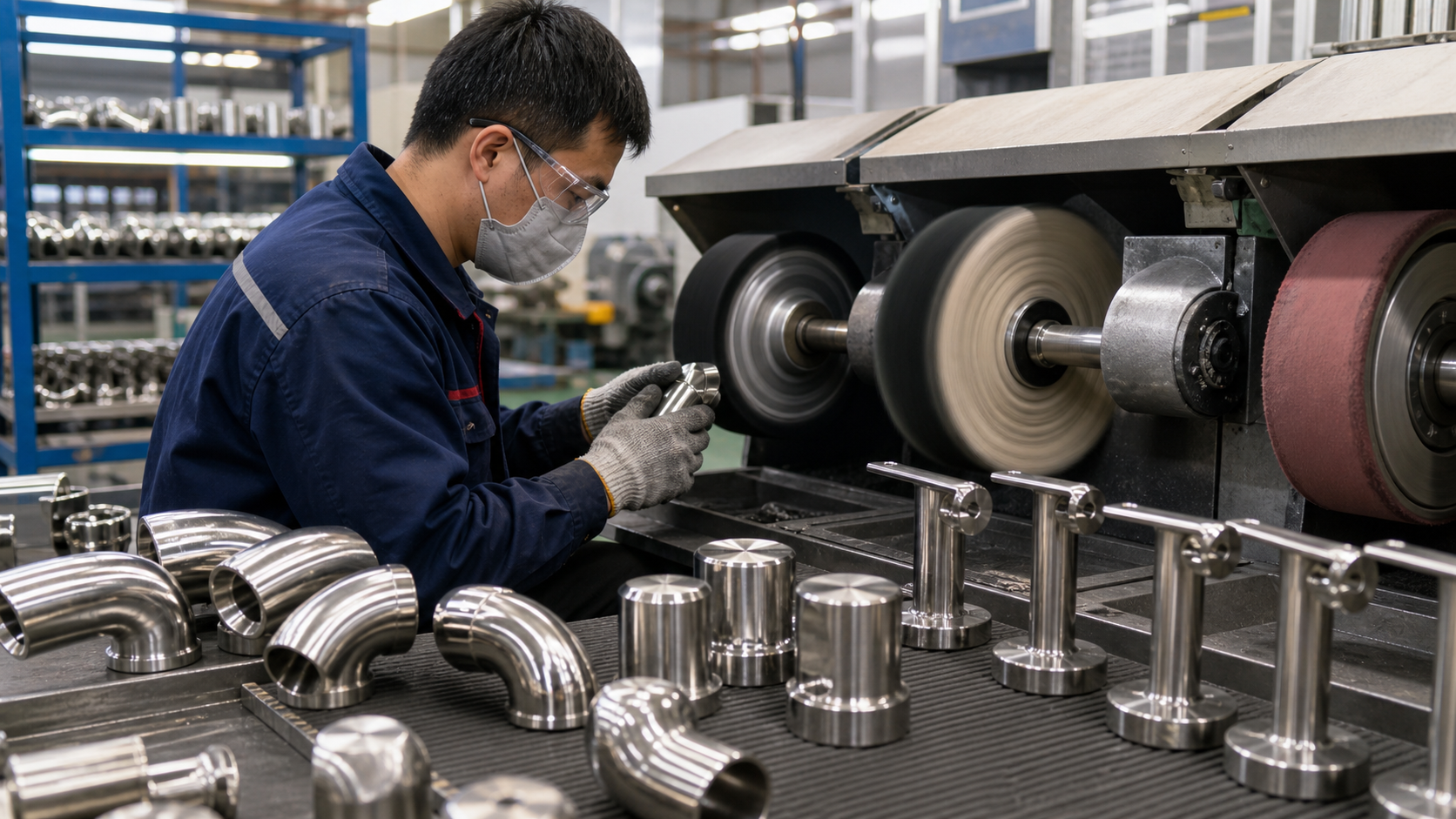
Investment Casting
Investment casting is well suited for elbows, supports, bases and custom connectors with complex shapes. It forms near-net stainless steel blanks, reducing material waste and allowing smoother transitions than simple welded fabrication. AODSON’s article Investment Casting for Architectural Hardware explains the process in more detail.
CNC Machining
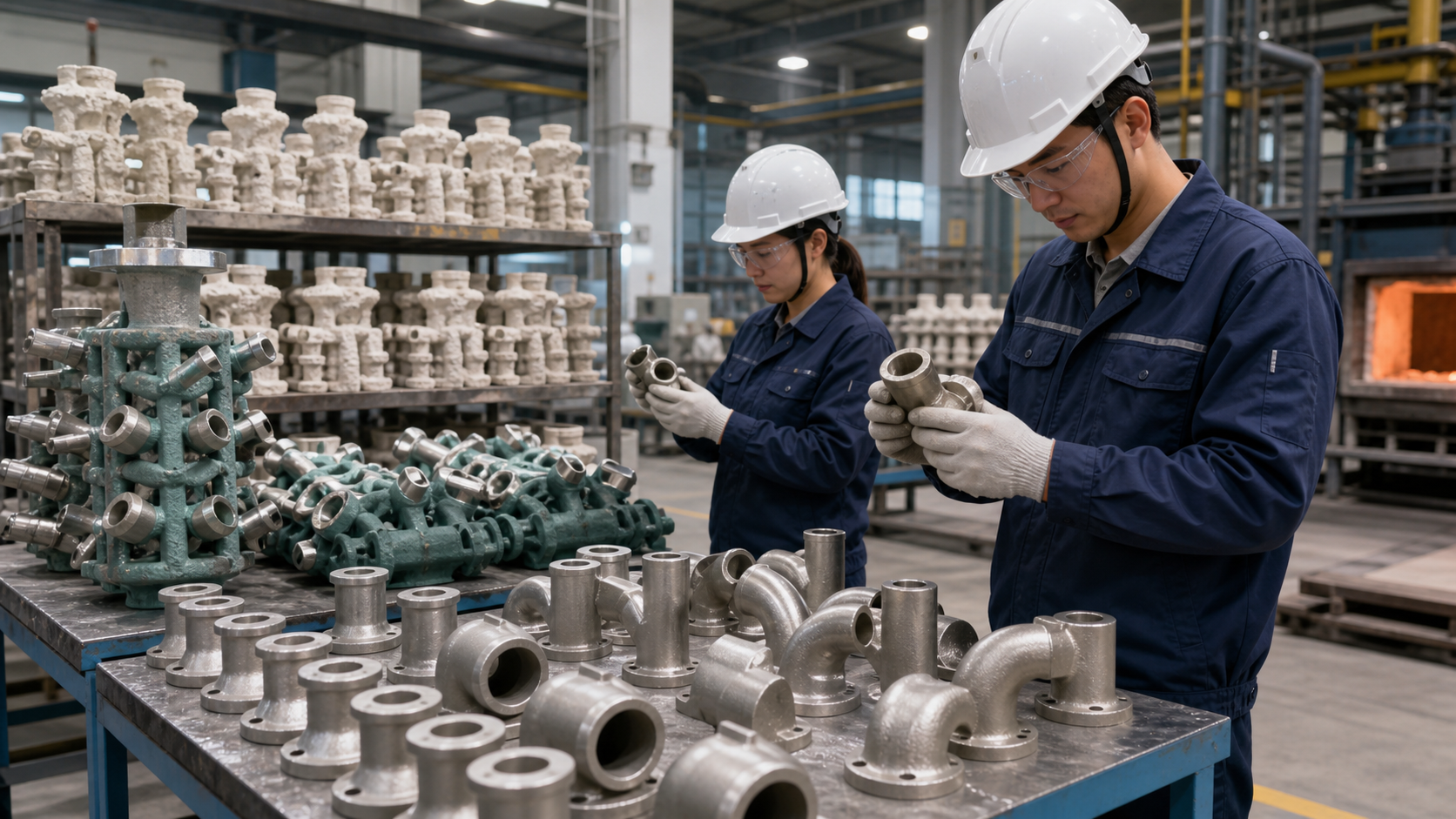
CNC machining creates precision features such as threaded holes, tube seats, flat mounting faces, countersinks and alignment surfaces. Even when the part is cast, machining is usually required for installation-critical dimensions.
Welding
Some handrail assemblies require welding, especially for custom supports, brackets or fabricated structures. Weld quality must control joint strength, distortion, discoloration and post-weld surface cleaning.
Surface Finishing
Surface finishing affects both appearance and corrosion behavior. Fittings may be satin brushed, mirror polished, electropolished or passivated depending on application. For finish selection, see Mirror Polish vs Satin Finish for Stainless Steel Architectural Hardware.
Surface Finish Options
| Finish | Appearance | Best Use | Control Point |
|---|---|---|---|
| Mirror polish | Bright reflective surface | Hotels, premium interiors, decorative handles and fittings | Scratch removal, reflection quality and packaging protection |
| Satin finish | Directional brushed grain | Commercial handrails, staircases and public-use railings | Uniform grain direction and roughness |
| Electropolishing | Bright, smooth and cleanable surface | Corrosion-sensitive or cleanability-focused applications | Consistent chemistry, edge control and rinsing |
Quality Inspection
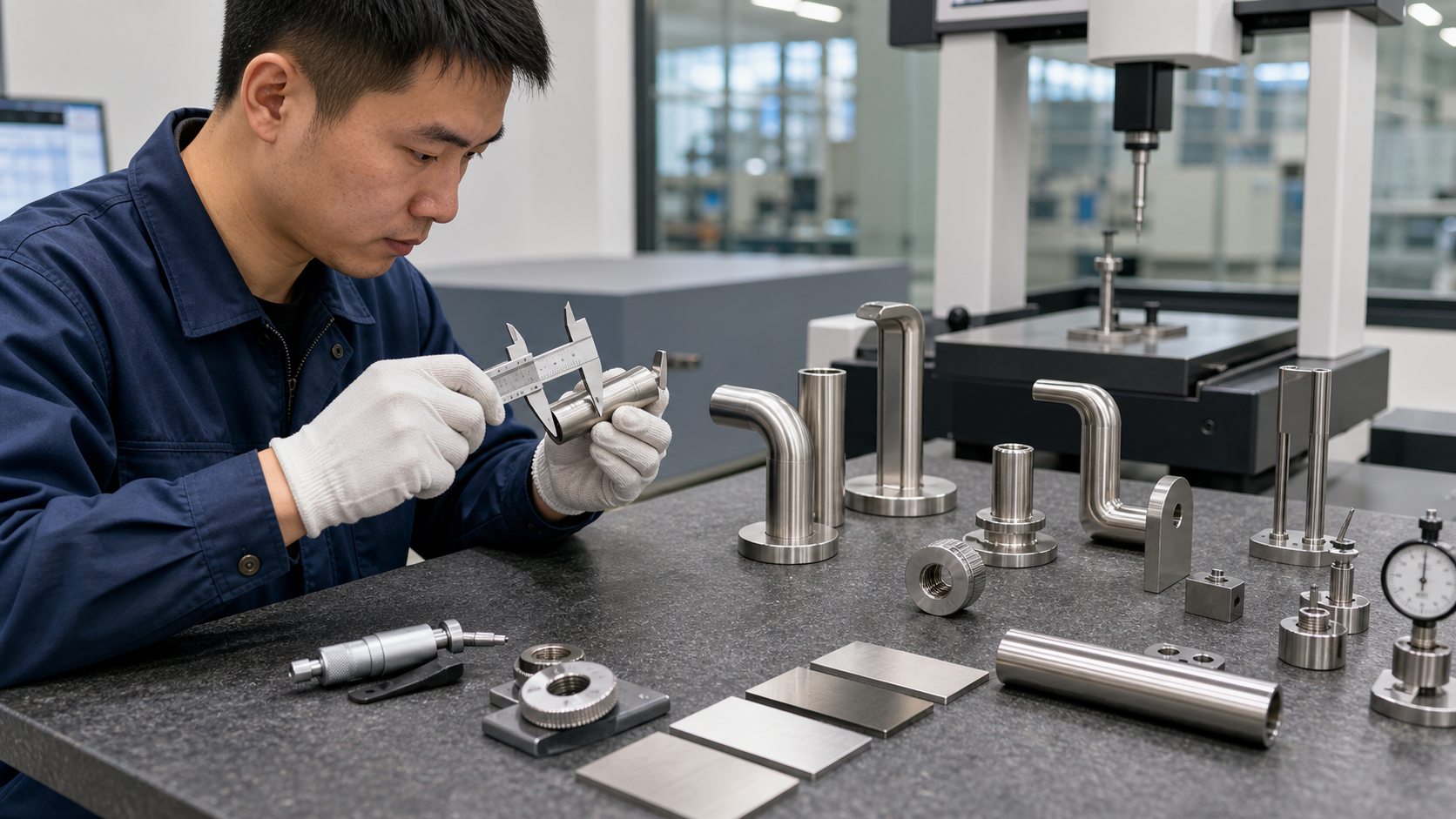
Quality inspection should be practical and linked to installation. A fitting that looks good but has incorrect tube fit or thread depth can create site problems. AODSON’s quality control process can include material certificate review, dimensional inspection, thread checks, tube-fit verification, surface inspection and final packaging review.
| Inspection Item | What to Check | Why It Matters |
|---|---|---|
| Material traceability | Grade, heat number and certificate | Confirms corrosion and strength basis |
| Dimensions | Tube seat, hole spacing, angles and thickness | Controls installation fit |
| Threads and holes | Thread gauge, depth and burr control | Prevents assembly failure and fastener issues |
| Surface finish | Grain, scratches, polish level and discoloration | Protects appearance and corrosion performance |
| Packaging | Separation, protective sleeves and carton strength | Prevents scratches during export shipping |
Indoor vs Outdoor Applications
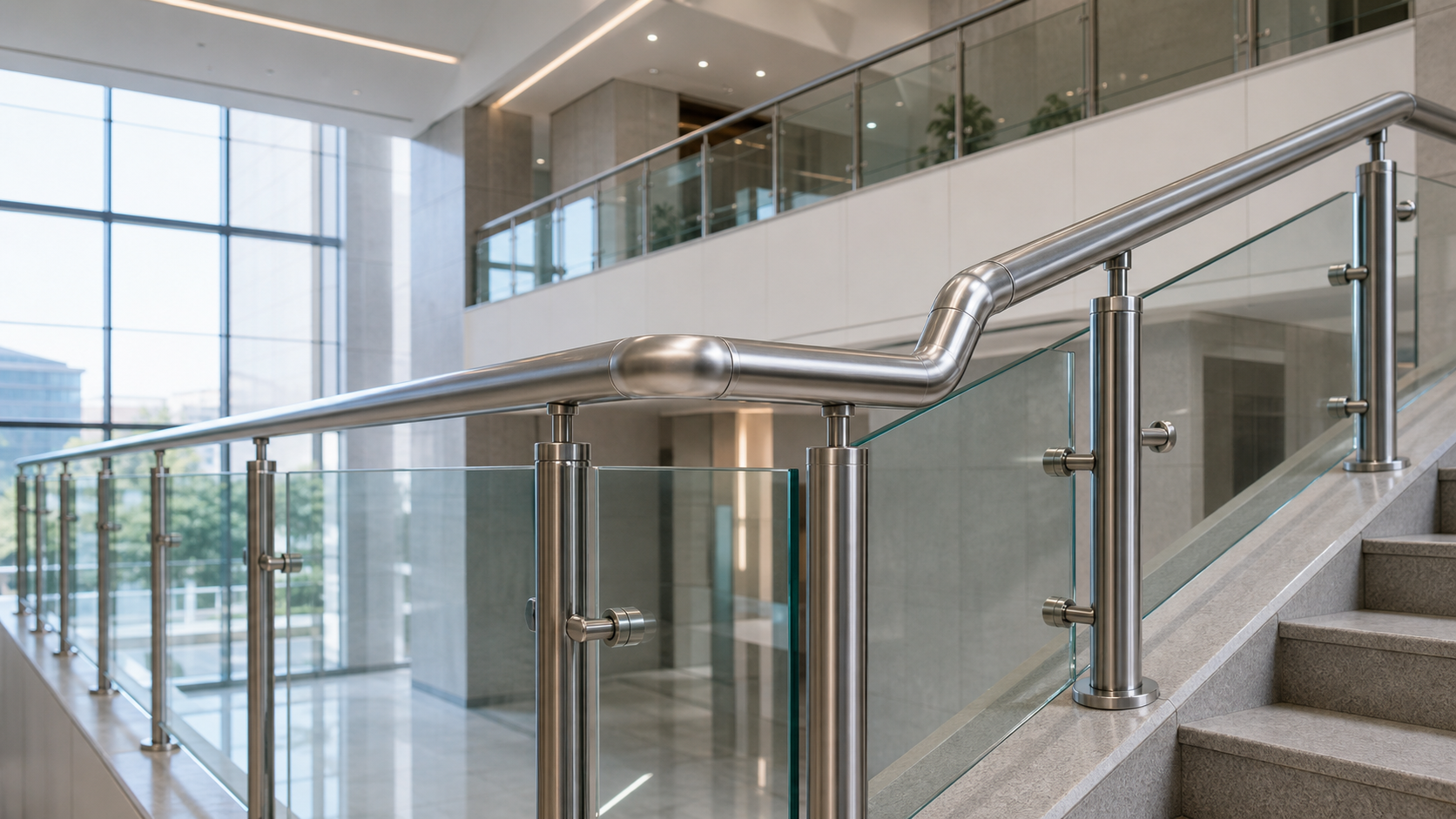
Indoor projects usually prioritize appearance, touch quality, alignment and ease of installation. Outdoor projects add UV exposure, rain, humidity, pollution, chlorides and maintenance access. Material and finish choices should reflect these differences.
| Application | Recommended Material | Recommended Finish | Key Concern |
|---|---|---|---|
| Indoor office stairs | 304 or 316 | Satin finish | Consistent appearance and handling resistance |
| Hotel interiors | 304 or 316 | Mirror or satin finish | Premium visual quality |
| Outdoor commercial railings | 316 | Satin or passivated finish | Weather and maintenance |
| Coastal balconies | 316 or duplex 2205 | Satin with strong cleaning plan | Chloride exposure |
| Industrial or severe environments | 316, duplex or project-specific alloy | Application-specific finish | Corrosion and strength requirements |
Coastal and Marine Projects
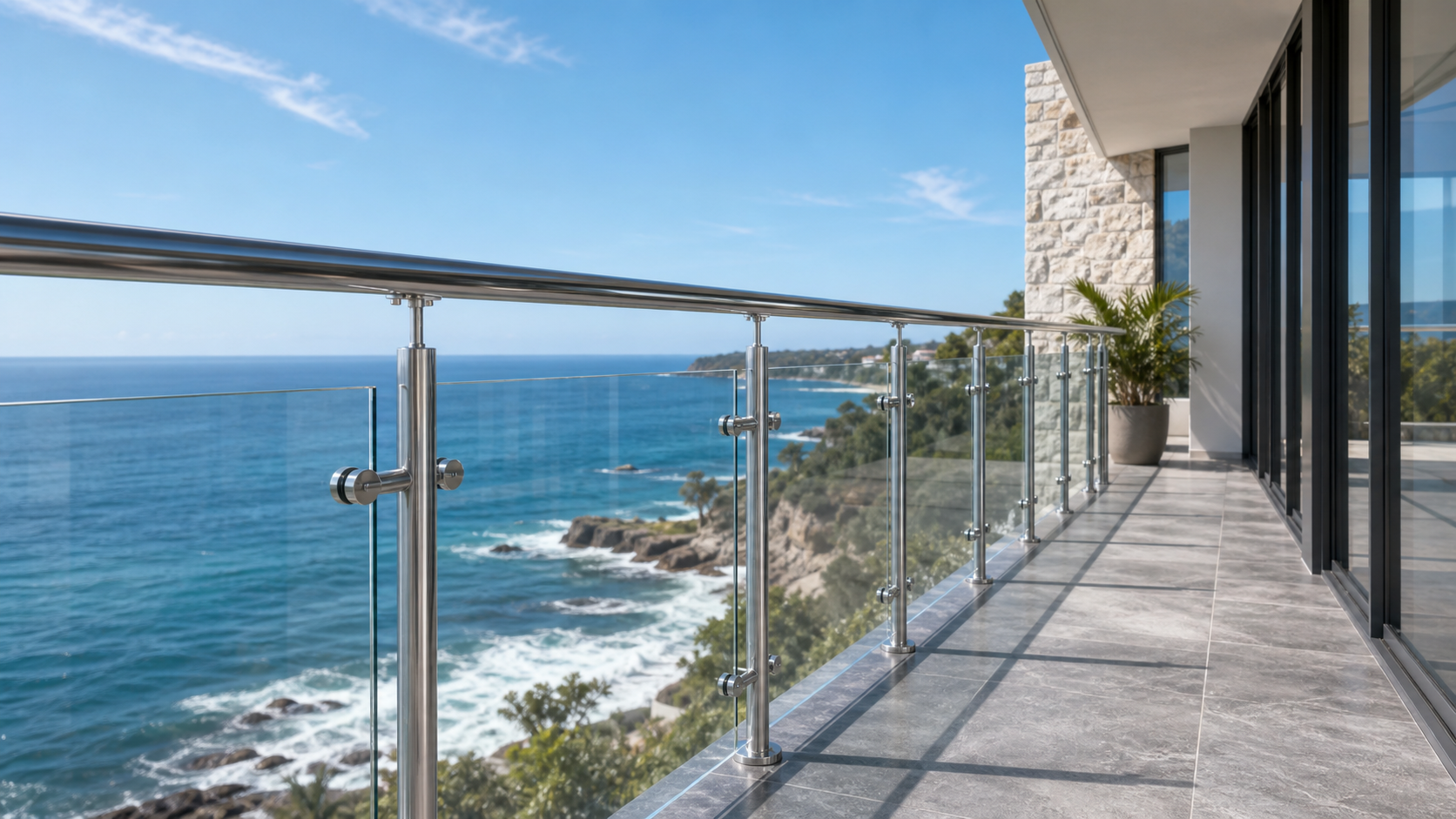
Coastal projects need special attention because chloride exposure can cause staining or corrosion if the wrong grade or finish is selected. 316 stainless steel is usually preferred over 304, and duplex 2205 may be considered for demanding conditions. Good design should avoid water traps, crevices and contact with incompatible metals.
Maintenance still matters. Even 316 stainless steel benefits from regular cleaning in salt-laden environments. Buyers should define the expected environment clearly before quoting or production.
Installation Considerations
Installation planning should confirm tube diameter, tube wall thickness, post spacing, fastener type, substrate strength, glass layout, railing height, local code requirements and finish protection. Handrail fittings should not be forced to compensate for poor site alignment beyond their intended adjustment range.
Protective film, separated packing and careful handling are important, especially for mirror-polished components. Installers should avoid abrasive tools near visible surfaces and should clean stainless steel with approved methods after installation.
OEM and Custom Manufacturing with AODSON
AODSON supports OEM stainless steel handrail fitting projects from drawings, 3D files, samples or technical requirements. The manufacturing route may include investment casting for complex shapes, CNC machining for precision interfaces, welding for assemblies, polishing for the specified finish and inspection for export-ready quality.
Custom options can include material grade, tube size, fitting geometry, finish, packaging method and inspection documentation. To begin a project, send drawings, samples, expected quantity, material, finish and application environment through Request a Quote or Contact AODSON.
Frequently Asked Questions
What are stainless steel handrail fittings?
They are elbows, connectors, end caps, base plates, tube supports and other components used to connect, support and finish stainless steel handrail systems.
Which stainless steel grade is best for handrail fittings?
304 is suitable for many indoor applications, 316 is preferred outdoors or near chlorides, and duplex 2205 is used for higher strength or severe corrosion exposure.
Are handrail fittings cast or machined?
Both routes are common. Complex shapes are often investment cast and then CNC machined, while simpler parts may be machined from bar, tube or plate.
What finish is best for handrail fittings?
Satin finish is common for commercial handrails because it hides handling marks. Mirror polish is used for premium decorative interiors, while electropolishing may support cleanability and corrosion performance.
Can stainless steel handrail fittings be used outdoors?
Yes, but outdoor systems should use suitable material, usually 316 or duplex for demanding exposure, plus proper surface finishing, drainage and maintenance.
What should be checked before installing handrail fittings?
Check tube diameter, wall thickness, mounting surface, fastener compatibility, alignment, glass or post spacing, finish protection and local safety requirements.
Why is CNC machining important for handrail fittings?
CNC machining controls holes, threads, mating faces, tube seats and mounting surfaces so the handrail system assembles accurately and safely.
How are handrail fittings inspected?
Inspection should cover material certificates, dimensions, threads, tube fit, weld quality when applicable, surface finish, corrosion-related requirements and packaging.
Can AODSON manufacture custom OEM handrail fittings?
Yes. AODSON can manufacture custom stainless steel handrail fittings from drawings, 3D files or samples using casting, CNC machining, welding, finishing and inspection.
What information is needed for a quotation?
Provide drawings, 3D files if available, tube size, material grade, finish, application environment, annual quantity, tolerance notes and packaging or inspection requirements.
Conclusion
Stainless steel handrail fittings are essential to safe, clean and durable railing systems. The right choice depends on fitting type, material grade, surface finish, installation environment, inspection requirements and maintenance expectations.
For OEM buyers and project teams, the best results come from defining these requirements early. AODSON helps customers manufacture custom handrail fittings with investment casting, CNC machining, welding, surface finishing, quality assurance, material traceability and export manufacturing experience.
Need stainless steel handrail fittings for a project or OEM product line? Send your drawings, samples or requirements through Request a Quote or Contact.