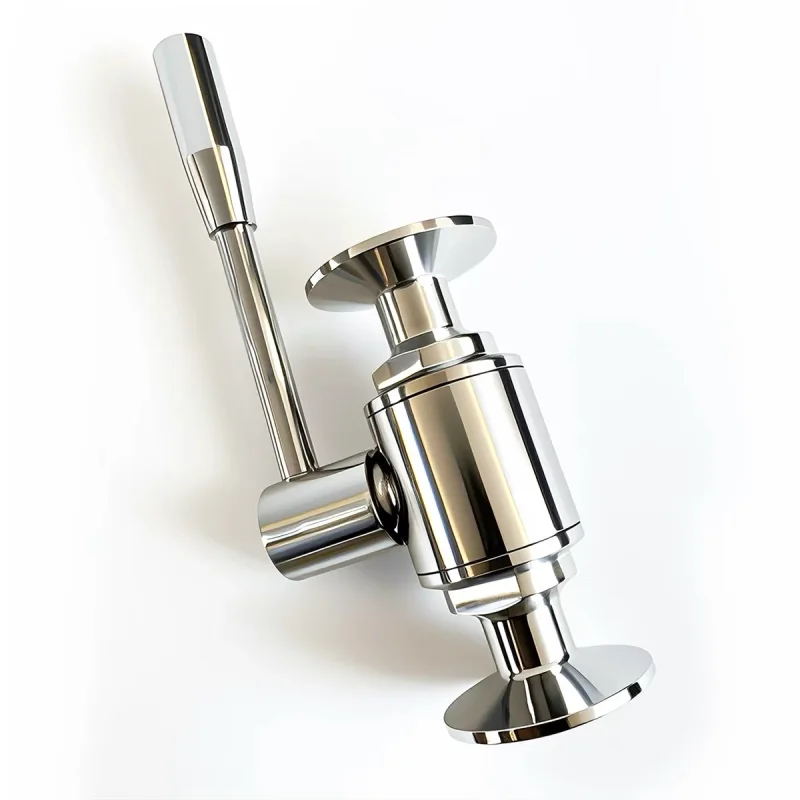
A clamp-end ball valve and a clamp-end butterfly valve can both isolate a process line, yet the parts inside the flow path and the information needed to approve them are different. A buyer comparing catalog photos should start with the service duty and the mating connection drawing, not the handle shape.
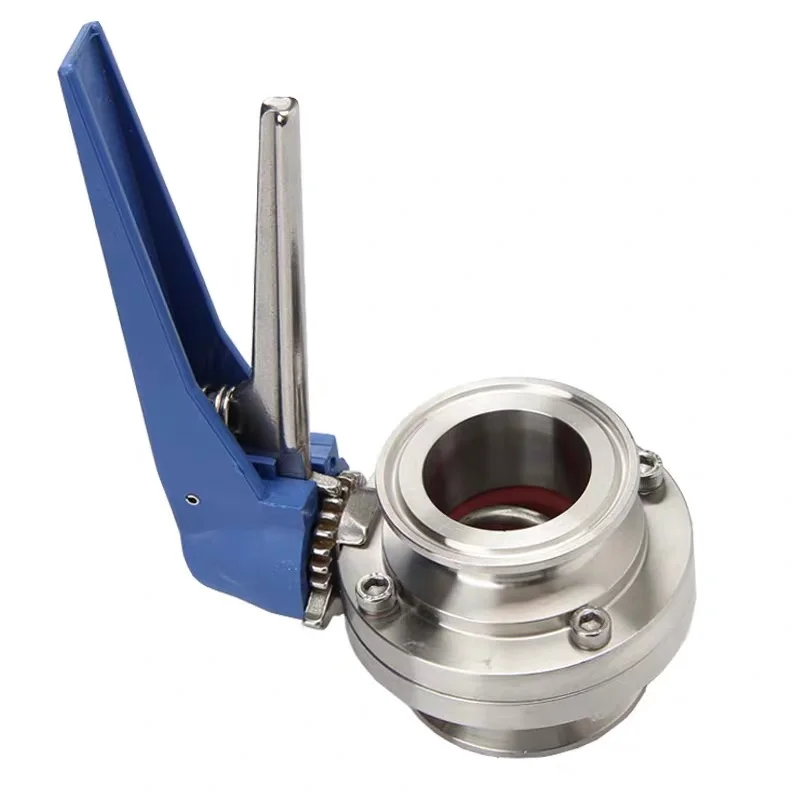
This comparison uses AODSON’s photographed manual clamp-end ball valve and manual clamp-end butterfly valve as purchase examples. Neither product page establishes a universal pressure rating, sanitary certification or food-contact approval. Those points must be confirmed for the exact assembly supplied.
How the two valve types differ
A ball valve rotates a bored ball between its seats. A butterfly valve rotates a disc across the passage. These are design families, not performance guarantees: actual bore, pressure loss, cleanability and sealing depend on the selected internal geometry and materials.
| Review point | Clamp-end ball valve | Clamp-end butterfly valve |
|---|---|---|
| Flow path | Request the actual ball-port diameter; do not infer a full bore from the clamp size. | The disc remains in the flow path when open; check the required flow and pressure loss. |
| Sealing | Review ball seats, stem seals and any body joints. | Review disc-to-seat contact, seat material and shaft seals. |
| Cleaning | Examine any cavities and the proposed cleaning or dismantling procedure. | Examine the disc edge, shaft area, seat geometry and cleaning procedure. |
| Maintenance | Confirm whether seats and seals can be accessed in the selected body design. | Confirm seat replacement, disc access and lever or actuator clearance. |
| Purchase data | Port, seats, stem, body construction and end-to-end length. | Disc, seat, shaft, body arrangement and end-to-end length. |
For a low-restriction duty, a suitably designed ball valve may be attractive, but AODSON’s pictured valve has no confirmed full-bore specification. For routine shut-off where the disc’s effect on flow is acceptable, a butterfly design may fit the layout. Compare the selected drawings and test data rather than assigning either family a blanket advantage.
Match the clamp connection before comparing valves
Clamp-ferrule outside diameter, tube outside diameter and internal passage are three different dimensions. A nominal clamp size or a photographed ferrule does not prove that two valves will mate with the same gasket and pipe ferrule. Specify the ferrule profile, sealing face, gasket geometry, tube dimensions and applicable connection standard on the purchase drawing.
Also state the scope of supply. The mating clamp, gasket and pipe ferrules may be purchased separately; neither photographed valve should be assumed to include them. An existing line is best documented with a dimensioned interface drawing and a photograph of the mating ferrule.
Check the medium, seal and cleaning conditions
List the process medium, normal and maximum temperatures, cleaning chemicals and pressure range. Then identify the body, ball or disc, stem and seat materials separately. A 304 or 316 stainless body alone does not identify every wetted component, and the color of a visible seal does not identify its compound.
Where hygiene matters, define the required surface finish, drainability, cleaning procedure and documentation. A clamp connection or a polished exterior does not establish hygienic certification or food-contact suitability. Ask for the specific evidence your project requires before approving a valve for that service.
Plan the installation and maintenance envelope
Compare end-to-end length, body diameter, lever sweep and removal space against the pipe layout. A valve that fits between two ferrules can still be difficult to operate beside a wall or instrument panel. Record the installed orientation, support arrangement and access for seal replacement. Do not rely on connected tubing to carry the valve’s weight or operating load.
Define inspection and test acceptance
For either valve, agree dimensional checks, operation checks, material traceability and the applicable pressure or leakage test before placing the order. State the test medium, test pressure, duration and acceptance criterion in the purchase specification. The complete connection—including gaskets and mating hardware—must suit the intended service. A pressure rating from a different size or seal arrangement should not be copied across.
RFQ checklist for a clamp-end valve
- Valve type and required flow or shut-off duty;
- mating ferrule drawing, tube size, passage target and end-to-end length;
- process medium, operating pressure, temperature and cleaning conditions;
- body and internal material grades, seal compound and finish requirement;
- handle type, orientation, operating clearance and maintenance access;
- quantity, scope of mating clamps and gaskets, inspection and document requirements.
Send the information with a drawing through AODSON’s request form. The product pages for the ball valve and butterfly valve show the available reference configurations; the final specification should follow the approved model and service conditions.
Frequently asked questions
Does a 50.5 mm clamp ferrule mean a 50.5 mm flow passage?
No. The ferrule’s outside dimension and the internal flow passage are different measurements. Request both on the drawing.
Is a butterfly valve always easier to clean?
No. Cleanability depends on the exact seat, shaft, disc and body design and on the verified cleaning procedure. Evaluate the selected valve rather than the valve family alone.
Can either photographed valve be specified for food contact immediately?
No. Confirm wetted materials, seal documentation, surface finish and any required compliance evidence for the intended market and process.
Technical context
GEA’s butterfly valve guidance explains why a disc remaining in the passage affects pressure loss. Alfa Laval’s sanitary ball valve example illustrates how a specifically designed full-bore product can differ. Their published features belong to those models; they do not certify the AODSON product examples shown here.