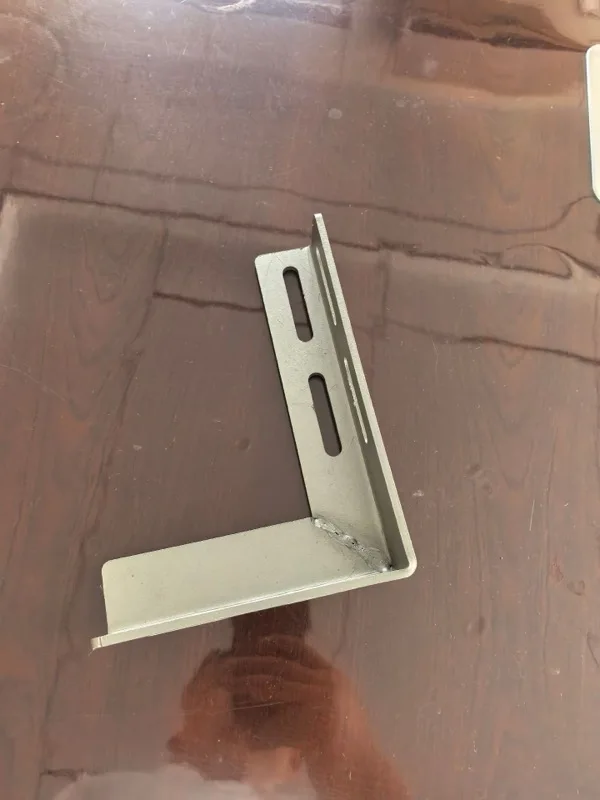
A stone support bracket is small compared with a façade panel, but it sits directly in the load path. The bracket may carry permanent stone weight, resist wind suction and pressure, accommodate installation tolerance and allow the building frame to move. Treating it as a generic bent angle is a common source of cracked stone, slipped joints and corroded anchors.
There is no responsible “standard load” for a bracket chosen from a photo. Panel size, stone properties, anchor location, cavity depth, substrate and local building loads all change the design.
Map the load path before sizing the steel
Start at the stone connection and follow force through the pin, kerf, dowel or anchor into the bracket, fasteners and building structure. Separate gravity support from lateral restraint. Some systems intentionally use different anchors for dead load and wind; others combine actions at a bracket. The drawing should make that behavior explicit.
ASTM C1242 is a guide for selecting, designing and installing dimension-stone attachment systems. Its scope includes anchors connecting panels to the structure or to subframes, and it emphasizes gravity and applied loads, documentation, material considerations and workmanship. Review the official ASTM C1242 overview and the project-specific code.
| Action | Typical design concern |
|---|---|
| Stone dead load | Bracket bending, weld shear, bolt slip and bearing |
| Wind pressure/suction | Pull-out, prying and façade restraint |
| Seismic movement | Drift compatibility and impact between panels |
| Thermal/moisture movement | Slot direction, restraint strategy and joint width |
| Installation load | Temporary eccentricity and adjustment condition |
Eccentricity often governs
The stone load usually acts away from the supporting wall. That stand-off creates a bending moment equal to force multiplied by eccentricity. Increasing cavity depth can raise bracket demand even when panel weight is unchanged. Include the distance from the wall fastener plane to the stone reaction point, plus any secondary eccentricity through slots or shims.
Check plate bending, local yielding around holes, bolt shear and tension, prying action, weld throat and the capacity of the supporting concrete or steel. A thick bracket cannot compensate for an inadequate substrate anchor.
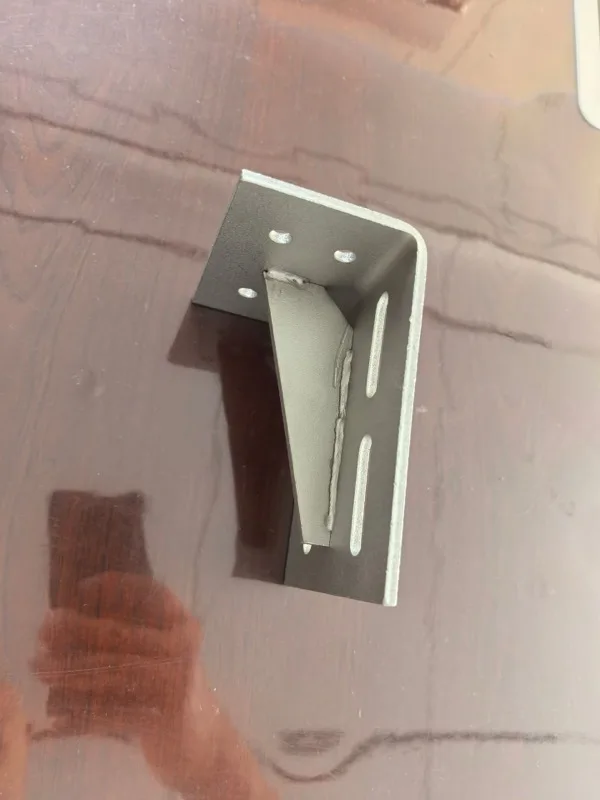
Slots provide adjustment—but remove material
Elongated slots help installers accommodate structural and façade tolerances. Their direction should match the intended adjustment or movement. A vertical slot may set elevation; a horizontal slot may set cavity position or panel alignment. If every connection is free in the same direction, however, the assembly may lack a defined restraint.
Slots reduce net section and can concentrate bearing stress at their ends. Check edge distance, slot length, washer or plate size and tightening method. Oversized washers that bridge the slot are not automatically sufficient if the connection relies on slip resistance.
Welded stiffeners and fabrication quality
A triangular stiffener can reduce plate bending and move load into the base, but its effectiveness depends on fit-up and weld placement. An oversized intermittent weld or abrupt termination can create distortion and local stress. State weld size, length, process and acceptance level on the drawing.
For stainless fabrication, avoid carbon-steel contamination and remove harmful heat tint when corrosion exposure demands it. Confirm that the acute corners remain accessible for welding, cleaning and inspection.
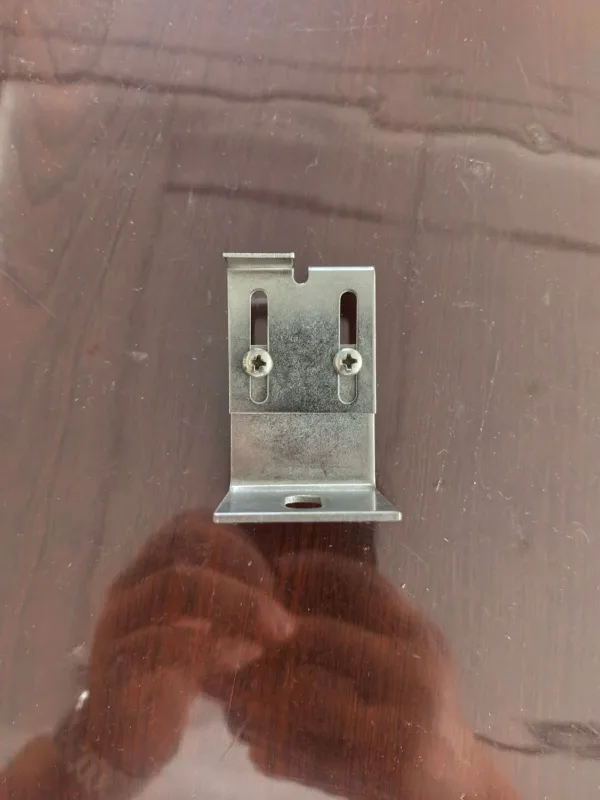
304 or 316 stainless steel?
304 stainless may suit protected interior or mild environments. 316/316L is frequently considered for exterior façades, coastal exposure and chloride-bearing runoff because of its improved resistance to localized corrosion. Grade selection must also account for crevices, cleaning chemicals, dissimilar metals and expected service life.
Specify the complete assembly: bracket, bolts, washers, shims, dowels and embedded anchors. A 316 bracket connected with an unsuitable fastener is not a 316 corrosion system. Isolate dissimilar metals where the design requires it and prevent water traps.
Stone is variable
Natural stone strength varies by type, quarry, bedding direction, moisture and flaw distribution. Anchor capacity should be based on representative testing and the actual edge distances and hole geometry. ASTM C1242 specifically notes that stone properties vary and that recent test data and engineering evaluation may be needed.
Do not transfer a test result from one stone to another because the bracket is unchanged. The stone-side failure mode may govern long before the stainless component yields.
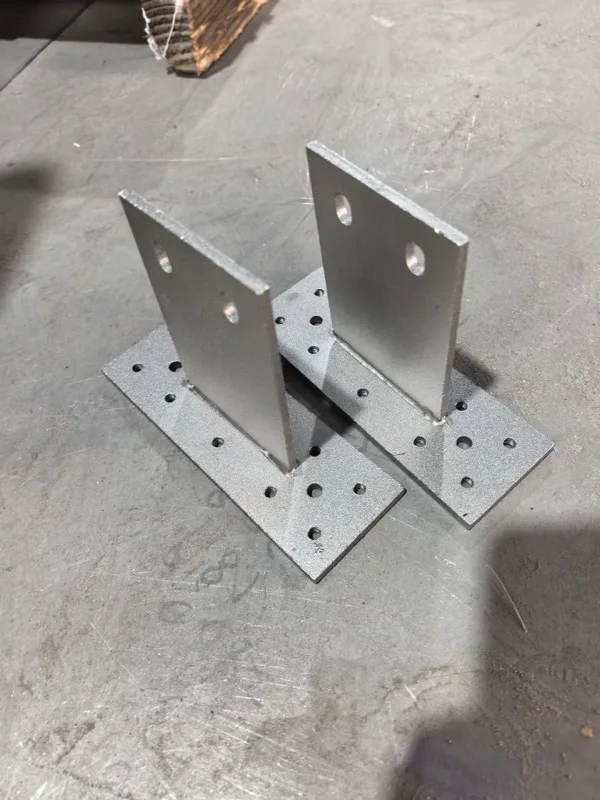
Tolerances and movement strategy
Build a tolerance chain from structural frame to finished stone face. Include substrate location, anchor placement, bracket fabrication, panel thickness and stone machining. Then assign adjustment deliberately. Slots, shims and threaded adjusters should have a defined working range with enough residual edge distance after adjustment.
Separate installation tolerance from in-service movement. A connection tightened after alignment may no longer slide. If thermal or seismic movement must continue, specify the bearing surface, bolt preload and restraint direction accordingly.
Prototype and project testing
Complex or high-risk systems may require component tests or façade mockups. Test the real bracket geometry, fasteners, substrate and stone connection—not an idealized coupon. Define load direction, preload, cycling, acceptance displacement and failure criteria before testing.
ASTM’s guide advises specialist involvement when connection performance is uncertain, the backup structure is unusually flexible or extreme loading is credible. Testing should support the engineering model, not replace one.
RFQ checklist
- panel dimensions, mass, stone type and anchor geometry;
- design dead, wind, seismic and maintenance loads;
- cavity depth and complete load-path drawing;
- substrate material and anchor specification;
- bracket material, thickness, slots and tolerances;
- weld sizes, fasteners, washers and isolation details;
- surface finish, traceability and inspection;
- prototype test or project documentation requirements.
The photographed AODSON adjustable stainless steel stone cladding brackets show several real welded and slotted configurations. They are custom components, not universal load-rated anchors. Send the façade detail, loads and material requirement through the request form for manufacturing review.