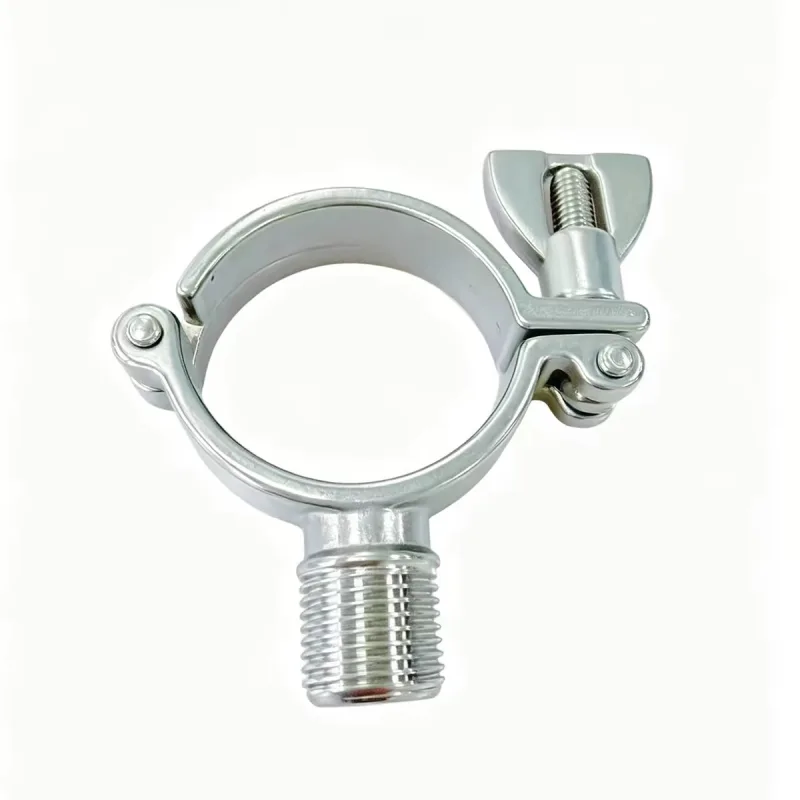
Short answer: A hygienic pipe hanger is selected from the piping layout, tube outside diameter, supported weight, thermal movement and cleaning environment. The clamp is only one part of the support system. Its location, mounting structure, insert or contact surface, fasteners and maintenance access determine whether the completed installation supports the line without creating avoidable stress or hard-to-clean details.
This buyer’s guide uses AODSON’s photographed sanitary hinged pipe hanger clamp as a component example. It does not claim that the photographed product or an installed system holds a particular sanitary certification. Project specifications and the applicable hygienic-design requirements must be confirmed separately.
Start with the loaded line, not the clamp appearance
Record the tube outside diameter, wall, material, route, operating temperature and the weight of the pipe, contained fluid and attached components. Identify heavy valves, instruments and branches, as well as areas exposed to vibration, washdown or cleaning chemicals. A clamp sized by nominal pipe designation alone may not fit the actual tube outside diameter or the required contact insert.
Support spacing is a system-design decision. It changes with tube diameter, weight, fluid density, allowable deflection, slope and vibration. Do not apply a single universal spacing figure to every sanitary line. The Swagelok tubing placement guidance emphasizes supports near bends, tees and heavy inline components, while referring designers to published spacing guidance for the actual application.
Place supports where loads enter the line
A straight run is not the only location needing support. Changes in direction and concentrated loads can increase local deflection and side loading. Review support positions near elbows, branches, valves and equipment connections. Where a valve or other heavy component is installed, a support on each side may be appropriate depending on its weight and the system layout. Maintain the specified slope if the line must drain.
Behringer’s sanitary clamp technical appendix illustrates supports near bends and concentrated loads and explains the need to account for thermal movement. Those illustrations are design guidance, not proof that any particular AODSON clamp has a stated load rating.
Decide where the pipe is anchored and where it may move
A hot line grows and contracts as its temperature changes. If every hanger grips the pipe as a fixed point, the line can push load into bends, flanged joints or equipment nozzles. Conversely, a line without the intended anchors and guides may move in an uncontrolled direction. Define fixed points, guided points and movement allowances on the piping drawing before selecting clamp details.
An anchor restrains movement at a chosen point; a guide permits intended movement while controlling other directions. A standard hinged clamp must not be assumed to act as either without an approved mounting and insert arrangement. Ask whether a contact insert, sliding guide or other detail is required for the thermal cycle. Behringer’s sanitary support catalog shows how guide inserts can be part of a specified system.
Make the installation accessible for cleaning
For a hygienic process area, examine the installed geometry rather than the polish of the clamp alone. Review exposed threads, gaps, contact points, horizontal ledges and inaccessible surfaces. Allow the cleaning method and inspection access to influence the mounting position. A threaded mounting boss or hand-operated wing screw may be convenient for assembly, but the project must decide whether such details are acceptable in the intended zone.
External pipe supports are distinct from product-contact components. A stainless steel grade, smooth-looking photo or “sanitary” product name does not by itself demonstrate 3-A, EHEDG or other approval. The 3-A Sanitary Standards listing includes specific practices for hygienic equipment and pipeline installation; the buyer should identify which requirements actually apply to the project.
Specify the clamp and mounting interface
For a quotation, define the actual tube outside diameter and tolerance, the contact surface or insert, clamp body material, hinge and fastener materials, mounting boss thread, supporting rod or bracket, finish and required cleaning exposure. State how the clamp opens for maintenance and whether the fastener needs tool access or hand operation. If the project uses 304 or 316 stainless steel, specify which parts need that grade; do not infer all component materials from the clamp body alone.
Check the structural support separately. A sound clamp cannot correct an undersized rod, weak attachment point or incompatible thread. The responsible piping and structural designers should confirm the loads and movement imposed on the complete support.
Inspection and documentation to request
- Tube fit and clamp inner diameter after any insert is installed.
- Hinge travel, closure engagement, bolt or wing-screw function and thread fit.
- Surface condition, burr removal and accessible cleaning surfaces.
- Material grade and traceability for the specified parts.
- Mounting thread, rod or bracket dimensions and drawing revision.
- Any project-specific load test, finish record or inspection report, if required and agreed.
AODSON’s quality-control page describes general manufacturing inspection. The availability and acceptance criteria of project-specific tests must be confirmed in the quotation.
RFQ checklist for a sanitary pipe hanger
Send the piping layout and support schedule together with the tube outside diameter, line contents, operating and cleaning temperature, environment, mounting arrangement, expected movement and quantity. Mark each intended anchor and guide location. State finish, material, insert, fastening, inspection and documentation requirements. If a nearby flexible connector is part of the arrangement, specify its duty separately; the hose should not be asked to support the pipework. See AODSON’s flanged braided flexible metal hose assemblies for that related component.
Frequently asked questions
Can one hanger design be used at every location?
Not automatically. Fixed points, guides, bends, heavy components and washdown zones may need different support details. The approved piping layout should define those roles.
Does a 316 stainless clamp make the whole installation hygienic?
No. Material grade is only one input. Installed geometry, exposed threads, cleaning access, finishes and the applicable project requirements also matter.
How is support spacing selected?
Use the project’s piping design and applicable published guidance, considering tube dimensions, loads, temperature, slope, vibration and nearby components. Avoid adopting a generic span without checking the actual service.
What should be included when asking AODSON for a quote?
Provide the tube OD, support drawing, mounting thread or bracket, material and finish, insert details, load and movement requirements, quantity, cleaning environment and inspection needs through the quotation page.
Technical references
- Swagelok, Proper Tubing Placement — support locations, vibration and accessibility.
- Behringer sanitary clamp technical appendix — bends, concentrated loads, anchors and guides.
- 3-A Sanitary Standards — the range of applicable hygienic design and installation practices.
These references explain general design considerations. They do not certify the photographed AODSON part or replace an approved project specification.