




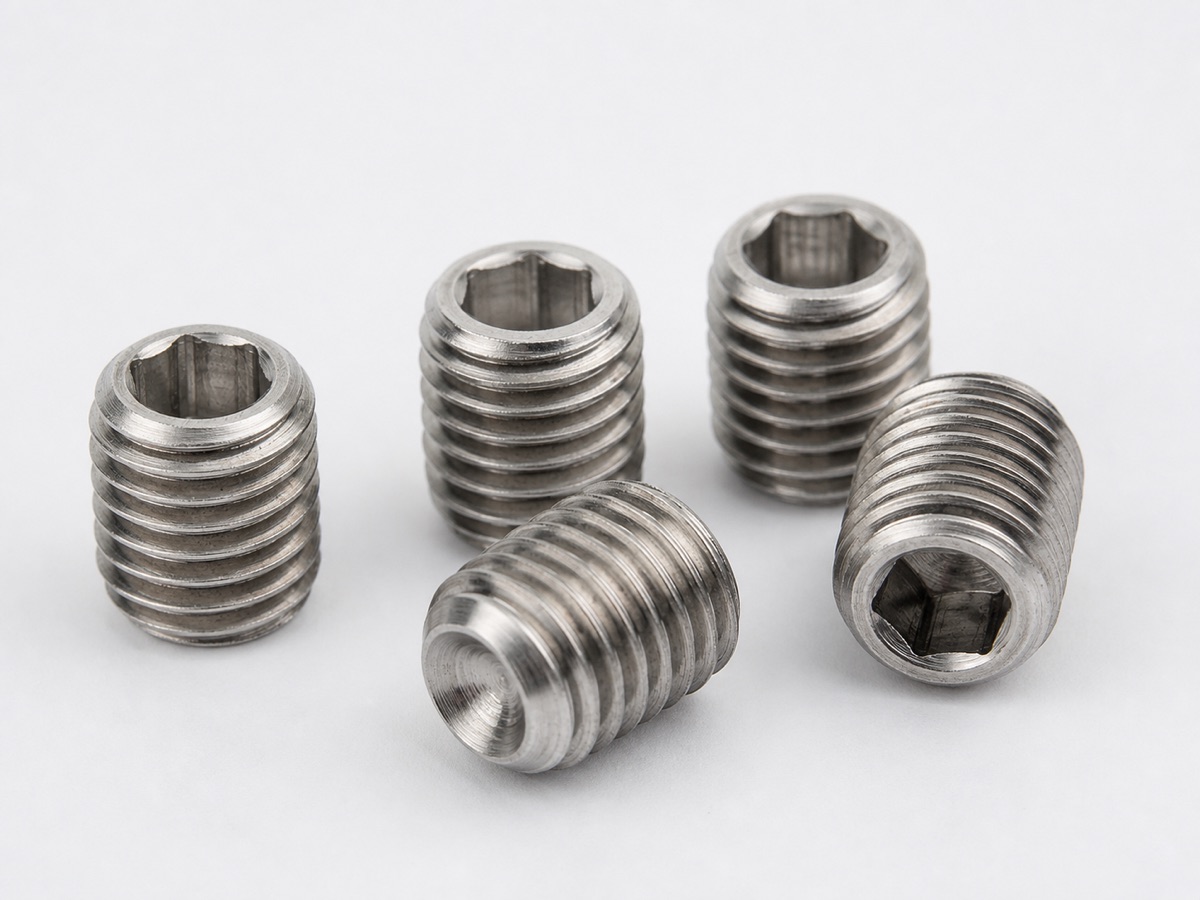
A stainless steel screw can feel tight long before the joint has reached the intended clamp load. The rising torque may be caused by thread friction and material transfer rather than useful preload. If tightening continues, the mating threads can seize, tear or break. For an OEM buyer, preventing this failure starts with the fastener specification and continues through the actual assembly method.
This guide explains what to check when sourcing stainless threaded parts, including industrial fasteners and AODSON’s photographed 2507 super duplex set screws. The photo is a product example; its material grade alone does not establish a tested anti-galling performance.
What happens when stainless threads gall?
Galling is adhesive wear between loaded, sliding metal surfaces. During tightening, local contact and friction can transfer material from one thread flank to the other. Raised material increases resistance, which can accelerate further damage until the fastener locks. A sudden torque spike therefore does not prove that the designed preload has been achieved. The risk is especially relevant to stainless mating threads, but the outcome depends on the complete combination of materials, finish, geometry, lubrication and installation.
Separate thread damage from alignment problems
Cross-threading begins with misalignment. Galling can start even when the screw and internal thread were initially aligned. Both may leave damaged crests and high turning resistance. Before changing a lubricant or torque setting, inspect the male and female threads for burrs, chips, damaged starts, contamination and a mismatch in thread form or tolerance. A go/no-go gauge or another agreed inspection method can confirm the specified thread before assembly; it cannot by itself prove that a particular pair will never gall.
Four controls that matter in production
1. Specify the mating pair
Document the external and internal thread standard, nominal size, pitch, tolerance class, engagement length and both material grades. “Stainless steel bolt and nut” is not enough. Different grades or surface conditions may change galling behavior, but material pairing must still meet the required strength, corrosion and service conditions. Do not substitute one grade solely to improve assembly without engineering approval.
2. Control surface condition and cleanliness
Inspect the first threads, rolled or cut profiles, edges and tapped holes. Remove machining chips and packaging debris without damaging the specified surface. Define whether passivation, coating or another finish applies, and check that the finished thread still meets its fit requirement. A clean, correctly formed thread is a prerequisite for a meaningful assembly trial.
3. Choose an approved lubricant or coating
A suitable anti-seize compound, thread lubricant or engineered dry-film coating can reduce metal-to-metal contact. Select it for the operating temperature, chemicals, hygiene requirements and corrosion environment. Approval is application-specific: a product acceptable on general industrial hardware may be unsuitable for food-contact, oxygen service or another controlled environment. Document where the material is applied and how excess is managed.
4. Validate the installation method
Start the fastener by hand where practical, use a controlled installation speed and avoid repeatedly driving through abnormal resistance. Powered tools should have a defined speed and stop rule. Lubrication changes friction, so a torque value taken from an unrelated dry-fastener table cannot simply be reused. Validate the tightening procedure and the required preload or functional result on the actual joint, with the approved fastener, mating part and surface condition.
| Review point | What the buyer should specify | Evidence to request |
|---|---|---|
| Thread interface | Standard, pitch, tolerance, engagement and mating material | Approved drawings and thread inspection records |
| Surface condition | Finish, coating and cleanliness requirement | Finish record and representative samples |
| Assembly aid | Approved lubricant or dry coating, application location and quantity | Product data and assembly instruction |
| Installation | Tool type, speed, tightening sequence and stop rule | Trial assembly and acceptance record |
| Performance | Required clamp load or functional outcome and service exposure | Project-specific validation method |
What to do when a fastener begins to seize
Stop the operation when resistance rises unexpectedly. Do not force the part to the nominal torque or count a seized joint as correctly tightened. Remove and examine the fastener and mating thread under the approved maintenance procedure; replace damaged parts and investigate the cause before restarting the batch. Record whether the problem is limited to one part number, one tool setting or a whole material and finish combination.
RFQ checklist for stainless threaded parts
- Part drawing, thread designation, tolerance and critical engagement length;
- external and internal material grades, strength and corrosion requirements;
- surface finish, passivation, coating or lubricant restrictions;
- assembly tool, target preload or functional test, and installation speed;
- quantity, inspection method, traceability and packaging requirements.
Send this information with your drawing through AODSON’s request-a-quote form. The fastener geometry and assembly method should be reviewed as one system before a production torque is released.
Frequently asked questions
Does a higher tightening torque mean a stronger joint?
No. Additional torque can be consumed by thread friction and damage. The actual joint result must be validated for the specified assembly.
Will using 316 or 2507 stainless steel automatically prevent galling?
No. Grade selection affects other properties, but galling also depends on the mating pair, surface, lubrication, speed and load.
Can a seized fastener be reused?
Do not assume so. Damaged threads require inspection and a disposition under the project’s maintenance and quality rules.
Technical references
Bossard’s technical paper on stainless steel fastener galling discusses material transfer, thread condition, coatings and assembly speed. Nord-Lock’s galling guidance discusses lubrication, installation speed and mating-material selection. These sources describe general mechanisms; neither certifies a specific AODSON fastener or installation.