




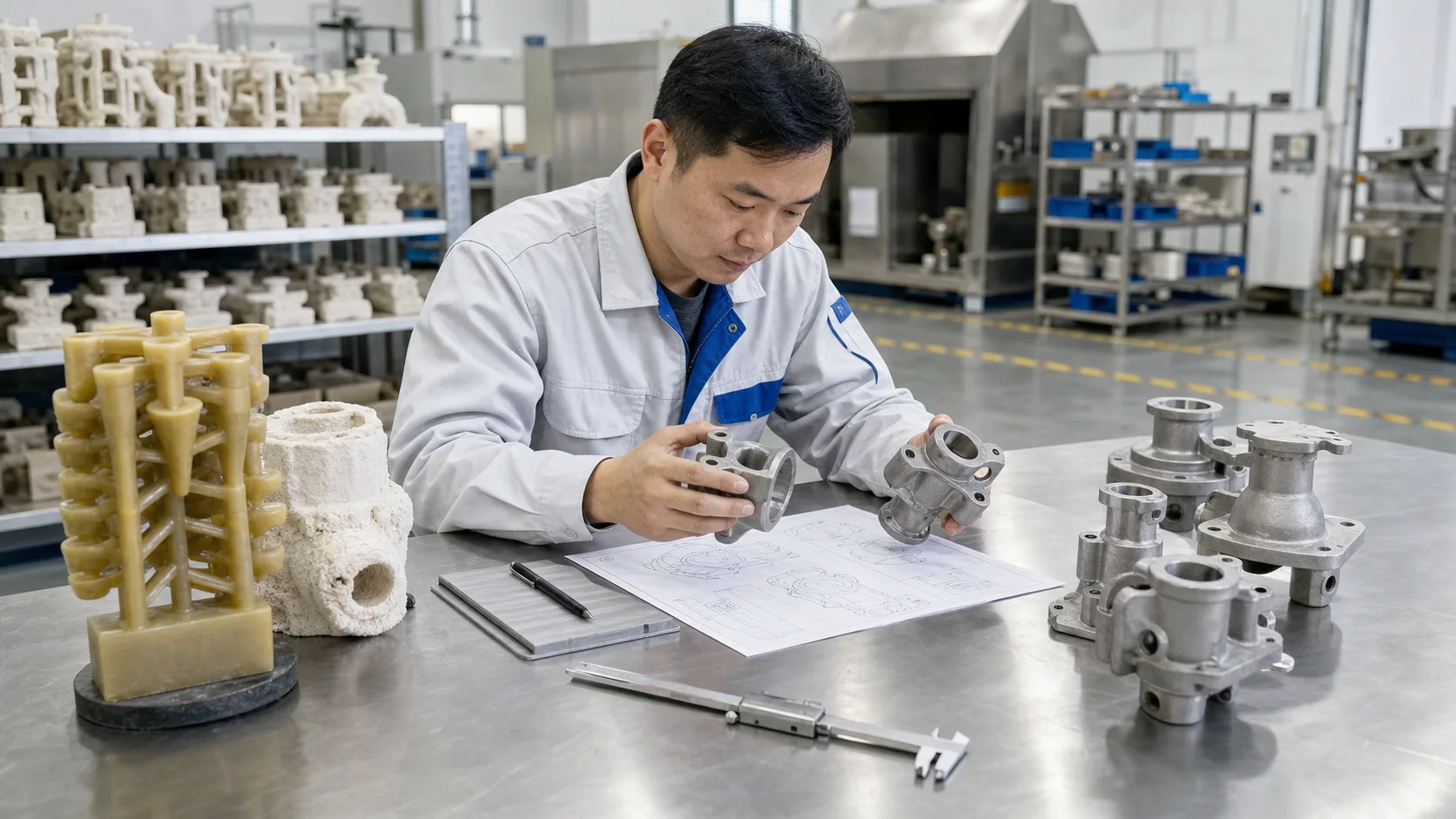
Investment casting cost is not determined by part weight alone. Two components with the same weight can have very different quotations because geometry, alloy, tooling, tolerance, machining, inspection and annual demand create different manufacturing risks.
For buyers, the most useful question is not simply, “What is the price per kilogram?” It is, “Which design and purchasing decisions are driving the total cost of an approved, repeatable part?” This guide explains the ten factors that matter most and what information helps a foundry prepare an accurate quotation.
Quick Answer: What Determines Investment Casting Cost?
The main cost drivers are tooling, part size and weight, geometry, alloy, order quantity, dimensional requirements, secondary machining, surface finish, inspection and packaging. Tooling is mainly a one-time development cost. Material, process yield, labor, machining and inspection affect recurring unit cost.
A complete drawing and realistic annual volume allow the foundry to separate these costs and propose a suitable production route. Incomplete information usually creates assumptions, quotation delays or additional risk allowance.
1. Part Size, Weight and Metal Yield
Part weight affects alloy consumption, but poured metal is greater than finished part weight. The gating system, runners, feeding and process scrap must also be considered. Large or thick components may require more shell strength, longer cooling time and different handling equipment.
Net weight, maximum envelope and expected machining stock are therefore more useful than a simple material estimate. A design with balanced sections and an efficient cluster layout can improve metal yield and reduce recurring cost.
2. Geometry and Casting Difficulty
Investment casting is valuable for complex shapes, but not every complex feature has the same risk. Deep slots, isolated heavy sections, abrupt wall changes, thin fins, blind cavities and difficult-to-feed areas can increase tooling complexity, shell failure risk, shrinkage sensitivity or finishing labor.
A design for manufacturability review examines wall transitions, radii, draft where needed, gating access and machining datums before tooling begins. Small design changes can preserve function while improving yield.
3. Alloy Grade and Material Control
Material cost varies among carbon steel, 304, 316, duplex stainless steel, heat-resistant alloys and nickel-based alloys. The quotation must also consider melting practice, alloy recovery, heat treatment and material verification.
Do not specify a premium alloy only by a familiar trade name. State the required standard and grade, service environment and any chemistry or mechanical-property requirements. This lets the supplier assess whether the material route and testing scope are compatible.
4. Tooling and Development Complexity
Investment casting normally requires a wax injection tool. Tool cost depends on part geometry, parting strategy, inserts, slides, expected tool life, cavity count and dimensional control. A simple single-cavity tool for sampling is different from a multi-cavity production tool designed for repeat orders.
Buyers should ask what the tooling quotation includes: design, manufacture, trial wax patterns, dimensional correction, ownership, maintenance and storage. A low tooling price can become expensive if production stability or future maintenance is not defined.
5. Order Quantity and Annual Demand
Quantity affects how tooling, setup, process engineering, inspection and packaging are distributed across each part. Prototype quantities carry more setup cost per piece, while repeat production can support dedicated fixtures, multi-cavity tooling and better batch planning.
Provide both the first order quantity and expected annual demand. A foundry can then propose a sampling route without designing an unnecessarily expensive production system, while still planning for later scale-up.
6. Tolerances and Dimensional Capability
Not every dimension needs the same tolerance. Applying tight tolerances across the entire drawing can increase tooling correction, straightening, inspection and rejection risk. Functional interfaces should be separated from non-critical cast surfaces.
Identify datums, critical-to-function dimensions, geometric tolerances and assembly relationships. Dimensions beyond stable casting capability may be better controlled by CNC machining. AODSON’s precision casting service combines casting review with machining planning when required.
7. CNC Machining and Secondary Operations
Threads, bearing seats, sealing faces, precision bores and close-tolerance mounting surfaces usually require machining. Cost depends on datum strategy, setup count, fixture design, tool access, material machinability and inspection frequency.
Machining allowance should be planned before tooling, not added after the first casting trial. The cast geometry must provide stable locating surfaces and enough stock without creating unnecessary metal removal. For machining-specific cost drivers, see CNC Machining Cost: 9 Factors That Affect Your Custom Part Quote.
8. Surface Finish and Cosmetic Requirements
Shot blasting, pickling, passivation, electropolishing, satin brushing, mirror polishing and coating preparation have different labor and acceptance requirements. Cosmetic hardware also needs agreement on grain direction, weld visibility, color range, handling marks and sample approval.
Define which surfaces are visible after assembly and provide a finish standard or approved sample. This prevents premium finishing work from being applied to hidden areas and reduces subjective inspection disputes.
9. Inspection, Testing and Documentation
Standard dimensional inspection is different from 100 percent CMM reporting, radiography, liquid penetrant testing, pressure testing, PMI or third-party inspection. Material certificates, heat numbers, inspection reports and special document formats also require planning.
State the applicable standard, sampling level and acceptance criteria in the RFQ. Testing without an agreed method can add cost without producing useful evidence. Review AODSON’s quality control capabilities when specifying documentation and inspection.
10. Packaging, Delivery and Commercial Terms
Raw castings can use robust bulk packaging, while polished or machined components may need protective film, individual sleeves, foam dividers, rust prevention, reinforced cartons or export pallets. Part weight and shape affect carton and pallet efficiency.
Destination, shipping method, required delivery date and Incoterms influence the total landed cost and production plan. Packaging should be included in the approved specification, especially when surface damage can make an otherwise acceptable part unusable.
Investment Casting Cost Reduction Checklist
| Cost Driver | Buyer Action | Potential Benefit |
|---|---|---|
| Geometry | Allow DFM review before tooling | Better yield and lower correction risk |
| Tolerances | Tighten only functional dimensions | Less machining and inspection |
| Volume | Share first order and annual demand | Appropriate tooling and batch planning |
| Finish | Mark visible and hidden surfaces | Focused finishing labor |
| Testing | Define method and sampling level | No unnecessary inspection scope |
| Packaging | State destination and protection needs | Lower damage and repacking risk |
What to Send for an Accurate Investment Casting Quote
- 2D drawing with revision number and critical dimensions
- 3D model in STEP, STP, IGS or another agreed format
- Material grade and governing standard
- First order quantity and estimated annual demand
- Machining, heat-treatment and surface-finish requirements
- Inspection, testing and documentation requirements
- Application environment and functional risks
- Packaging, destination and requested delivery date
If no drawing is available, a physical sample may still support an initial review. Read How to Reverse Engineer a Metal Part From a Sample Without Drawings for the information needed.
Lowest Unit Price vs Lowest Total Project Cost
A quotation should be compared by scope, not unit price alone. Check whether tooling correction, machining fixtures, material certificates, inspection reports, surface finishing, packaging and rejected-part responsibility are included. A cheaper quotation based on missing requirements can change after sampling.
The best commercial result is a stable part that meets the approved drawing with repeatable delivery. Early engineering review usually saves more than late correction after tooling or production has started.
Request an Investment Casting Cost Review
AODSON supports stainless steel and alloy investment castings from DFM and tooling through casting, CNC machining, finishing, inspection and export packaging. Send your drawing, material, quantity and application through Request a Quote for a practical manufacturing and cost review.
Frequently Asked Questions
Is investment casting priced by weight?
Weight affects material cost, but it is only one factor. Geometry, yield, tooling, machining, finish, inspection and quantity can have a larger effect on the final quotation.
Why is investment casting tooling required?
The tool produces repeatable wax patterns that define the cast geometry. Tool design depends on parting, inserts, cavity count, expected volume and dimensional-control needs.
Can design changes reduce casting cost?
Yes. Balanced wall thickness, practical radii, clear datums and selective tolerances can improve yield and reduce machining or inspection without changing the part’s function.
How long is an investment casting quote valid?
Validity depends on alloy prices, exchange rates, process scope and commercial terms. The supplier should state the quotation validity and identify assumptions that could change the price.