




Choose access covers and drainage hardware from the finished floor condition.
The correct product depends on clear opening, infill depth, load class, drainage flow, exposure and installation build-up. Recessed covers conceal the access point with matching floor material, while linear drains and gratings manage surface water along a defined channel.
- Specify finished opening and external frame dimensions.
- Match 304 or 316 stainless steel to the exposure.
- Confirm load, outlet and waterproofing interfaces.
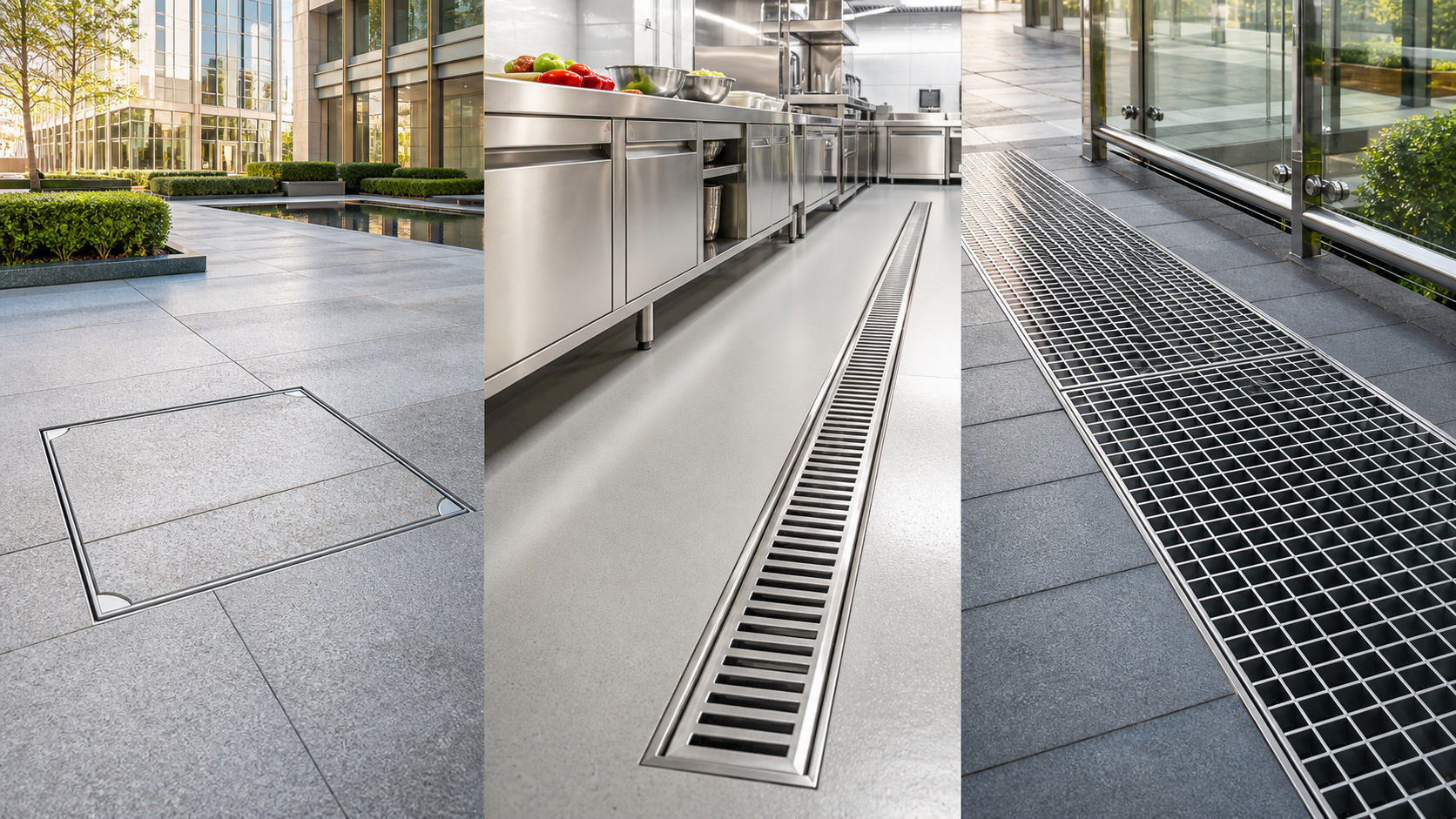
For architects, contractors, facility managers, and OEM buyers, stainless steel floor access and drainage products are no longer only functional parts. A well-designed stainless steel recessed manhole cover, hidden linear drainage channel, or stainless steel grating helps keep floors clean, safe, serviceable, and visually consistent in demanding projects.
Aodson supplies custom stainless steel building hardware for commercial, industrial, municipal, and architectural applications. This guide explains where these products are commonly used, how to select the right design, and the key installation methods that international buyers often search for when comparing stainless steel access covers, trench drain grates, and linear drain channels.
Why Stainless Steel Is Preferred for Hidden Access and Drainage Systems
Stainless steel is widely used in drainage and access systems because it combines corrosion resistance, load capacity, hygiene, and a premium finish. For coastal areas, food processing plants, commercial kitchens, laboratories, public plazas, hotels, and transport facilities, stainless steel offers a longer service life than many painted or low-grade metal alternatives.
- Clean appearance: recessed and tile-in designs blend with stone, tile, concrete, resin floors, or pavers.
- Corrosion resistance: 304 stainless steel suits many indoor and outdoor projects; 316 stainless steel is often preferred for coastal, chemical, or high-moisture environments.
- Easy maintenance: removable covers and gratings provide access for inspection, cleaning, and repair.
- Custom fabrication: size, frame depth, load rating, drain outlet, slot pattern, and surface finish can be tailored to the project.
1. Stainless Steel Recessed Manhole Covers
A stainless steel recessed manhole cover, also called a recessed access cover, hidden manhole cover, tile insert access cover, or invisible manhole cover, uses a tray-style lid that can be filled with the surrounding floor material. After installation, the cover remains accessible but visually discreet.
Typical Application Scenarios
- Hotel entrances, shopping malls, office lobbies, and high-end commercial floors
- Outdoor plazas, pedestrian streets, landscaped courtyards, and garden paths
- Basements, utility rooms, pump rooms, and inspection points
- Food factories, pharmaceutical facilities, laboratories, and clean production areas
- Residential patios, pool decks, terraces, and stone paving projects
Buyers often search for these products using phrases such as stainless steel recessed manhole cover, hidden access cover, tile insert manhole cover, recessed drain cover, flush access cover, and custom stainless steel access hatch.
2. Stainless Steel Hidden Linear Drainage Channels
A stainless steel hidden linear drainage channel collects surface water through a narrow slot, removable grate, or tile-in cover. It is commonly specified where drainage must be efficient without interrupting the floor design.
Where Linear Drain Channels Work Best
- Commercial kitchens, breweries, dairies, and food processing drainage systems
- Shower rooms, swimming pool surrounds, spa areas, and hotel bathrooms
- Parking areas, garage entrances, loading zones, and workshop floors
- Balconies, roof terraces, courtyards, and outdoor paving transitions
- Factories and warehouses where liquids must be guided to a drain outlet quickly
Common international search terms include stainless steel linear drain, linear drainage channel, slot drain channel, trench drain with stainless steel grate, hidden drain cover, tile insert linear drain, and industrial floor drain channel.
3. Stainless Steel Grating and Trench Drain Grates
Stainless steel grating is used when drainage, ventilation, slip resistance, or heavy-duty load support is required. Compared with ordinary drain covers, stainless steel grates can be fabricated with different bar spacing, frame types, anti-slip surfaces, and load capacities.
Common Uses for Stainless Steel Grating
- Trench drain covers for factories, workshops, and logistics facilities
- Pedestrian walkways, platforms, stairs, and maintenance access areas
- Commercial kitchen floor drains and wash-down areas
- Marine, coastal, and humid environments where corrosion resistance matters
- Architectural floor grilles and decorative drainage covers
Useful SEO keywords include stainless steel grating, stainless steel drain grate, trench drain grate, floor drain grating, heavy duty stainless steel grating, custom steel grating, and anti slip stainless steel grate.
How to Choose the Right Product for Your Project
| Project Need | Recommended Product | Key Specification Points |
|---|---|---|
| Hidden access in stone, tile, or paver floors | Stainless steel recessed manhole cover | Clear opening size, tray depth, infill thickness, sealing, lifting key, load rating |
| Discreet water collection along a wall or floor edge | Hidden linear drainage channel | Channel length, outlet position, slope, waterproofing, grate or slot design |
| High-flow drainage or heavy traffic areas | Stainless steel grating or trench drain grate | Bar spacing, frame type, anti-slip finish, load class, cleaning access |
| Corrosive or coastal environments | 316 stainless steel access and drainage products | Material grade, weld quality, surface treatment, maintenance schedule |
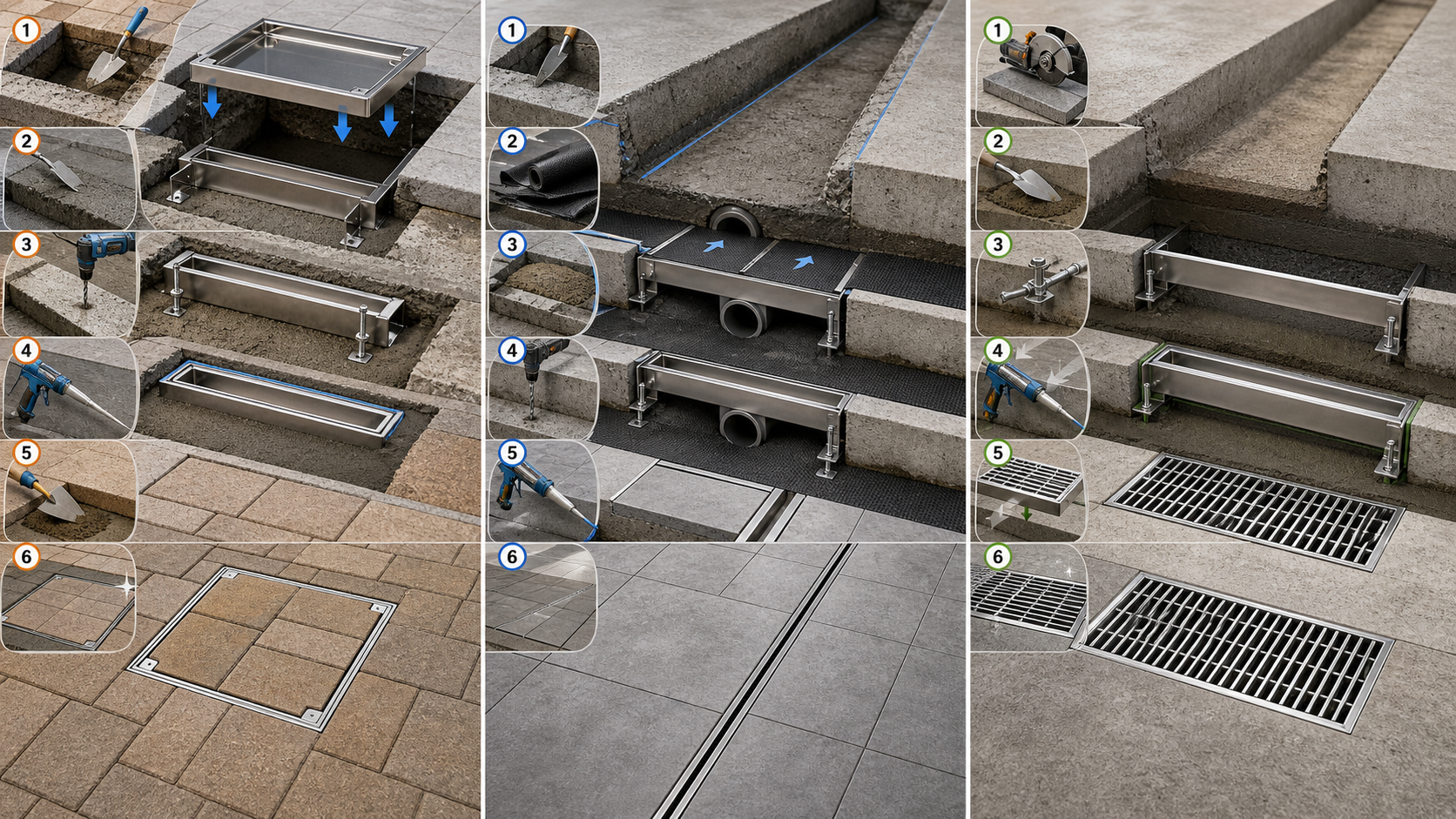
Installation Method for Stainless Steel Recessed Manhole Covers
- Confirm the opening size and load requirement. Check the clear opening, frame dimensions, floor build-up, traffic type, and whether the cover must be sealed or lockable.
- Prepare a level support base. The frame should sit on stable concrete, mortar, or a designed support structure. Avoid uneven bedding that may twist the frame.
- Set the frame flush with the finished floor level. Use a laser level or straight edge so the final tray infill aligns with surrounding tiles, stone, concrete, or pavers.
- Fix and bed the frame securely. Anchor, weld, or embed the frame according to project requirements. Keep the cover removable during alignment checks.
- Add infill material to the tray. Install tile, stone, concrete, resin, or paver infill with suitable adhesive or mortar. Keep lifting holes and access points clear.
- Seal edges and test removal. Apply compatible sealant where needed, clean the stainless surface, and confirm that the cover can still be lifted for maintenance.
Installation Method for Hidden Linear Drain Channels
- Plan the drainage route. Confirm the water flow direction, outlet size, pipe connection, channel length, and required floor slope.
- Install the channel body at the correct height. The top edge should match the final floor finish while maintaining adequate slope toward the drain.
- Connect the outlet and waterproofing layer. Use the proper connector, gasket, and waterproof membrane detail for bathrooms, kitchens, balconies, or industrial floors.
- Support the channel evenly. Bed the channel with mortar or concrete to prevent movement, vibration, or deformation under traffic.
- Install the cover or grate. Fit the slot cover, tile-in cover, or stainless steel grate after surrounding floor work is complete.
- Flush and inspect. Test water flow, remove construction debris, and confirm that the cover can be lifted for cleaning.
Installation Method for Stainless Steel Grating
- Measure the trench or frame opening. Confirm clear span, bearing length, depth, and whether the grate needs locking clips or hinges.
- Select the correct load capacity. Pedestrian areas, carts, forklifts, and vehicle zones require different bar sizes and support spacing.
- Install the support frame. Keep the frame square, level, and fully supported to reduce noise and rocking.
- Place the grating panels. Ensure panels sit flat, with safe gaps and correct orientation for traffic direction.
- Secure and maintain. Add fasteners where required, check for sharp edges, and clean the grate regularly to maintain drainage performance.
Custom Options from Aodson
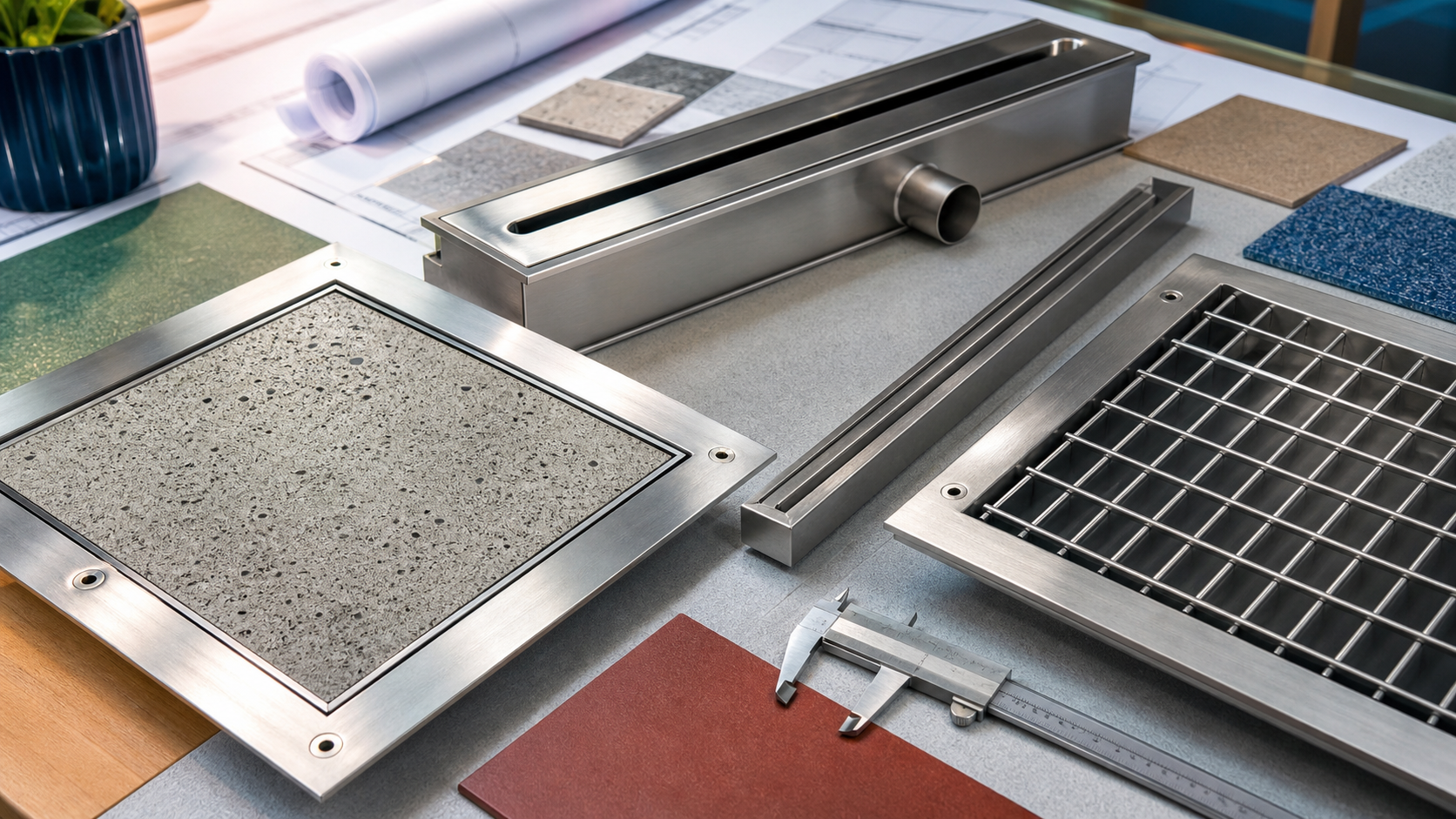
Every project has different floor finishes, drainage flow, access frequency, and loading conditions. Aodson can support stainless steel fabrication for custom dimensions, OEM drawings, and application-specific details.
- 304 or 316 stainless steel material options
- Recessed tray covers for tile, stone, concrete, resin, pavers, or other infill materials
- Linear drain channels with slot covers, removable grates, or tile-in covers
- Stainless steel grating with custom spacing, frame, finish, and load design
- Brushed, polished, bead-blasted, or passivated surface treatments
- OEM manufacturing according to drawings, samples, or project specifications
FAQ
What is the difference between a recessed manhole cover and a normal manhole cover?
A normal manhole cover is usually visible on the floor surface. A recessed manhole cover has a tray that can be filled with matching floor material, so it provides access while blending into the surrounding finish.
Should I choose 304 or 316 stainless steel?
304 stainless steel is suitable for many indoor and general outdoor applications. 316 stainless steel is recommended for coastal areas, high humidity, chemical exposure, and more demanding corrosion environments.
Can stainless steel linear drains be customized?
Yes. Length, width, outlet position, cover type, channel depth, frame style, and surface finish can be customized according to drawings or installation conditions.
What information should I provide for a quotation?
Please provide the product type, dimensions, material grade, quantity, load requirement, application environment, floor finish, drawings if available, and any drainage outlet or sealing requirements.
Conclusion
Stainless steel recessed manhole covers, hidden linear drainage channels, and stainless steel grating help modern projects combine clean design with reliable access, drainage, safety, and long-term durability. Whether the project is a hotel, plaza, factory, commercial kitchen, laboratory, or outdoor landscape area, Aodson can help develop a practical stainless steel solution based on your drawings and application needs.