




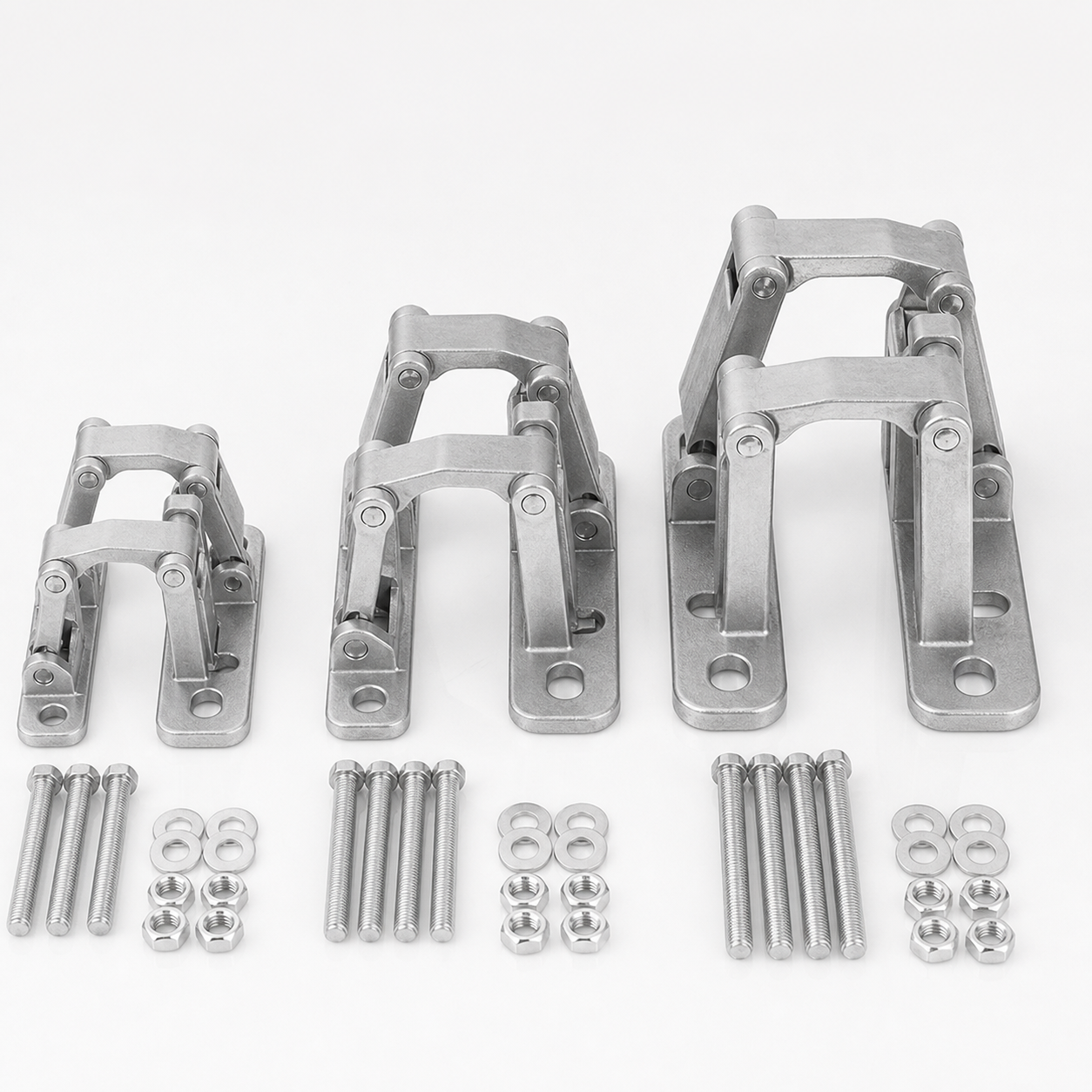
Why Concealed Hinges Matter in Modern Architectural Doors
In high-end commercial buildings, hotels, villas, offices, hospitals, and public facilities, door hardware is expected to do more than simply open and close. It must support heavy panels, maintain accurate alignment, protect the door structure, and preserve a clean architectural appearance. That is why more contractors and door manufacturers are choosing concealed hinges, also called hidden hinges or invisible hinges.
A concealed hinge is installed inside the door leaf and frame, so the hinge body is not exposed when the door is closed. This creates a flush, minimalist look while improving safety, reducing tampering risks, and supporting premium door designs such as marble doors, fire-rated doors, wooden doors, metal doors, and custom architectural panels.
AODSON provides professional concealed hinge solutions for demanding door projects, including marble-clad doors and fire door applications where strength, precision, and reliable installation are essential.
Concealed Hinges for Marble Doors
Marble doors are visually impressive, but they also place special demands on hinge hardware. Natural stone, composite stone, and marble-faced panels are heavier than standard interior doors. They also require careful support to avoid sagging, cracking, edge damage, or uneven gaps over time.
For marble door concealed hinge applications, the hinge should offer:
- Heavy-duty load-bearing performance for thick or stone-faced door panels
- Accurate 3D adjustment for height, depth, and side alignment
- A flush hidden installation that keeps the marble surface clean and uninterrupted
- Strong corrosion-resistant materials for long-term service life
- Smooth opening and closing with stable movement under load
When properly selected and installed, AODSON concealed hinges help marble doors achieve a refined appearance without sacrificing durability. This makes them suitable for luxury apartments, hotel suites, office lobbies, private clubs, showrooms, and high-end residential projects.
Concealed Hinges for Fire-Rated Doors
Fire-rated doors require hardware that supports safety, stability, and compliance with the door system design. In many modern buildings, designers want fire doors to look clean and integrated with the surrounding wall, especially in corridors, public areas, and commercial interiors. A fire door concealed hinge solution can help achieve that appearance while supporting reliable operation.
For fire door concealed hinge projects, buyers often search for terms such as fire rated door hinge, hidden hinge for fire door, concealed fire door hinge, and heavy duty concealed hinge for metal door. These searches usually reflect three main concerns: fire door compatibility, structural strength, and installation reliability.
AODSON concealed hinge solutions are designed for professional door manufacturers, hardware distributors, builders, and contractors who need stable hinge performance for engineered door systems. For fire-rated applications, the hinge selection should always match the door manufacturer’s fire-rating requirements, local building codes, and complete certified door assembly.
Key Benefits of AODSON Hidden Hinge Solutions
Clean, Flush Appearance
The hinge body is hidden inside the door and frame. When the door is closed, the visible surface remains smooth and modern, which is especially important for marble doors, wall-panel doors, hotel doors, and architectural fire doors.
Heavy-Duty Support
Heavy doors need stable load distribution. AODSON concealed hinges are suitable for projects that require reliable support for thick panels, stone-faced doors, and high-traffic commercial doors.
Adjustable Installation
Precise adjustment helps installers correct door gaps after mounting. This is important for marble doors and fire-rated doors because even small alignment errors can affect appearance, sealing, and daily operation.
Better Security and Protection
Because the hinge is not exposed on the outside face of the closed door, it helps reduce tampering and protects the hardware from accidental impact.
Wide Application Range
Concealed door hinges can be used for marble doors, wooden doors, metal doors, aluminum doors, fire-rated doors, hotel room doors, office doors, villa doors, and customized project doors.
How to Install a Concealed Hinge
Correct installation is the key to long-term hinge performance. The exact process may vary depending on the door structure, frame material, hinge model, and project requirements, but the general concealed hinge installation method includes the following steps.
1. Confirm the Door Specification
Before cutting or drilling, check the door weight, door thickness, opening direction, frame material, and required opening angle. For marble doors and fire-rated doors, confirm whether additional reinforcement is needed inside the door leaf or frame.
2. Mark the Hinge Position
Use the installation template or technical drawing to mark the hinge pockets on both the door edge and frame. Accurate marking is critical because concealed hinges sit inside the structure. Poor positioning can cause uneven gaps, difficult adjustment, or door sagging.
3. Create the Mortise Pocket
Cut the hinge cavity according to the required depth and size. The pocket must be clean, flat, and accurately aligned. For marble-faced doors, avoid damaging the stone surface and make sure the internal support layer is strong enough for screw fixing.
4. Fix the Hinge Body
Place the hinge into the mortise pocket and secure it with the recommended screws. The hinge should sit firmly without movement. For heavy-duty doors, use the correct screw type and fixing method for the door core and frame material.
5. Hang the Door and Check Movement
After fixing the hinges, hang the door carefully and test the opening and closing movement. The door should move smoothly without rubbing the floor, frame, or sealing strip.
6. Adjust the Door Gap
Use the hinge adjustment function to fine-tune height, side gap, and depth. A consistent gap improves appearance and helps the door operate properly. For fire-rated doors, make sure the final gap and seal position meet the complete door system requirements.
7. Final Inspection
Check screw tightness, door alignment, opening angle, closing performance, and surface finish. For commercial or fire-rated projects, keep installation records according to project quality requirements.
Choosing the Right Concealed Hinge for Your Project
When choosing a hidden hinge supplier, do not look only at appearance. A reliable concealed hinge solution should match the real working conditions of the door. Before ordering, consider:
- Door weight and panel thickness
- Door material, such as marble, wood, steel, aluminum, or composite panels
- Fire-rated door requirements and local regulations
- Opening angle and traffic frequency
- Frame structure and available installation depth
- Surface finish and corrosion resistance
- Adjustment range and installer convenience
AODSON can support customers in selecting suitable concealed hinges based on project drawings, door samples, or technical requirements.
AODSON Concealed Hinge Solutions for Global Customers
Foreign buyers often search for products using practical terms such as concealed door hinge, hidden door hinge, invisible hinge, fire door hinge, heavy duty concealed hinge, marble door hinge, and adjustable concealed hinge. AODSON focuses on these real project needs by providing durable hidden hinge solutions for architectural doors, fire doors, and customized door systems.
Whether you are a door manufacturer, building contractor, hardware distributor, or project purchaser, AODSON can help you find the right concealed hinge solution for clean design, stable performance, and professional installation.
For marble doors, fire-rated doors, and other heavy-duty architectural door projects, contact AODSON to discuss hinge specifications, installation requirements, and project-based hardware solutions.
Related AODSON hardware solutions: explore AODSON building hardware products for customized architectural door projects.
Reference for fire-rated assemblies: always check the latest NFPA 80 fire door standard and local building code requirements before final hardware selection.