Local Service, Global Capabilities.
Local Service, Global Capabilities.
2026-04-17
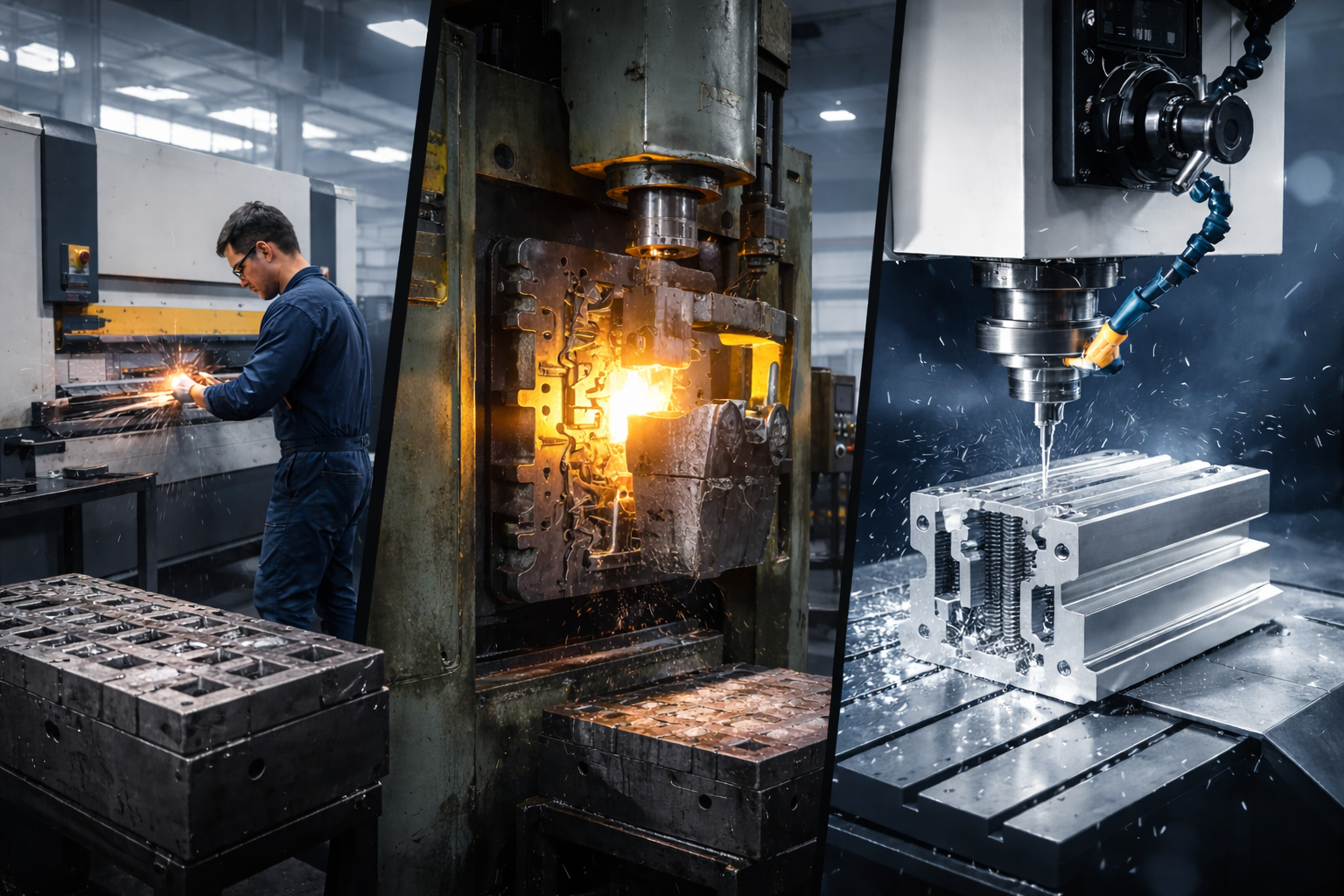
On drawings, the choice between CNC machining, die casting, and sheet metal fabrication often appears straightforward. Yet in real-world production, OEMs frequently make suboptimal process decisions—driving up costs, extending lead times, and creating downstream assembly challenges. The real difficulty lies not in understanding what each process is, but in how each behaves under actual manufacturing constraints such as tolerance requirements, supply-chain limitations, and volume fluctuations. This article provides a technical comparison of these processes, highlights common engineering pitfalls, and explains how engineering-driven suppliers help OEMs avoid unnecessary risks and costs. 1. CNC Machining: Precision and Flexibility, but Highly Sensitive to Unit Cost CNC machining is often seen as the safest choice due to its precision and repeatability, with tolerances commonly guided by standards such as ASME Y14.5. However, for complex geometries, CNC becomes the most cost-sensitive option due to material waste and long machining cycles. When CNC is Suitable Common OEM Mistakes Industry Example A consumer electronics enclosure was initially machined during prototype runs. Once volume increased to several thousand units, the per-piece CNC cost surged. After evaluating alternative processes with a multi-process supplier, the team shifted to die casting with selective CNC post-machining, reducing total cost by around 30%. 2. Die Casting: Ideal for Scale, but Requires Planning and Realistic Expectations Die casting delivers strong cost efficiency at higher volumes, but the fixed tooling cost and lengthy lead time are commonly underestimated during early planning. The process is typically used for aluminum, zinc, or magnesium alloys, and the material itself limits applicability. Manufacturers often reference guidelines from industry bodies such as NADCA to ensure quality and dimensional stability. When Die Casting Is Suitable Common OEM Mistakes Industry Example An industrial equipment manufacturer initially machined a complex aluminum housing. Once annual volume projections increased, die casting became significantly more economical. After switching, total…