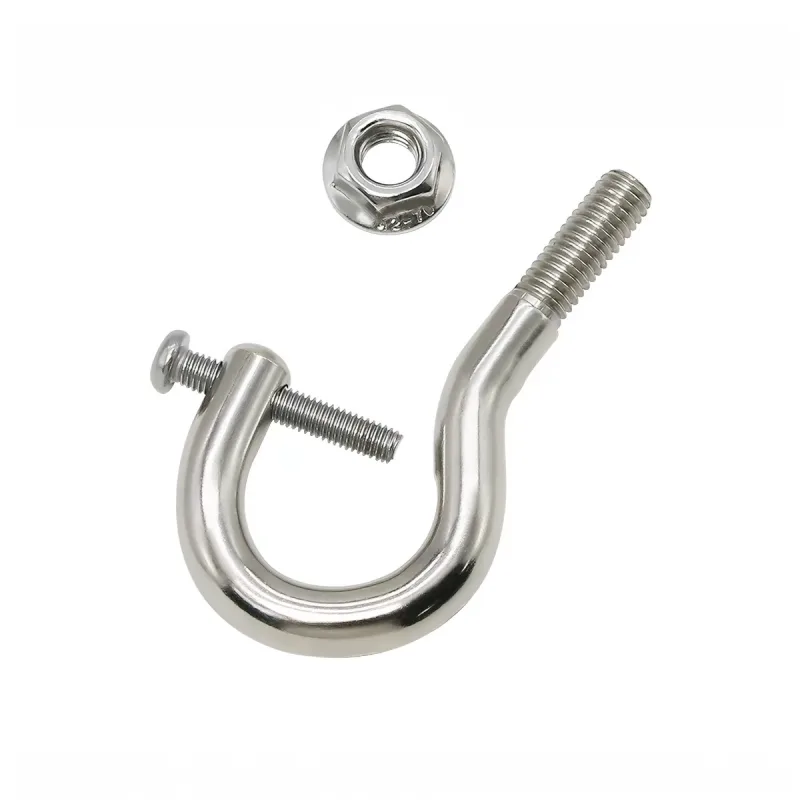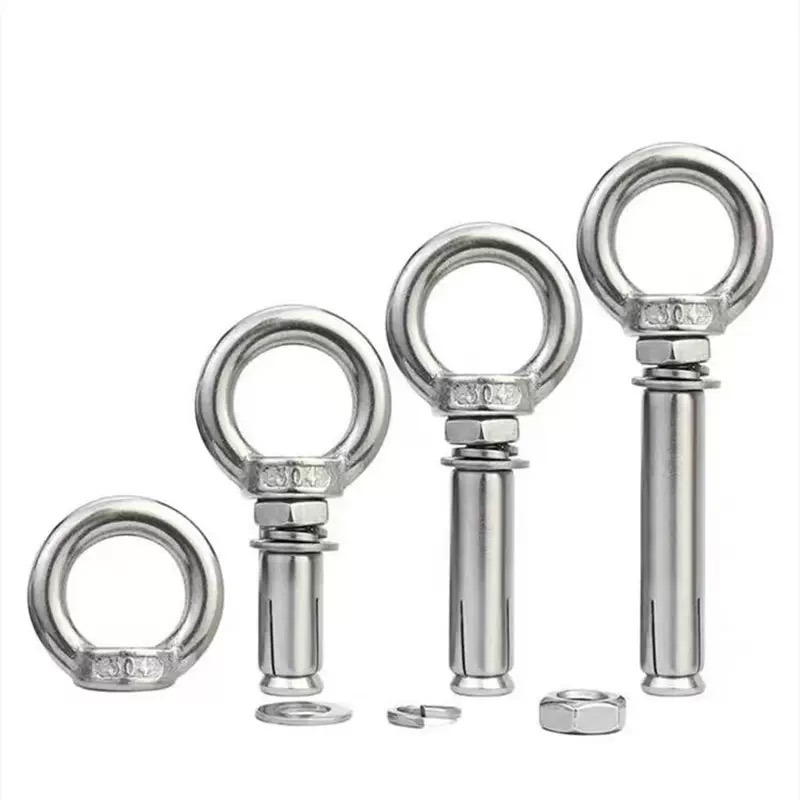




42CrMo Grade 80 alloy steel lifting eye bolts provide a threaded lifting point for machinery, dies, fixtures and engineered load-handling assemblies. Compared with general-purpose stainless eye bolts, forged and heat-treated alloy steel designs are intended for controlled lifting applications where the working load limit, thread engagement, load direction and test documentation are defined.
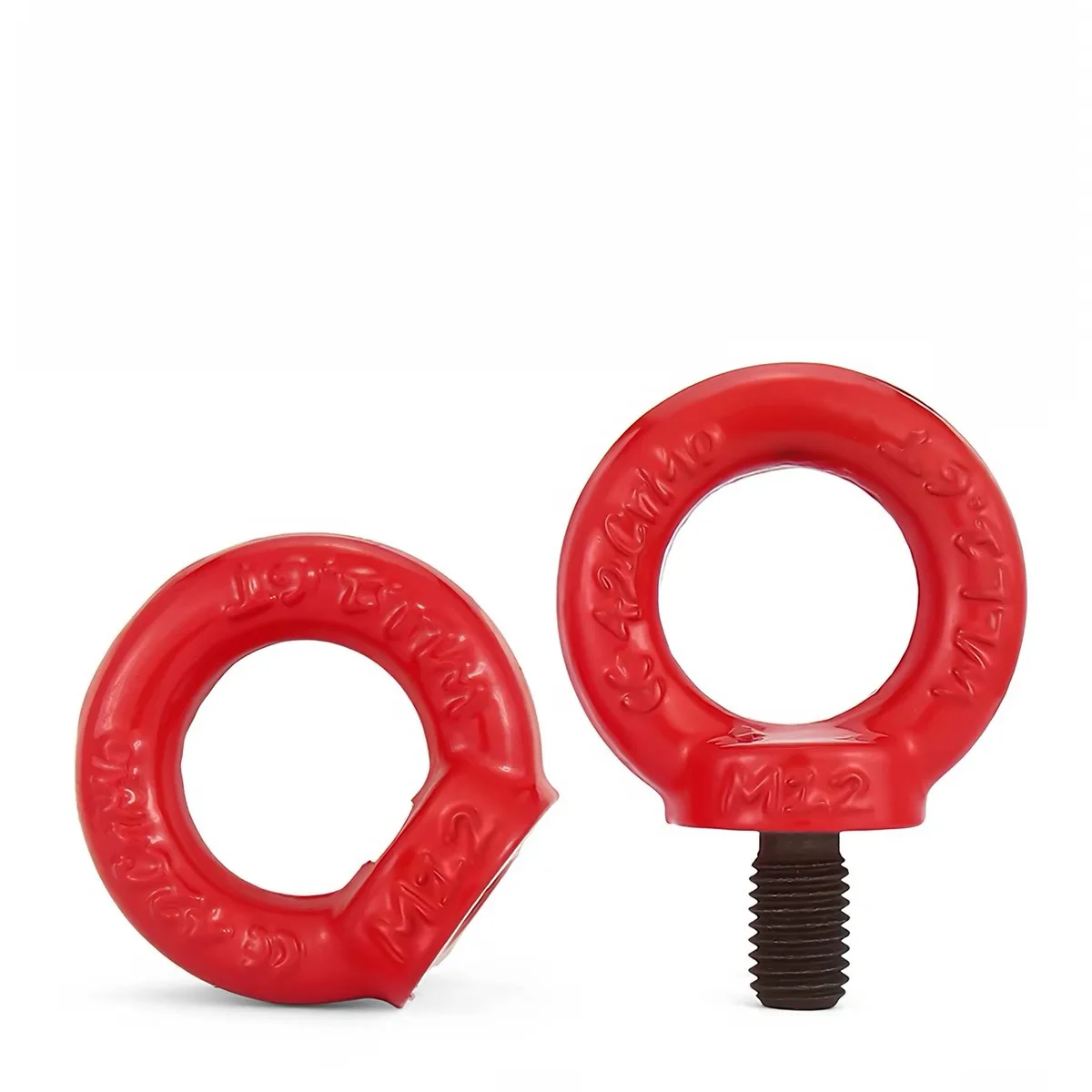
Product Specifications and Options
| Product type | Fixed lifting eye bolt / machinery lifting point |
|---|---|
| Material | 42CrMo forged alloy steel shown; final grade to approved specification |
| Strength class | Grade 80 product family shown; certification required for the supplied model |
| Thread | Metric threads including the pictured M12 example; other sizes subject to engineering review |
| Finish | Red or black protective coating; other project finishes available |
| Documentation | Material, heat treatment, proof-load and traceability records as specified |
Installation and Load Direction
A fixed eye bolt must seat fully against a clean, flat bearing surface with sufficient thread engagement in material capable of carrying the intended load. The eye should be aligned with the direction of pull. Side loading, angular loading, shock loading or rotation can reduce capacity and is permitted only when the selected product standard and manufacturer data explicitly allow it.
- Confirm thread diameter, pitch, length and receiving-thread strength
- Use the specified tightening method and ensure full seating
- Keep the sling or shackle correctly positioned in the eye
- Do not exceed the marked and certified working load limit
- Remove components showing deformation, cracks, thread damage or severe corrosion
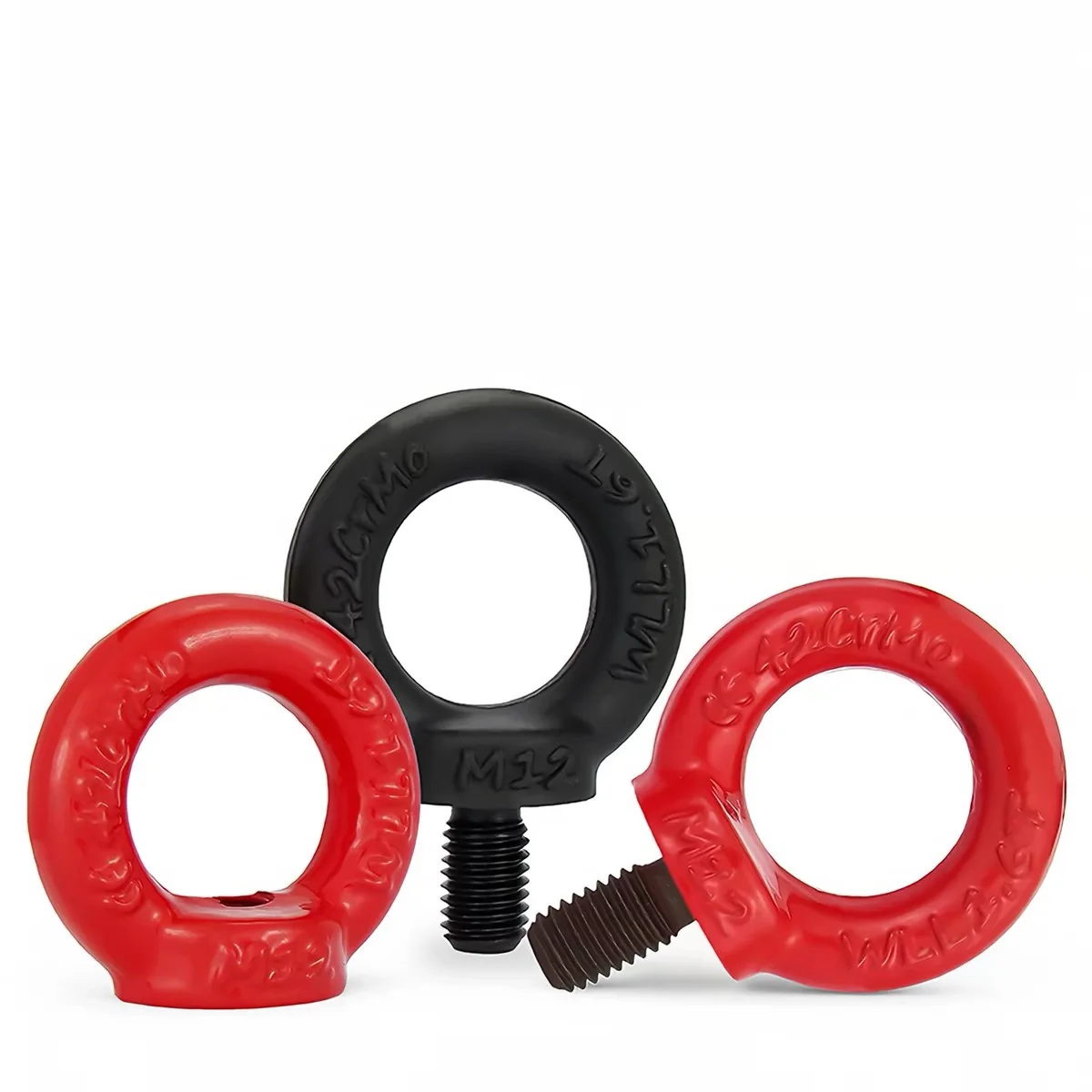
Forging, Heat Treatment and Marking
The lifting eye body is forged to create a continuous load path around the eye and into the threaded shank. Controlled heat treatment develops the required strength and toughness. Threads, seating faces and markings are then finished and inspected. Product identification can include thread size, material or grade, working load limit, batch code and conformity marks according to the purchase specification.
Typical Applications
- Machinery, motors, pumps and gearbox lifting points
- Molds, dies, fixtures and fabrication assemblies
- Maintenance lifting and controlled installation operations
- OEM equipment with engineered threaded lifting locations
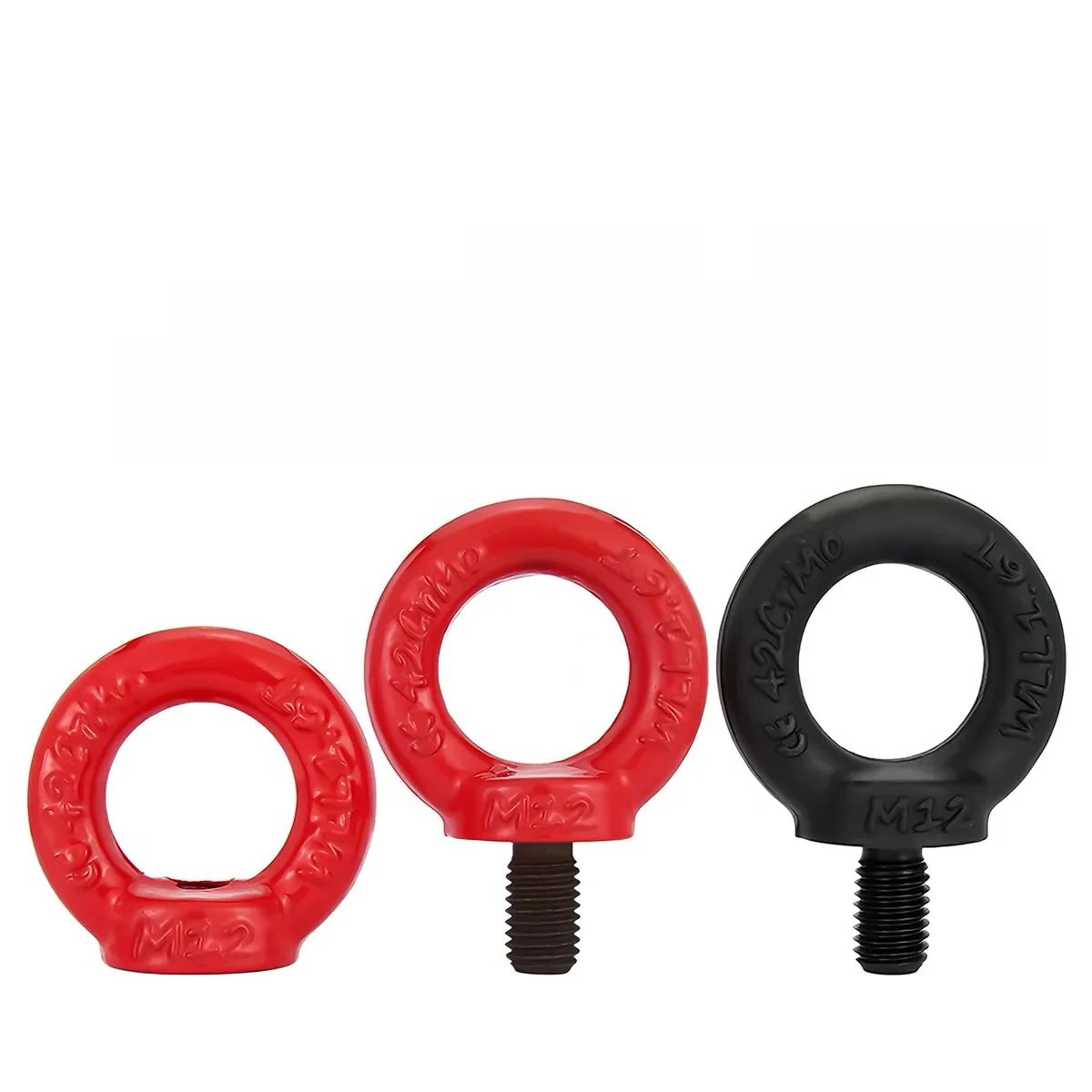
Inspection and Proof Testing
Available inspection can include chemical and mechanical material verification, dimensional checks, hardness testing, magnetic-particle inspection, proof-load testing and batch traceability. A visible size or WLL marking is not a substitute for the applicable certificate. Final capacity must be taken from the documentation for the exact thread size, load direction and installation condition.
RFQ Information
Please provide thread size and pitch, shank length, required WLL, load angle, mounting material, governing standard, safety factor, proof-test requirement, marking, coating and quantity. Drawings are recommended for OEM lifting-point applications.
Send your lifting eye bolt requirement for review, or explore AODSON rigging systems and quality control.
Frequently Asked Questions
Can this eye bolt be used for angled lifting?
Only when the exact model and its certified load chart explicitly permit angular loading. A fixed eye bolt is normally aligned with the direction of pull.
Can AODSON provide proof-load certificates?
Yes, when the governing standard, test load, sampling plan and certificate format are agreed before production.
Is the pictured M12 marking a universal capacity?
No. Capacity depends on the exact design, material, installation, loading direction and certification. Use only the documentation supplied with the ordered batch.