



Forged alloy steel lifting hooks with safety latch are connection components for chain slings, wire-rope assemblies, hoists and material-handling systems. AODSON supports eye hooks, clevis hooks, swivel hooks, self-locking hooks, grab hooks and drawing-specific lifting hardware for OEM and industrial procurement.
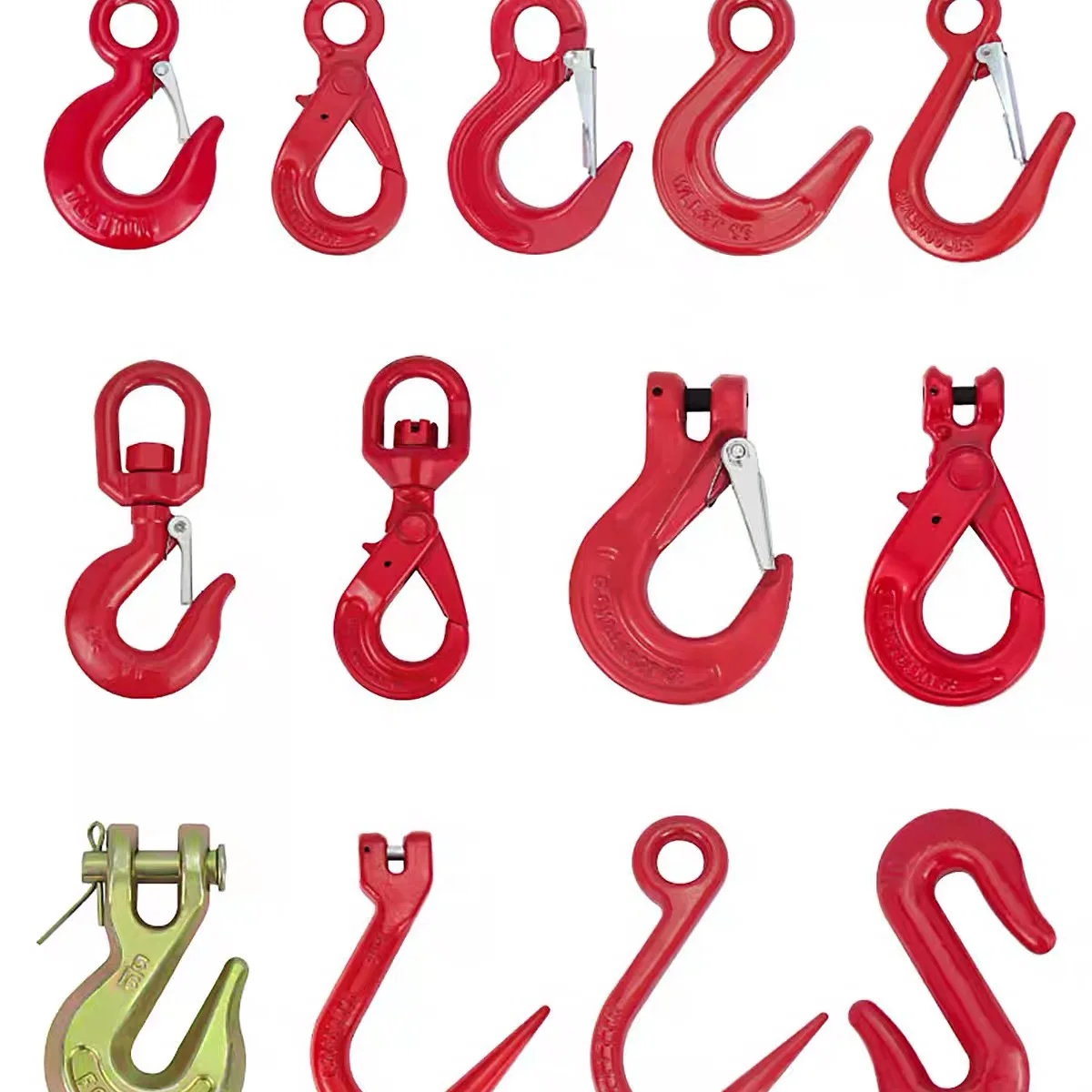
Hook Types and Custom Options
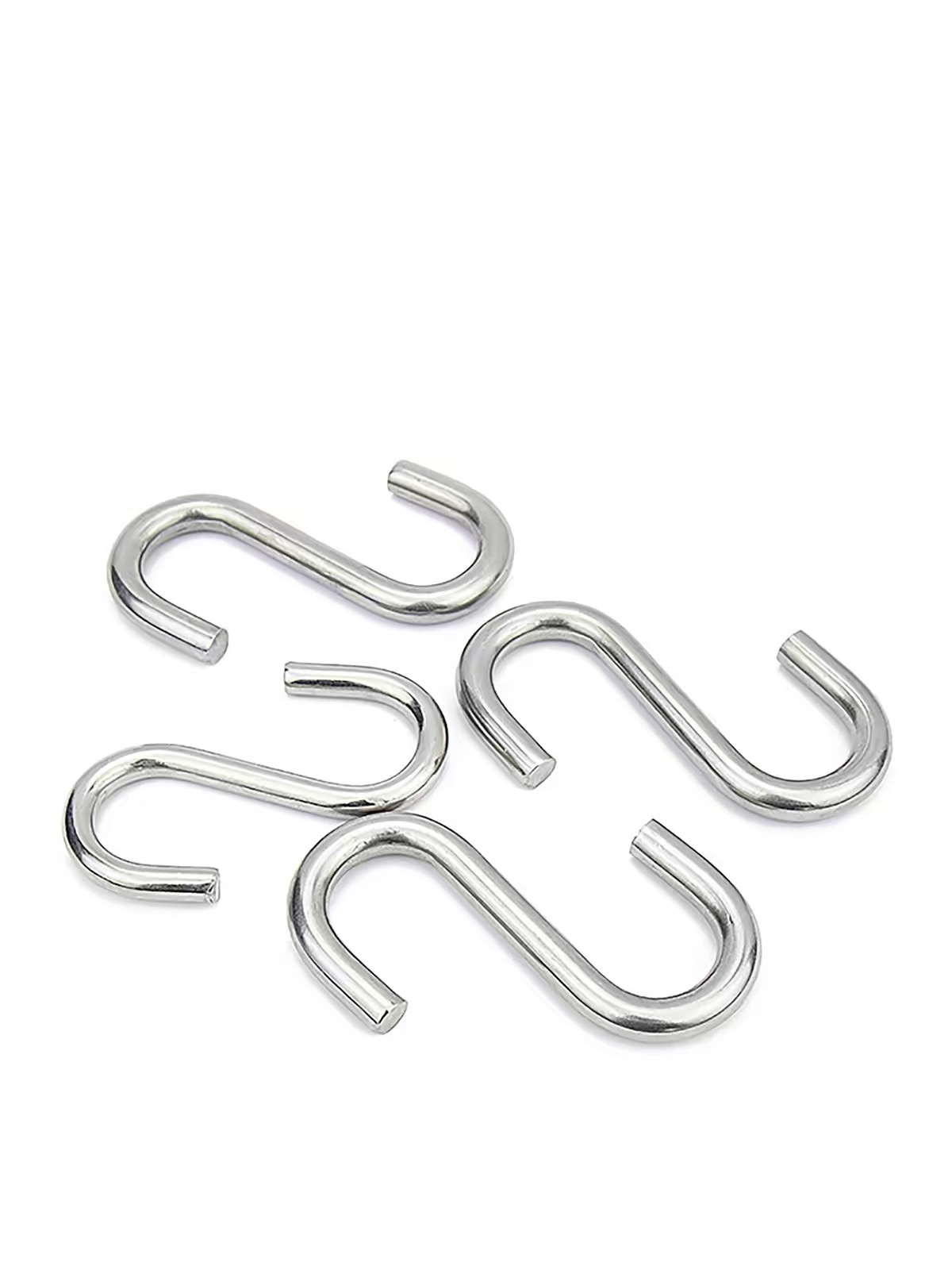
| Product range | Eye, clevis, swivel, self-locking, grab, wide-mouth and S-type hooks |
|---|---|
| Material | Forged alloy steel selected to the approved specification |
| Manufacturing | Closed-die forging, heat treatment, machining, proof testing and protective coating as specified |
| Connection | Eye, clevis pin, swivel eye or project-specific interface |
| Finish | Red powder coating shown; zinc, painted and customer-specified finishes available |
Selecting the Correct Lifting Hook
Hook shape alone does not establish suitability. Selection must account for the chain or sling grade, working load limit, load direction, throat opening, connection size, temperature, shock loading and applicable lifting standard. A safety latch helps retain a slack sling or attachment, but it is not intended to carry the load and does not replace correct rigging practice.
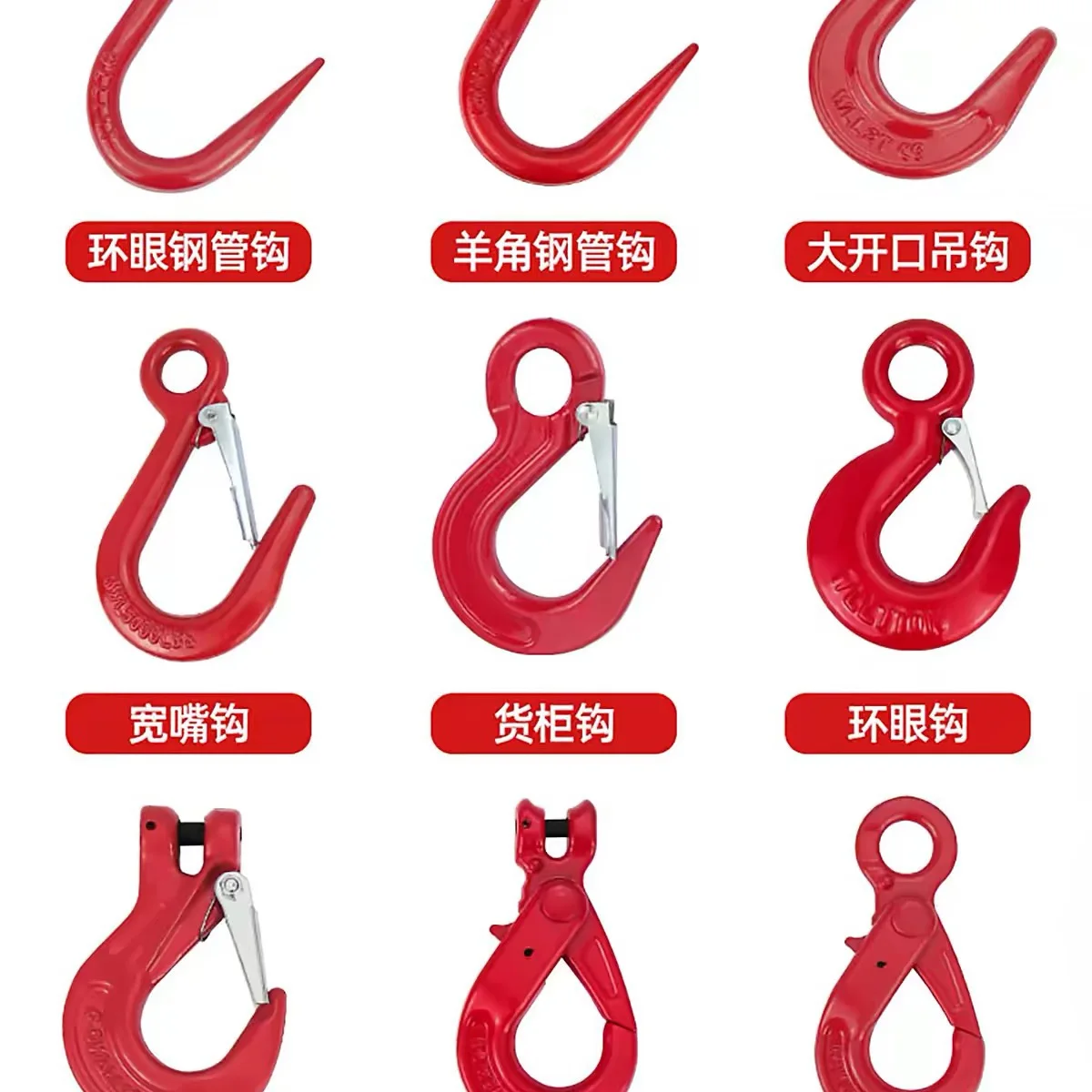
- Eye hooks: connected through a coupling link, shackle or approved fitting
- Clevis hooks: direct chain connection using a matched pin and grade
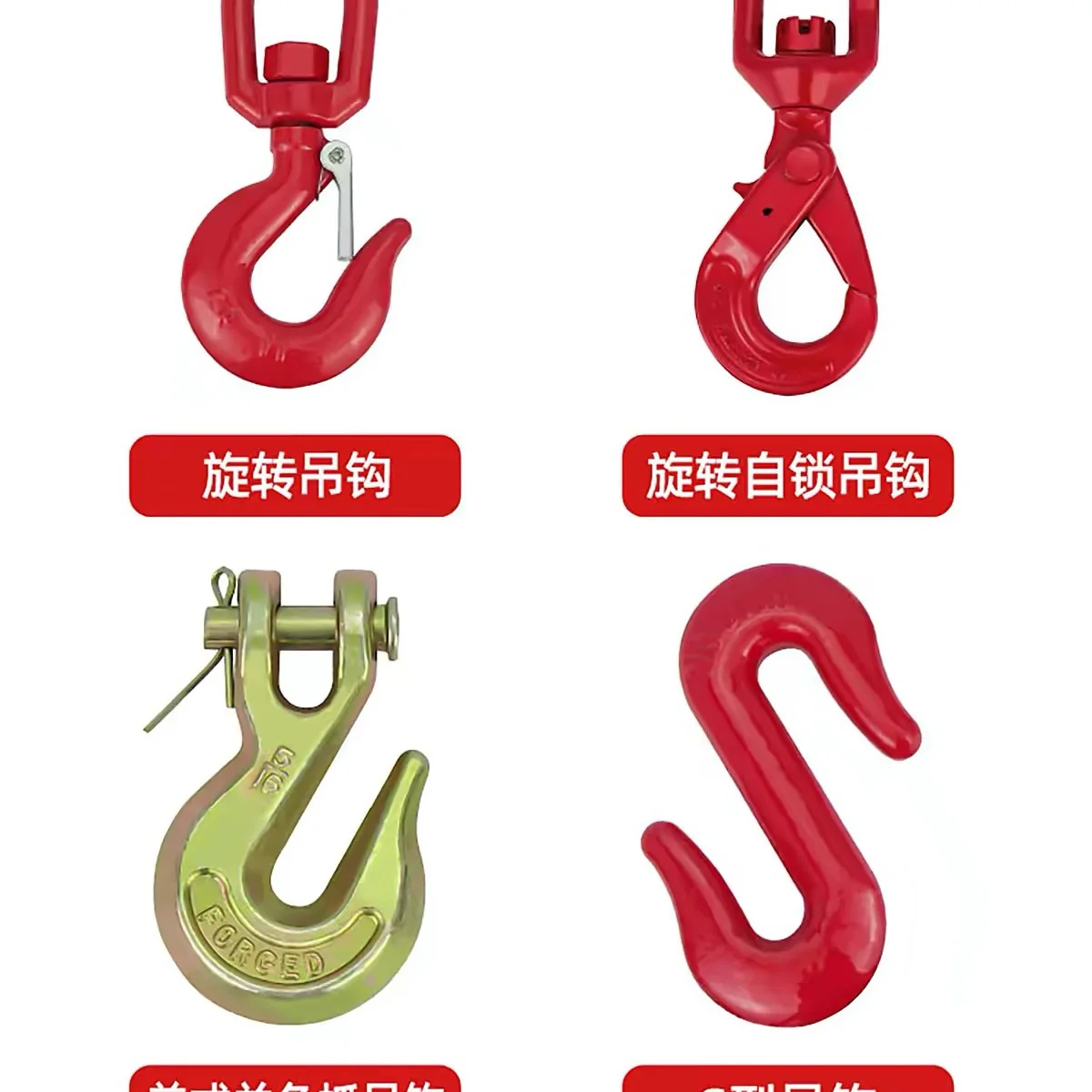
- Swivel hooks: allow orientation before loading; rotation under load requires a purpose-designed bearing swivel
- Self-locking hooks: close around the load and require the specified release method
- Grab hooks: engage compatible chain links for shortening or securing applications
Forging, Heat Treatment and Finish
Critical lifting hooks are commonly formed by closed-die forging to develop a continuous load-bearing section. Heat treatment is specified to achieve the required strength and toughness, followed by machining of pins, eyes, latch interfaces and swivel components. Protective coating improves identification and corrosion resistance, while the base material and heat-treatment condition govern mechanical performance.
Typical Applications
- Chain sling and wire-rope lifting assemblies
- Overhead hoists, cranes and material-handling equipment
- Construction, fabrication and maintenance operations
- Transport, towing and load-securing systems where specifically approved
- OEM lifting points and custom equipment attachments
Inspection and Safety Documentation
Depending on the purchase specification, inspection can include material verification, dimensional checks, heat-treatment records, hardness testing, magnetic-particle inspection, proof load testing and batch traceability. The working load limit must be permanently marked and supported by the applicable test and conformity documentation. Never use a hook based only on its appearance or nominal size.
RFQ Information
For an accurate quotation, provide the hook type, required working load limit, chain or connection size, material or grade, governing standard, safety factor, testing requirement, marking, finish and order quantity. Drawings and existing samples can be reviewed for OEM production.
Send your lifting hook requirement for engineering review. You can also review AODSON rigging systems and quality control capabilities.
Frequently Asked Questions
Can AODSON supply hooks with proof-load certificates?
Yes, when the required standard, test load, sampling plan and certificate format are defined before production.
Is a swivel hook designed to rotate while loaded?
Not automatically. Only a hook assembly specifically designed and approved for rotation under load should be used that way.
Can the hook color and marking be customized?
Yes. Coating color, embossed or stamped identification, batch traceability and packaging can be produced to the approved specification.