Local Service, Global Capabilities.
Local Service, Global Capabilities.
Engineering insights on metal materials, manufacturing processes, tolerances, corrosion and component design.
2026-07-03
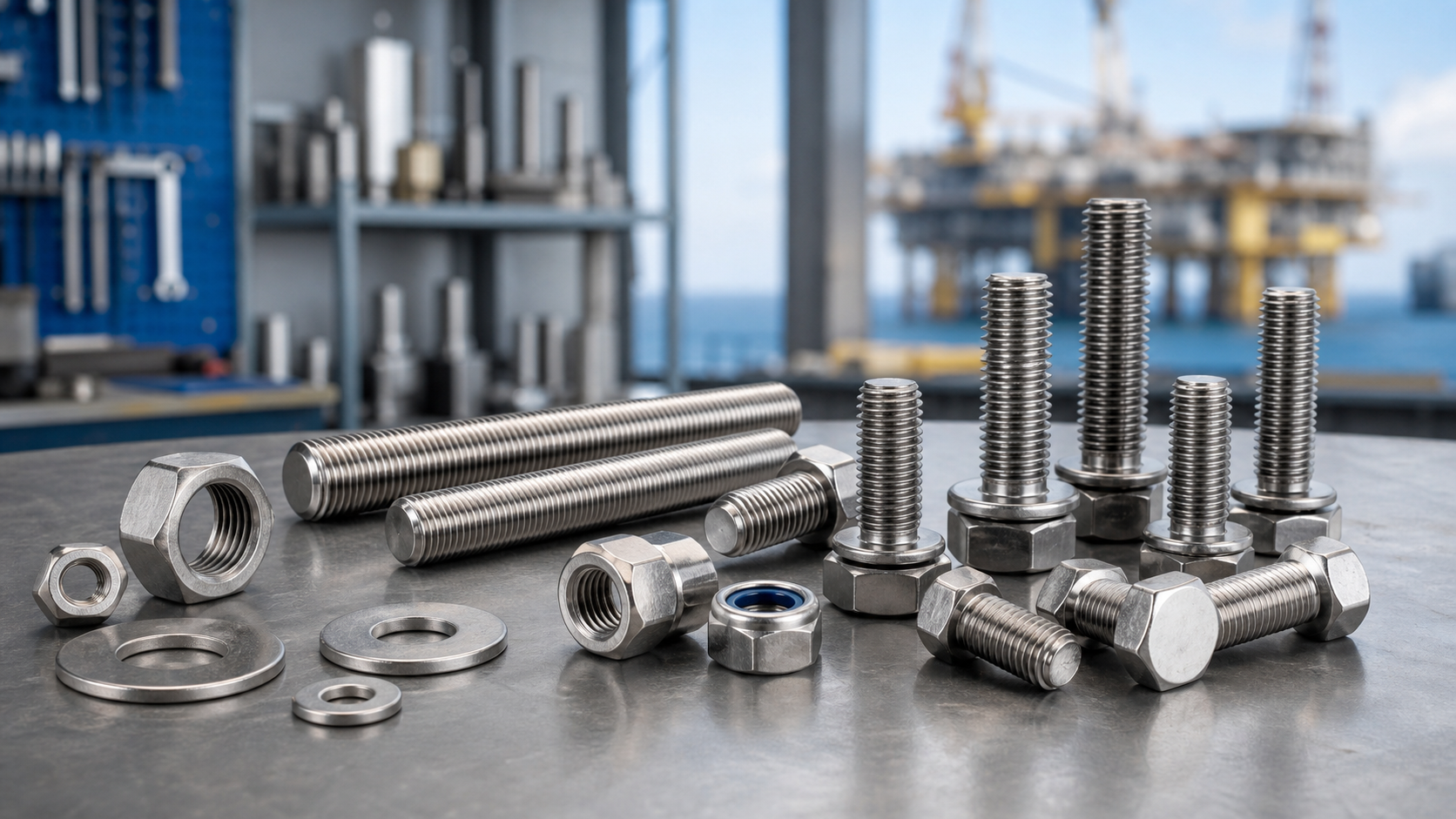
This guide compares stainless steel and special alloy fasteners for seawater, offshore and marine applications, including 316L, 2205, 2507, 904L, 254SMO, 1.4529, titanium and nickel alloys.
2026-07-03
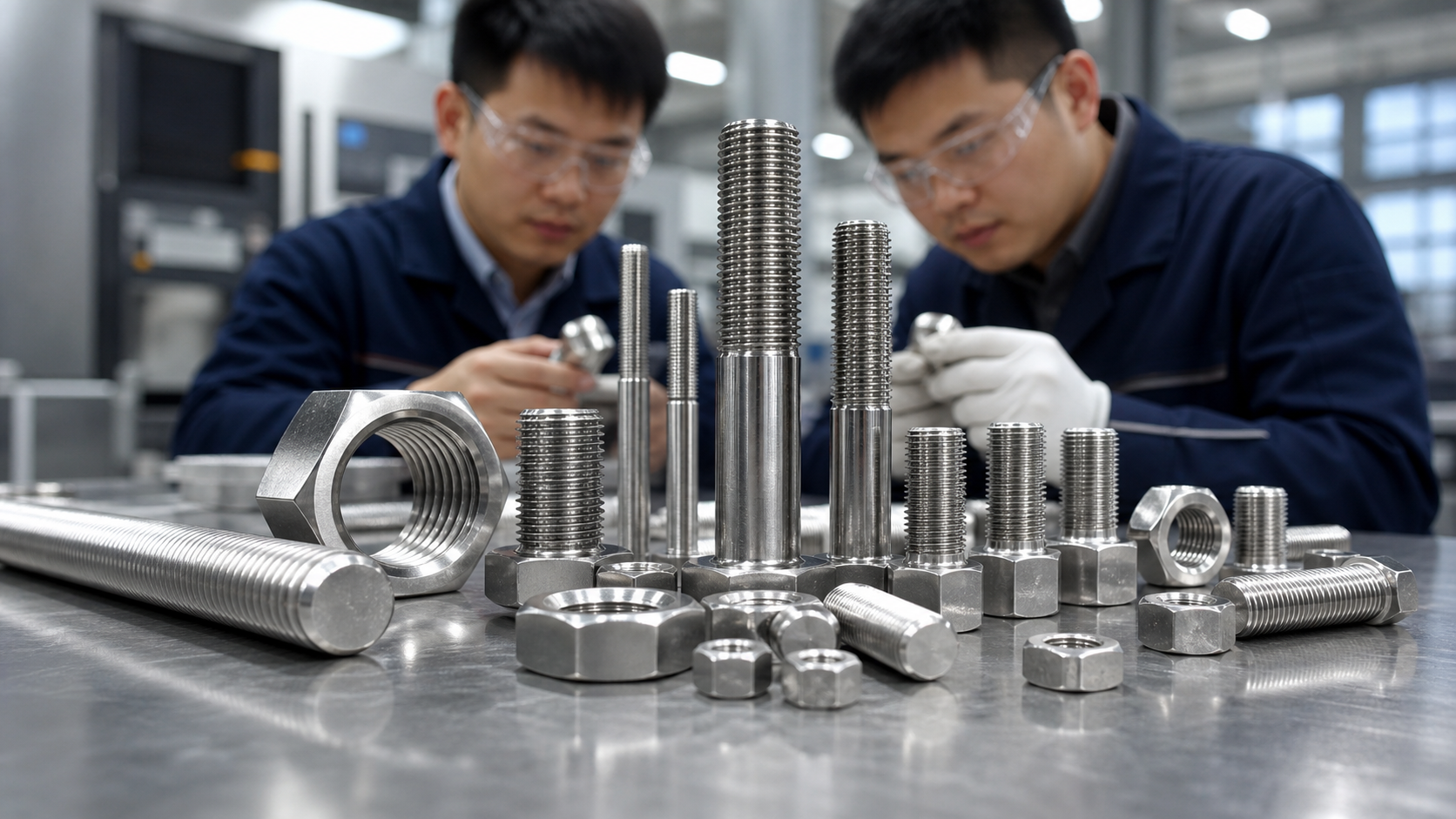
A practical engineering comparison of 904L and 254SMO stainless steel for fasteners, seawater, chloride corrosion, PREN, machining, cost and severe industrial service.
2026-07-03
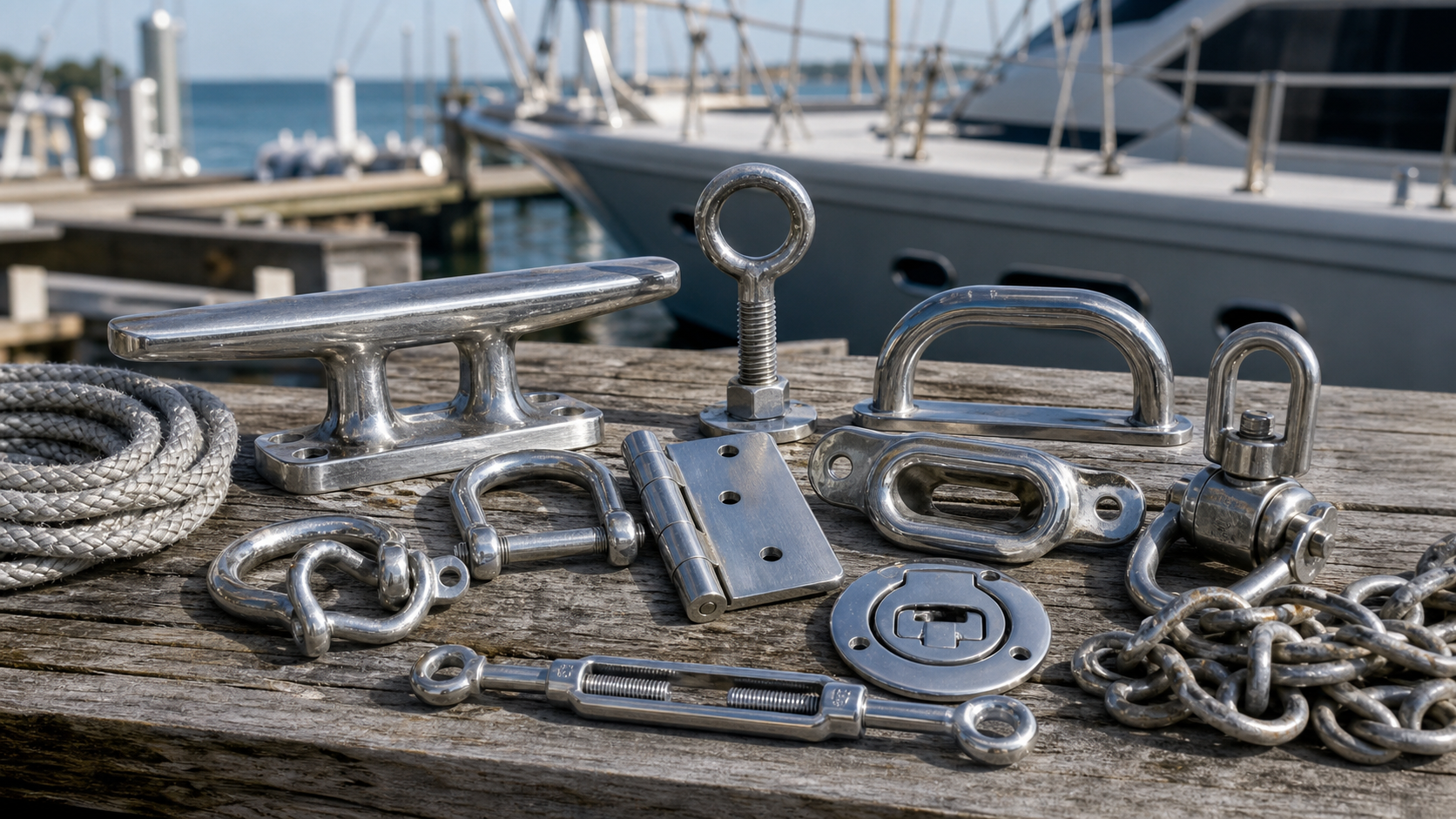
904L vs 1.4529 Stainless Steel: Complete Comparison for Fasteners and Industrial Applications Short answer: 904L stainless steel is a practical high-alloy austenitic grade for many severe industrial and acid environments, while 1.4529 stainless steel, also known as Alloy 926 or UNS N08926, is generally the stronger choice when chloride pitting, crevice corrosion, seawater exposure or stagnant salt-containing media are the main risks. For fasteners, the final choice must consider not only the alloy, but also thread design, manufacturing route, surface finish, lubrication, torque control, certification and real service conditions. Engineering note 904L vs 1.4529 is not a simple “good vs better” question. Both materials can be excellent choices, but they solve different corrosion and sourcing problems. In many fastener projects, 904L may be technically sufficient and commercially efficient. In more aggressive chloride service, 1.4529 can provide a larger safety margin. Article sections: Introduction | 904L | 1.4529 | Composition | PREN | Corrosion | Fasteners | Manufacturing | Selection guide | FAQ 1. Introduction: Why 904L and 1.4529 Are Often Compared Engineers compare 904L and 1.4529 because both are corrosion resistant, high nickel, high molybdenum austenitic stainless steels used when common 304, 316 or 316L stainless steel no longer provides enough durability. The two grades overlap in chemical plants, petrochemical equipment, marine hardware, offshore structures, flue gas desulfurization systems, pump and valve assemblies, heat exchanger equipment and custom industrial fasteners. The comparison matters because bolts, nuts, studs and threaded rods often fail differently from large plates or pipe sections. A fastener has loaded threads, small crevices below the head and nut, contact with washers or flange faces, and a surface that can be damaged by machining, installation torque or repeated maintenance. Localized corrosion in these small areas can be more dangerous than general corrosion on an open surface. Both materials…
2026-07-01
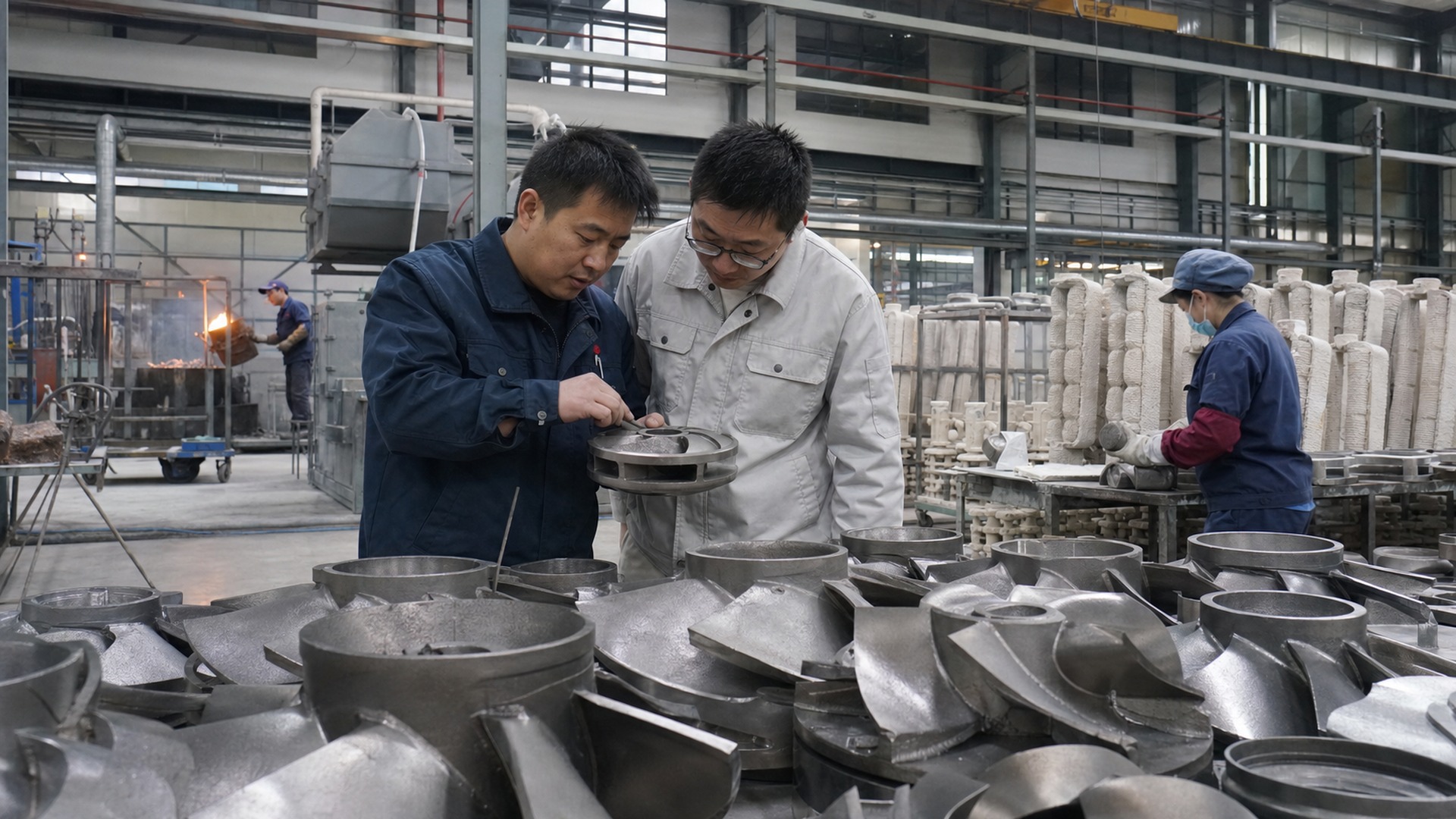
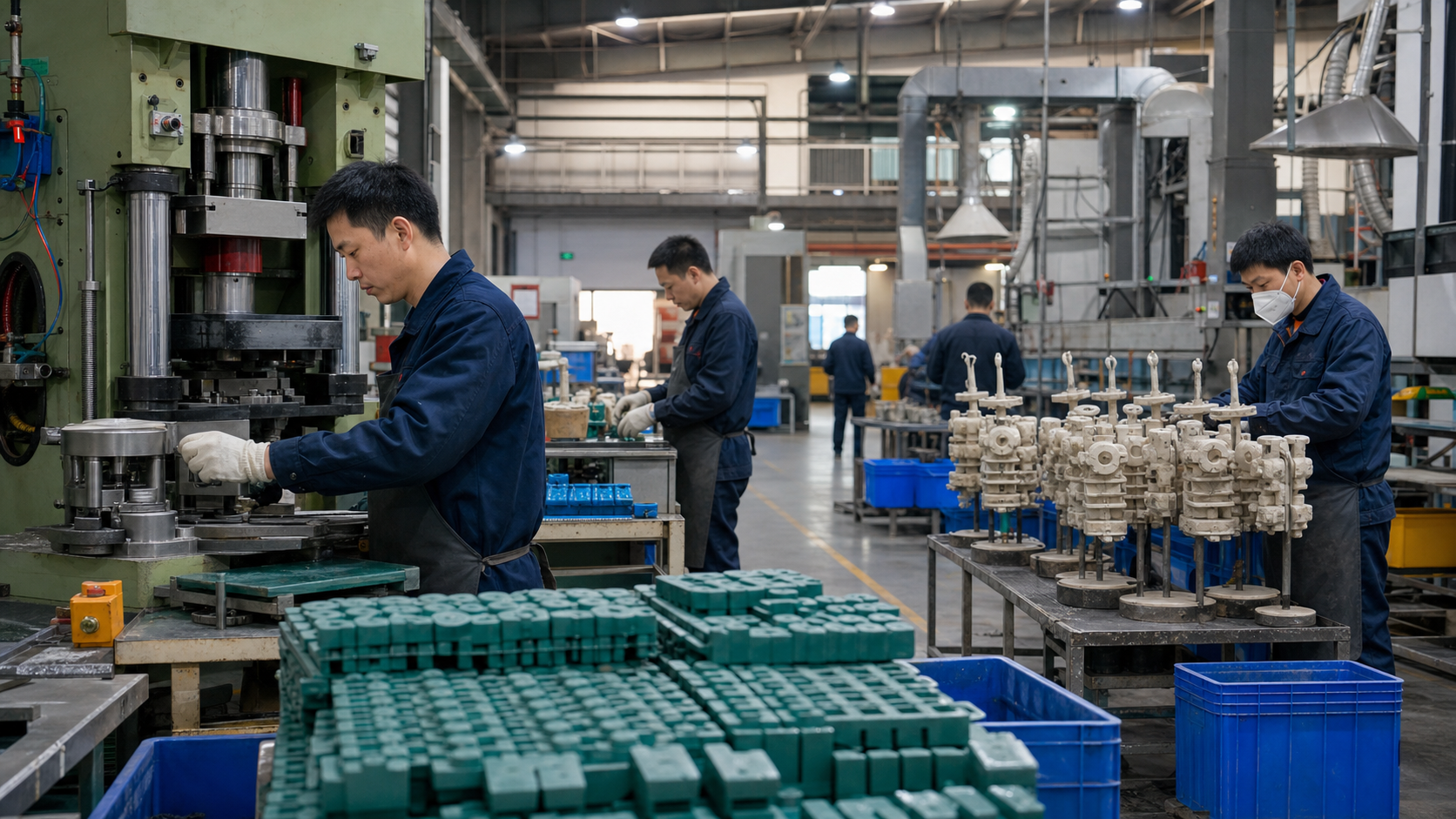
A practical engineering guide to stainless steel pump impeller manufacturing, covering material selection, investment casting, CNC machining, balancing, inspection, defects and finishing.
2026-07-01
Choosing an investment casting foundry is rarely a simple price comparison. Most buyers receive several quotations that look similar on the surface: material grade, unit price, tooling cost, and lead time. The difficult part is judging what sits behind those numbers. A casting may look easy on a drawing and still become difficult in production because of shrinkage, wall thickness variation, machining allowance, alloy behavior, or inspection requirements. A supplier may quote quickly but miss a pressure test requirement. Another may understand the casting but outsource machining to a shop that does not control datum location. These details are where purchasing risk usually begins. For OEM buyers, mechanical engineers, and industrial equipment manufacturers, the right foundry should reduce uncertainty before production starts. It should review the drawing carefully, ask practical questions, explain process limits, and control the work from wax pattern to final inspection. This guide explains how to evaluate a foundry before placing an order, especially for stainless steel, duplex stainless, heat-resistant steel, nickel alloy, and other precision industrial castings. Modern investment casting production depends on process control, not only casting equipment. Why Choosing the Right Foundry Matters Investment casting is often selected because it can produce complex shapes, better surface finish, and tighter dimensional control than many sand casting or fabrication routes. That does not mean every foundry can make the same part equally well. The real difference appears after tooling is built, samples are inspected, and repeat orders begin. A poor supplier choice usually affects four areas: Cost: The lowest casting price can become expensive if machining scrap, rework, air freight, or field failure is added later. Lead time: A foundry without stable shell making, melting, heat treatment, or machining capacity may miss shipment dates even when the casting itself is simple. Quality: Dimensional drift, porosity, wrong…
2026-06-06
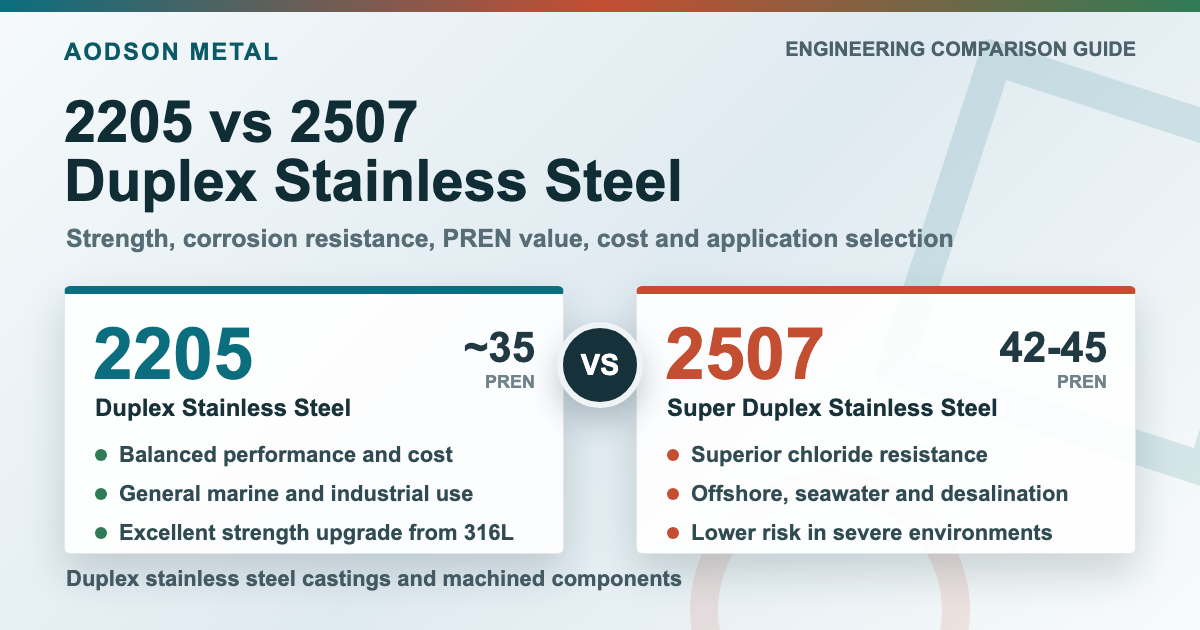
Duplex stainless steels have become increasingly important in demanding industrial environments because they combine high mechanical strength with strong resistance to chloride corrosion. For engineers, buyers, and project managers, two grades often appear on the same material shortlist: 2205 Duplex Stainless Steel and 2507 Super Duplex Stainless Steel. Both grades are widely used for marine hardware, offshore equipment, desalination systems, chemical processing parts, pumps, valves, and corrosion resistant castings. The challenge is that they do not serve the same purpose. 2205 offers an excellent balance of strength, corrosion resistance, and cost. 2507 provides a higher level of protection in severe chloride environments, especially where seawater, salt spray, acid media, or long service life requirements make failure expensive. This guide compares 2205 vs 2507 duplex stainless steel from an engineering selection perspective. It explains composition, PREN value, corrosion resistance, strength, cost, castability, machinability, and practical application guidance for marine, offshore, desalination, and industrial OEM components. What Is 2205 Duplex Stainless Steel? 2205 Duplex Stainless Steel is the most widely used duplex stainless steel grade. It is designed with a mixed microstructure of austenite and ferrite, typically balanced close to 50/50 after proper solution heat treatment. This duplex microstructure gives 2205 higher yield strength than common austenitic stainless steels such as 304 and 316L, while also improving resistance to stress corrosion cracking in chloride-containing environments. The typical chemistry of 2205 contains about 22% chromium, 5% nickel, 3% molybdenum, and a controlled nitrogen addition. Chromium improves general corrosion resistance. Molybdenum and nitrogen improve pitting and crevice corrosion resistance. Nickel helps maintain the austenite/ferrite phase balance required for toughness, weldability, and reliable mechanical performance. Compared with 316L, 2205 is much stronger and generally more resistant to chloride stress corrosion cracking. This makes it a practical material for marine stainless steel components, valve bodies, pump…
2026-06-06
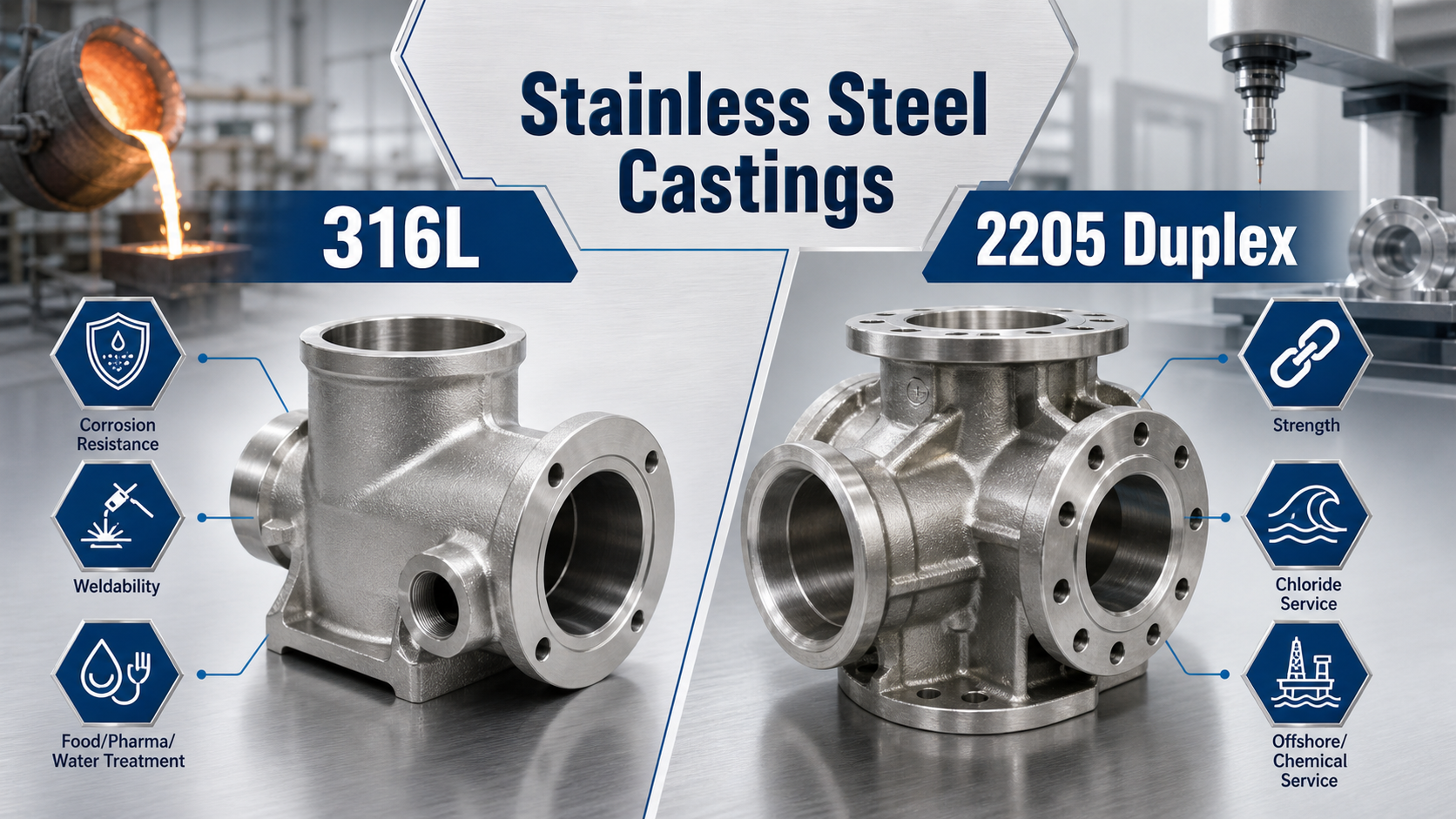
Selecting the right 316L Stainless Steel Casting or 2205 duplex stainless steel casting material is one of the most important decisions in an industrial product design. A casting may have the correct geometry, surface finish, and machining tolerance, but if the alloy is not suitable for the service environment, the part can still suffer from pitting, stress corrosion cracking, premature wear, or unexpected failure. For corrosion-resistant cast components, 316L stainless steel and 2205 duplex stainless steel are two of the most common options considered by purchasing managers, design engineers, mechanical engineers, and OEM buyers. Both materials are widely used in Stainless Steel Castings, and both can be produced by precision investment casting. However, they are not interchangeable in every application. 316L Stainless Steel Casting is well known for its balanced corrosion resistance, excellent weldability, good formability, and broad availability. 2205 Stainless Steel Casting, also known as Duplex Stainless Steel Casting, provides much higher strength and significantly better resistance to chloride-rich environments. Choosing between them requires more than comparing purchase price. Engineers should evaluate corrosion risk, mechanical loading, operating temperature, fabrication needs, machining requirements, and total life cycle cost. What Is 316L Stainless Steel? 316L stainless steel is a low-carbon austenitic stainless steel. In cast form, it is often selected when an OEM needs a reliable Corrosion Resistant Casting for general industrial, food-grade, pharmaceutical, architectural, and water handling applications. The “L” means low carbon, which helps reduce carbide precipitation during welding and improves resistance to intergranular corrosion after fabrication. Typical Chemical Composition of 316L Element Typical Range Engineering Function Chromium 16.0-18.0% Forms a passive oxide layer for corrosion resistance Nickel 10.0-14.0% Stabilizes the austenitic structure and improves toughness Molybdenum 2.0-3.0% Improves pitting resistance compared with 304 stainless steel Carbon 0.03% max Reduces sensitization risk during welding Manganese, Silicon, Nitrogen Controlled additions…
2026-06-06
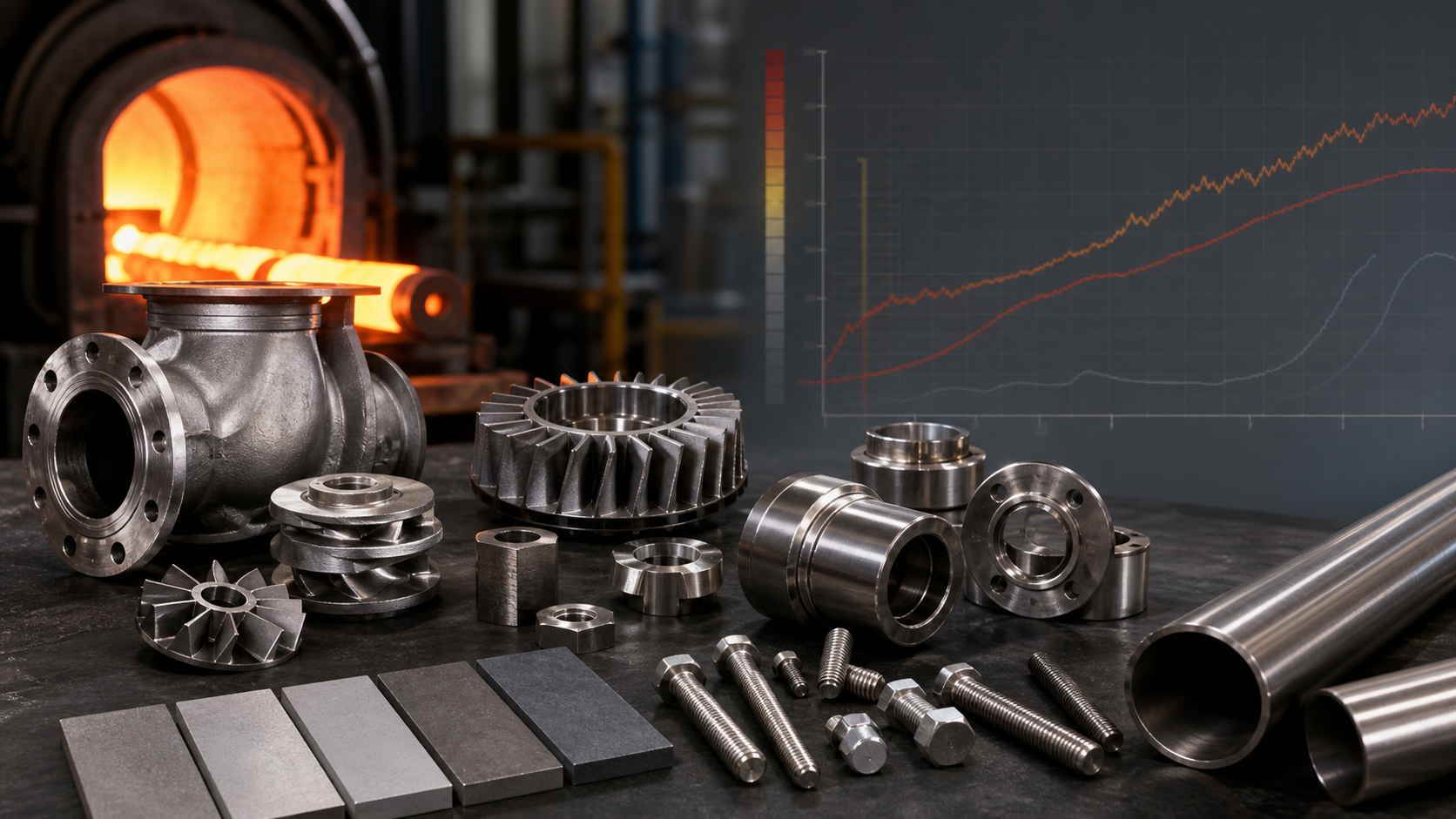
Author: AODSON Engineering Team High-temperature material selection is rarely a simple question of maximum temperature. A part that survives a brief exposure to 1000°C may fail early when the same temperature is continuous, loaded, cyclic, carburizing, sulfur-bearing, or combined with chloride contamination. Engineers also need to consider oxidation resistance, creep strength, thermal fatigue, castability, machinability, weldability, cost, and lead time. This high temperature alloy selection guide compares common heat resistant stainless steels and nickel alloys used for castings, machined parts, fasteners, furnace parts, pump components, valve components, and custom OEM metal parts. It is written as a practical engineering reference rather than a universal material guarantee. Actual performance depends on service conditions, part geometry, manufacturing process, heat treatment, inspection requirements, and the user’s acceptance criteria. Taizhou Aodson Metal Technology Co., Ltd. supports stainless steel castings, heat-resistant steel castings, high-temperature fasteners, CNC machined parts, pump and valve components, marine hardware, and custom OEM parts. The material recommendations below can help prepare a better RFQ and reduce the risk of premature failure. Why High Temperature Alloy Selection Matters Choosing the wrong material at elevated temperature can create failures that are expensive and difficult to diagnose. A part may look acceptable after installation, then gradually lose section thickness through oxidation scaling, deform under load because of creep, crack after repeated thermal cycling, or seize at threaded connections. Common consequences include oxidation scaling, deformation, creep rupture, thermal fatigue cracking, fastener seizure, loss of strength, short service life, and unexpected shutdowns. In furnace equipment, a weak tray or fixture can damage product batches. In pump and valve assemblies, hot corrosion can combine with pressure and flow to accelerate leakage or wear. In high-temperature fasteners, oxidation, galling, and creep relaxation can reduce clamp load and make maintenance difficult. A good alloy decision balances performance and manufacturability….
2026-06-06
Author: AODSON Engineering Team, Taizhou Aodson Metal Technology Co., Ltd. Designing a stainless steel casting is not the same as drawing a machined component and asking a foundry to make it from a wax pattern. Investment casting is extremely capable, but it rewards parts that respect molten metal flow, solidification, ceramic shell strength, wax injection limits, heat treatment response, and downstream machining access. A design that looks efficient in CAD can become expensive if it creates hot spots, trapped cores, deep blind features, excessive stock removal, or tolerances that must be corrected one by one on a machining center. This stainless steel casting design guide is written for engineers, product designers, sourcing managers, and OEM teams who need practical design rules before releasing an RFQ. It focuses on stainless steel investment casting, also called lost wax casting, because the process is widely used for pump parts, valve bodies, impellers, marine fittings, architectural hardware, heat resistant components, food equipment, machinery parts, and many other precision metal components. The goal is not to replace formal foundry review. The goal is to help you send a better STEP or STP file, reduce avoidable revisions, and understand why a foundry may recommend changes to wall thickness, radius, machining allowance, material grade, or inspection requirements. The best casting designs are developed as a manufacturing system. Casting geometry, alloy selection, heat treatment, surface finish, CNC machining, inspection datums, and assembly requirements should be considered together. When these decisions are separated, cost is usually added late in the project through welding repair, extra machining, fixture complexity, rework, or delayed approval samples. Understanding Stainless Steel Investment Casting Process overview Stainless steel investment casting is a precision casting process that uses an expendable wax pattern and a ceramic shell mold. The wax pattern reproduces the part geometry, including most…
2026-06-04
Marine hardware components are often treated as secondary details, but modern vessels depend on them as much as engines, navigation electronics, and hull design. The small pieces of hardware fitted across the deck, rail, hatch, rigging, and access points often decide whether a vessel feels safe, dependable, and easy to maintain after years in saltwater service. A cleat that deforms under load, a hinge that starts binding, or a latch that will not seal properly can turn a routine voyage into an expensive repair. For builders, refit yards, distributors, and vessel owners, choosing marine hardware is therefore not just a catalog exercise. The right component must match the vessel type, expected load, installation environment, material compatibility, inspection schedule, and long-term corrosion exposure. Below are ten essential marine hardware components that modern vessels rely on, along with practical notes on what to look for before specifying or purchasing them. 1. Deck Cleats and Mooring Fittings Deck cleats, bollards, chocks, and fairleads handle the loads created during docking, towing, short-term mooring, and line handling. They may look simple, but they are among the most highly stressed pieces of deck hardware on many boats. A cleat should have enough bearing surface for the line, a base large enough to spread load into the deck structure, and smooth edges that will not damage rope fibers. For modern vessels, 316 stainless steel is widely used because it offers strong corrosion resistance in marine atmospheres. For heavier commercial or offshore applications, buyers should also consider load rating, backing plate design, casting quality, weld integrity, and whether the fitting can be inspected easily after installation. A beautiful polished cleat is not useful if the deck underneath cannot carry the load. 2. Shackles, Swivels, and Connecting Links Shackles and swivels connect anchors, chains, safety lines, blocks, and many…