Local Service, Global Capabilities.
Local Service, Global Capabilities.
Engineering insights on metal materials, manufacturing processes, tolerances, corrosion and component design.
2026-06-03
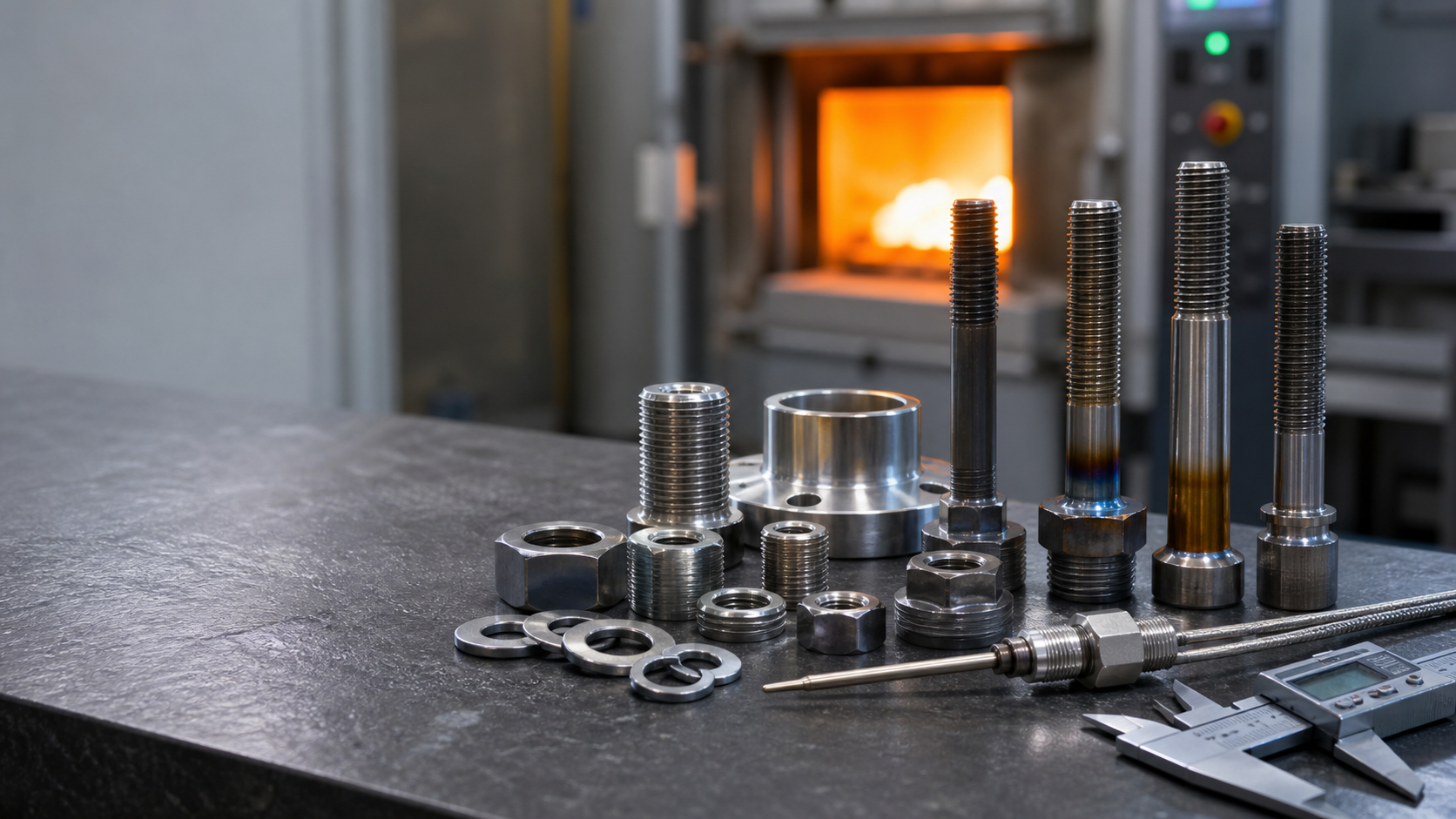
High-temperature service is hard on fasteners and mechanical components because heat changes almost everything that makes a metal reliable. Tensile strength drops, creep becomes more important than short-term yield strength, oxidation accelerates, and a bolt that looked oversized at room temperature can relax after repeated thermal cycles. For this reason, choosing a material for high-temperature applications should never be based on a single maximum temperature number. A better question is: what load, atmosphere, thermal cycle, mating material, and inspection schedule will the part actually see? What makes a fastener material suitable for high-temperature service? In practical engineering work, a heat-resistant fastener or machined component is expected to hold geometry and clamping force while exposed to elevated temperature for long periods. The most important properties are high-temperature strength, creep resistance, oxidation resistance, thermal fatigue resistance, corrosion behavior in the service environment, and dimensional stability after heat treatment. Short-term tensile strength is still useful, but it can be misleading. In furnace hardware, exhaust systems, petrochemical equipment, turbines, heat exchangers, and power generation assemblies, failures often come from creep, stress relaxation, scaling, galling, or thermal fatigue rather than a simple one-time overload. Common material families used in high-temperature fasteners and components 1. Austenitic stainless steels: practical and widely available Grades such as 304, 316, 321, 347, and 310 stainless steel are often used where moderate heat resistance, corrosion resistance, and availability matter. 304 and 316 are easy to source and machine, but they are not the best choice for sustained high load at high temperature. Stabilized grades such as 321 and 347 can offer better resistance to intergranular corrosion after heating because titanium or niobium helps tie up carbon. 310 stainless steel is frequently considered for oxidizing environments because of its higher chromium and nickel content. It is a sensible option for furnace…
2026-06-03
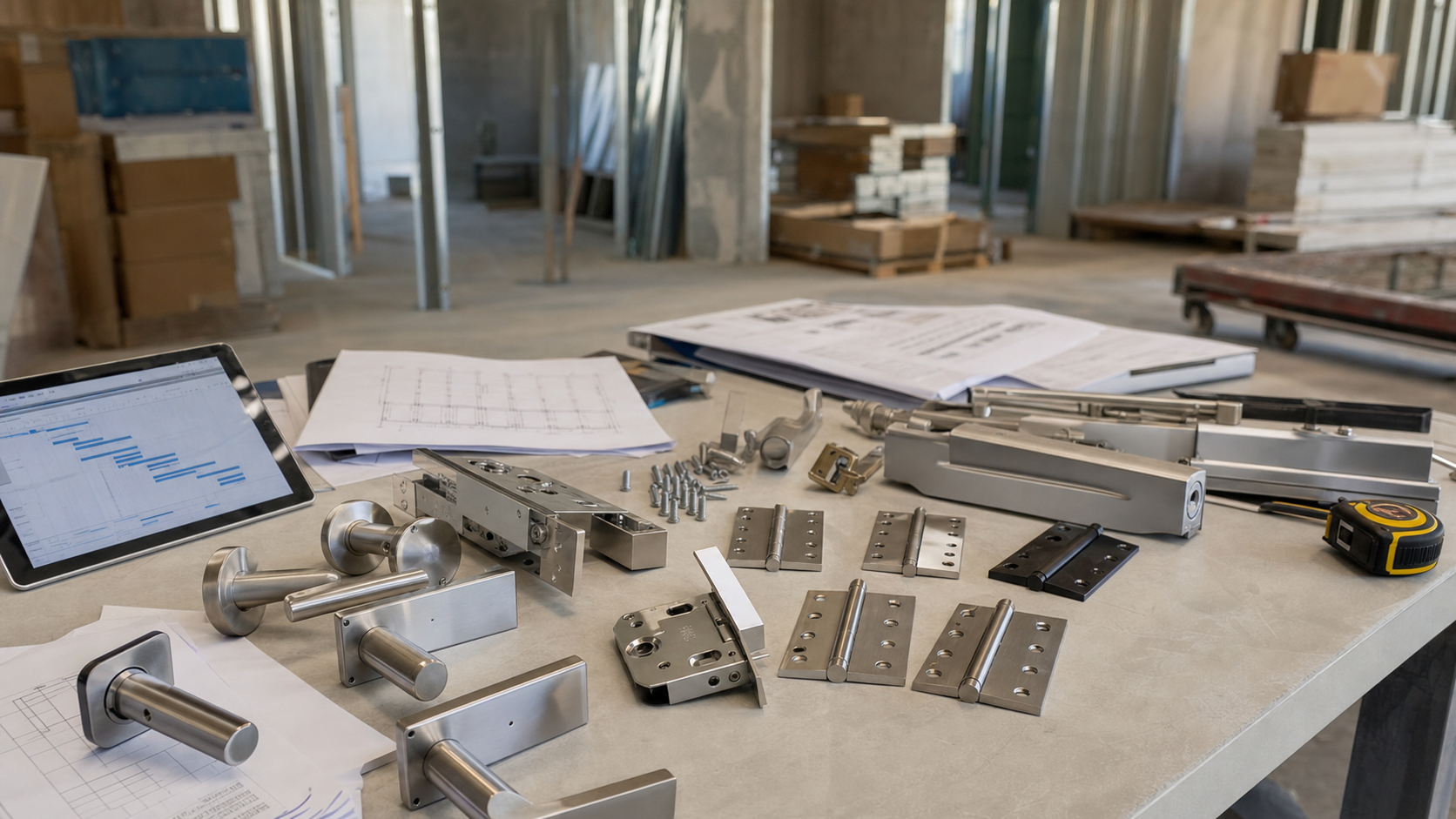
Choosing architectural hardware is rarely just a line item on a bill of materials. For contractors, the right hinges, locks, handles, door closers, pulls, fasteners, and railing fittings can protect the schedule, reduce callbacks, and keep the finished building working as specified after handover. The challenge is that hardware decisions are often made under pressure. Drawings are still being revised, door schedules may be incomplete, and the purchasing team is comparing quotes that do not always describe the same grade, finish, material, or testing standard. A low unit price can look attractive until a hinge corrodes near a coastal entrance, a door closer fails inspection, or a replacement part is unavailable during the final week of the project. This buying guide looks at ten factors every contractor should check before placing an order for architectural hardware. It is written for real project conditions: tight timelines, changing site requirements, multiple trades, and the need to balance quality with cost control. 1. Start with the application, not the catalog Before comparing product photos or prices, define where and how the hardware will be used. A lever handle for a hotel room, a hinge for a fire-rated stairwell door, a pull handle for a shopping mall entrance, and a stainless steel fitting for a coastal exterior all face different loads, regulations, and exposure conditions. Contractors should confirm the door type, opening direction, frame material, expected traffic level, indoor or outdoor exposure, security requirement, and any special user needs such as accessibility or hands-free operation. When the application is clear, it becomes easier to reject unsuitable options early instead of discovering the mismatch during installation. 2. Match material grade to the environment Material choice has a direct effect on service life. For interior dry areas, standard zinc alloy, brass, aluminum, or common stainless steel…

2026-06-03
Commercial buildings ask more from architectural hardware than a private residence ever will. A door handle in an office tower may be touched thousands of times a week. A railing bracket in a shopping mall has to look clean while quietly resisting impact, cleaning chemicals, humidity, and daily wear. In hotels, hospitals, schools, airports, factories, and public buildings, hardware is not just a finishing detail. It is part of the building’s safety, accessibility, maintenance cost, and long-term appearance. That is why stainless steel remains one of the most widely specified materials for commercial architectural hardware. It offers a practical balance of corrosion resistance, strength, hygiene, fire performance, and design flexibility. The best product choice still depends on the building environment. Indoor dry areas may use 304 stainless steel successfully for many years, while coastal sites, swimming pool areas, food facilities, and chemical-exposed environments often require 316, duplex stainless steel, or carefully selected surface treatments. Below are ten stainless steel architectural hardware products commonly used in commercial buildings, with practical notes on where they are used and what buyers, contractors, and designers should check before specifying them. 1. Stainless Steel Door Pull Handles Door pull handles are among the most visible pieces of architectural hardware in any commercial entrance. They are used on glass doors, timber doors, aluminum-framed doors, and stainless steel doors in offices, hotels, retail stores, schools, and public buildings. For commercial use, the handle should be judged by more than shape. Tube wall thickness, welded joint quality, mounting method, grip clearance, and finish consistency all affect performance. Back-to-back pull handles on glass doors need reliable fixing kits and properly sized gaskets to prevent glass stress. For high-traffic entrances, brushed satin stainless steel is often more forgiving than mirror polish because small scratches are less obvious. 2. Stainless Steel…
2026-06-03
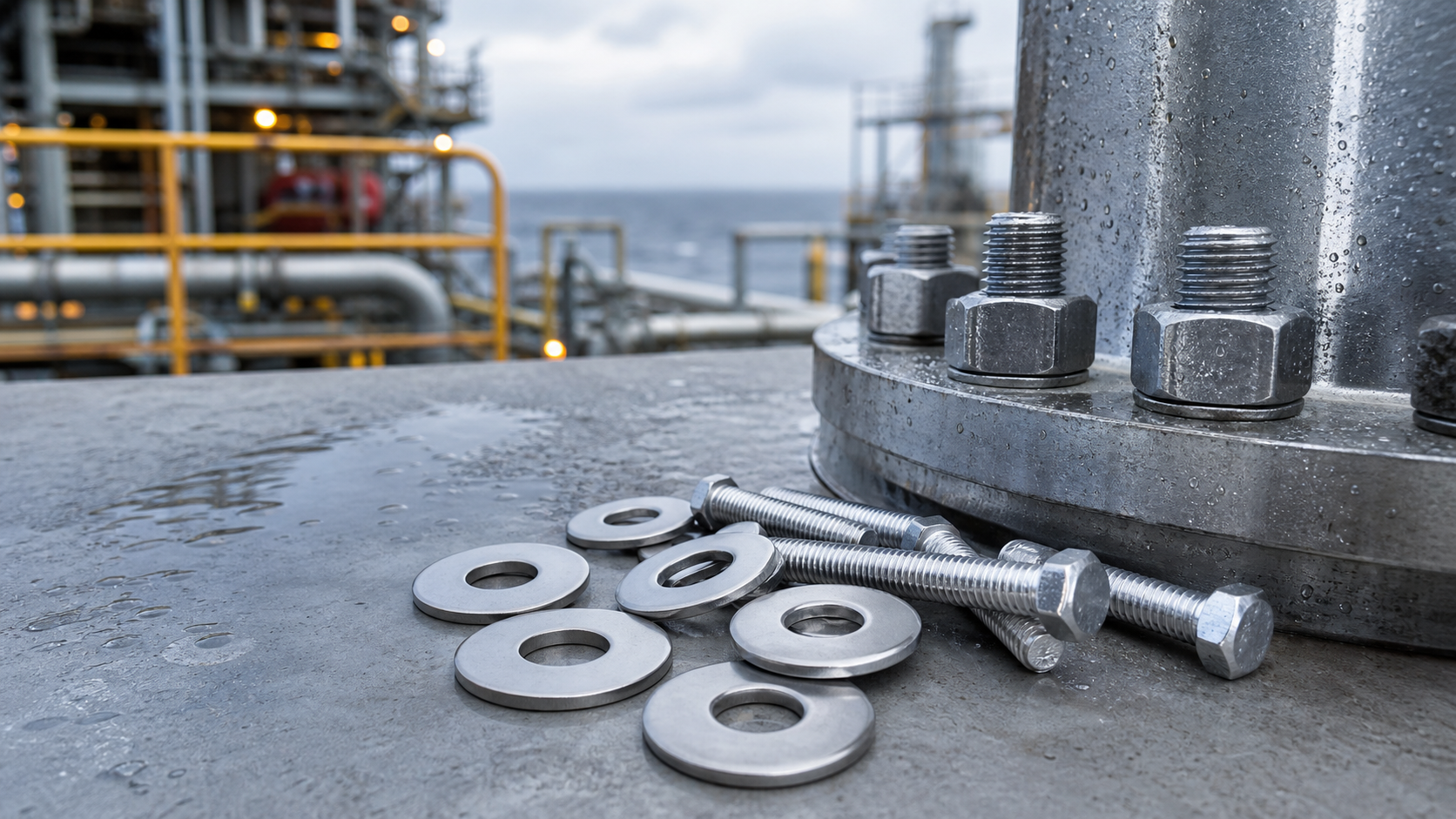
In harsh industrial environments, a washer is never just a thin ring of metal. It is a load-distribution surface, a spacing element, a seal-support component, and often the small part that protects a much more expensive bolted assembly from premature failure. When equipment is exposed to salt spray, chemicals, heat, vibration, moisture, and constant maintenance cycles, stainless steel washers become essential because they help keep fastening systems stable, clean, and corrosion resistant over time. For manufacturers, EPC contractors, maintenance teams, and OEM buyers, the value of stainless steel washers is not only in their material strength. Their real value is in reliability: fewer seized fasteners, more predictable clamp load, better resistance to environmental attack, and lower risk of unplanned downtime. Harsh environments attack the whole fastening system Industrial fasteners rarely fail because of one simple cause. Failure usually comes from a combination of corrosion, surface damage, vibration, thermal cycling, and poor load distribution. A carbon steel washer may look acceptable at installation, but in wet, marine, chemical, or high-temperature service it can become the weak point in the joint. Rust expansion, pitting, and surface roughness can reduce contact quality and make later disassembly difficult. Stainless steel washers are designed to resist these conditions. Grades such as 304 stainless steel provide good general corrosion resistance, while 316 stainless steel adds molybdenum for improved resistance to chlorides and marine atmospheres. In more aggressive environments, duplex stainless steels or higher alloy grades may be selected for increased strength and pitting resistance. They distribute load and protect mating surfaces The most immediate function of a washer is to spread the load from the bolt head or nut over a larger area. In industrial machinery, pumps, valves, structural brackets, marine hardware, and flange connections, this helps prevent localized indentation, galling, or deformation of the mating…
2026-05-28
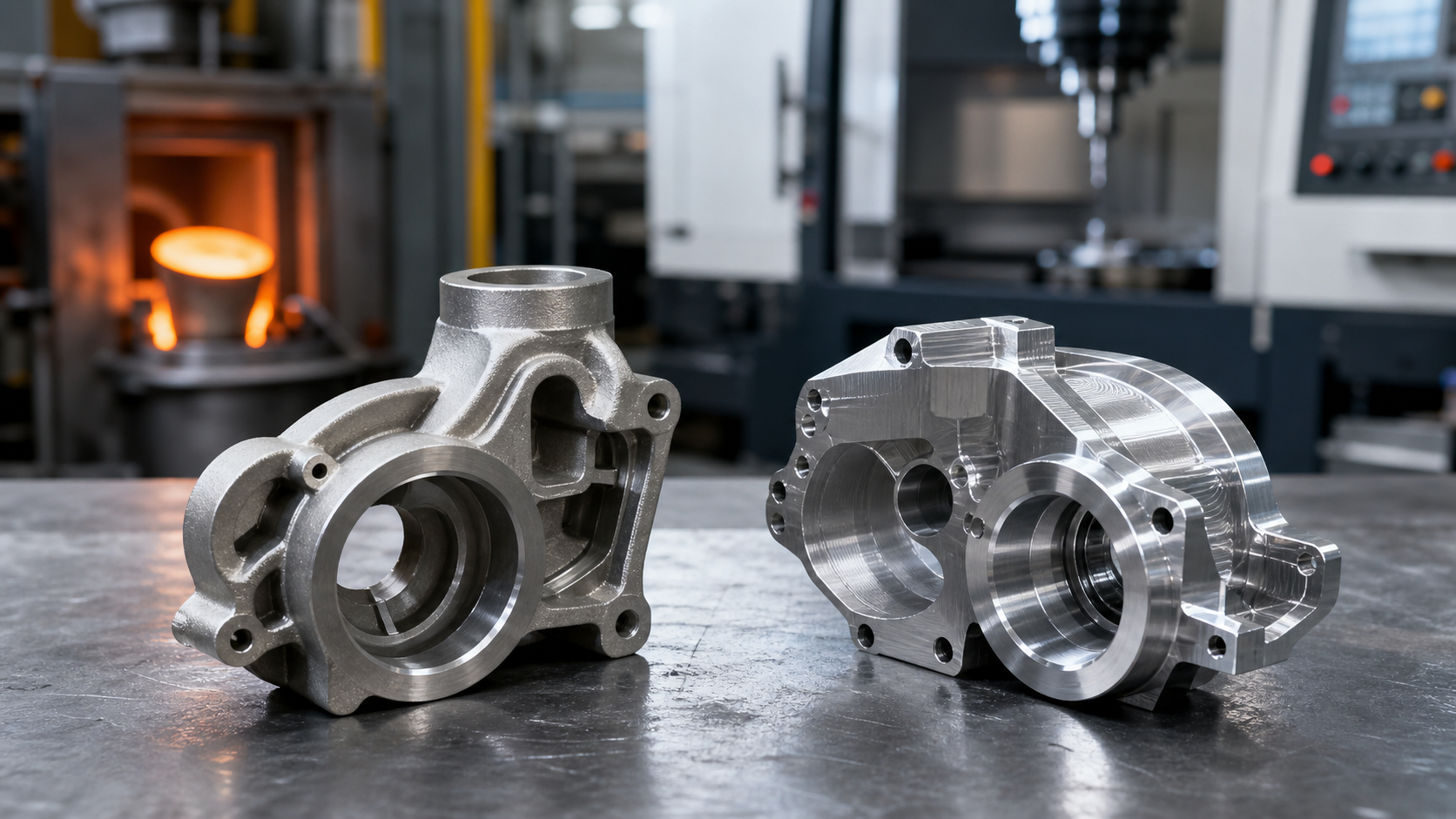
When a metal part becomes difficult to make, the manufacturing decision usually narrows to two strong options: investment casting and CNC machining. Both can produce reliable, high-performance components. Both are used for stainless steel, carbon steel, alloy steel, aluminum, brass, and specialty alloys. And both can support demanding applications in pumps, valves, marine hardware, construction hardware, machinery, and custom industrial assemblies.The better choice depends less on which process is “more advanced” and more on the shape of the part, annual quantity, tolerance requirements, surface finish, material, and how much post-processing the design can tolerate.This guide compares investment casting vs CNC machining from a practical engineering and sourcing point of view, especially for complex metal parts where cost, repeatability, and design freedom all matter. What Is Investment Casting? Investment casting, also called lost wax casting, is a precision casting process used to produce metal parts with complex geometry. A wax pattern is made, assembled into a tree, coated with ceramic shell, melted out, and then filled with molten metal. After solidification, the ceramic shell is removed and the castings are cut, cleaned, heat treated, machined where needed, and inspected.The biggest strength of investment casting is shape freedom. It can create internal contours, curved surfaces, ribs, bosses, thin walls, and blended transitions that would be expensive or impossible to machine from solid bar stock. For complex parts, it often produces a near-net-shape blank, leaving only critical surfaces for secondary CNC machining. What Is CNC Machining? CNC machining removes material from a solid block, bar, forging, casting, or extrusion using computer-controlled cutting tools. Common CNC processes include milling, turning, drilling, tapping, grinding, and multi-axis machining.The biggest strength of CNC machining is dimensional control. It is excellent for tight tolerances, flatness, concentricity, threads, precision holes, sealing surfaces, and parts that need clean, repeatable edges….
2026-05-28
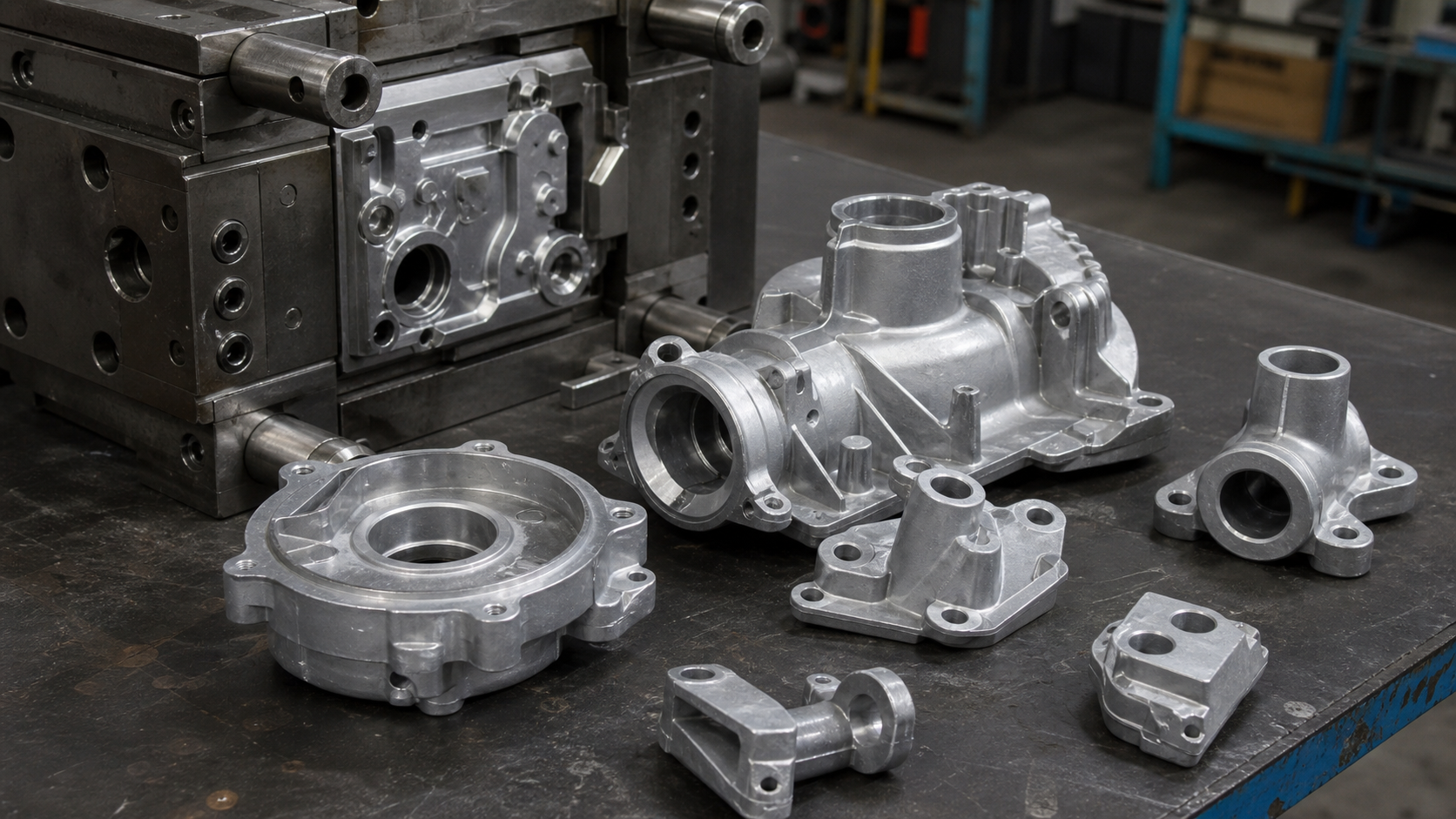
A practical guide to Zamak 5 zinc alloy, including composition, die casting benefits, common uses, design notes, and material selection tips.
2026-05-26
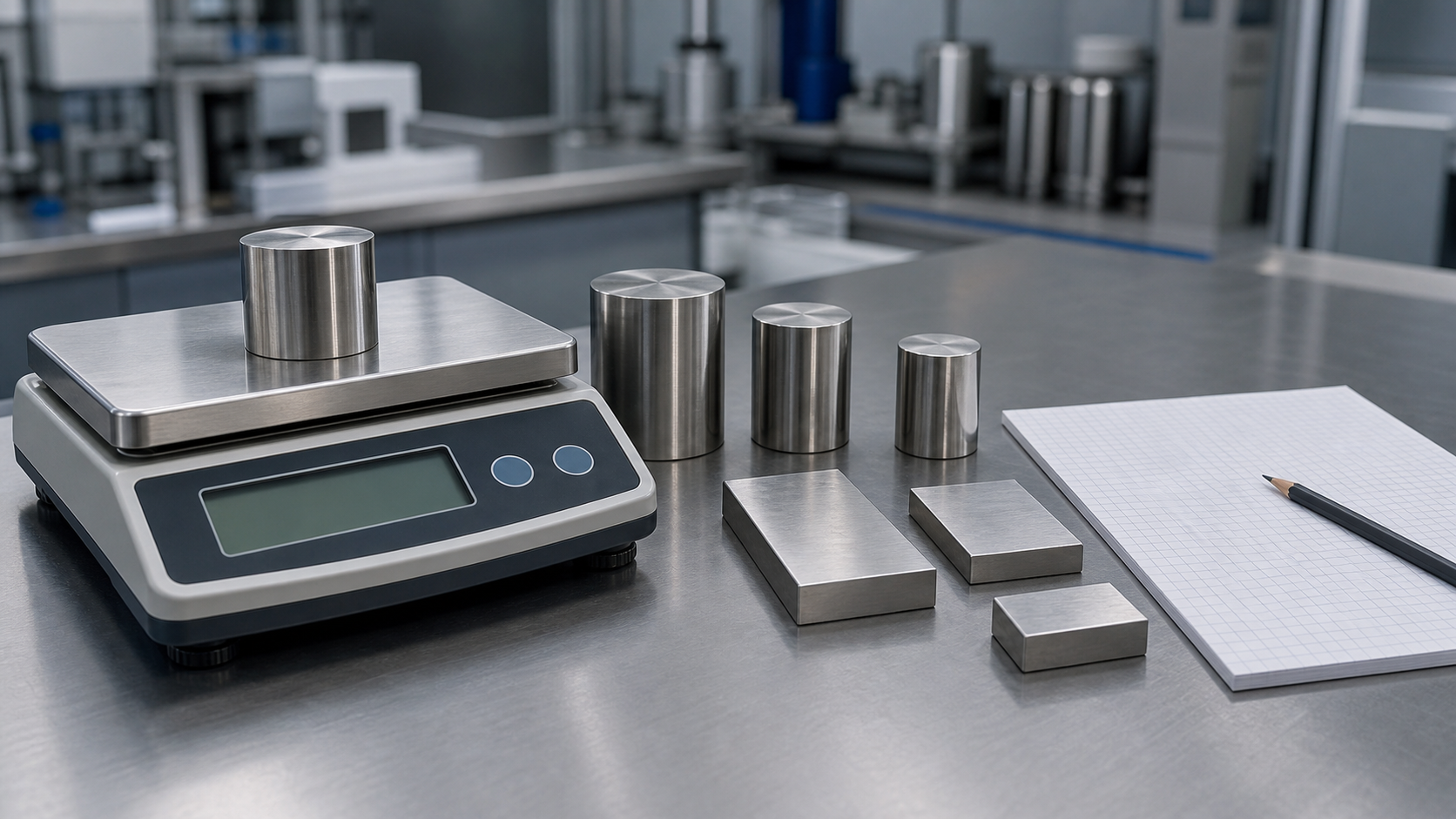
Density is one of the quiet variables that shapes every stainless steel project. It turns a drawing into a shipping weight, a casting model into a material quotation, and a tank wall into a lifting requirement. Yet using one generic value for every stainless steel grade can create avoidable errors, especially when quantities are large or weight is commercially important. This guide provides a practical stainless steel density chart, explains why grades differ, and shows how engineers and purchasers can use density correctly for sheet, machined parts and investment cast components. Comparing stainless steel mass starts with defined geometry, a known grade and an appropriate density value. Turn a Weight Estimate into a Component Quote For a custom stainless steel part, estimated weight is only one input to pricing. Tooling, machining allowance, tolerances, finish and order quantity also affect the manufacturing cost. Send a 2D drawing and 3D model with the required grade and quantity to compare investment casting and CNC machining for your geometry. Request a custom component quotation and include whether your weight target is for the casting blank or the finished part. What Is the Density of Stainless Steel? Most stainless steels have a density between approximately 7.7 and 8.0 g/cm³, or 7,700 to 8,000 kg/m³. Austenitic grades such as 304 and 316 are generally at the upper end of that range, while ferritic and martensitic grades are usually lighter. Duplex grades normally sit between the two. Density is mass divided by volume. It should not be confused with strength, hardness or corrosion resistance. A lower-density grade is not automatically a better lightweight material: its mechanical properties, corrosion performance, fabrication method and life-cycle cost still control material selection. Stainless Steel Density Chart by Grade The following figures are typical nominal values at or near room temperature (about…
2026-05-26
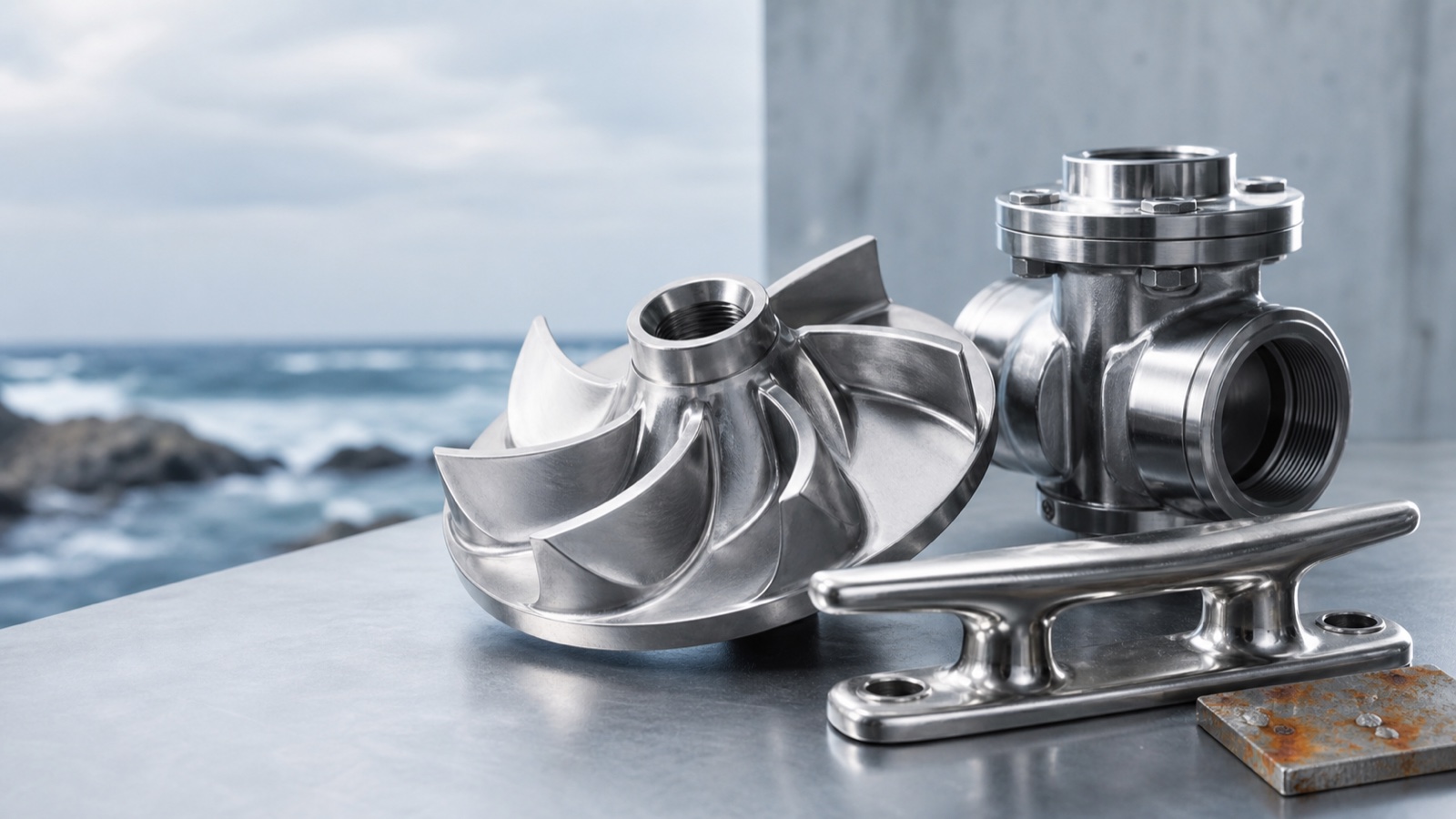
Stainless steel is corrosion-resistant, not corrosion-proof. Learn why it rusts, compare 304, 316L and duplex grades by environment, and prevent corrosion failures.
2026-05-25
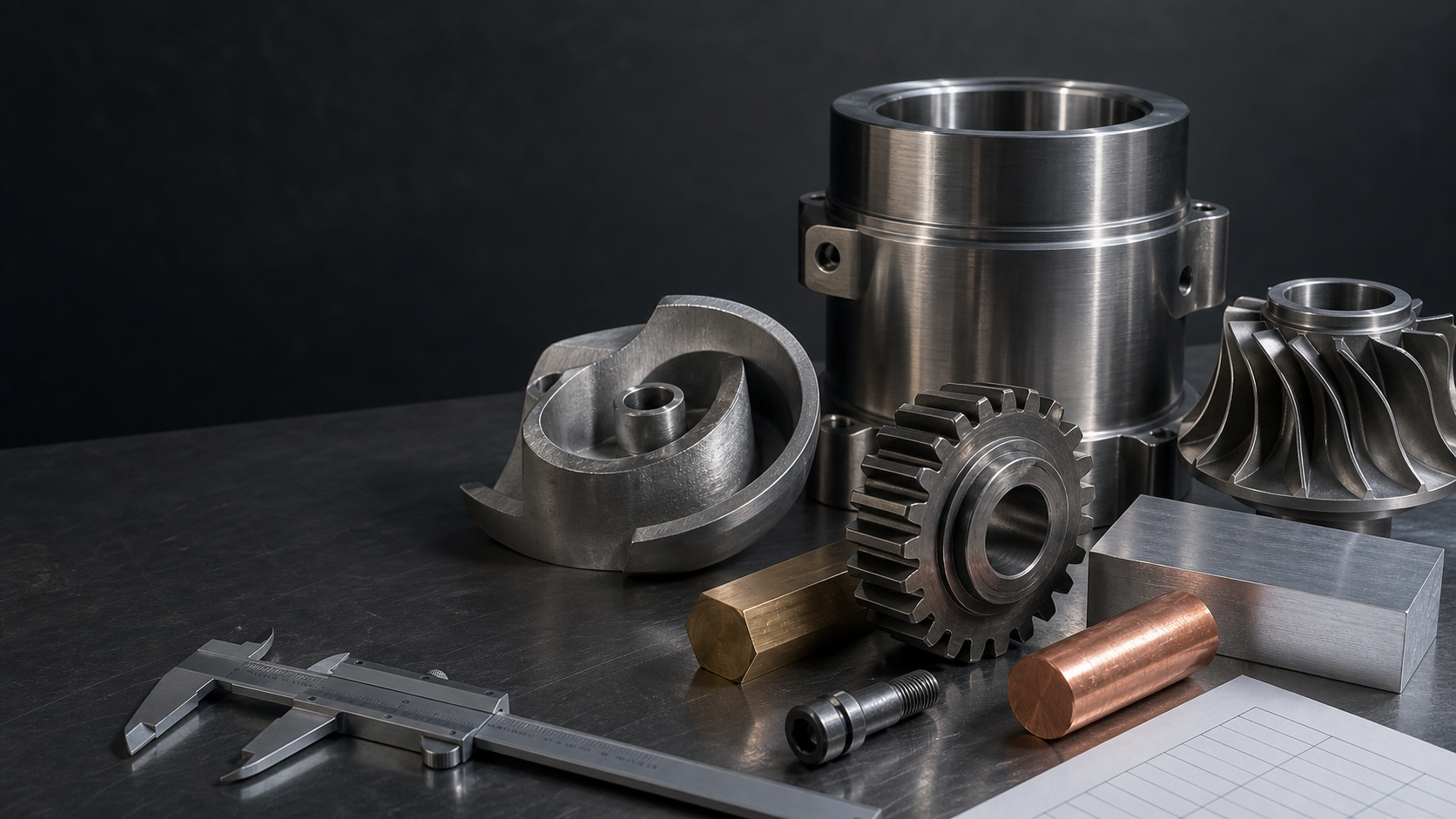
Compare common metal material grades across GB/T, ASTM/UNS/SAE, EN/DIN and JIS for stainless steel, alloy steel, aluminum, copper, titanium and nickel alloys.
2026-05-25
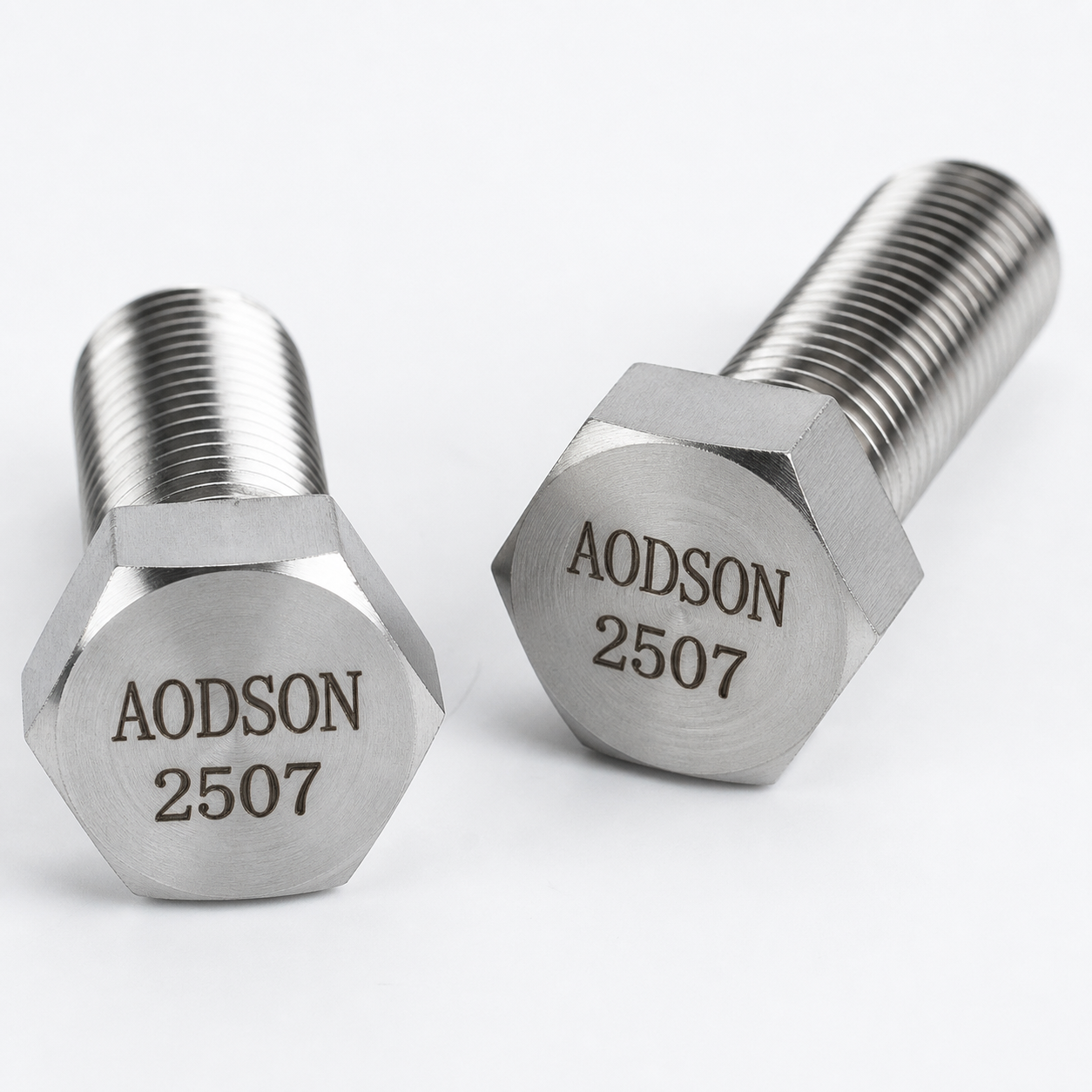
Compare duplex stainless steel grades with 304 and 316L for corrosion, strength and wear-related service. Learn when 2205 or 2507 is the better material choice.