


Material Quick Reference
Zamak 5 composition and use at a glance
Zamak 5 is a zinc-aluminum-copper-magnesium alloy developed for high-pressure die casting. Compared with Zamak 3, its higher copper content generally provides greater hardness, strength and wear resistance, with a modest reduction in ductility.
Confirm the governing alloy standard, supplier certificate and design conditions before final material approval.
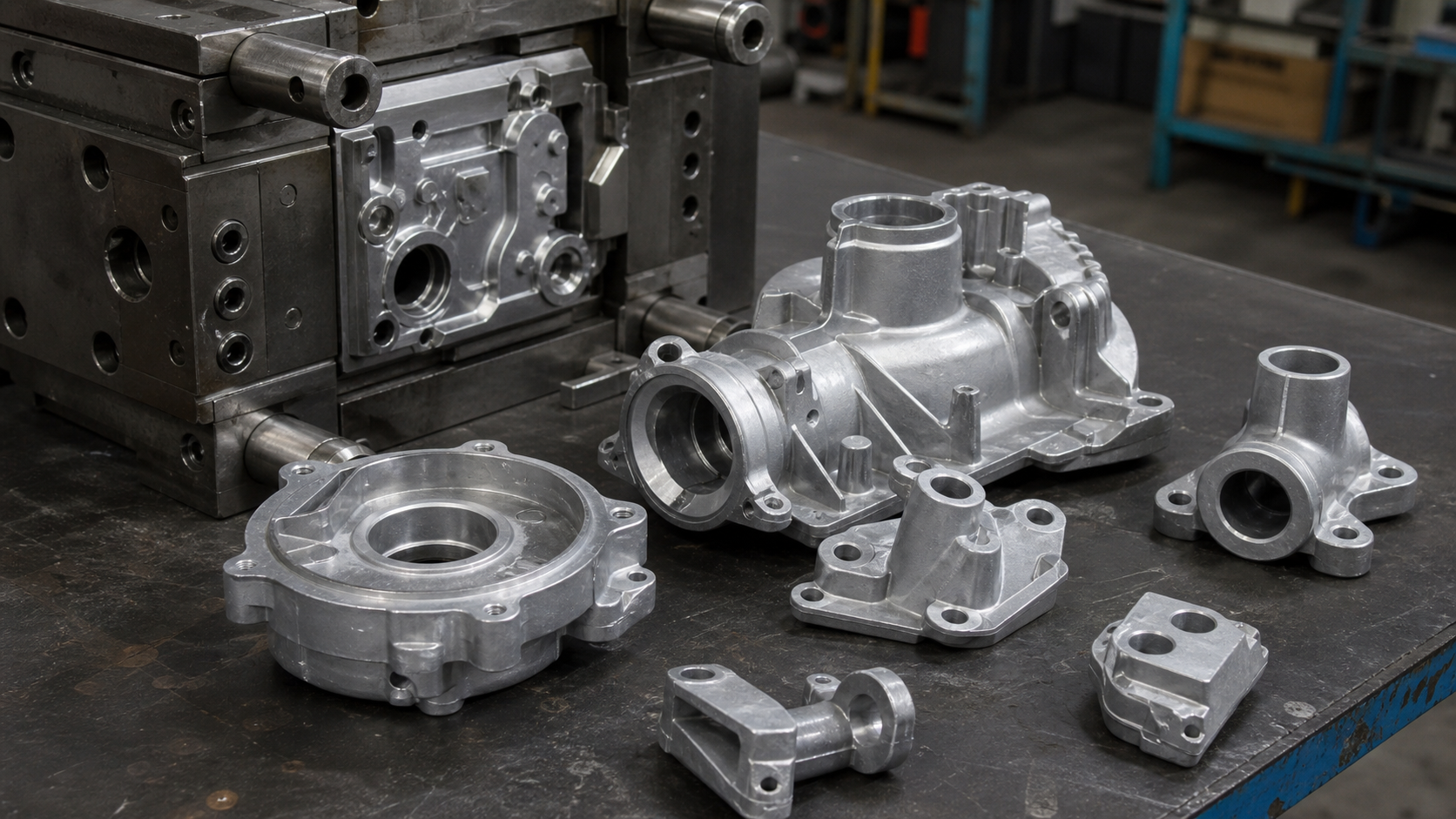
Zamak 5 is one of the zinc alloys most often chosen when a die cast part needs a little more strength and wear resistance than standard Zamak 3, while still keeping the casting process fast and economical. It is used for compact, detailed metal components such as hardware fittings, automotive brackets, lock parts, appliance components, mechanical housings, and decorative parts that need a clean surface finish.
For engineers and buyers, the important point is simple: Zamak 5 is not a generic zinc material. It is a controlled zinc-aluminum-copper-magnesium alloy designed for high-pressure die casting. When the part design, tooling, and surface finishing are handled correctly, it can produce precise parts with thin walls, sharp details, and stable dimensions at high production volumes.
What Is Zamak 5?
Zamak 5 is a member of the Zamak family of zinc die casting alloys. The name comes from the German words for zinc, aluminum, magnesium, and copper: Zink, Aluminium, Magnesium, and Kupfer. Like other Zamak grades, zinc is the base metal, while the alloying elements are added in small, carefully controlled amounts.
A typical Zamak 5 composition is:
- Zinc: balance, usually around 95 percent or more
- Aluminum: about 3.5 to 4.3 percent
- Copper: about 0.75 to 1.25 percent
- Magnesium: about 0.03 to 0.08 percent
The copper addition is what separates Zamak 5 from Zamak 3 in day-to-day material selection. Copper improves hardness, tensile strength, and wear resistance, although it also reduces ductility slightly. That trade-off is often acceptable for functional parts that need a stronger feel, better thread performance, or improved resistance to handling wear.
Key Properties of Zamak 5
Zamak 5 is valued because it combines castability with useful mechanical performance. Depending on the exact standard, supplier data, and casting conditions, typical properties include tensile strength in the range of roughly 320 to 330 MPa, Brinell hardness around 90 HB, good impact strength for a zinc alloy, and excellent dimensional repeatability in die casting.
It also has a relatively low melting temperature compared with aluminum die casting alloys. This reduces thermal stress on the die, supports shorter production cycles, and can help extend tooling life. The alloy flows well into detailed cavities, which makes it suitable for small features, ribs, bosses, logos, and thin sections that would be more difficult or costly to machine from solid bar stock.
Why Zamak 5 Works Well for Die Casting
High-pressure die casting is where Zamak 5 shows its value. The molten alloy is injected into a steel die under pressure, then solidifies quickly into a near-net-shape part. Because zinc alloys flow easily and shrink predictably, the process can hold tight tolerances and reduce the need for secondary machining.
For production teams, that means less material waste, shorter cycle times, and repeatable part geometry. For product designers, it opens the door to integrated features: mounting posts, snap-fit details, external textures, ribs, slots, and decorative surfaces can often be included directly in the casting.
The surface finish is another practical advantage. Zamak 5 die castings can be polished, plated, powder coated, painted, chromated, or passivated depending on the final application. This makes the alloy useful for both visible parts and internal mechanical components.
Zamak 5 vs. Zamak 3
Zamak 3 is often considered the default zinc die casting alloy because it offers excellent castability, dimensional stability, and a balanced cost-performance profile. Zamak 5 is chosen when the part needs a step up in strength and hardness.
In practical terms, Zamak 5 may be the better choice for parts that experience repeated contact, moderate loading, or threaded assembly. Examples include mechanical hardware, lock bodies, handles, small brackets, connector housings, hinge components, and fittings. Zamak 3 may still be preferred when maximum ductility, very high dimensional stability, or the lowest material cost is the main concern.
The right choice is not always obvious from the drawing alone. Wall thickness, expected load, finishing method, and assembly process should all be reviewed before selecting the alloy.
Common Applications
Zamak 5 is widely used in industries where small and medium-sized metal parts need strength, detail, and a good surface at scale. Common applications include:
- Building hardware such as handles, lock parts, hinges, and fittings
- Automotive and motorcycle components such as brackets, trim bases, and small housings
- Electrical and appliance parts, including covers, connectors, and control components
- Furniture hardware, decorative parts, and consumer product components
- Mechanical accessories where cast-in threads, bosses, or mounting details reduce machining
Because Zamak 5 is denser than aluminum, it gives parts a solid, substantial feel. This can be useful for hardware and consumer products where weight communicates durability. For lightweight structural parts, however, aluminum or magnesium may be more suitable.
Design Notes for Better Zamak 5 Castings
A good Zamak 5 part starts with die casting-friendly design. Uniform wall thickness helps reduce sink marks and internal stress. Draft angles support clean ejection from the die. Fillets reduce stress concentration and improve metal flow. Ribs and bosses should be proportioned carefully so they strengthen the part without creating heavy sections that cool unevenly.
Surface finishing should also be considered early. If a part will be chrome plated, painted, or powder coated, the designer should avoid sharp transitions and deep blind pockets where finishing quality may be harder to control. For parts that need close-tolerance holes or critical sealing surfaces, secondary CNC machining may still be required after casting.
Limitations to Keep in Mind
Zamak 5 is strong for a zinc die casting alloy, but it is not a replacement for steel, stainless steel, or high-strength aluminum in every situation. It is generally best for moderate mechanical loads rather than high-temperature or high-fatigue structural environments. Zinc alloys also have lower service-temperature capability than many aluminum alloys, so the working environment should be reviewed if the part will see sustained heat.
Corrosion performance depends heavily on environment and finishing. Indoor hardware and protected mechanical parts are usually good candidates. Outdoor or marine applications may require plating, coating, or a different material depending on exposure, salt spray requirements, and service life expectations.
When Should You Choose Zamak 5?
Choose Zamak 5 when the project needs a precise die cast part with better hardness and strength than Zamak 3, especially when the component includes fine details, threaded features, decorative surfaces, or medium-volume to high-volume production requirements. It is a practical option when machining the full part from billet would be too expensive, but plastic does not provide enough stiffness, weight, or surface quality.
For many industrial buyers, the most reliable approach is to discuss the drawing with a die casting supplier before finalizing the material. Aodson can review the wall thickness, tolerance targets, finishing requirements, and working environment, then suggest whether Zamak 5, another zinc alloy, aluminum die casting, stainless steel casting, or CNC machining is the better route.
Final Thoughts
Zamak 5 remains popular because it solves a very real manufacturing problem: how to make detailed, strong, clean-looking metal parts efficiently. Its copper content gives it a useful improvement in hardness and strength, while the zinc base keeps the die casting process fast and accurate.
If your part needs tight dimensions, a high-quality surface, and reliable production economics, Zamak 5 zinc alloy die casting is worth considering early in the design stage.