



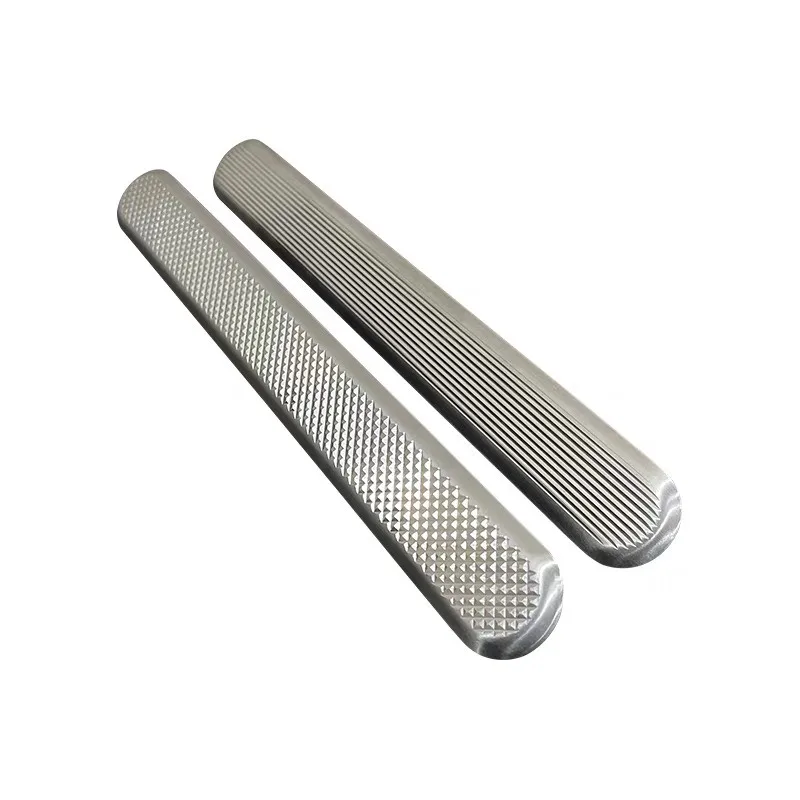
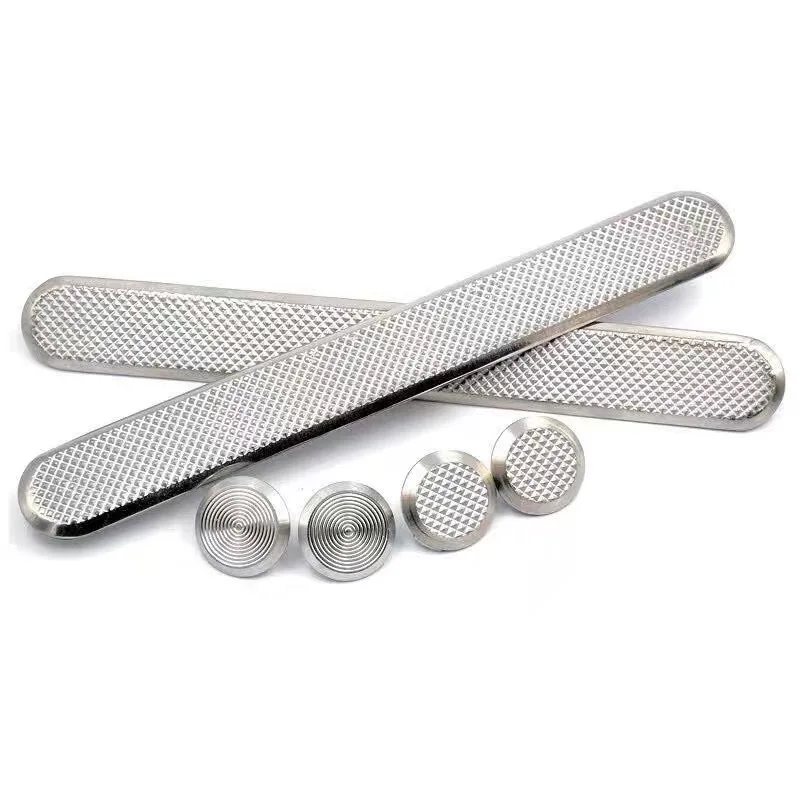
AODSON manufactures custom stainless steel tactile indicators for accessible walking surfaces and architectural wayfinding systems. The range includes directional guidance strips and round warning studs with project-specific dimensions, top textures, finishes and fixing details.
Products are made against approved drawings or samples. The final indicator profile, spacing and installation layout must be selected according to the applicable accessibility standard and the project designer’s requirements.
Product Specifications and Custom Options
| Product types | Directional tactile strips, warning studs and matching indicator sets |
|---|---|
| Material options | 304 or 316 stainless steel; alternative grades reviewed on request |
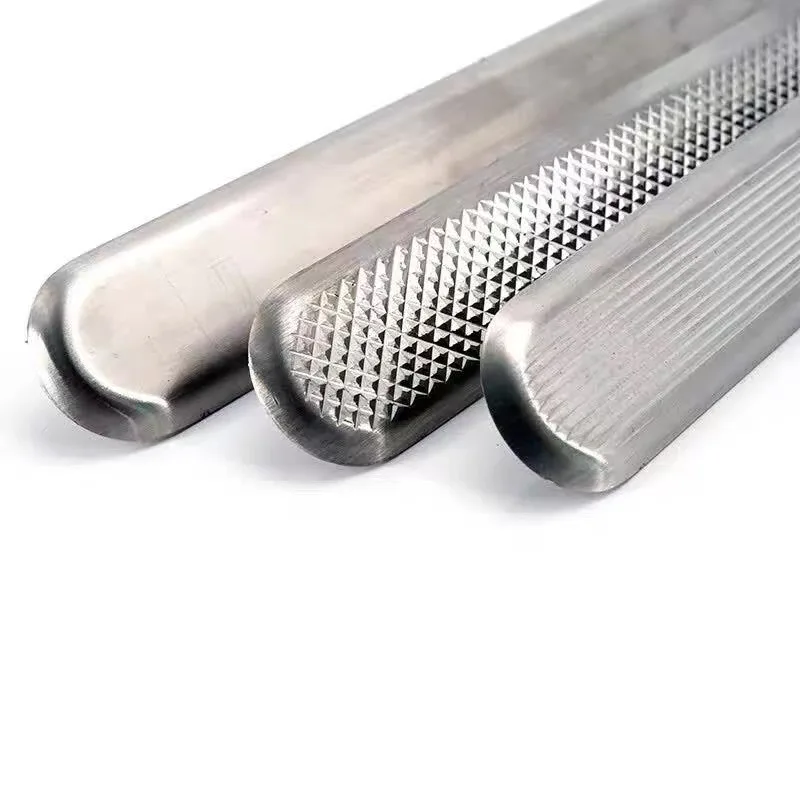
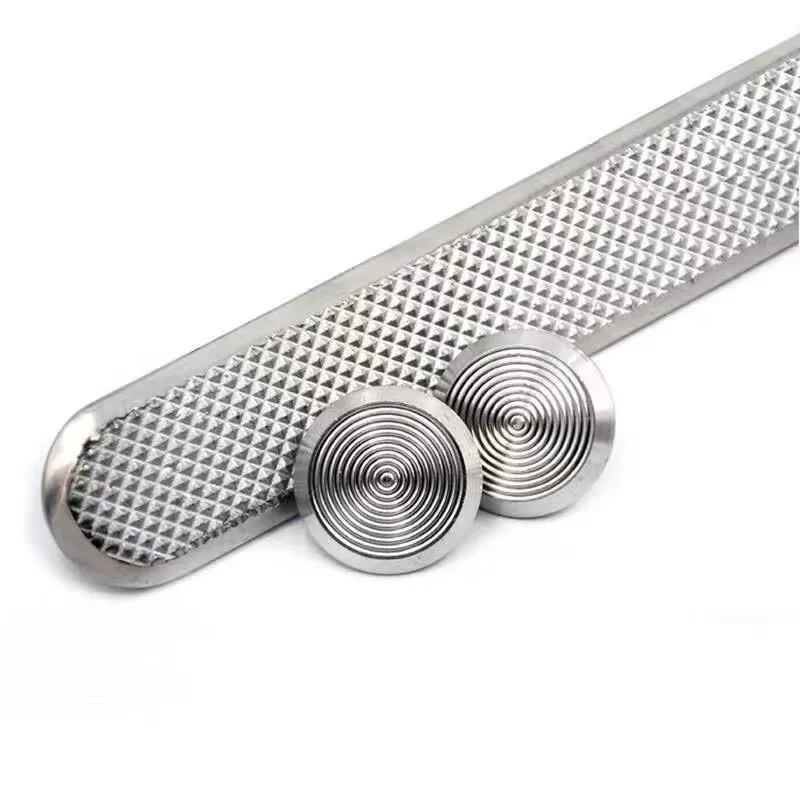
| Top surfaces | Diamond-knurled, longitudinal ribbed, concentric-groove or smooth profiles |
| Finish options | Satin, polished, PVD decorative colours or coated colours subject to sample approval |
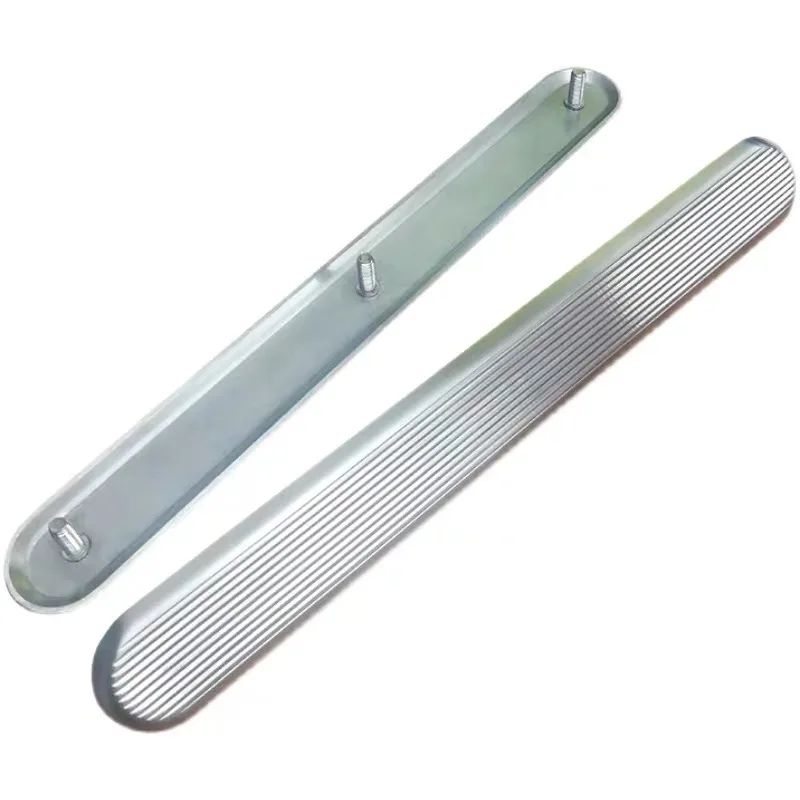
| Fixing options | Threaded stems, pins, screws or adhesive installation according to substrate |
| Dimensions | Length, width, height, diameter, stem size and spacing made to drawing |
| Production route | Forming, stamping, CNC machining and surface finishing selected by geometry and volume |
| Applications | Stations, airports, public buildings, commercial developments and pedestrian routes |
Product Views
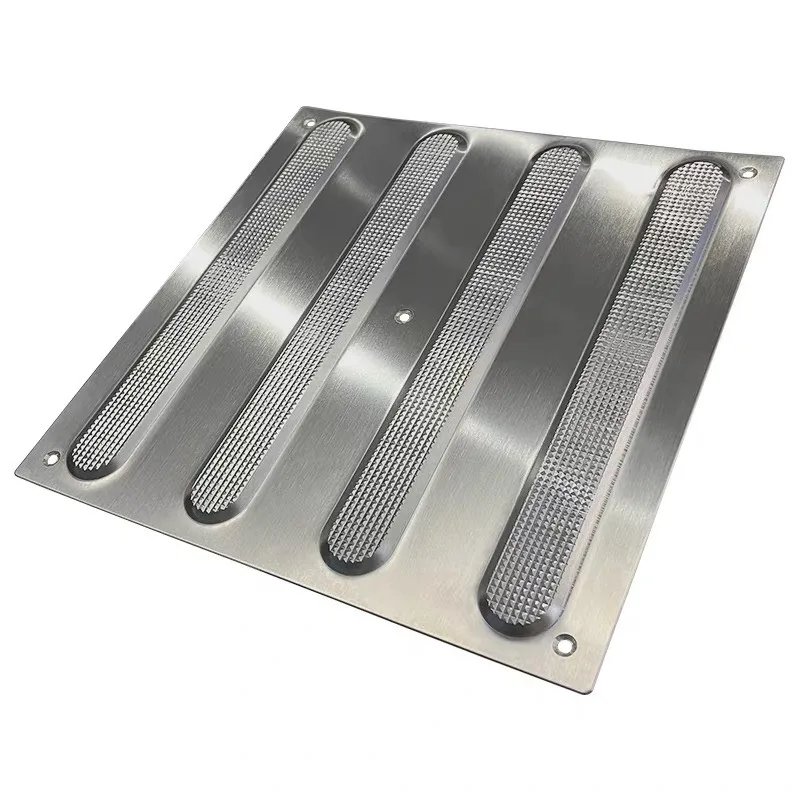
The gallery shows guidance strips with diamond-knurled and ribbed top surfaces, round tactile studs, and rear views of threaded fixing stems. These views illustrate available configurations; final dimensions, textures and mounting details are confirmed on the approved drawing.
Design and Installation Considerations
- Accessibility layout: Indicator type, direction, spacing and coverage must follow the applicable local standard and approved architectural plan.
- Substrate: Specify stone, tile, concrete, timber or metal so the fixing method and stem length can be reviewed.
- Service environment: State whether the installation is indoor, outdoor, coastal or exposed to aggressive cleaning chemicals.
- Slip resistance: When a defined performance level is required, include the test method and acceptance value in the purchase specification.
- Visual contrast: Natural stainless steel, PVD and coated colour options can be evaluated against the required luminance contrast.
Key Features
- Separate directional strips and warning studs for flexible project layouts
- Multiple tactile textures and decorative finish options
- Drawing-based dimensions and fixing interfaces
- Stainless steel construction for architectural and public-access environments
- OEM production for new construction, renovation and replacement work
Typical Applications
- Railway and metro stations
- Airports and transport terminals
- Hospitals, schools and public-service buildings
- Shopping centres, hotels and office developments
- Pedestrian routes, stair approaches, crossings and platform zones
Quality Control and Inspection
Inspection can cover material verification, overall dimensions, strip or stud profile, surface-texture consistency, stem position, finish appearance and fixing-interface dimensions. Project-specific inspection records, material traceability and functional checks can be supplied when stated in the order requirements. Learn more about our quality control process.
OEM Customization and RFQ Requirements
For a production review, send the drawing or target accessibility standard, product type, stainless steel grade, dimensions, top texture, finish, fixing method, quantity and delivery country. Photos of the substrate or an existing approved sample help us evaluate replacement projects. Request a quote with your technical files for confirmation.
Frequently Asked Questions
What is the difference between tactile studs and directional strips?
Warning studs are generally used to identify hazards or decision points, while parallel strips form a directional guidance path. The applicable project standard determines the final layout.
Should I specify 304 or 316 stainless steel?
304 suits many general architectural environments. 316 may be preferred for coastal locations, chloride exposure or demanding cleaning conditions. Material selection should be based on the actual service environment.
Can the dimensions, colour and fixing method be customized?
Yes. Profiles, dimensions, top textures, PVD or coated colours, and fixing interfaces can be reviewed from a drawing or approved sample. Availability depends on geometry, quantity and performance requirements.