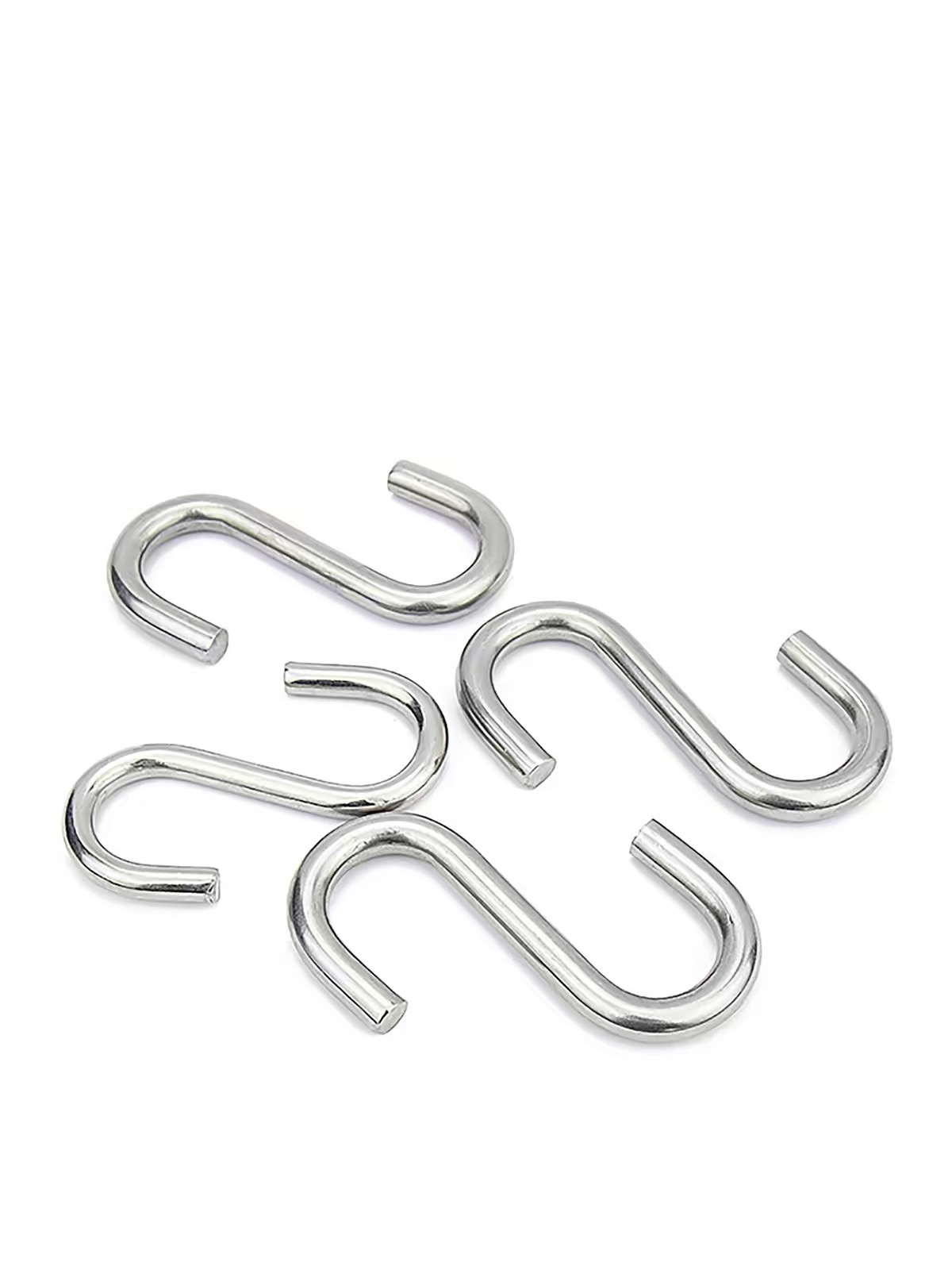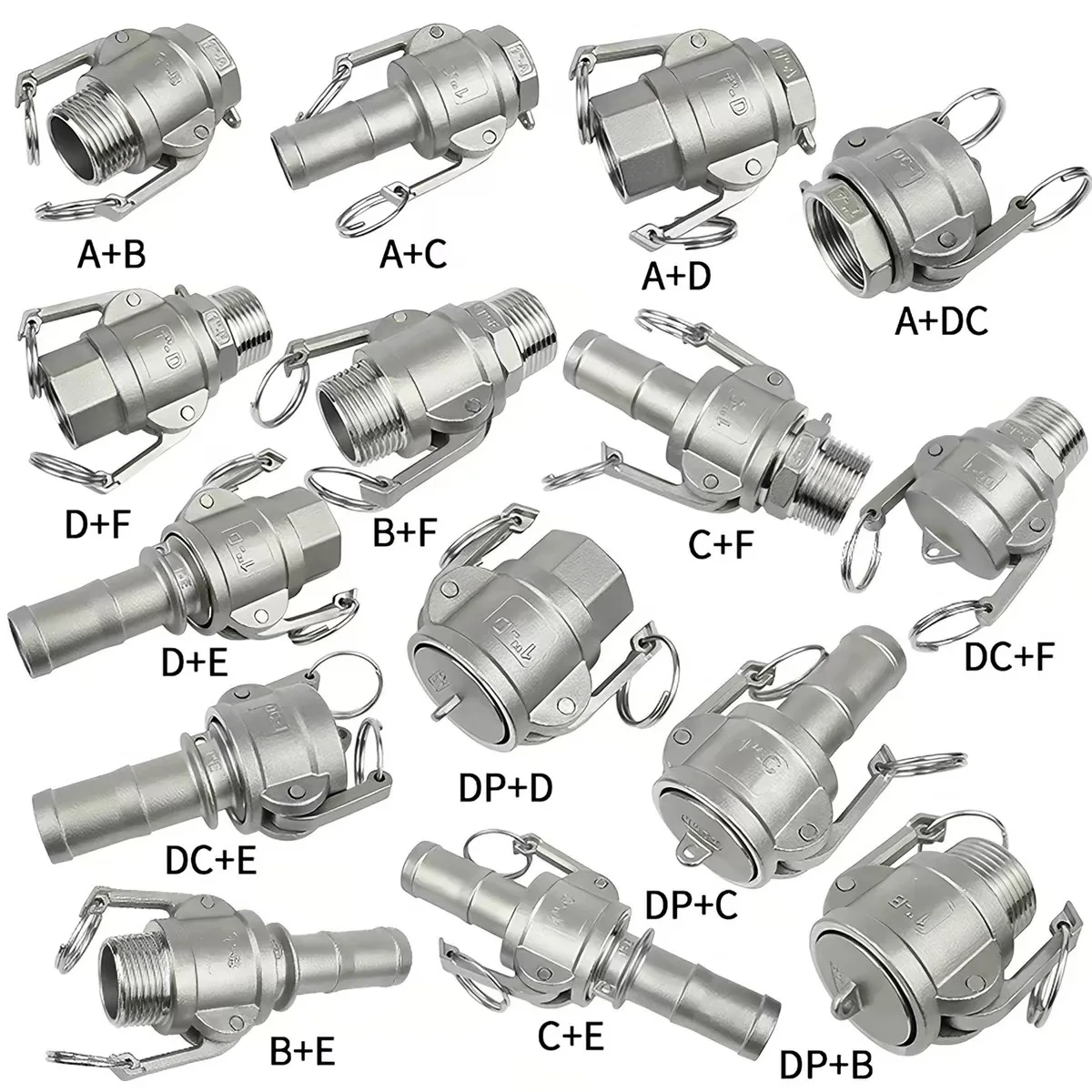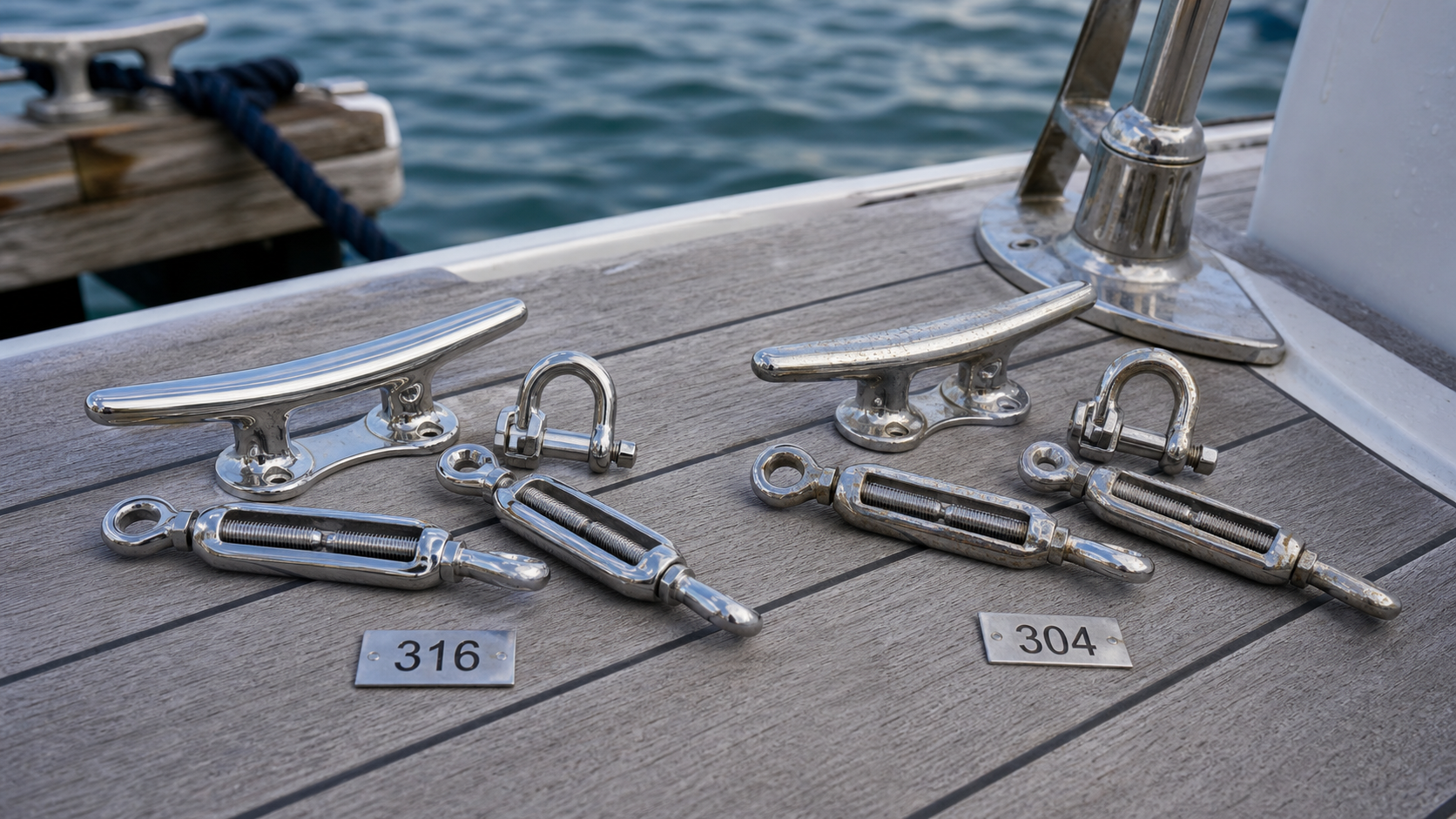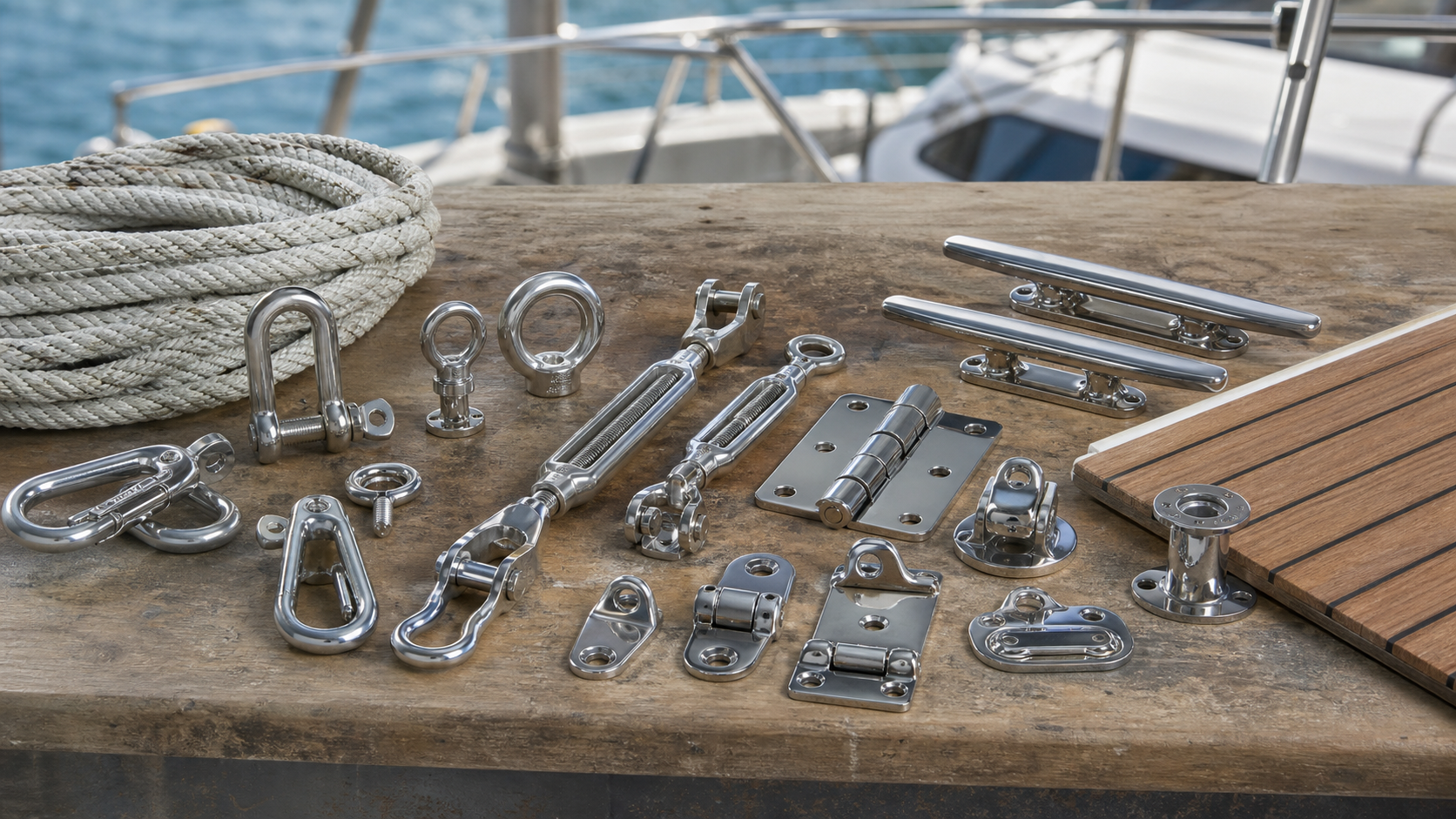




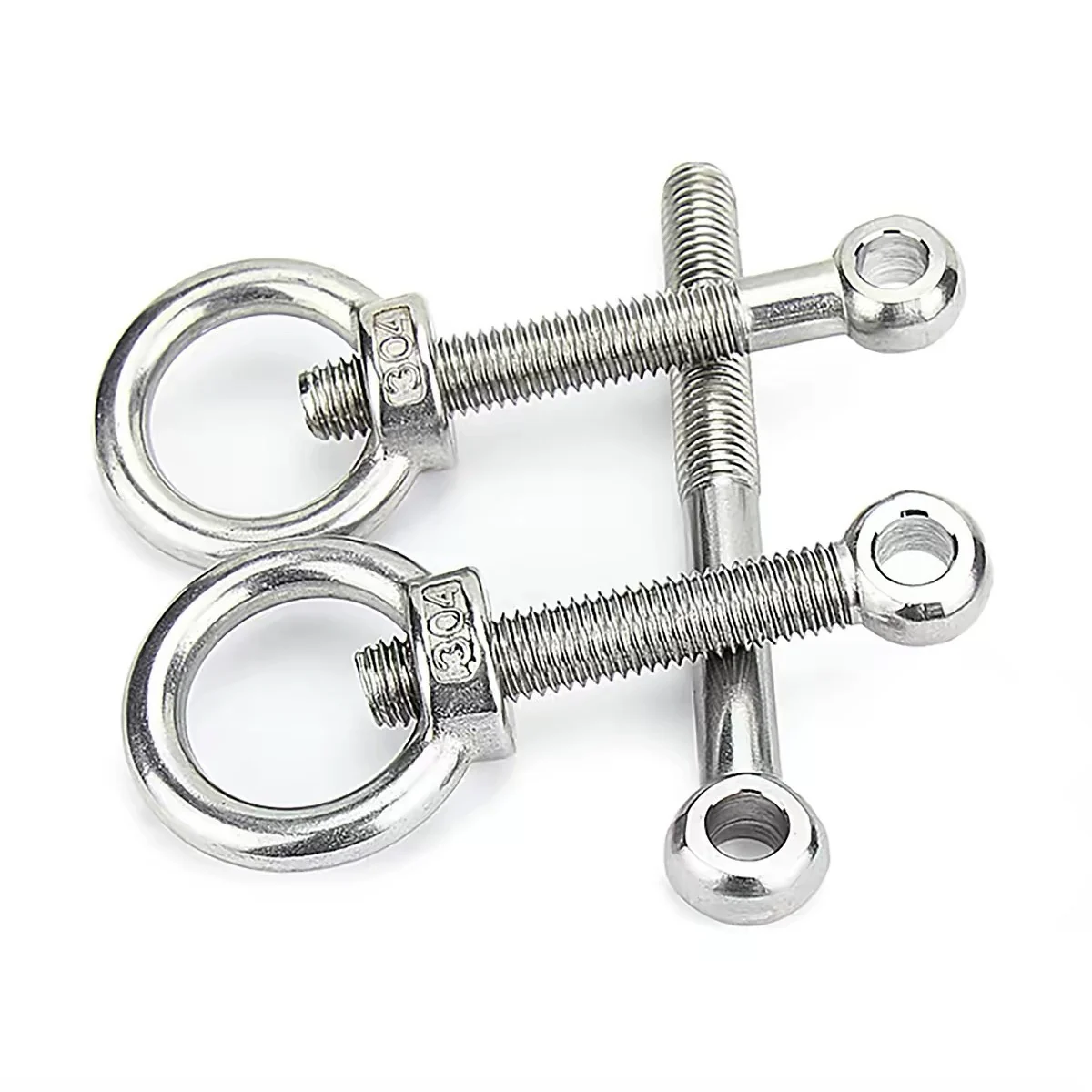
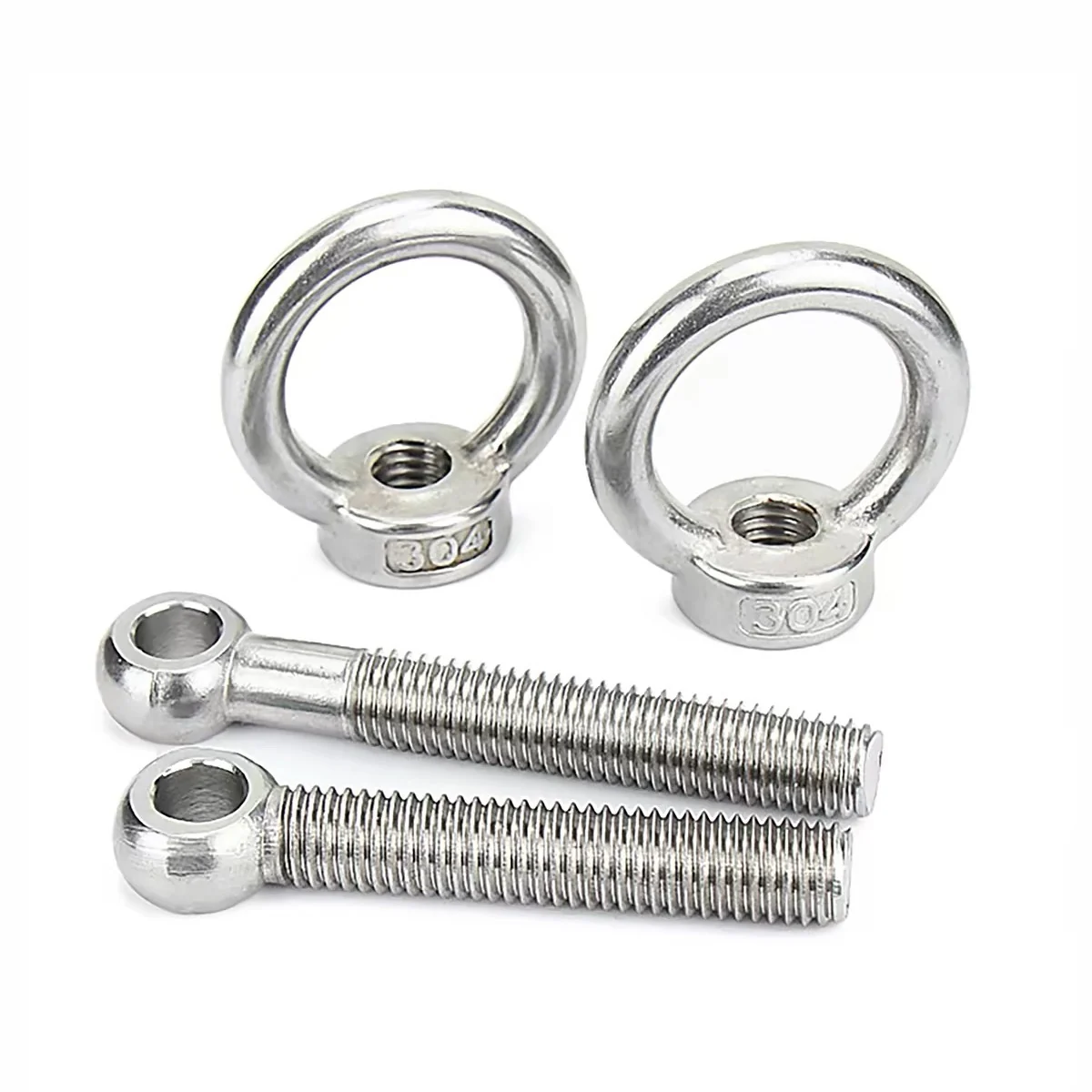
304 stainless steel eye bolts and eye nuts provide a compact threaded connection for adjustable rods, fixtures, gates, guards and custom hardware assemblies. The photographed set combines internally threaded ring nuts with externally threaded eye-ended bolts, allowing OEM buyers to specify the eye geometry, thread engagement and overall length around the application.
Product Overview
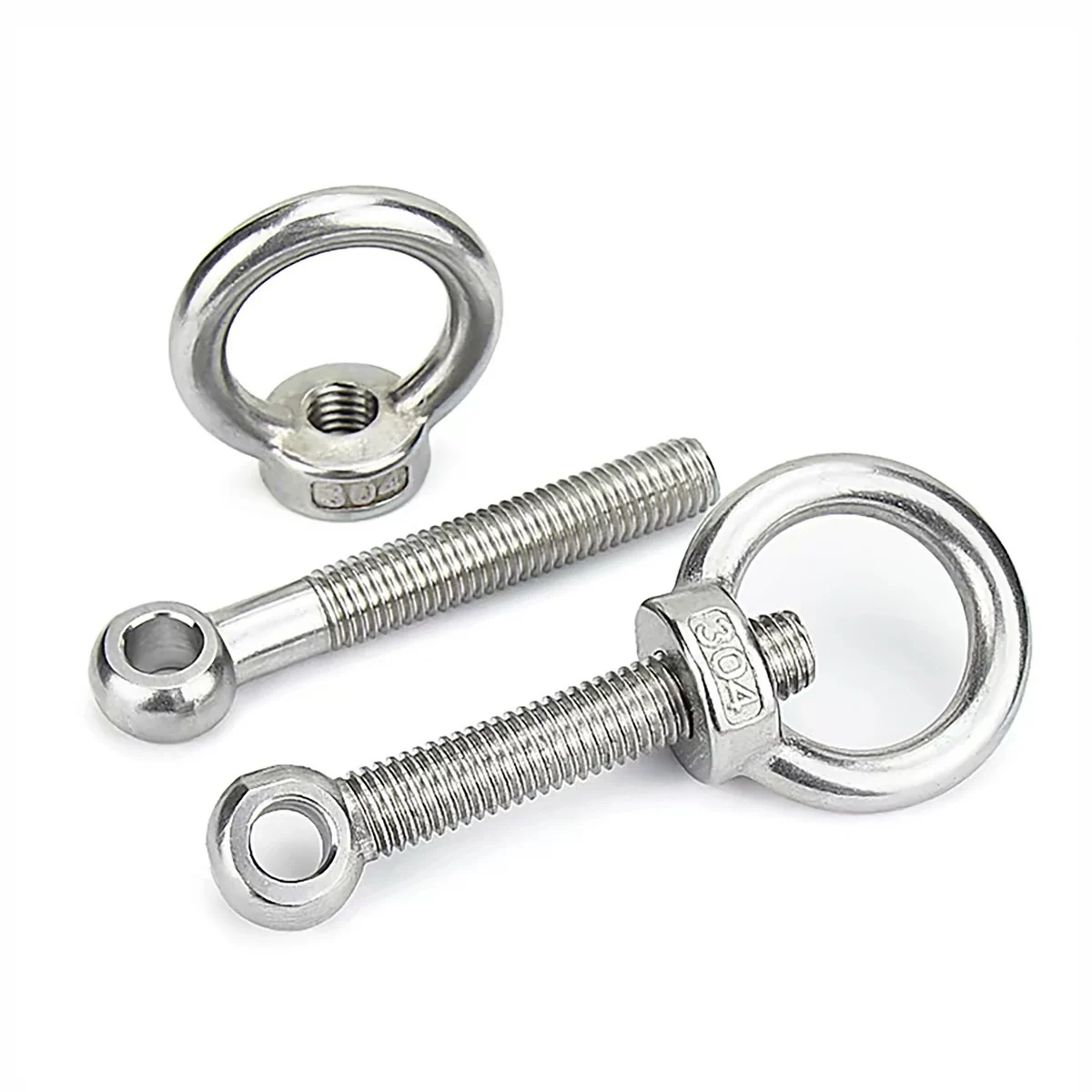
Eye bolts and eye nuts create an accessible connection point at the end of a threaded interface. In the pictured arrangement, the larger ring component has an internal thread, while the mating bolt has a long external thread and a smaller closed eye at the opposite end. The parts can be ordered separately or supplied as a matched assembly.
This geometry is useful where a pin, hook, cable, spring or linkage must connect to a threaded adjustment point. Dimensions are not universal: the thread size, engaged length, eye inside diameter, section thickness and load direction must be defined together.
Specifications and Custom Options
| Product type | Eye-ended threaded bolt and internally threaded eye nut |
|---|---|
| Pictured material | Components marked 304 stainless steel |
| Available materials | 304, 316, duplex stainless steel or customer-specified alloy |
| Threads | Metric, UNC, UNF or drawing-specific thread |
| Finish | Natural stainless steel, passivated, polished or project-specific |
| Supply format | Separate components or matched bolt-and-eye-nut sets |
| Customization | Thread diameter, pitch, length, eye diameter, section profile, marking and inspection |
Key Product Features
- Corrosion-resistant material: 304 stainless steel is suitable for many indoor, outdoor and general industrial environments.
- Adjustable threaded connection: long thread engagement allows the assembly position to be set within the approved design range.
- Multiple connection interfaces: ring and small-eye geometries support pins, links, hooks or other mating hardware.
- Drawing-based production: dimensions, tolerances and inspection can be controlled for OEM repeat orders.
- Matched supply: mating threads can be checked together before packing.
Material Selection: 304, 316 or Duplex Stainless Steel
The photographed parts carry a 304 marking. Grade 304 provides a practical balance of corrosion resistance, formability and cost for general equipment and architectural assemblies. For coastal, marine, chloride-rich or chemical environments, 316 or duplex stainless steel may be more appropriate.
Material selection should follow the operating environment, required strength, fabrication route and applicable specification. When grade verification is contractual, AODSON can review material certificates, positive material identification and lot traceability requirements before production.
Manufacturing and Thread Control
The manufacturing route depends on part size, quantity, geometry and mechanical requirements. Eye bodies may be produced by casting, forging, forming or machining, followed by thread production, deburring and surface treatment. The selected process must be approved against the drawing rather than inferred from appearance.
Thread inspection may include plug or ring gauges, pitch verification, engagement checks and visual inspection of incomplete threads. Critical transition areas around the eye, shank and threaded section are reviewed for geometry, surface condition and burrs.
Typical Applications
- Adjustable tie rods and linkage assemblies
- Machine guards, access panels and gate hardware
- Fixture, display and architectural hardware connections
- Marine and outdoor equipment using approved corrosion-resistant grades
- Springs, cables, pins and custom mechanical connections
- OEM assemblies manufactured from a drawing or physical sample
Important Load and Safety Note
Appearance and a stainless steel grade marking do not establish a working load limit. Components used for lifting, fall protection, overhead suspension or other safety-critical service require an applicable standard, verified manufacturing route, proof testing, traceability and an approved load rating. Do not use the photographed configuration for lifting unless the complete assembly has been engineered and certified for that purpose.
Quality Control and Traceability
Inspection can be configured around material identity, thread size and pitch, thread engagement, overall length, eye inside diameter, section thickness, surface condition and marking. Project-specific options may include dimensional reports, material certificates, PMI, proof testing or other tests defined by the buyer.
A matched assembly can be checked for smooth engagement and the required adjustment range. Packaging can separate finished surfaces and preserve lot identification for export orders.
Information Needed for a Quotation
For an accurate manufacturing review, provide the 2D drawing or sample dimensions, material grade, thread specification, required quantity and intended application. Please identify whether the part is a general connection component or a load-rated item.
- Thread diameter, pitch, tolerance and threaded length
- Overall length and required adjustment range
- Eye inside diameter, outside profile and section thickness
- Material, finish, marking and corrosion environment
- Working direction, design load and required safety factor
- Inspection, certification, packaging and delivery requirements
Send your eye bolt or eye nut drawing for review. You can also explore Rigging Systems, Industrial Fasteners, Fastener Manufacturing and Quality Control & Traceability.
Frequently Asked Questions
Are these eye bolts suitable for lifting?
Not automatically. A material marking and visual shape are not a working load rating. Lifting service requires the correct standard, load direction, proof test, traceability and certification for the complete assembly.
Can AODSON manufacture DIN 444, DIN 580 or DIN 582 configurations?
AODSON can review DIN-style eye bolts and eye nuts when the exact standard, size, material, load requirement and inspection criteria are stated in the RFQ. The photographed parts should not be assumed to comply with a specific DIN standard without dimensional and documentary verification.
Can 316 stainless steel be supplied for coastal use?
Yes. Grade 316 and higher-alloy alternatives can be reviewed for coastal and chloride exposure. Final selection depends on corrosion severity, cleaning, surface finish and mechanical requirements.
Can the thread and eye dimensions be customized?
Yes. Thread form, diameter, pitch, length, eye opening, section profile and marking can be produced from an approved drawing or sample, subject to manufacturability review.