




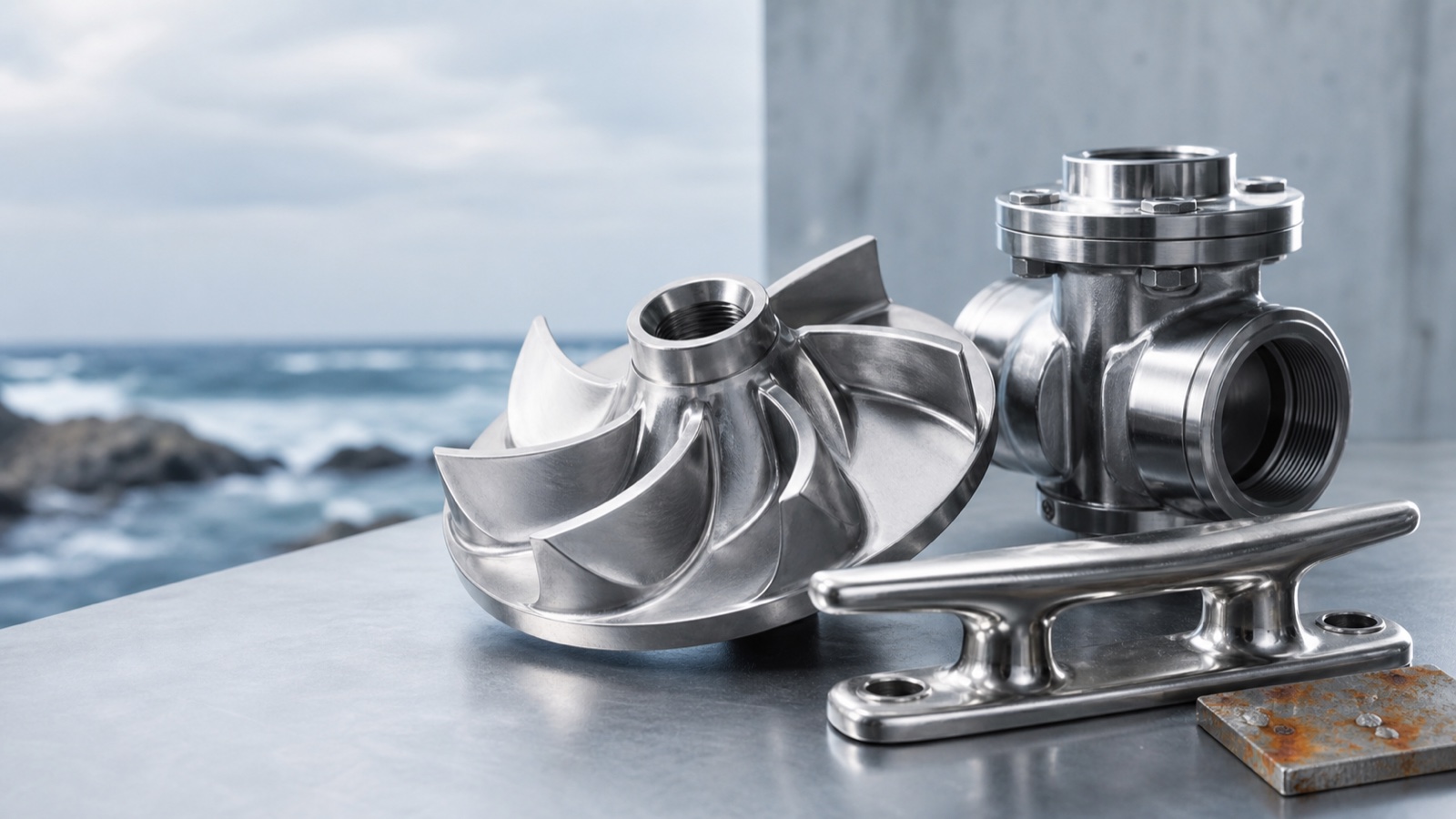
Stainless steel is widely selected for castings, machined parts, valves, pump components, marine hardware, food equipment and architectural fittings because it can resist corrosion while maintaining strength and an attractive surface. However, the name can be misleading: stainless steel is corrosion-resistant, not corrosion-proof. Under the wrong conditions, even a high-quality stainless component can stain, pit, crack or suffer severe metal loss.
This guide explains why stainless steel rusts, how common grades perform in different environments, which preventive measures matter in manufacturing and service, and when stainless steel should not be specified without a detailed corrosion assessment.
Why Is Stainless Steel Corrosion Resistant?
Stainless steel contains at least about 10.5% chromium. When a clean surface is exposed to oxygen, chromium forms an extremely thin, tightly adherent passive oxide film. Unlike loose rust on carbon steel, this film limits further reaction and can reform after minor surface damage when the environment provides sufficient oxygen.
Additional alloying elements improve performance in particular conditions:
- Molybdenum (Mo) increases resistance to localized pitting and crevice corrosion, especially in chloride-containing environments. This is an important reason 316/316L generally outperforms 304/304L near salt or process chlorides.
- Nickel (Ni) helps stabilize the austenitic structure and supports toughness, fabrication and corrosion performance in many chemical conditions.
- Nitrogen (N), often used in duplex and super duplex grades, improves strength and pitting resistance.
- Higher chromium and molybdenum levels in duplex, super duplex and highly alloyed grades extend the practical range in aggressive environments, although they do not make selection automatic.
Why Can Stainless Steel Rust or Corrode?
1. Chlorides Break Down the Passive Film
Chlorides are found in seawater, salt spray, road salt, brines, cleaning chemicals and some process fluids. They can locally damage the passive layer, initiating small but deep pits. Temperature, chloride concentration, acidity, deposits and stagnant conditions all make this risk worse.
2. Crevices and Deposits Create Oxygen-Starved Areas
Under washers, gaskets, lap joints, deposits, biofouling or poorly drained surfaces, oxygen cannot replenish the passive film effectively. The chemistry inside the crevice becomes more aggressive, and corrosion can progress even where the exposed surface still appears bright. Good grade choice cannot compensate for poor crevice design in severe service.
3. Iron Contamination Causes Rust Staining
Grinding dust, carbon-steel tooling, wire brushes, handling equipment or workshop contamination can leave free iron on stainless surfaces. That embedded iron may rust quickly and create orange-brown staining. The stain may initially come from contamination rather than corrosion of the stainless substrate, but it should still be corrected before damage develops.
4. Welding and Heat Treatment Can Reduce Local Resistance
Welding heat tint and unremoved oxide reduce local corrosion resistance. In inappropriate thermal conditions, chromium carbide formation can also leave chromium-depleted regions susceptible to intergranular attack. Low-carbon grades such as 304L and 316L, correct welding procedures, and post-weld cleaning help manage this risk.
5. Chloride Stress Corrosion Cracking Can Be Sudden
Austenitic stainless grades such as 304 and 316 can crack when tensile stress, chlorides and sufficiently elevated temperature occur together. This is particularly important for hot process equipment, stressed fittings and heat exchanger components. Duplex grades often offer improved resistance, but design verification remains essential.
6. Incompatible Chemicals Can Attack Stainless Steel Directly
Stainless steel is not a universal material for acids or oxidizing cleaners. Hydrochloric acid, wet chlorine, hypochlorite solutions and certain hot concentrated chemicals can attack many commonly used stainless grades rapidly. Chemical identity, concentration, temperature, aeration, contaminants and cleaning procedures must all be evaluated.
Stainless Steel Grades for Different Environments
The table below provides practical starting guidance for component sourcing and preliminary design. Final material selection for critical service should be checked against actual fluid chemistry, temperature, stress, fabrication condition, design geometry and applicable standards.
| Grade / Casting Equivalent | Typical Strengths | Suitable Application Examples | Important Limitations |
|---|---|---|---|
| 304 / 304L CF8 / CF3 castings |
General corrosion resistance, hygienic finish, economical and widely fabricated | Indoor machinery parts, food-contact components with controlled cleaning, architectural hardware away from salt, clean freshwater or low-chloride service | Not a reliable choice for coastal salt exposure, seawater, brine, chloride cleaners or hot chloride service |
| 316 / 316L CF8M / CF3M castings |
Molybdenum improves chloride pitting resistance compared with 304 | Outdoor equipment, coastal atmospheric exposure with cleaning, food and pharmaceutical equipment, pump/valve components in moderate chemical or chloride conditions, exposed marine hardware | Can pit or suffer crevice attack in stagnant or continuously immersed seawater; not automatically suitable for bleach, hydrochloric acid or hot brines |
| 410 / 420 Martensitic stainless |
Hardenable; useful where wear resistance or cutting performance matters | Shafts, wear parts, blades and mechanical components in mild environments | Lower corrosion resistance than 304/316; unsuitable for aggressive chloride or chemical service unless specially assessed |
| 310S | Good oxidation resistance at elevated temperature | Furnace fixtures, high-temperature equipment and heat-resistant cast or fabricated parts | A high-temperature grade is not automatically a strong solution for wet chloride or marine corrosion |
| Duplex 2205 CD3MN-type castings |
Higher strength and stronger pitting, crevice and chloride SCC resistance than standard 300-series grades in many services | Process pumps, valves, impellers, chemical handling equipment, wastewater equipment and chloride-bearing industrial service after verification | Still requires controls for welding, heat treatment and crevice design; severe seawater or chemical conditions may require a higher alloy |
| Super Duplex 2507 | High resistance to localized corrosion in demanding chloride exposure and high strength | Desalination, offshore systems, seawater piping and demanding marine/process components selected by engineering review | Cost, fabrication practice and service-specific qualification must be considered; no alloy eliminates bad design or unsuitable chemistry |
| 904L / 6Mo Austenitic Grades | Enhanced performance in certain acidic and high-chloride process conditions | Chemical processing, pulp and paper, flue-gas or demanding process environments where corrosion data supports selection | Not interchangeable solutions: each chemical concentration and temperature needs confirmation using corrosion data or testing |
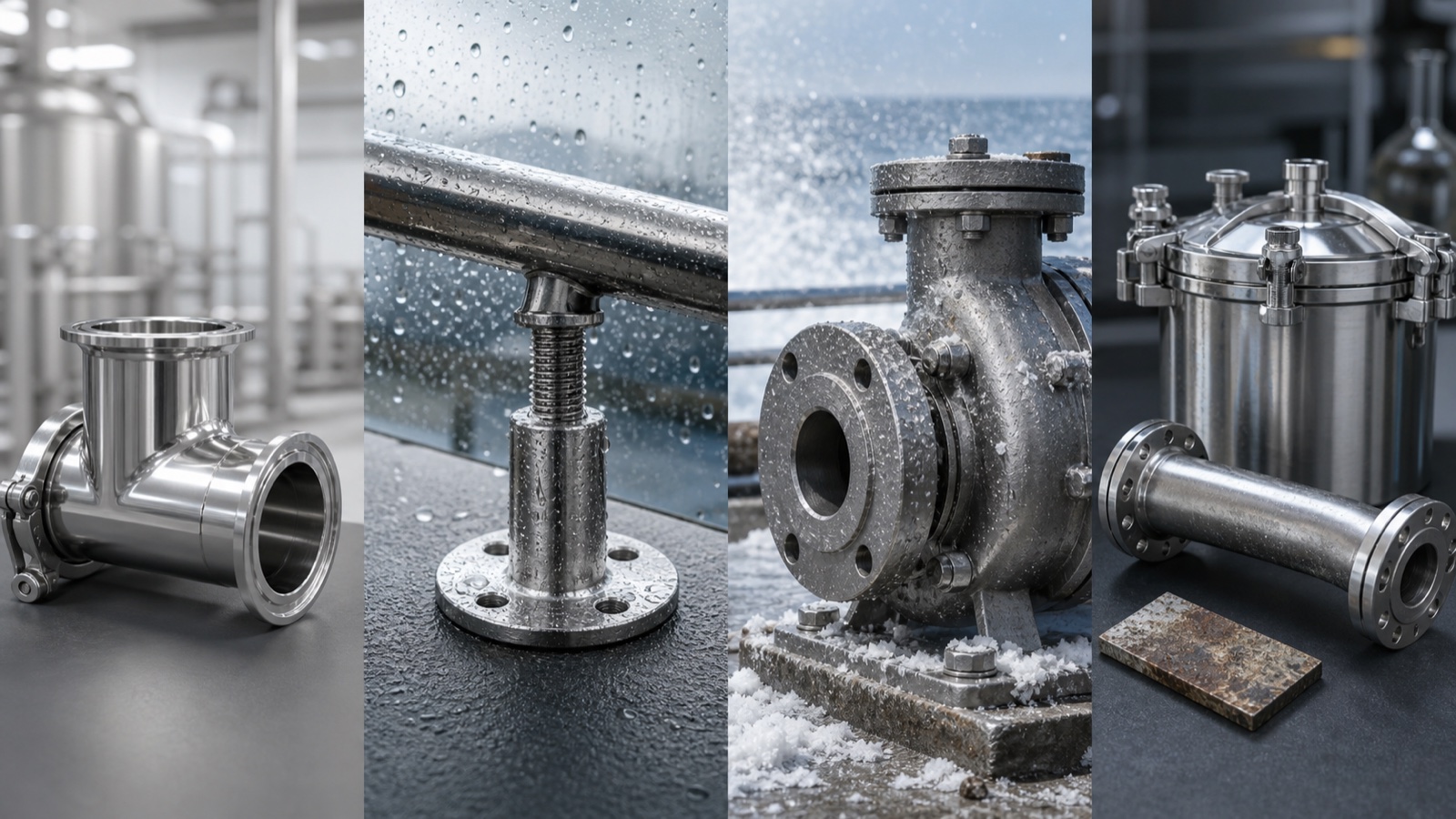
Quick Selection Guide by Environment
- Dry indoor or clean, low-chloride general use: 304/304L is often a practical starting point.
- Outdoor humidity, food processing or moderate coastal atmosphere: 316/316L is commonly preferred, supported by drainage, smooth finish and cleaning.
- Marine splash, salt retention, brackish water or process chlorides: begin evaluation with 316L only for limited exposure; duplex 2205 or higher may be required depending on severity.
- Continuous seawater immersion, stagnant seawater or high-chloride critical equipment: do not assume 316 is sufficient. Super duplex, 6Mo or other corrosion-resistant alloys may be necessary after engineering assessment.
- Hot equipment where oxidation is the principal concern: heat-resistant grades such as 310S may be appropriate, but wet chemical corrosion must be evaluated separately.
- Acidic or disinfectant process service: use corrosion tables, compatibility testing and specialist advice; grade selection cannot be made from the word “stainless” alone.
How to Prevent Rust and Corrosion on Stainless Steel Components
Choose the Grade from the Actual Environment
Define chloride level, pH, temperature, fluid velocity, stagnant periods, oxidizing or reducing conditions, cleaning chemicals, stress and expected life before selecting a grade. For a casting or machined component, also confirm grade designation, heat treatment and material traceability.
Design Out Water Traps and Crevices
Use drainage-friendly geometries, avoid unnecessary lap joints, minimize tight stagnant gaps, select compatible gasket arrangements and allow surfaces to be rinsed and inspected. On marine hardware and outdoor fittings, designs that retain salt deposits can make an otherwise reasonable alloy fail prematurely.
Prevent Carbon-Steel Contamination During Manufacturing
Use dedicated stainless-steel tools, abrasives and work areas where possible. Prevent contact with carbon-steel grinding dust, storage racks and handling residues. Clean contamination promptly rather than polishing rust stains without identifying their source.
Remove Heat Tint and Restore a Clean Surface
After welding or heavy fabrication, suitable pickling, cleaning and/or passivation procedures can remove damaging oxides and free iron contamination and support a uniform passive surface. Procedures must be selected and performed safely for the grade, part and industry requirements.
Use an Appropriate Surface Finish
Smoother, well-finished surfaces generally retain fewer deposits and are easier to clean. For exposed marine hardware or architectural components, polishing helps appearance and maintenance, but it does not turn an unsuitable grade into a seawater-proof material.
Clean, Rinse and Inspect in Service
Fresh-water rinsing of salt-exposed equipment, prompt removal of deposits, correct cleaning-agent selection and scheduled inspection can extend service life. Avoid chloride-bearing cleaners unless the grade and rinsing procedure are verified. Early rust staining, pits or deposits should trigger investigation rather than cosmetic cleaning alone.
When Should Stainless Steel Not Be Used?
Stainless steel should not be chosen simply by reputation when the environment sits outside the verified operating window of an available grade. In the following situations, common grades such as 304 or 316 should generally be avoided, and in some cases stainless steel as a family may need to be replaced by a nickel alloy, titanium, lined system, polymer or other engineered solution:
- Hydrochloric acid service, particularly at meaningful concentration or elevated temperature, unless a specifically validated alloy solution has been established.
- Wet chlorine, hypochlorite/bleach and strongly chlorinating conditions, especially with heat, stagnation or stress.
- Continuously immersed or stagnant seawater where crevices, deposits or biofouling are unavoidable and only 304/316 is being considered.
- Hot, concentrated chloride solutions or evaporative salt concentration where pitting, crevice corrosion or chloride stress corrosion cracking threatens safety or function.
- Reducing acids or mixed chemical streams for which no reliable compatibility data or corrosion test supports the proposed grade.
- Applications where a small pit or crack is unacceptable, such as critical pressure containment or safety-critical equipment, unless the grade, fabrication, design and inspection plan are fully qualified.
Conclusion: “Stainless” Starts with Correct Selection
Stainless steel can offer excellent service life, attractive appearance and efficient manufacture, but only when its passive surface is supported by the right alloy, correct fabrication, good design and proper maintenance. 304, 316L, duplex 2205, super duplex and heat-resistant stainless grades each solve different engineering problems; none is universally corrosion-proof.
For OEM stainless steel castings and machined components, Aodson supports application-based material selection, precision investment casting, CNC machining, finishing and inspection for parts including pump components, valves, impellers, marine hardware and industrial fittings. Share your drawing, service environment and performance requirements so the material and manufacturing route can be reviewed together.
Technical References
- Nickel Institute, Guidelines for Nickel Stainless Steels for Marine Environments, Natural Waters and Brines, Publication 11003.
- Euro Inox / Nickel Institute, Pickling and Passivating Stainless Steel.
- British Stainless Steel Association, Principles and Prevention of Crevice Corrosion.