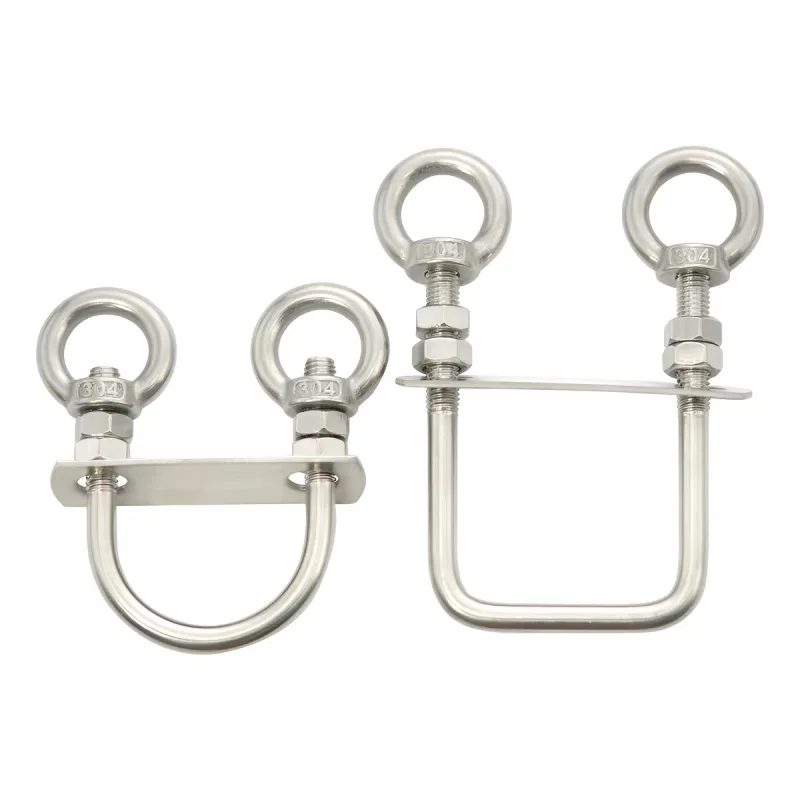




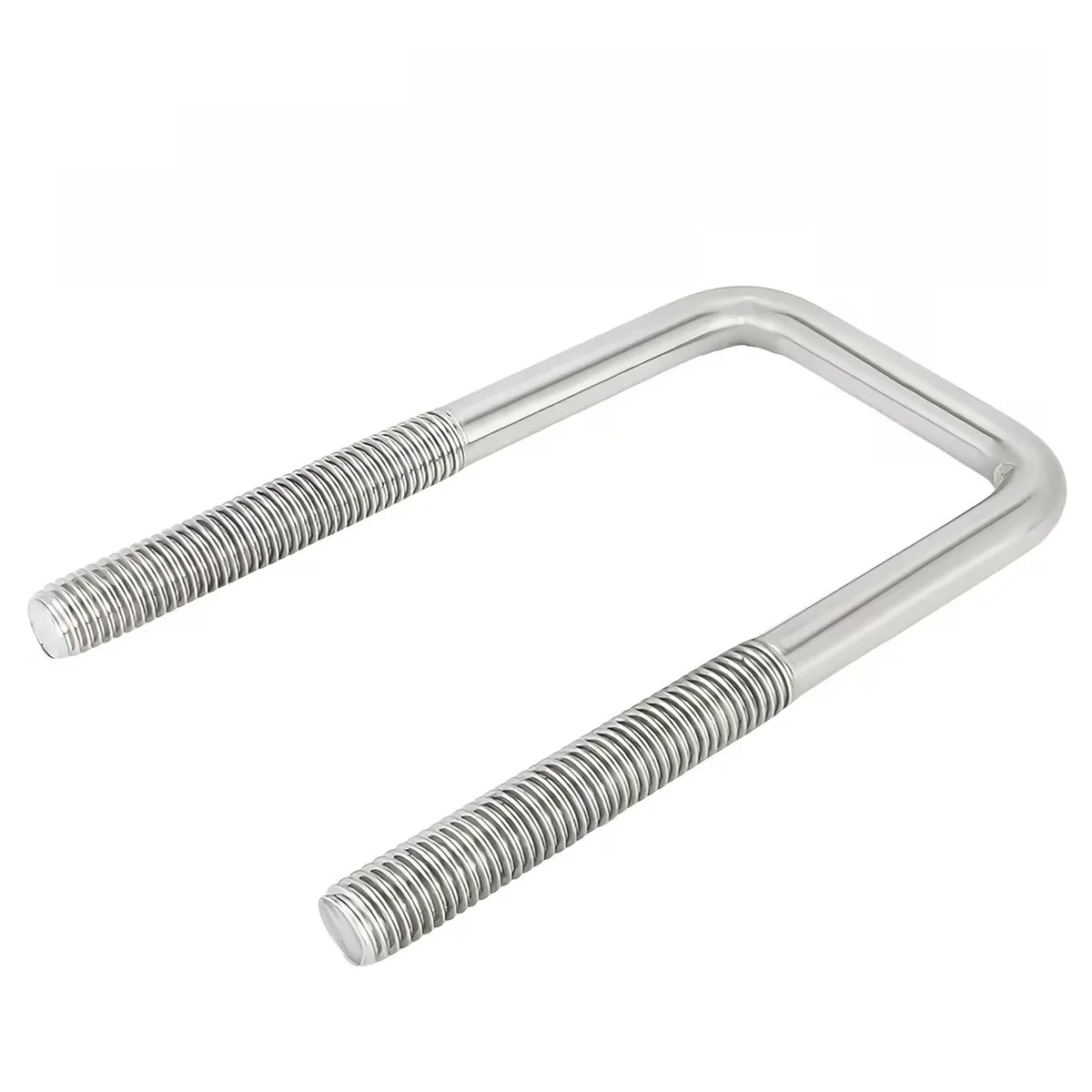
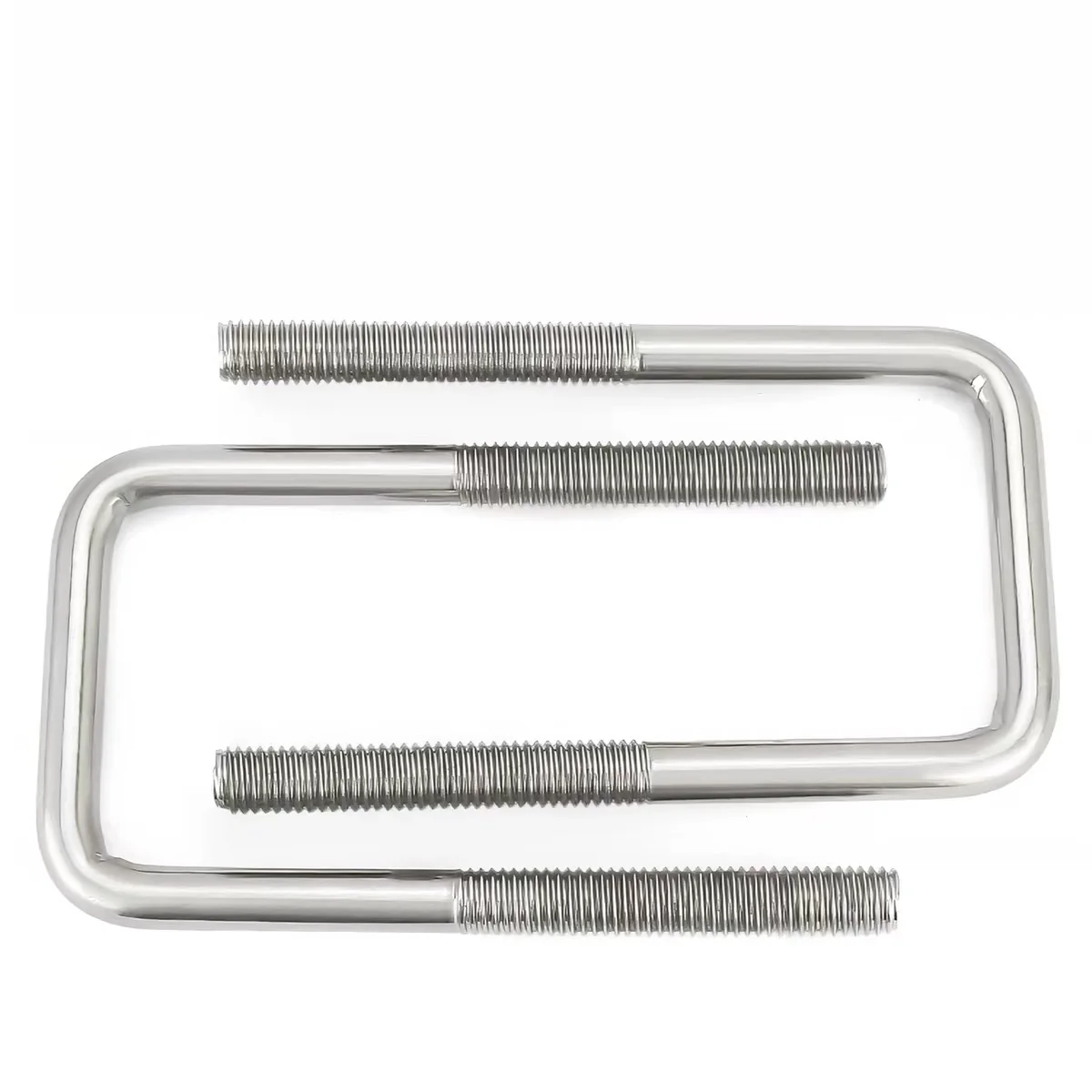
Custom stainless steel square and rectangular U-bolts provide a close-fitting fastening profile around square tube, rectangular frames, trailer members, beams and equipment supports. Unlike a round U-bolt, the formed corners and parallel threaded legs can be dimensioned to follow a flat-sided component and distribute clamping through a matching plate, bracket, washers and nuts.
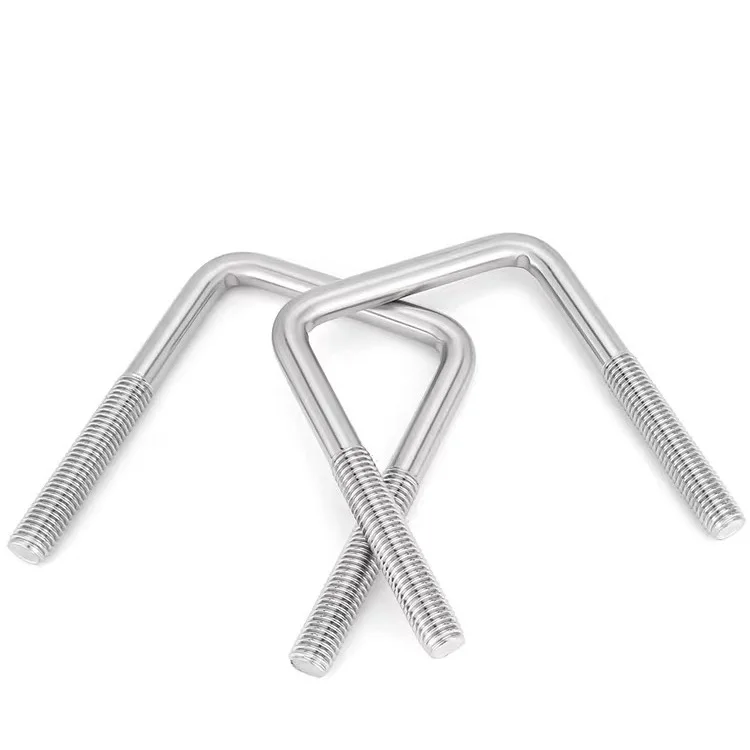
Product Specifications and Custom Options
| Product type | Square or rectangular U-bolt with two threaded legs |
|---|---|
| Materials | 304, 316 or customer-specified stainless steel and corrosion-resistant alloy |
| Manufacturing | Rod cutting, forming, thread rolling or cutting, straightening, deburring and surface treatment |
| Finish | Natural stainless, passivated, polished or project-specific |
| Custom dimensions | Rod diameter, inside width, inside height, corner radius, thread size, pitch and threaded length |
| Optional supply | Nuts, washers and clamping plates when defined by the purchase specification |
Designed Around Your Frame or Equipment
A practical U-bolt specification starts with the part being clamped. Please define the section width and height, required clearance, rod diameter and installation stack. The inside width and inside height must account for forming tolerance, corner geometry, mating plates and any protective liner or coating. AODSON can manufacture from an approved 2D drawing, 3D model or verified sample.
Typical Applications
- Trailer frames, axle-related brackets and chassis attachments
- Industrial equipment frames and machinery supports
- Square tube, rectangular tube, channel and beam clamping
- Marine, outdoor and corrosive-environment assemblies
- Custom pipe supports, mounting brackets and structural fixtures
Application suitability depends on the complete joint design. For suspension, lifting, safety-critical or cyclic-load service, the buyer should provide the approved drawing, material requirements, installation torque and acceptance tests. Load rating must be established from the finished assembly and must not be inferred from appearance or nominal thread size.
Manufacturing Route
Production begins with material and dimensional review. Stainless rod is cut to length, formed to the specified square or rectangular profile, threaded at both legs, straightened and deburred. Depending on size and quantity, threads may be rolled or machined. Passivation, polishing, marking and project packaging can be added after dimensional inspection.
Quality Control and Documentation
Inspection can cover material identity, rod diameter, inside width, inside height, leg parallelism, overall length, thread gauge, threaded length and surface condition. Material certificates, dimensional reports and additional mechanical or corrosion testing are available when specified before quotation. Learn more about our quality control and inspection process.
Information Required for a Fast Quotation
- Drawing or sample with inside width, inside height and rod diameter
- Thread standard, size, pitch, fit and threaded length
- Material grade and operating environment
- Target quantity and repeat demand
- Required nuts, washers, plates, finish, testing and packaging
AODSON supports custom fastener development from drawing review through production and inspection. Review how custom fasteners are made, or send your U-bolt drawing for an engineering quotation.
Frequently Asked Questions
Can the inside width and leg length be customized?
Yes. Inside width, inside height, rod diameter, corner radius, thread and leg length are produced to an approved drawing or verified sample.
Which stainless steel grades are available?
304 and 316 are common options. Other corrosion-resistant alloys can be reviewed according to the environment, strength requirements and order volume.
Can nuts and clamping plates be supplied together?
Yes, when their material, dimensions, finish and inspection requirements are included in the purchase specification.
Are these U-bolts supplied with a standard load rating?
No generic load rating is assigned without the complete application and test criteria. Safety-critical projects require engineering validation and customer-approved acceptance requirements.