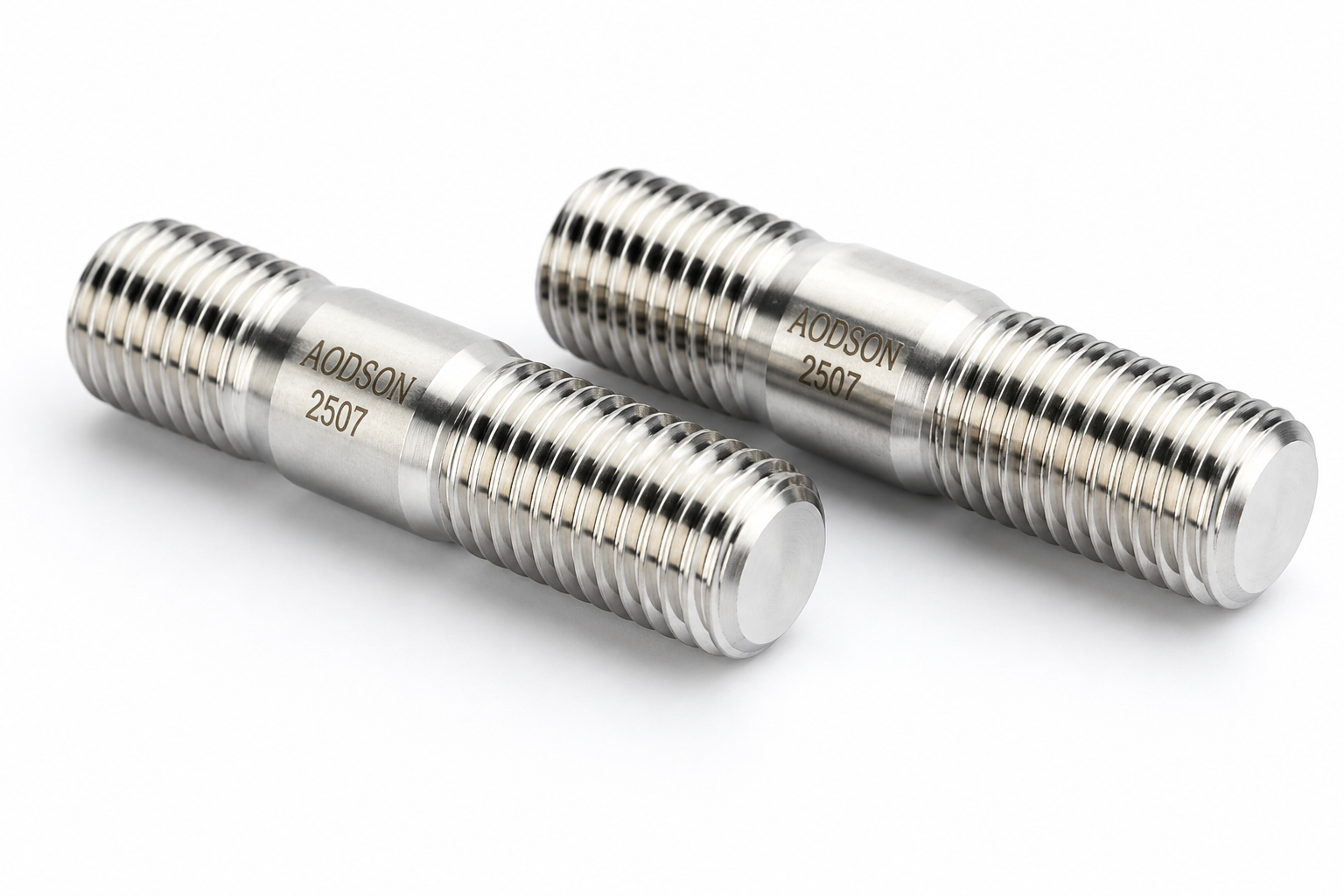




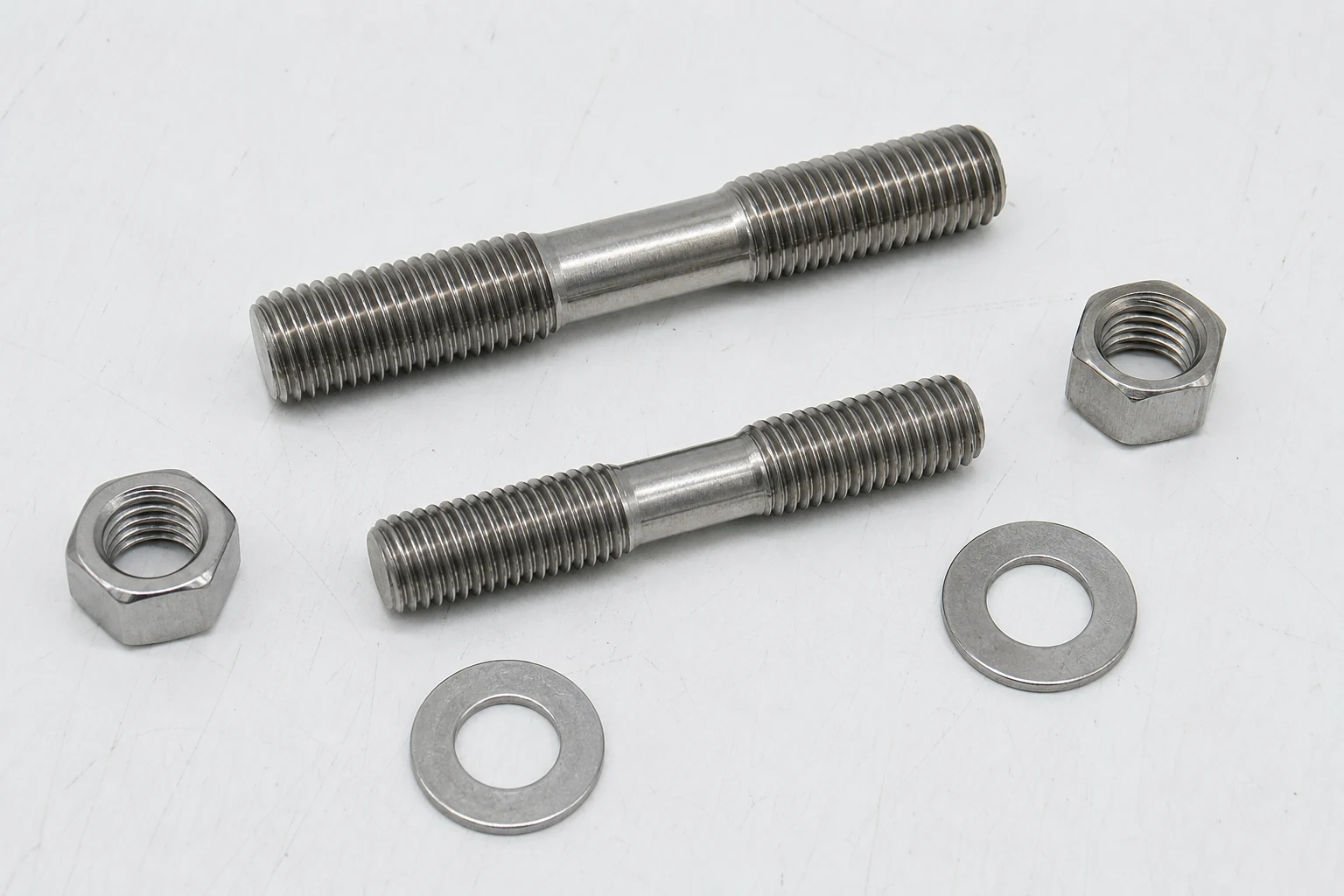
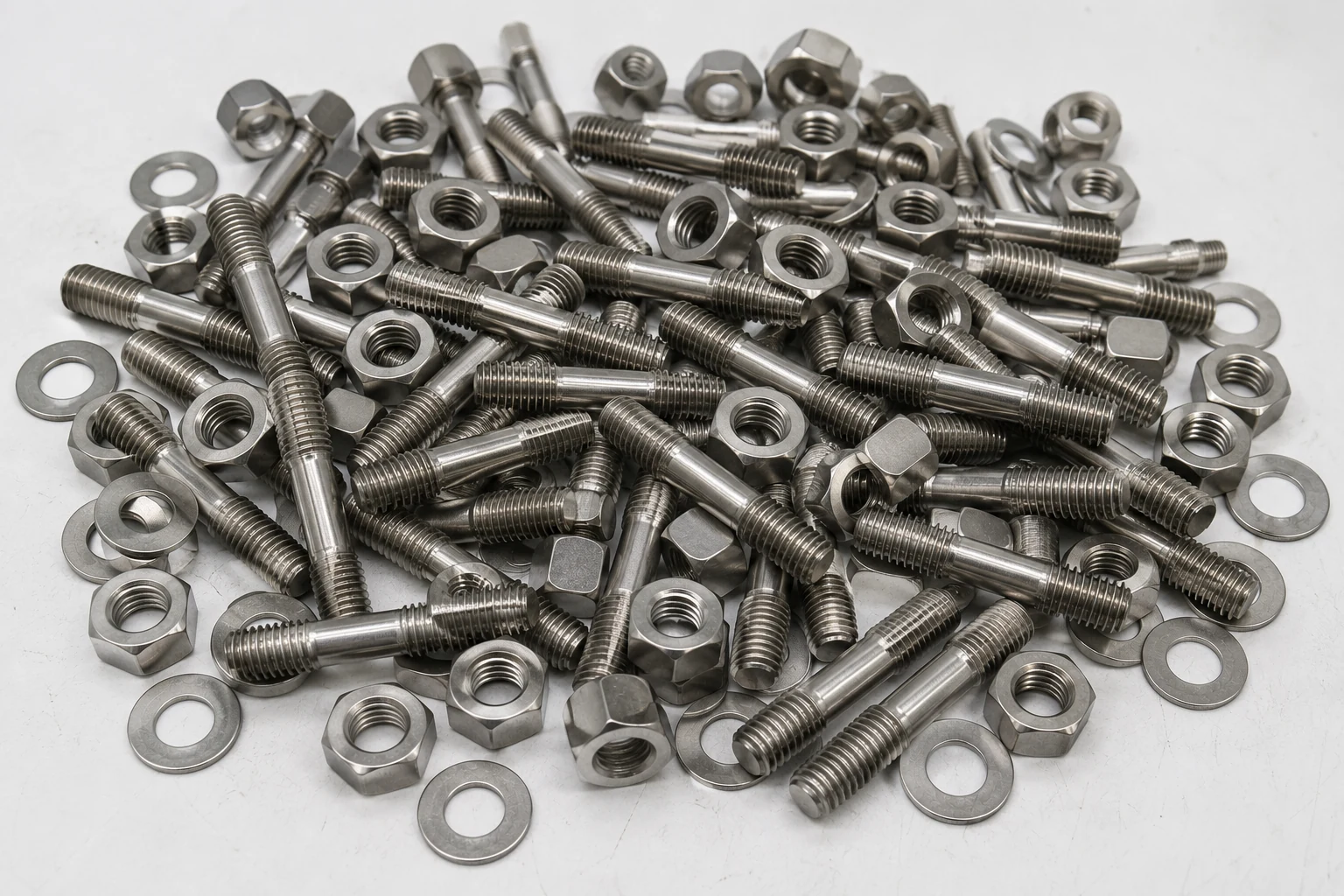
Reduced-shank elastic stud bolts, also called waisted or necked-down stud bolts, use threaded ends and a deliberately reduced smooth center section. AODSON manufactures these engineered fasteners from customer drawings for joints that require controlled bolt elongation, stable preload and project-specific material or inspection requirements.
What Is a Reduced-Shank Elastic Stud Bolt?
A conventional stud may use a center shank close to the nominal thread diameter. A reduced-shank elastic stud has a smaller, carefully machined center section with controlled transition radii between the threads and shank. The geometry allows more of the stud length to participate in elastic elongation when the joint is tightened.
When correctly engineered, this can help distribute strain more evenly and maintain clamping force in joints exposed to pressure, vibration or temperature cycles. The shank diameter, transition profile and preload must be approved through joint calculations and the customer drawing; they are not universal dimensions.
Product Specifications and Custom Options
| Product type | Reduced-shank / waisted elastic stud bolt |
|---|---|
| Configuration | Threaded ends with a controlled reduced smooth center shank |
| Materials | Stainless steel, duplex stainless steel, alloy steel, nickel alloy or customer-specified grade |
| Threads | Metric, UNC, UNF or drawing-specific thread forms |
| Manufacturing | Material preparation, CNC turning, thread rolling or cutting, heat treatment and finishing as specified |
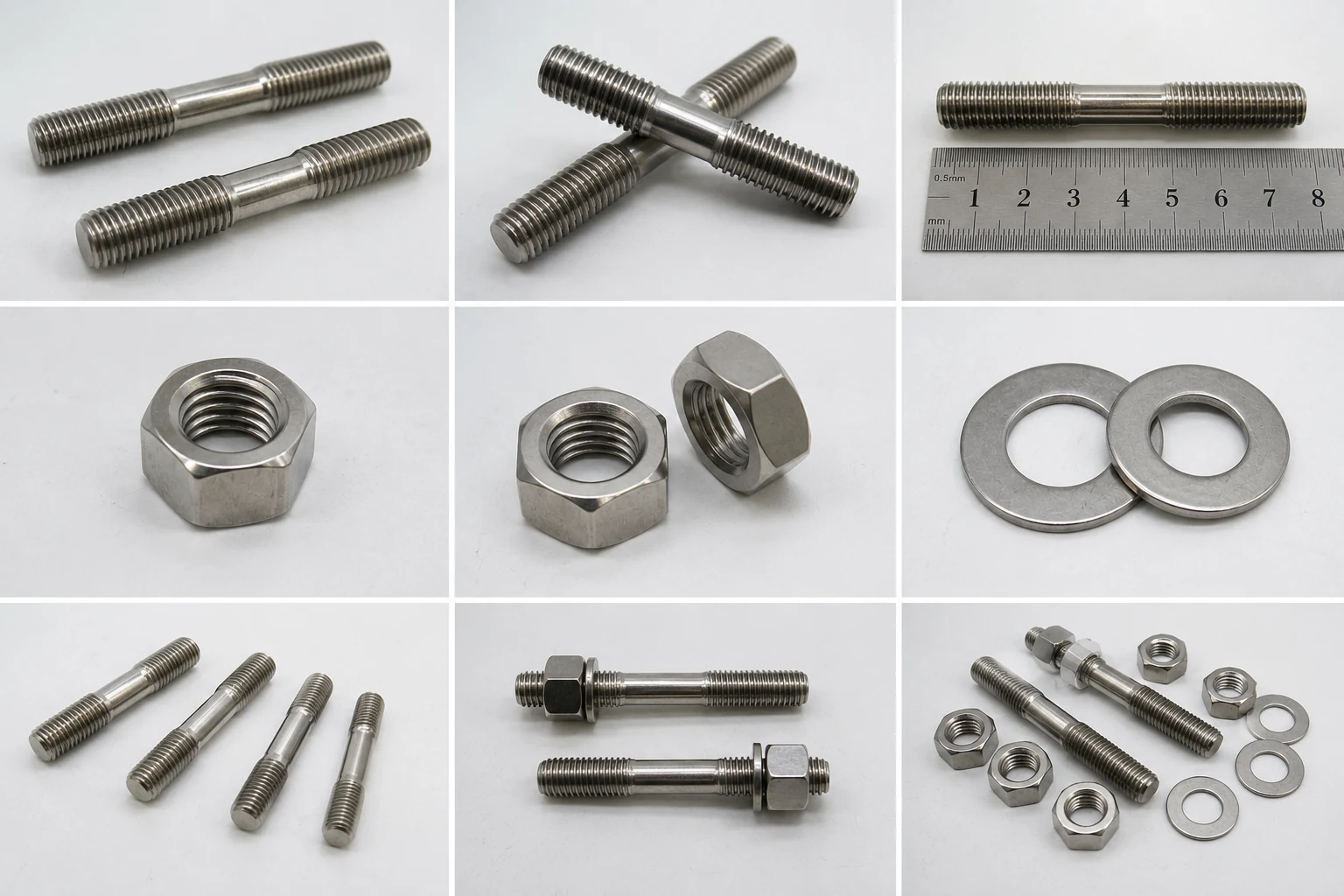
| Matching hardware | Nuts and washers supplied to the approved material and dimensional specification |
| Customization | Diameter, shank length, transition radii, threaded length, end form, marking and inspection |
Why Use a Reduced Shank?
- Controlled elastic elongation: the reduced section can provide a longer effective stretch length within the joint.
- Preload stability: properly designed elasticity can support clamping-force retention where operating loads or temperatures vary.
- Stress transition: generous, controlled radii help avoid abrupt changes between the threaded and reduced sections.
- Drawing-based optimization: the shank can be engineered around joint length, material strength and assembly requirements.
These benefits depend on the complete bolted-joint design. AODSON does not assume a universal torque, preload, strength class or reduced diameter. Final acceptance follows the customer-approved drawing and governing specification.
Critical Design Information
A practical review should define the nominal thread diameter and pitch together with the reduced-shank diameter, smooth length and transition radii. Thread engagement, grip length, end chamfers, runout, nut height and washer arrangement also influence assembly behavior.
- Overall length, threaded lengths and effective grip length
- Reduced-shank diameter, tolerance and surface finish
- Transition radius and thread runout requirements
- Material specification, strength or heat-treatment condition
- Operating temperature, pressure, vibration and corrosion exposure
- Target preload, tightening method and installation procedure
Materials and Manufacturing Route
Material selection is based on strength, temperature, corrosion environment and the governing equipment standard. Options may include austenitic or duplex stainless steels, alloy steels and nickel-based alloys. Each grade requires its own heat-treatment, machining, thread-production and surface-control route.
Production can include verified bar preparation, CNC turning of the reduced section and transitions, thread rolling or cutting, heat treatment, passivation or project-specific coating, marking and controlled packaging. Thread rolling is considered according to material, diameter, quantity and specification rather than applied automatically.
Inspection and Traceability
Inspection can be configured to the purchase specification and may include material certificates, positive material identification, dimensional reports, thread gauging, surface inspection, hardness or mechanical testing and non-destructive examination. Lot marking and document traceability can be maintained from raw material through final packing.
Typical Applications
- High-pressure flange and valve assemblies
- Pumps, compressors and process equipment
- Turbine, heat-exchanger and thermal-cycle connections
- Marine, offshore and corrosion-resistant equipment
- Custom machinery requiring controlled bolt stretch
RFQ Information for Custom Elastic Studs
For a reliable quotation and manufacturability review, send the 2D drawing, material grade, thread specification, quantity and operating conditions. Please identify all critical dimensions, transition radii, inspection requirements, matching nut and washer requirements, marking, packaging and required certification.
Send your reduced-shank stud drawing for review or continue with Industrial Fasteners, Fastener Manufacturing and Quality Control & Traceability.
Frequently Asked Questions
What is the difference between a standard stud and a reduced-shank elastic stud?
A reduced-shank stud has a deliberately smaller smooth center section so more of the stud can elongate elastically under preload. A standard stud may use a full-diameter or near-full-diameter center shank. Final suitability depends on the complete joint calculation.
Is the reduced-shank diameter standardized?
It may be governed by a customer drawing or an applicable fastener and equipment standard, but it should never be assumed from the thread diameter alone. Material strength, grip length, preload and operating loads must be reviewed together.
Which materials are available?
AODSON can review stainless steel, duplex stainless steel, alloy steel and nickel-alloy requirements. Availability, heat treatment and testing are confirmed against the requested grade and order quantity.
Can matching nuts and washers be supplied?
Yes. Nuts and washers can be supplied as a controlled set when their material, dimensions, finish and mechanical requirements are included in the purchase specification.