



Adjustable Leveling Feet for Machinery and Equipment
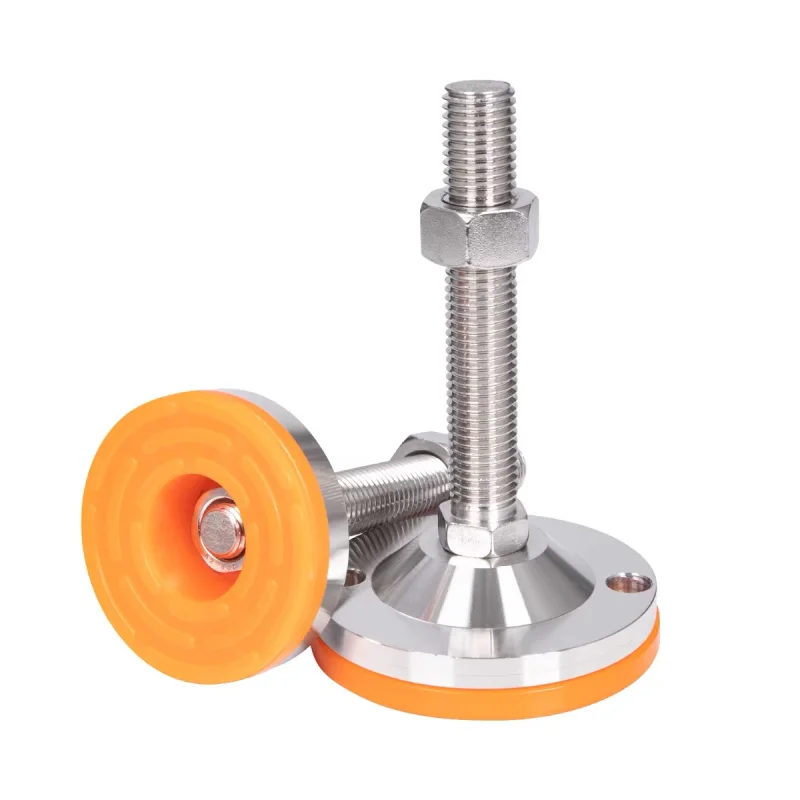
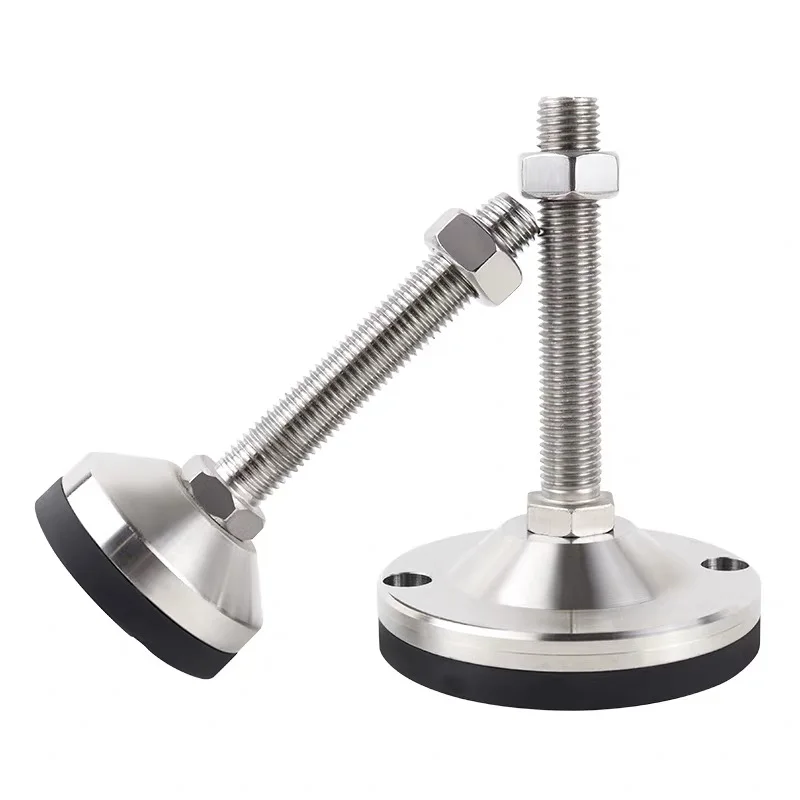
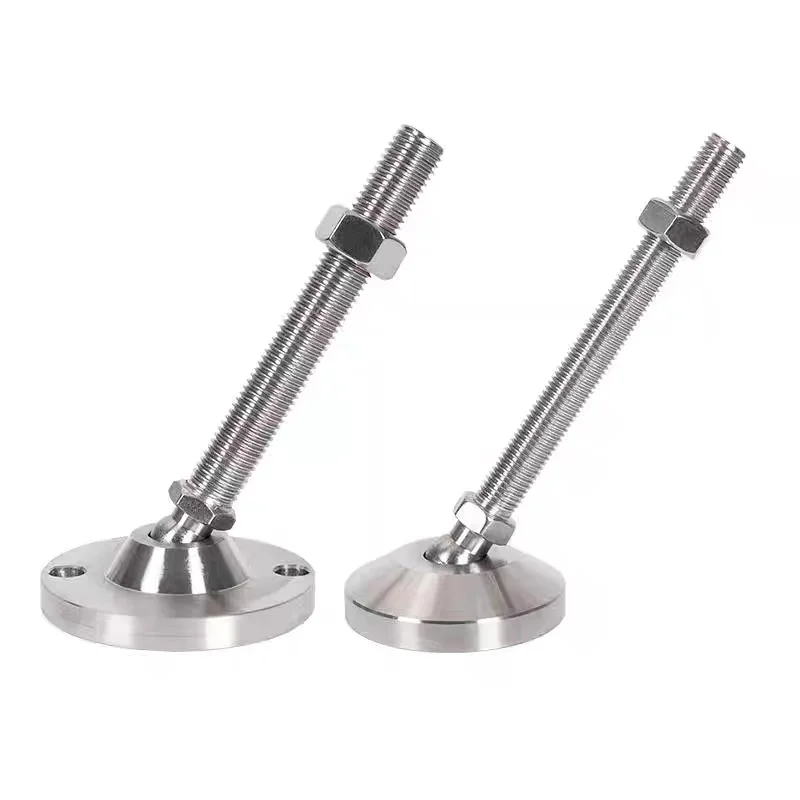
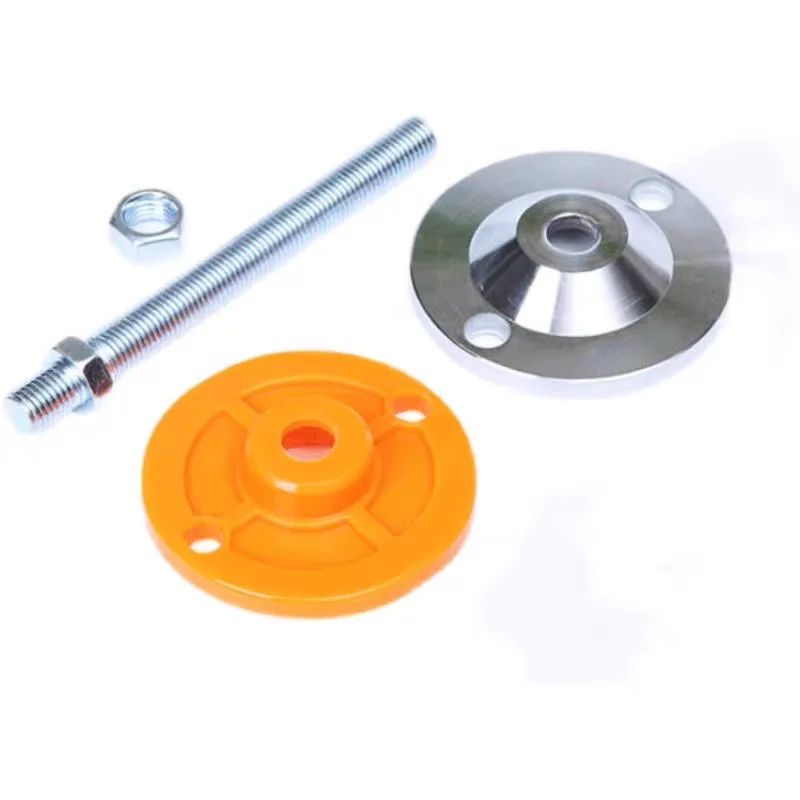
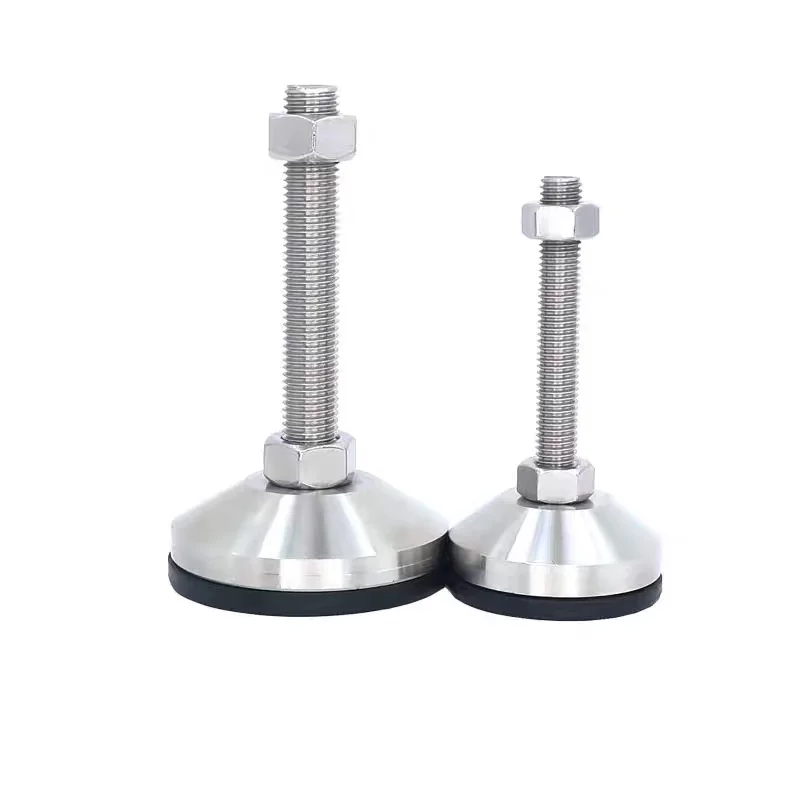
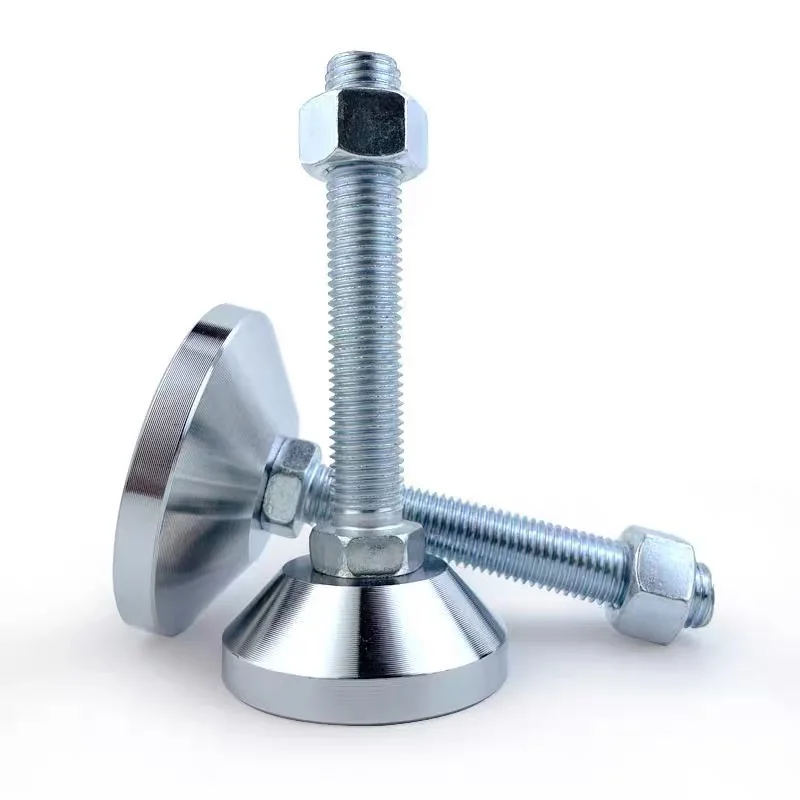
These adjustable leveling feet use a threaded stem and lock nuts to set equipment height and compensate for uneven floors. Round metal bases distribute contact at the floor, while the pictured orange and black bottom pads provide an interface between the metal base and the installation surface. Some versions include floor-fixing holes; others use a compact plain round base.
The photographs show several mechanical arrangements, but appearance alone does not establish load capacity, vibration isolation or anchorage performance. The correct size must be selected from the supported load, frame geometry, floor condition and required adjustment range.
Specifications and Options to Confirm
| Item | Details for quotation |
|---|---|
| Metal material | 304 stainless steel is listed in the supplier reference. Confirm the required grade, material standard and documentation. |
| Thread | Supplier references include M8, M12, M16 and M20 examples. Specify thread size, pitch, usable adjustment length and total stem length. |
| Base style | Round base with or without floor-fixing holes. Provide base diameter, height and required hole size and spacing. |
| Bottom pad | Orange and black pad versions are pictured. Define pad material, hardness, thickness, color and resistance to oils, chemicals or cleaning agents. |
| Articulation | Some configurations appear to permit stem-to-base angular movement. State the required swivel range and confirm it in the approved drawing. |
| Locking hardware | Specify the number, position and dimensions of lock nuts, washers and mating frame interfaces. |
| Load requirement | Provide static load per foot, dynamic effects, center-of-gravity information and any required safety factor or test method. |
| Finish and inspection | Confirm surface finish, thread checks, dimensional inspection, pad condition and required load or slip testing. |
Base and Mounting Selection
A larger base can spread load over a wider floor area, but load capacity also depends on stem size, thread engagement, base construction and how the equipment frame transfers force. The mounting boss or threaded insert in the frame must provide adequate engagement without bottoming out during adjustment.
Floor-fixing holes can locate the foot and help resist movement when suitable fasteners are used. They do not by themselves define a structural, seismic or safety anchor. If anchorage is required, provide the floor construction, fastener specification, edge distances and design loads for engineering review.
Pad and Floor Interface
The bottom pad should be selected for the floor finish, temperature, cleaning chemicals, oil exposure and desired friction. A compliant pad may reduce direct metal-to-floor contact and accommodate minor surface irregularities, but vibration-isolation performance requires defined stiffness, load and frequency data.
For washdown or hygienic areas, identify crevices, drainage, cleanability and corrosion requirements. If the pad must be replaceable, include the retention method and spare-part requirement in the enquiry.
Typical Applications
- Machine frames and production equipment
- Conveyors, packaging lines and workstations
- Industrial storage racks and cabinets
- Tables, enclosures and adjustable support structures
Quality Control and Documentation
Inspection can cover material identification, thread size and fit, stem length, base dimensions, hole position, articulation, surface condition and pad assembly. Load, slip, vibration or chemical-resistance tests should be defined with their methods and acceptance criteria before production. See our quality control information.
Frequently Asked Questions
How is the required stem size selected?
Provide the load per foot, mating frame thread, adjustment range and operating conditions. Thread diameter alone is not a complete load rating.
Are floor-fixing holes required?
They are useful when the equipment must be located or restrained, but the need and fastening method depend on floor construction and applied loads.
Can the bottom pad material be specified?
The gallery shows different pad colors and forms. State the required compound, hardness, thickness and environmental exposure so availability can be confirmed.
Request a Leveling Foot Quote
Send the metal grade, thread size and pitch, stem length, base diameter, fixing-hole layout, pad material, load per foot, adjustment range, quantity and destination. Include an equipment drawing when alignment, articulation or anchorage is critical.