




OEM precision casting and machining
Precision Cast Turbocharger Components
OEM investment casting and CNC machining for turbocharger housings, nozzle rings, exhaust flow parts, and high-temperature stainless steel components manufactured according to customer drawings.
Why precision casting
Complex exhaust-side geometry needs more than a simple casting supplier.
Turbocharger-related parts work close to heat, vibration, clamping loads, exhaust flow, and repeated thermal cycling. Investment casting gives engineers a practical way to create complex metal geometry near net shape while keeping machining focused on the surfaces that really define assembly accuracy.
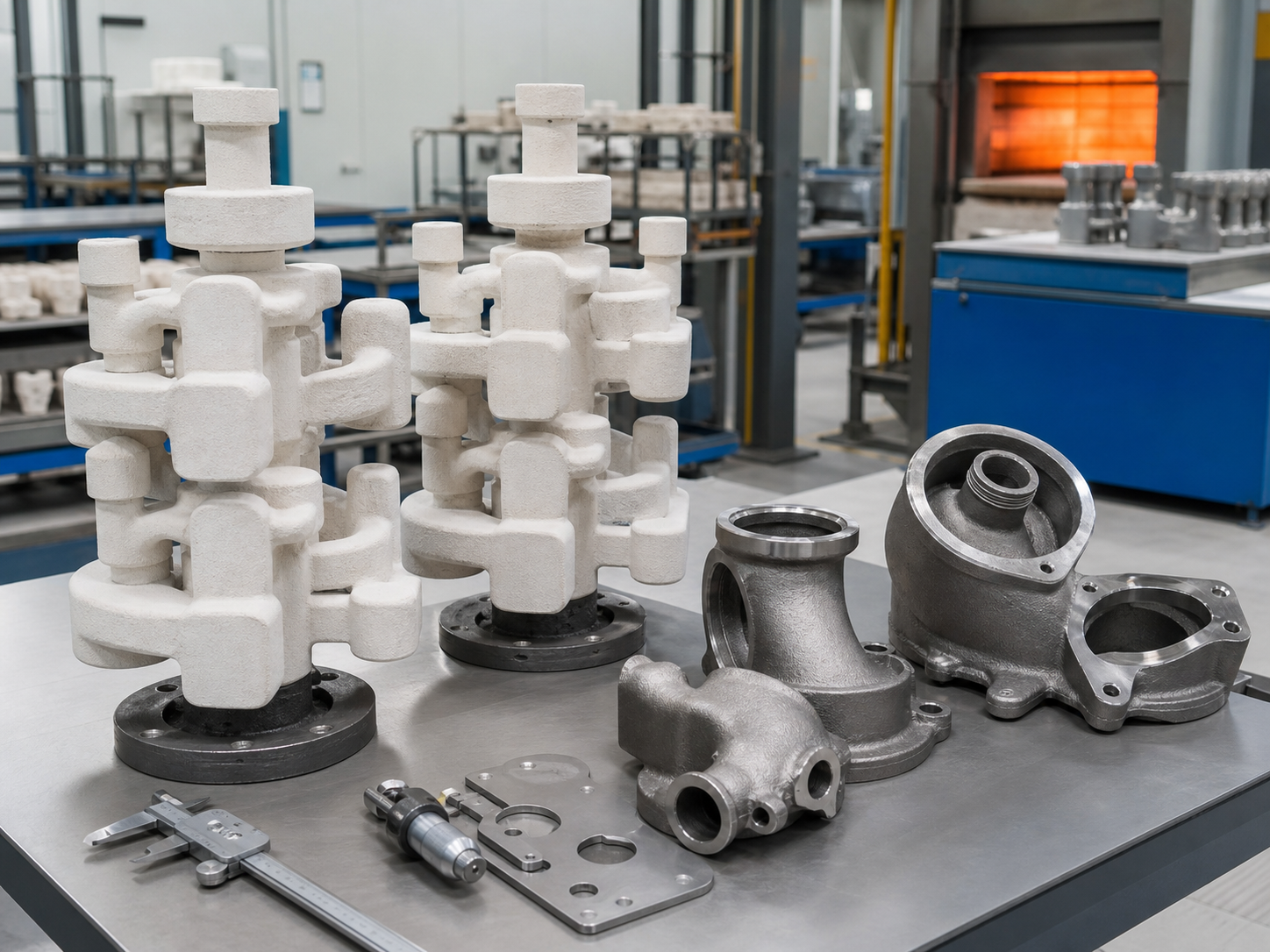
For turbine housings, nozzle rings, exhaust housings, brackets, shields, and related flow-path components, the most expensive errors usually appear at the transition between casting design and machining control. AODSON reviews the drawing, material expectation, working environment, machining allowance, wall thickness, and inspection requirement before production begins.
Component scope
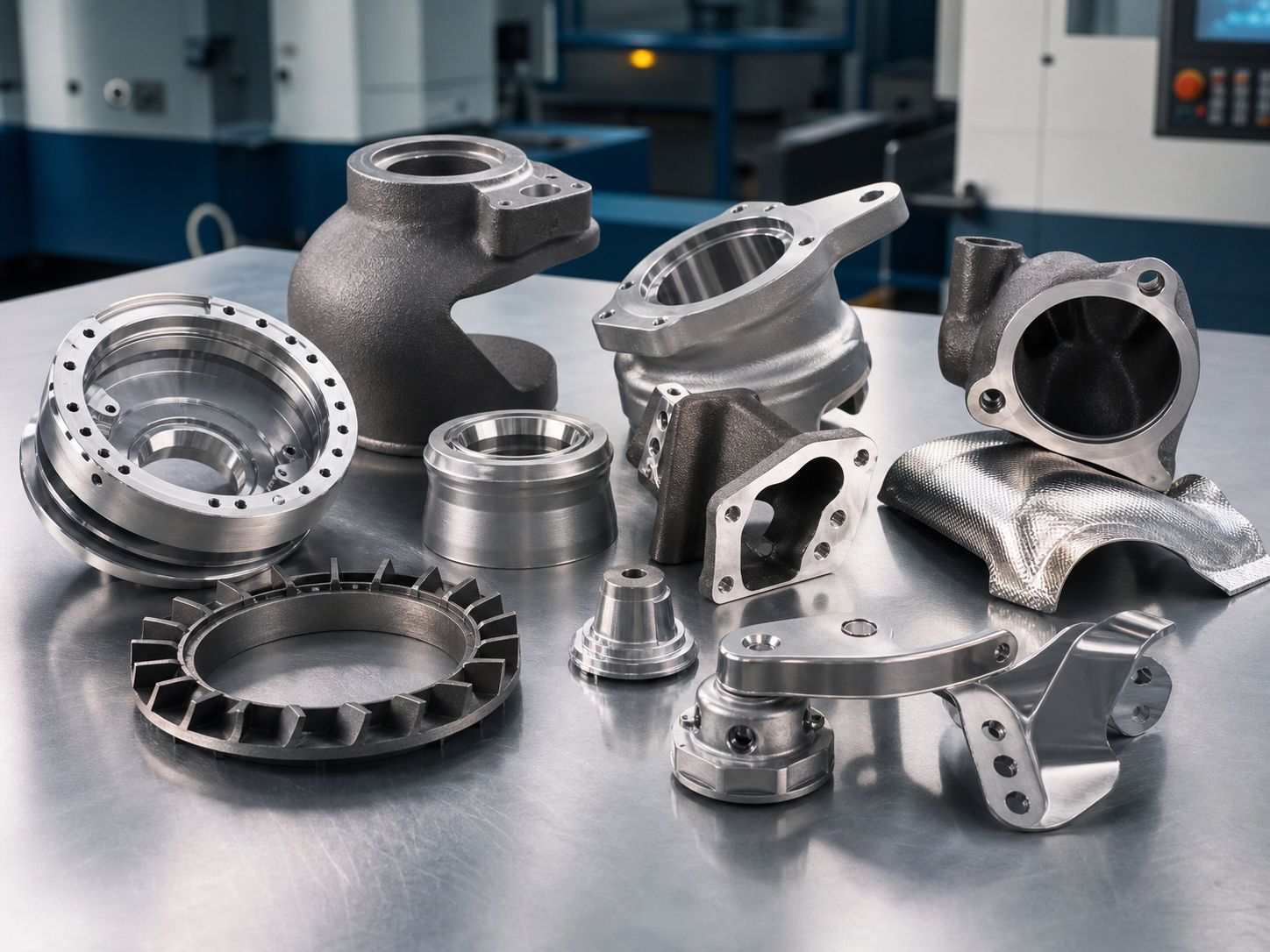
Custom cast parts for turbocharger-related assemblies.
AODSON manufactures metal components according to drawings, samples, or defined technical requirements. The scope can include casting only, casting plus CNC machining, surface finishing, welding, or sub-assembly when required by the customer.
Turbine Housing
Heat-resistant cast housings with machined flanges, bolt holes, sealing faces, and critical datum control.
Bearing Housing
Cast and machined housings where bearing seats, oil passages, and concentricity need careful process planning.
Nozzle Ring
Ring-shaped parts requiring stable casting, clean surface finish, controlled flatness, and accurate machining.
Exhaust Housing
Custom exhaust flow parts with complex passages, mounting features, and high-temperature alloy options.
Wastegate Parts
Small cast components such as levers, valve-related parts, brackets, and high-heat connection pieces.
Mounting Brackets
Strong cast brackets and supports designed for repeatable assembly, machining, and surface finishing.
Heat Shields
Cast or fabricated heat-related components where geometry, material, and finish are selected by application.
Custom Cast Components
Drawing-based parts for automotive, industrial, and engine-adjacent systems with controlled production routes.
Material selection
Material decisions are made around heat, corrosion, machining, and cost.
Material choice should match the working temperature, exhaust chemistry, strength requirement, machining tolerance, surface treatment, and purchase quantity. AODSON can review the specification and suggest a practical manufacturing route, while the final material remains tied to the customer drawing or approved engineering requirement.
| Material family | Typical grades | Where it helps | Selection notes |
|---|---|---|---|
| Austenitic stainless steel | 304, 316, 316L | Corrosion resistance, clean surface finish, general high-quality cast parts. | Used when corrosion resistance and machinability matter more than extreme temperature strength. |
| Cast stainless equivalents | CF8, CF8M | Investment cast components requiring stainless corrosion resistance and stable foundry production. | Often considered when the drawing calls for cast-grade stainless properties. |
| Heat-resistant stainless | 310S, 2520, 253MA | Exhaust-side parts, heat shields, housings, and components exposed to elevated temperature. | Chosen according to service temperature, oxidation resistance, and mechanical demand. |
| Nickel alloy options | Customer-specified nickel alloys | More demanding heat, corrosion, or oxidation conditions. | Best reviewed case by case because material cost, casting behavior, and machining strategy change quickly. |
| Carbon and alloy steel | Carbon steel, alloy steel | Brackets, supports, and mechanical components where heat resistance is not the primary driver. | May offer a more economical path when coating, strength, and assembly conditions permit. |
Manufacturing capability
From process evaluation to packed components.
AODSON combines investment casting, stainless steel casting, heat-resistant alloy casting, CNC machining, surface finishing, welding, and assembly support when required. The goal is not to force every project into one route, but to choose the route that protects the drawing requirement and the buyer’s production schedule.
For engineering buyers, the early manufacturing discussion is often where the project is won or lost. A drawing may show the final geometry, but it does not always show the best way to cast a thin wall, protect a machined datum, locate a threaded feature, or avoid unnecessary cost in a non-critical surface. AODSON reviews these points before quoting where possible, because changing the process after tooling or sample casting is slower and more expensive than resolving risk at the RFQ stage.
This approach is useful when a customer is replacing a fabricated part with a casting, localizing an imported component, improving a heavy bracket, or preparing a new exhaust-side component for stable purchasing. The manufacturing plan can separate what belongs in the casting, what should be left for machining, and what can be handled through finishing or inspection. That separation helps purchasing managers compare quotations more fairly and helps engineers avoid vague supplier assumptions.
- Process evaluation based on geometry, wall thickness, tolerance, and expected working conditions.
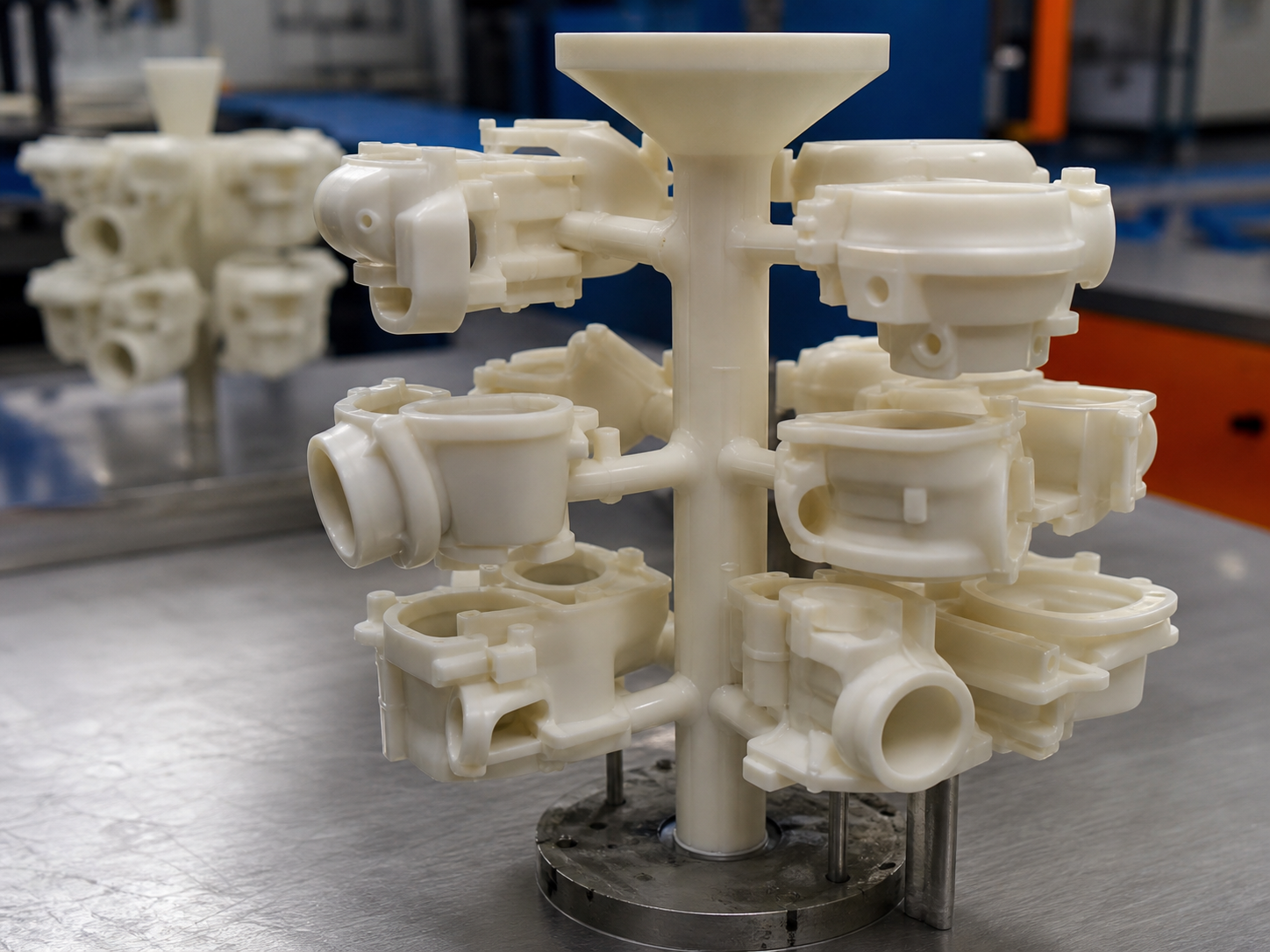
- Pattern making and shell building for repeatable casting geometry.
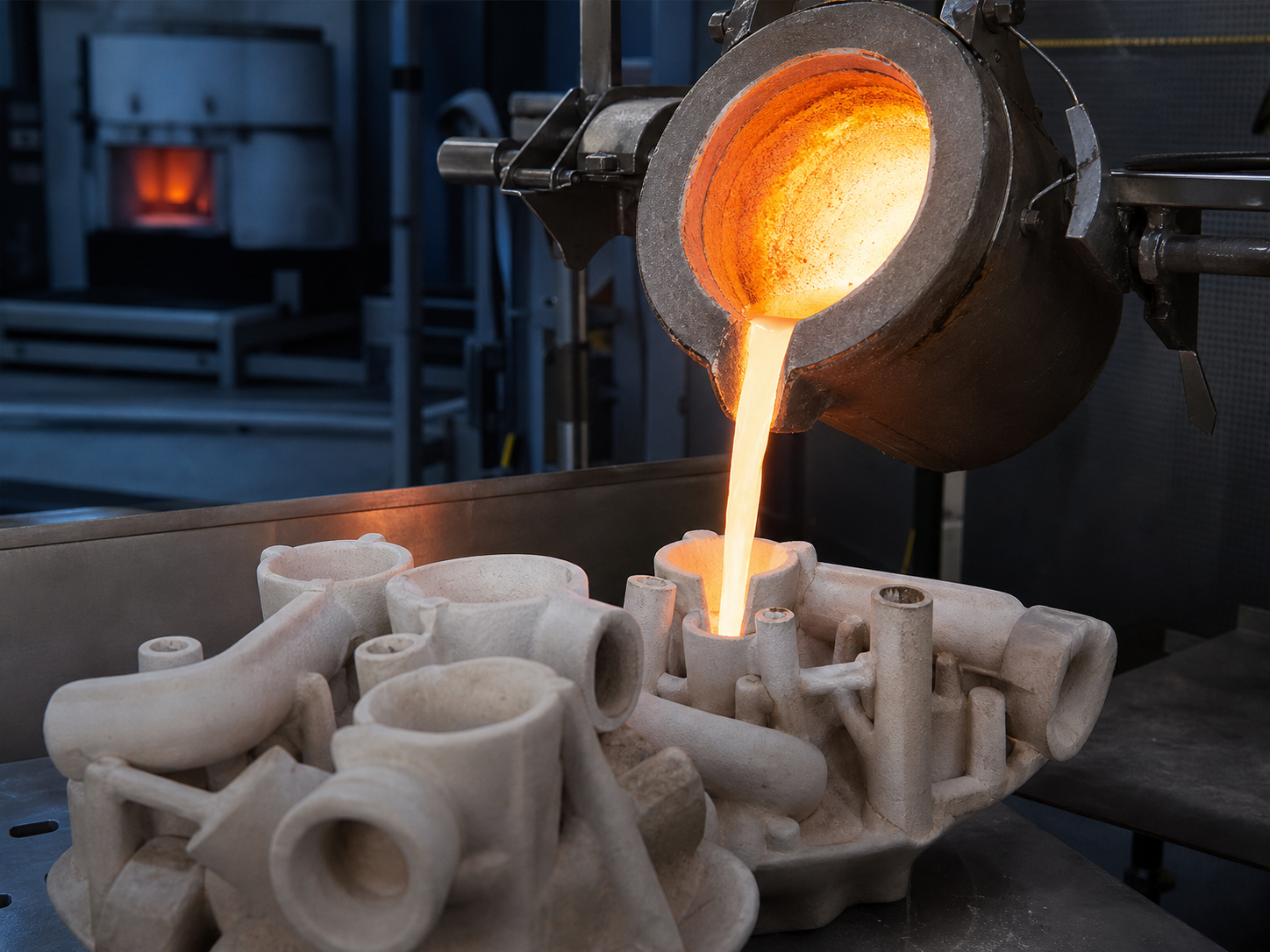
- Pouring, heat treatment, and controlled post-casting operations.
- CNC machining for flanges, sealing faces, threads, bearing seats, datum surfaces, and critical dimensions.
- Surface finishing, inspection, packing, and export preparation according to the purchase requirement.
Manufacturing flow
A controlled path from RFQ drawing to delivered metal part.
Each project is reviewed before production so the tooling route, casting process, machining allowance, inspection method, and packing requirement are aligned with the intended component function.
Drawing
2D drawing, 3D file, material, quantity, and technical notes are reviewed together.
Engineering Review
Wall thickness, shrinkage risk, machining allowance, surface finish, and inspection points are checked.
Tooling
Pattern and tooling decisions are made according to geometry, batch size, and approval expectations.
Casting
Shell building, pouring, cooling, and cleaning are controlled for stable part formation.
Heat Treatment
Applied when required by material, drawing, or performance expectation.
Machining
CNC operations define sealing, mounting, threaded, bearing, and datum features.
Inspection
Dimensional, visual, machining, and final packing checks are completed before shipment.
Packing and Delivery
Parts are protected for export handling, long-distance transport, and receiving inspection.
Engineering control
Small process decisions decide whether a cast component is easy to assemble.
AODSON pays attention to the production details that affect fit, sealing, machining stability, and repeatability. The review is practical: what must be cast accurately, what should be machined, what needs allowance, and what must be checked before parts leave the factory.
Porosity and shrinkage
Geometry, gating, section change, and process control are considered to reduce casting defects in critical areas.
Wall thickness
Thin sections, heavy bosses, and transitions are reviewed so parts can be cast reliably without unnecessary weight.
Tolerance strategy
Casting tolerance and machining tolerance are separated clearly, helping buyers avoid unrealistic foundry expectations.
Surface finish
As-cast, blasted, machined, or finished surfaces are specified according to function and appearance requirement.
Thread accuracy
Threaded holes, studs, and mounting features are machined and inspected according to drawing requirements.
Batch consistency
Production control focuses on repeatable dimensions, stable surface quality, and consistent packing from batch to batch.
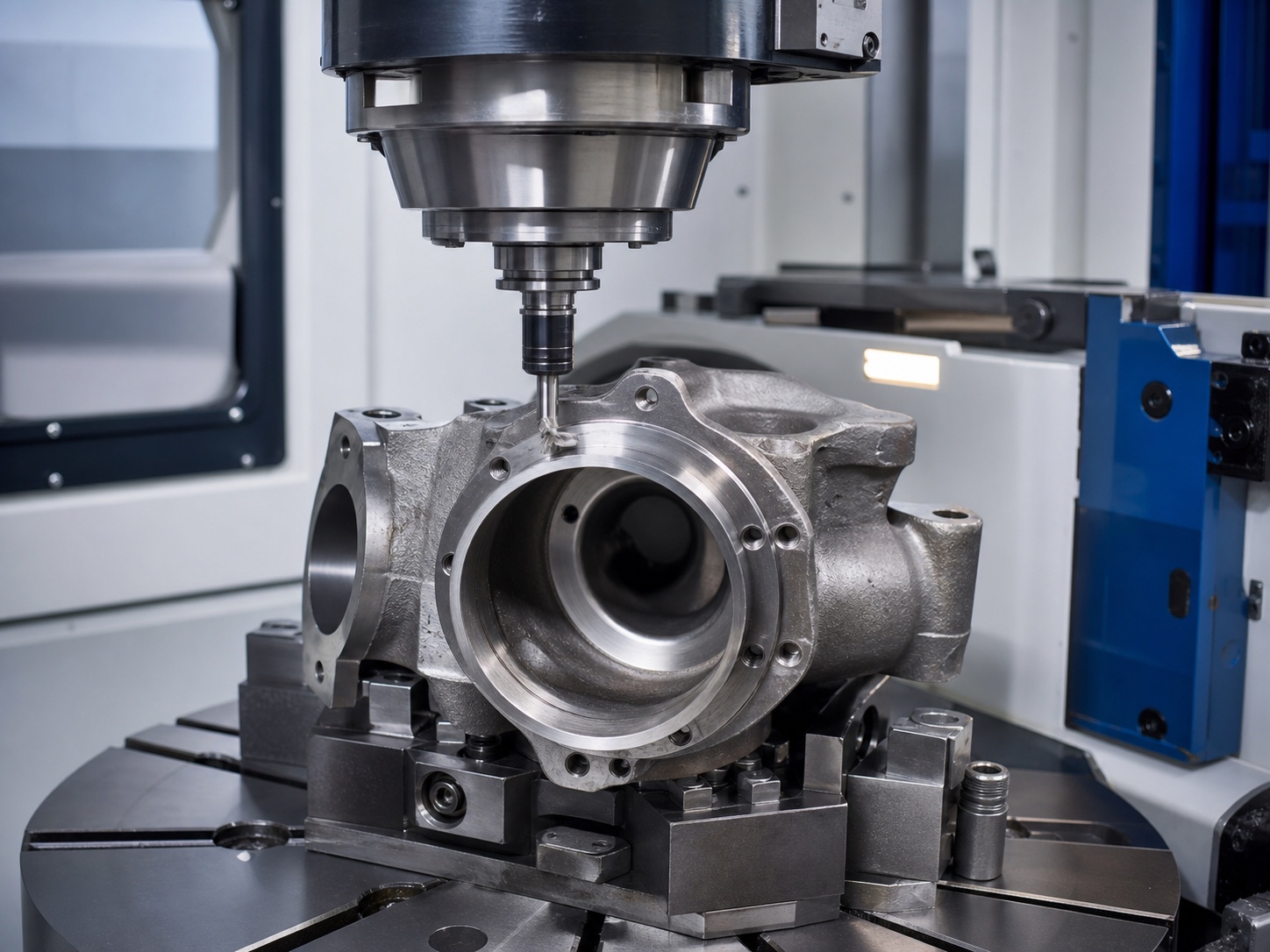
CNC machining after casting
Machining turns a cast shape into an assembly-ready component.
Most turbocharger-related castings need machining where parts connect, seal, rotate, locate, or carry a fastener. AODSON plans machining allowance during the casting review so there is enough stock for accurate finishing without adding unnecessary weight or cycle time.
- Flanges and sealing faces for controlled flatness and surface contact.
- Threads, bolt holes, and mounting points for repeatable assembly.
- Bearing seats and datum surfaces where alignment and concentricity matter.
- Critical dimensions checked during sample approval and batch inspection.
Quality control
Inspection follows the drawing, not a generic checklist.
AODSON supports quality control through material documentation when required, dimensional inspection, CMM checks for selected features, visual inspection, machining inspection, sample approval, and final packing review. The inspection plan can be adjusted to match the buyer’s drawing, purchase order, and receiving standard.
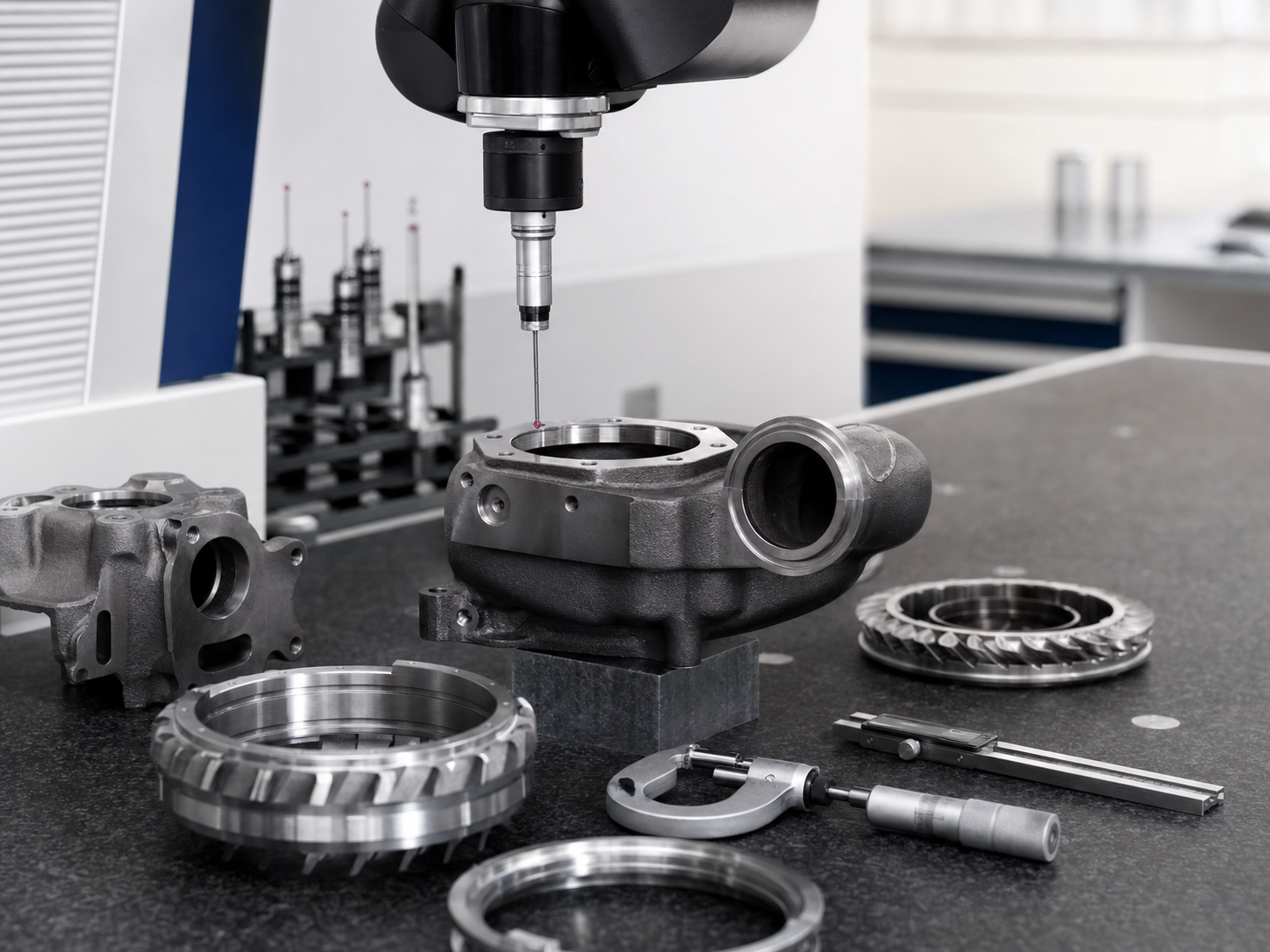
Finished component readiness
Good castings must also be easy to receive, inspect, and assemble.
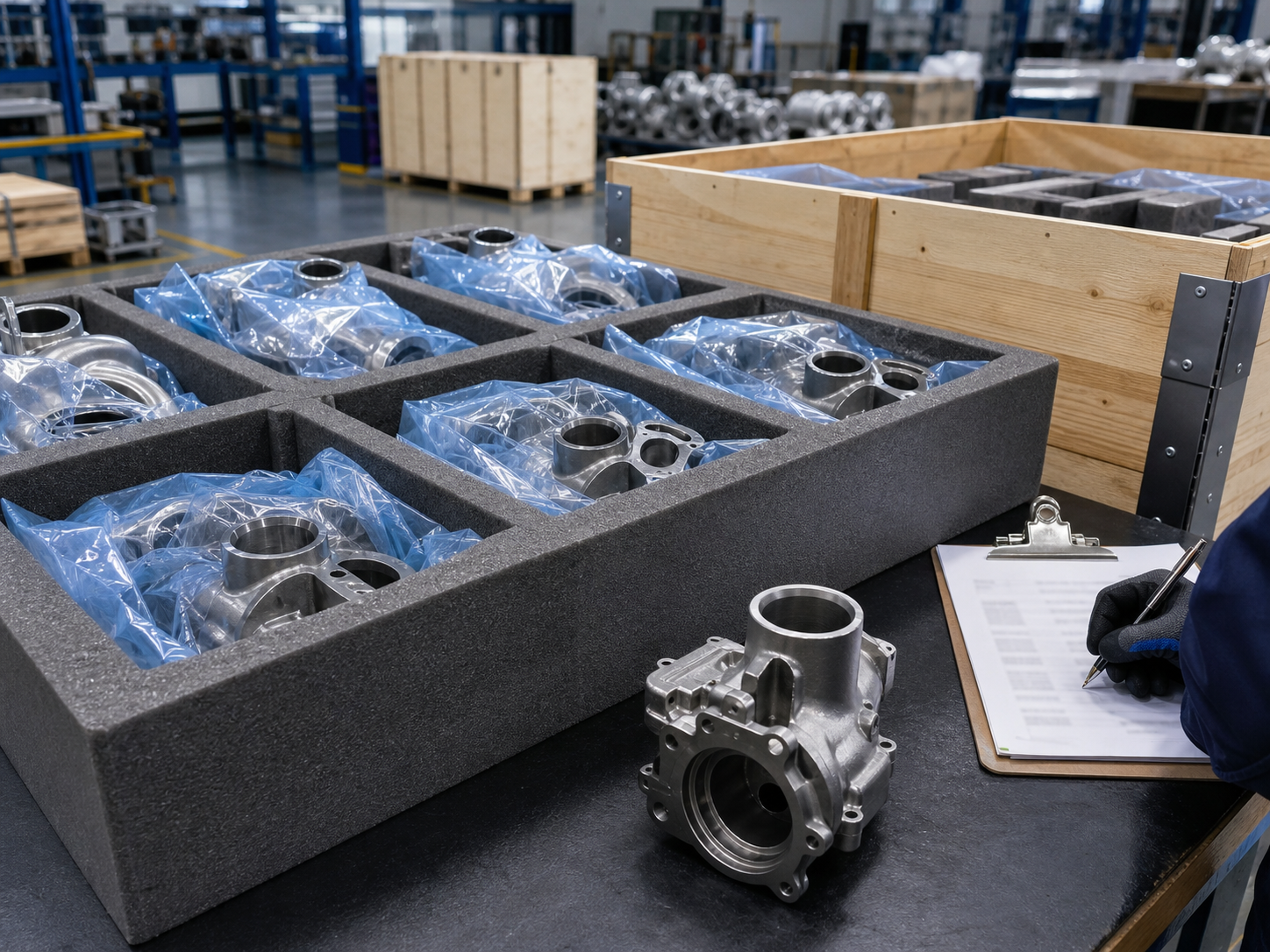
For sourcing teams, a component is not finished when it leaves the machining center. It is finished when the buyer can identify the batch, inspect the agreed features, protect the machined surfaces, and move the part into the next assembly step without avoidable rework. AODSON therefore treats final handling as part of the manufacturing process, not an afterthought.
Turbocharger-related cast components often combine rough cast surfaces with locally machined faces. Those two surface conditions need different handling. Cast areas may tolerate normal contact during packing, while sealing faces, bearing-related surfaces, threads, and datum features require more careful separation. The packing method can be adapted with foam, wrapping, dividers, VCI protection, or customer-specified labels where required.
When a part is intended for repeat purchasing, batch consistency becomes as important as the first sample. AODSON can keep attention on the features that drive downstream work: flange flatness, hole location, thread condition, surface cleanliness, burr control, and the relationship between as-cast geometry and machined reference points. This is especially useful for buyers who source components for engine-adjacent assemblies but complete final validation in their own system.
Why AODSON
A practical manufacturing partner for engineered metal components.
AODSON is positioned for OEM buyers who need custom manufacturing, engineering communication, drawing confidentiality, material selection support, flexible quantities, export experience, stable supply chain coordination, and fast response during RFQ and sampling.
Custom Manufacturing
Production is based on customer drawings, samples, material requirements, and inspection expectations.
Engineering Review
Manufacturability, casting risk, machining sequence, and packing protection are discussed before production.
Drawing Confidentiality
Customer drawings and technical files are handled as project-specific manufacturing information.
Material Selection
Stainless, heat-resistant, nickel alloy, carbon steel, and alloy steel options can be reviewed by application.
Flexible Quantities
The production route can be planned for samples, trial orders, or repeat batches depending on tooling and inspection needs.
Export Communication
Clear RFQ response, packing discussion, and shipment preparation support international sourcing work.
RFQ checklist
Send the details that define the manufacturing route.
For a faster and more accurate quotation, please share the available technical package. AODSON treats drawings, models, and project information as confidential manufacturing inputs.
FAQ
Common engineering and sourcing questions.
These answers are intended for buyers evaluating custom cast components, not complete turbocharger assemblies.
Does AODSON manufacture complete turbochargers?
No. AODSON manufactures custom cast and machined metal components according to customer drawings. The scope may include housings, rings, exhaust flow parts, brackets, shields, or other specified components.
Can you machine critical features after casting?
Yes. CNC machining can be planned for sealing faces, flanges, bolt holes, threads, bearing seats, datum surfaces, and other critical dimensions defined by the drawing.
Which files are useful for quotation?
A 2D drawing is the most important file because it defines material, tolerance, surface finish, and inspection requirements. STEP or IGS files help evaluate geometry, tooling, and machining allowance.
Can AODSON help choose material?
AODSON can review common stainless, cast stainless, heat-resistant stainless, nickel alloy, carbon steel, and alloy steel options. Final selection should match the engineering requirement and the customer’s approval process.
How are sample parts controlled?
Sample approval can include dimensional inspection, visual review, machining checks, and material documentation when specified. The sample result helps lock the production route before repeat orders.
Can you support small or flexible quantities?
Project feasibility depends on tooling, casting method, machining setup, and inspection requirements. AODSON can review sample, trial, and repeat order quantities case by case.
What affects lead time most?
Tooling complexity, material availability, heat treatment, machining cycle, inspection plan, and sample approval all influence timing. Clear drawings and early technical communication help reduce avoidable delay.
Can you work from an existing sample?
A physical sample can help with visual reference, assembly understanding, and manufacturing discussion, but a controlled 2D drawing is still recommended for quotation and production. If a drawing is not available, the project may need reverse engineering or customer confirmation of critical dimensions before tooling and sample work can begin.
How should buyers define inspection requirements?
The best inspection plan identifies the surfaces and dimensions that affect assembly, sealing, positioning, or safety. Buyers can mark critical features on the drawing, define required reports, and separate cosmetic expectations from functional tolerances so the production team can focus control where it matters most.
Related services
Explore AODSON manufacturing capabilities.
Use these internal service pages to review the manufacturing routes most often connected with turbocharger-related cast metal components.
Start with the drawing
Need a custom turbocharger-related casting?
Send your drawing, material, quantity, tolerance, surface finish, and inspection requirement. AODSON will review the manufacturing route and respond with practical next steps for casting, machining, finishing, and delivery.